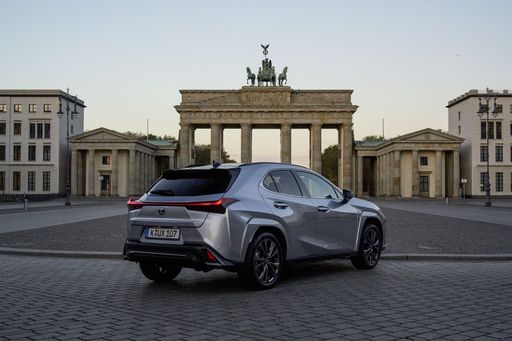
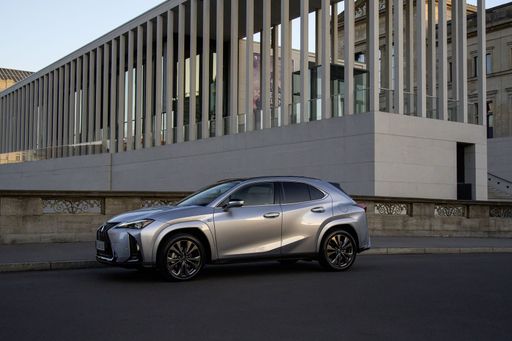
VS

Toyota C-HR vs Lexus UX comparison

Compare performance (223 HP vs 199 HP), boot space and price (29,100 £ vs 37,900 £ ) at a glance. Find out which car is the better choice for you – Toyota C-HR or Lexus UX?

Toyota C-HR vs Lexus UX: Key differences

Toyota C-HR

4.8 (2 Reviews)
rate
  • visibly cheaper
  • a bit more power
  • considerably more efficient
  • very slightly quicker 0–100 km/h

Lexus UX

4.6 (4 Reviews)
rate
  • marginally lighter

All details on performance, efficiency, range and trunk space can be found in the technical comparison below – including user reviews for both models.

C-HR

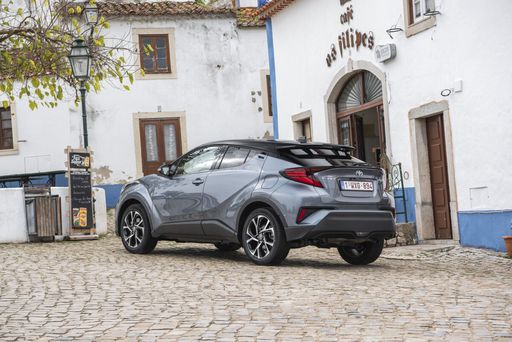
In the increasingly competitive compact SUV market, the Lexus UX and Toyota C-HR stand out for their unique blend of style, efficiency, and technology. Both vehicles, built on a similar platform, offer drivers a modern driving experience tailored to different preferences. Let's dive deeper into these two models to see how they compare in terms of technical specifications and innovations.
UX

Design and Build Quality

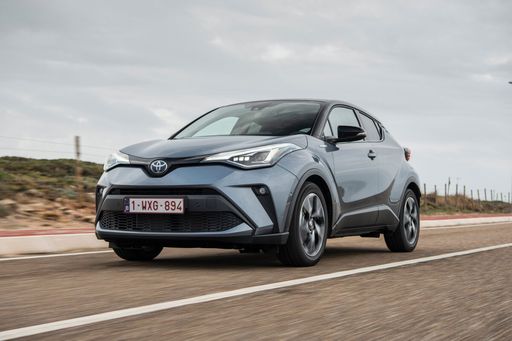
The Lexus UX is a luxurious compact SUV that emphasizes elegance and sophisticated aesthetics. With a length of 4495 mm and a width of 1840 mm, it projects a more robust stance compared to the C-HR. In contrast, the Toyota C-HR, measuring 4362 mm in length and 1832 mm in width, adopts a sportier, more dynamic design. While both vehicles feature five doors for easy access, the Lexus UX has a slightly elevated height of 1545 mm compared to the 1558 mm of the C-HR.

C-HR

Performance and Driving Experience

Performance is key in any vehicle comparison, and both the Lexus UX and Toyota C-HR provide options that cater to different driving styles. The UX offers two engine types—electric and full hybrid—producing up to 204 HP, paired with an automatic transmission featuring either a reduction gearbox or CVT. The car achieves acceleration from 0 to 100 km/h in as fast as 7.5 seconds, making it a capable performer in urban environments.

On the other hand, the Toyota C-HR has a more diverse engine lineup with options ranging from a full hybrid producing 140 HP and plugin hybrid variants pushing up to 223 HP. With a maximum acceleration of 7.4 seconds for the more powerful engines, the C-HR also delivers a satisfying driving experience, despite having a slightly lower top speed of 180 km/h compared to the UX's 177 km/h.

UX

Fuel Efficiency and Eco-Friendliness

In terms of fuel efficiency, the Lexus UX offers competitive consumption rates of 5 to 5.6 L/100 km, while its electric range extends up to an impressive 449 km. Meanwhile, the Toyota C-HR shines with its low consumption figures, achieving as little as 4.7 L/100 km with its hybrid powertrains. The C-HR also boasts an electric range of 67 km, which may appeal to urban drivers seeking to minimize their carbon footprint.

C-HR

Interior Comfort and Cargo Space

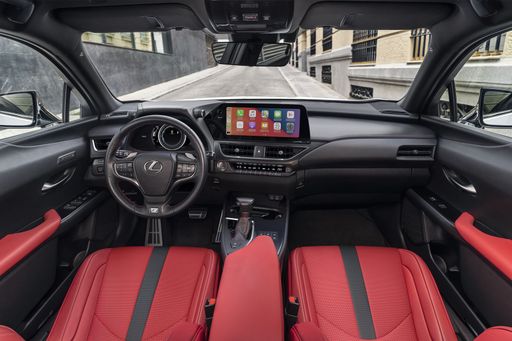
The Lexus UX prioritizes a premium driving experience with high-quality materials and attention to detail. Although it seats four passengers, the spacious interior offers a comfortable ambiance. In terms of cargo space, the UX has a trunk capacity of 367 L, which is practical for everyday use.

Conversely, the Toyota C-HR excels in passenger capacity, accommodating five occupants comfortably. It also outperforms the UX in cargo space, offering up to 447 L, depending on the configuration. This makes it a more versatile option for families and those needing extra storage.

UX

Technological Innovations

Both models are equipped with cutting-edge technology to enhance the driver and passenger experience. The Lexus UX features a sophisticated infotainment system with a large touchscreen, navigation, and driver-assistance features like adaptive cruise control and lane-keeping assist. This combination facilitates a more luxurious and connected driving experience.

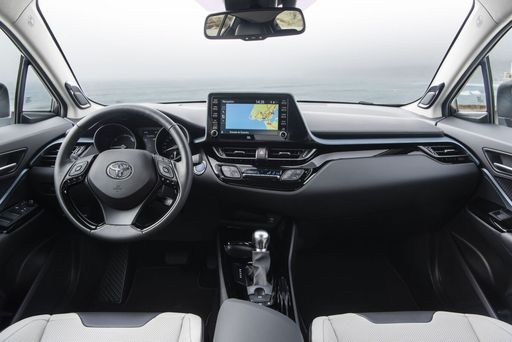
The Toyota C-HR, while more utilitarian in its approach, is not lacking in technological innovation. It offers a user-friendly infotainment system with seamless smartphone integration, along with advanced safety features like Toyota Safety Sense. This ensures that drivers have both convenience and security at their fingertips.

C-HR

Conclusion: Which One Should You Choose?

When comparing the Lexus UX and Toyota C-HR, your choice will largely depend on your priorities. If you’re inclined towards a more luxurious feel and cutting-edge electrification with impressive speed, the Lexus UX could be the better fit. However, if practicality, fuel efficiency, and a lower price point are your main concerns, the Toyota C-HR emerges as a formidable contender.

Ultimately, both vehicles stand as excellent representatives of their brands, offering unique blends of technology, comfort, and performance that cater to a diverse array of drivers.

Here’s where it gets real: The technical differences in detail

C-HR

Costs and Efficiency:

Looking at overall running costs, both models reveal some interesting differences in everyday economy.

Toyota C-HR is visibly cheaper – starting at 29,100 £ , while the Lexus UX costs 37,900 £ . That’s a price difference of around 8,794 £.

Fuel consumption also shows a difference: the Toyota C-HR uses 2.3 L/100km and is considerably more efficient than the Lexus UX with 5 L/100km. The difference is about 2.7 L/100km.

UX

Engine and Performance:

Under the bonnet, it becomes clear which model is tuned for sportiness and which one takes the lead when you hit the accelerator.

When it comes to engine power, the Toyota C-HR offers a bit more power – delivering 223 HP compared to 199 HP. That’s roughly 24 HP more horsepower.

When accelerating from 0 to 100 km/h, the Toyota C-HR is very slightly quicker – completing the sprint in 7.4 s, while the Lexus UX takes 7.9 s. That’s about 0.5 s quicker.

C-HR

Space and Everyday Use:

Whether family car or daily driver – which one offers more room, flexibility and comfort?

Both vehicles offer seating for 5 people.

In terms of curb weight, Lexus UX is marginally lighter – 1,495 kg compared to 1,505 kg. The difference is around 10 kg.

When it comes to payload, the Lexus UX carries noticeably more – 615 kg compared to 425 kg. That’s a difference of about 190 kg.

Who wins the race in the data check?

The Toyota C-HR stands well ahead of its rival in the objective data comparison.
This result only shows which model scores more points on paper – not which of the two cars feels right for you.

from £29,100
C-HR

Toyota C-HR

  • Engine Type : Full Hybrid, Plugin Hybrid
  • Transmission : Automatic
  • Drive Type : Front-Wheel Drive, All-Wheel Drive
  • Power HP : 140 - 223 HP
  • Consumption L/100km : 2.3 - 5.1 L/100km
  • Electric Range : 66 km
Toyota C-HR
Lexus UX

Costs and Consumption

View detailed analysis

Engine and Performance

View detailed analysis

Dimensions and Body

View detailed analysis

Toyota C-HR

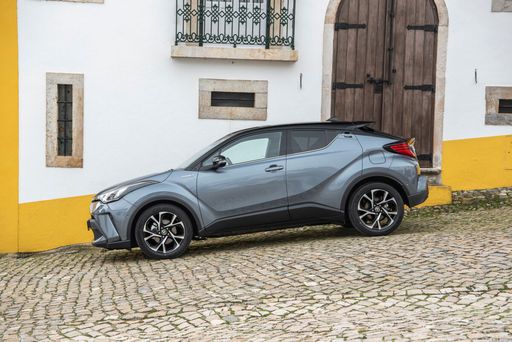
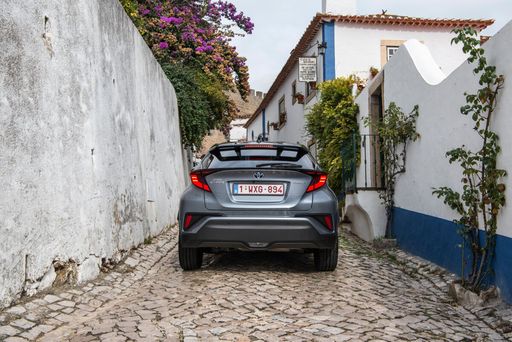
The Toyota C-HR cuts a striking figure with its angular styling and coupe-like profile, so you’ll never go unnoticed in the supermarket car park. It balances everyday practicality with a nimble, city-friendly personality, making routine commutes feel a touch more fun without asking for forgiveness.

details

Lexus UX

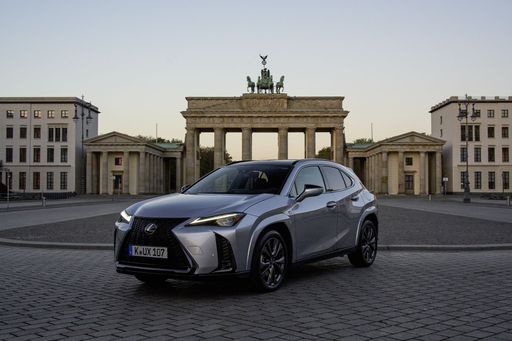
The Lexus UX is a compact luxury crossover that blends sharp styling with a quiet, comfortable cabin, perfect for urban buyers who want premium feel without shouting about it. It rides with poise, serves up plush materials and thoughtful tech, and—while it won’t satisfy anyone chasing track thrills—it's a smart, stylish choice for everyday driving.

details
Toyota C-HR
Lexus UX

Costs and Consumption

Price
29,100 - 42,800 £
Price
37,900 - 54,100 £
Consumption L/100km
2.3 - 5.1 L/100km
Consumption L/100km
5 - 5.6 L/100km
Consumption kWh/100km
-
Consumption kWh/100km
-
Electric Range
66 km
Electric Range
-
Battery Capacity
-
Battery Capacity
-
co2
52 - 116 g/km
co2
113 - 127 g/km
Fuel tank capacity
-
Fuel tank capacity
-

Dimensions and Body

Body Type
SUV
Body Type
SUV
Seats
5
Seats
5
Doors
-
Doors
-
Curb weight
1,505 - 1,755 kg
Curb weight
1,495 - 1,555 kg
Trunk capacity
350 - 447 L
Trunk capacity
-
Length
-
Length
-
Width
1,832 mm
Width
1,840 mm
Height
-
Height
-
Max trunk capacity
-
Max trunk capacity
-
Payload
375 - 425 kg
Payload
555 - 615 kg

Engine and Performance

Engine Type
Full Hybrid, Plugin Hybrid
Engine Type
Full Hybrid
Transmission
Automatic
Transmission
Automatic
Transmission Detail
CVT
Transmission Detail
CVT
Drive Type
Front-Wheel Drive, All-Wheel Drive
Drive Type
Front-Wheel Drive, All-Wheel Drive
Power HP
140 - 223 HP
Power HP
199 HP
Acceleration 0-100km/h
7.4 - 9.9 s
Acceleration 0-100km/h
7.9 - 8.1 s
Max Speed
-
Max Speed
-
Torque
-
Torque
-
Number of Cylinders
4
Number of Cylinders
4
Power kW
103 - 164 kW
Power kW
146 kW
Engine capacity
1,798 - 1,987 cm3
Engine capacity
1,987 cm3

General

Model Year
2,026
Model Year
2,025
CO2 Efficiency Class
C, D, B
CO2 Efficiency Class
C, D
Brand
Toyota
Brand
Lexus
DriveDuel uses data analysis and artificial intelligence to evaluate vehicle data and create content. Content is regularly reviewed and improved. The displayed prices are estimates based on German list prices, adjusted to the respective country’s VAT. Country-specific registration taxes are not included. This information is not legally binding.