@ Alfa Romeo / Stellantis Media
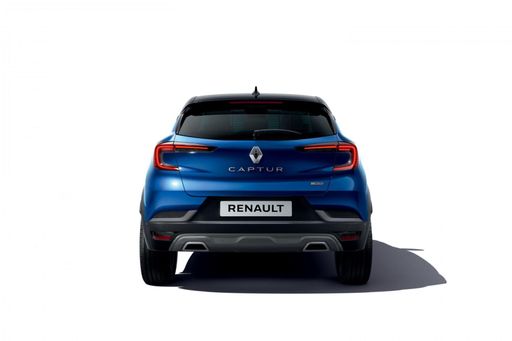
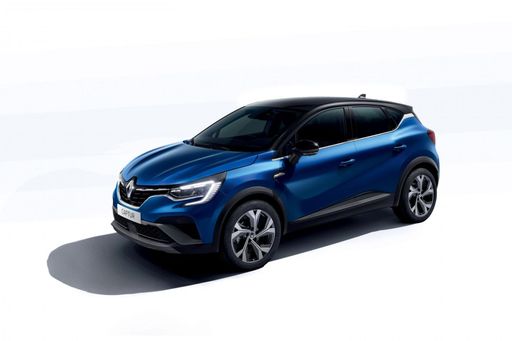
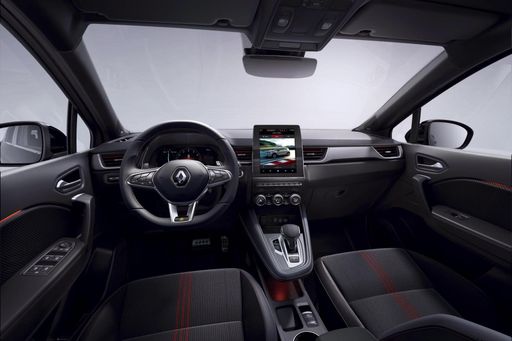
@ Renault Group Media
VS

Alfa Romeo Junior vs Renault Captur – Differences & prices compared

Two cars, one duel: Alfa Romeo Junior meets Renault Captur.
Which one wins in performance, efficiency and value for money? Find out now!

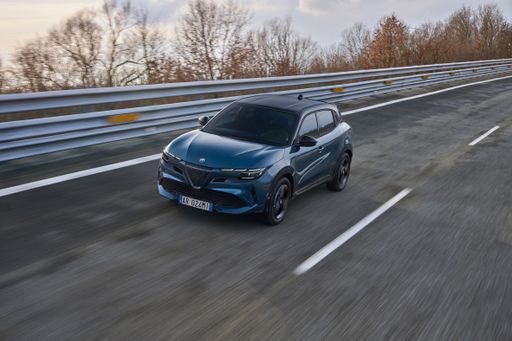
Junior @ Alfa Romeo / Stellantis Media

In the world of SUVs, competition is fierce, and two notable contenders have emerged: the Alfa Romeo Junior and the Renault Captur. Both vehicles showcase innovative technologies and unique designs aimed at different types of drivers. In this comparison, we will dive into the technical specifications, innovations, and overall performance of these two models.

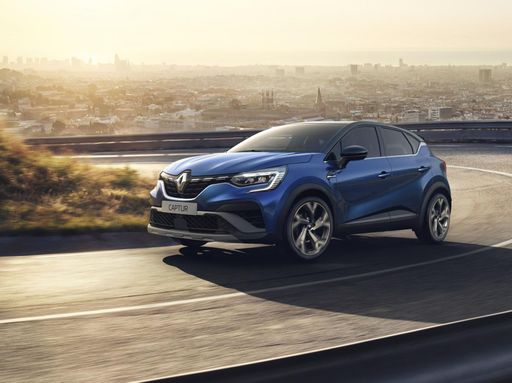
Captur @ Renault Group Media

Design and Dimensions

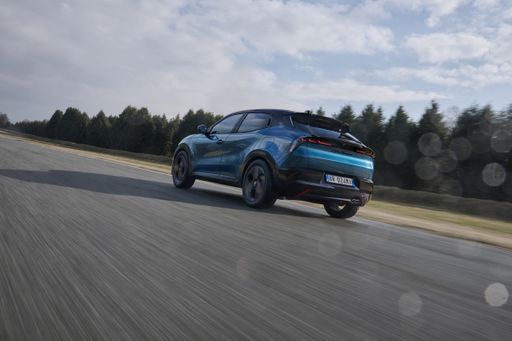
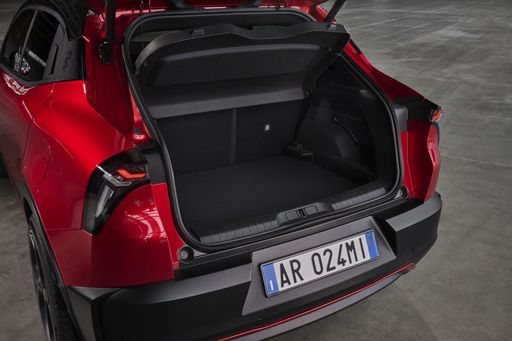
The Alfa Romeo Junior stands out with its bold Italian styling, exuding a sporty and elegant aura. Measuring 4173 mm in length, 1781 mm in width, and 1533 mm in height, it combines compact dimensions with spacious interior comfort. In contrast, the Renault Captur is slightly larger, with a length of 4239 mm, a width of 1797 mm, and a height of 1575 mm. Both offer practicality with five doors and five seats, although the Captur provides a trunk capacity of 422 liters, surpassing the Junior's 400 liters.

Junior @ Alfa Romeo / Stellantis Media

Powertrain Options

Under the hood, the Alfa Romeo Junior offers a variety of engine types, including electric and petrol MHEV (Mild Hybrid Electric Vehicle) options. It boasts power outputs ranging from 136 to a robust 280 hp, allowing for an exhilarating driving experience. The Junior also features multiple drive options, including front-wheel drive and all-wheel drive configurations. Fuel consumption is efficient, with estimated figures of 4.5 to 5.4 L/100 km, and an electric range of up to 410 km for the electric variant.

The Renault Captur, on the other hand, presents a diversified lineup of engine types as well, including full hybrids, LPG, and petrol variants. Power outputs for the Captur range from 91 to 158 hp. Its front-wheel-drive setup complements urban driving, while consumption figures hover between 4.7 to 7.8 L/100 km, depending on the model choice. The Captur’s hybrid options make it an eco-friendly vehicle, appealing to environmentally conscious consumers.


Captur @ Renault Group Media

Performance and Acceleration

Performance enthusiasts will find the Alfa Romeo Junior's acceleration figures impressive, with top variants reaching 0 to 100 km/h in as little as 5.9 seconds. Its torque ranges up to 345 Nm, ensuring a sporty drive. The maximum speed can soar up to 206 km/h, emphasizing its performance-oriented design.

Comparatively, the Renault Captur offers respectable acceleration figures, with the best performance variant reaching 0 to 100 km/h in about 8.5 seconds. With a maximum speed of 180 km/h, it provides ample excitement for daily driving. However, the Captur focuses more on a balanced driving experience tailored for city environments.

Junior @ Alfa Romeo / Stellantis Media

Technology and Innovations

In terms of technology, the Alfa Romeo Junior integrates cutting-edge features to enhance the driving experience. Expect advanced infotainment systems, driver assistance technologies, and connectivity options as standard features, catering to the modern driver’s needs.

The Renault Captur is no less impressive, boasting smartphone integration, touchscreens, and a suite of safety enhancements. The Captur’s commitment to eco-friendliness is evident in its hybrid technology, which allows for reduced emissions and better fuel efficiency, appealing to green-minded consumers.

Captur @ Renault Group Media

Price and Market Positioning

Pricing for both models is competitive, but the Alfa Romeo Junior is likely positioned as a more premium offering, targeting performance-focused buyers. Consequently, it may come with a higher price tag reflecting its build quality and dynamic capabilities. The Renault Captur, being an economical and practical choice, continues to attract a diverse customer base that values value for money and efficiency in their everyday vehicles.

Conclusion

Choosing between the Alfa Romeo Junior and the Renault Captur ultimately depends on what the buyer values most in an SUV. Whether it’s the sporty performance and striking design of the Junior or the practical efficiency and technology-packed features of the Captur, both vehicles represent strong options in an ever-evolving segment. Each has its unique strengths, making them worthy competitors that appeal to different sets of preferences.

Here’s where it gets real: The technical differences in detail

Costs and Efficiency:

Looking at overall running costs, both models reveal some interesting differences in everyday economy.

Renault Captur has a clearly perceptible advantage in terms of price – it starts at 21100 £, while the Alfa Romeo Junior costs 26100 £. That’s a price difference of around 4972 £.

Fuel consumption also shows a difference: Renault Captur manages with 4.50 L and is therefore hardly perceptible more efficient than the Alfa Romeo Junior with 4.80 L. The difference is about 0.30 L per 100 km.

Engine and Performance:

Power, torque and acceleration say a lot about how a car feels on the road. This is where you see which model delivers more driving dynamics.

When it comes to engine power, the Alfa Romeo Junior has a decisively edge – offering 280 HP compared to 143 HP. That’s roughly 137 HP more horsepower.

In acceleration from 0 to 100 km/h, the Alfa Romeo Junior is convincingly quicker – completing the sprint in 5.90 s, while the Renault Captur takes 8.90 s. That’s about 3 s faster.

In terms of top speed, the Alfa Romeo Junior performs slightly better – reaching 206 km/h, while the Renault Captur tops out at 180 km/h. The difference is around 26 km/h.

There’s also a difference in torque: Alfa Romeo Junior pulls evident stronger with 345 Nm compared to 265 Nm. That’s about 80 Nm difference.

Space and Everyday Use:

Whether family car or daily driver – which one offers more room, flexibility and comfort?

Both vehicles offer seating for 5 people.

In curb weight, Renault Captur is slight lighter – 1323 kg compared to 1380 kg. The difference is around 57 kg.

In terms of boot space, the Renault Captur offers minimal more room – 422 L compared to 415 L. That’s a difference of about 7 L.

In maximum load capacity, the Renault Captur performs hardly perceptible better – up to 1363 L, which is about 83 L more than the Alfa Romeo Junior.

When it comes to payload, Renault Captur slight takes the win – 453 kg compared to 420 kg. That’s a difference of about 33 kg.

Who wins the race?

The Alfa Romeo Junior proves to be outperforms in nearly all aspects and therefore becomes our DriveDuel Champion!
Alfa Romeo Junior is the better all-rounder in this comparison.

from about £26,100
Junior @ Alfa Romeo / Stellantis Media

Alfa Romeo Junior

  • Engine Type : Electric, Petrol MHEV
  • Transmission : Automatic
  • Drive Type : Front-Wheel Drive, All-Wheel Drive
  • Power HP : 136 - 280 HP
  • Consumption L/100km : 4.8 - 5.4 L
  • Consumption kWh/100km : 15.1 - 17.5 kWh
  • Electric Range : 344 - 410 km

Alfa Romeo Junior

5 (1)
rate

The Alfa Romeo Junior captures the essence of Italian design with its sleek lines and compact dimensions, making it an icon of elegance and performance. With a spirited driving experience and a charming retro aesthetic, it appeals to enthusiasts and casual drivers alike. This delightful car embodies the brand's rich heritage while remaining a fun and engaging option for those seeking a unique automotive experience.

details

Renault Captur

5 (1)
rate

The Renault Captur is a cheeky little crossover that pairs city-friendly agility with a roomy, well-thought-out cabin and enough style to turn heads at the lights. It’s a sensible choice for buyers who want practical versatility and a dash of personality on their daily drives, without taking itself too seriously.

details
Alfa Romeo Junior
Renault Captur
Junior @ Alfa Romeo / Stellantis Media
Captur @ Renault Group Media

Costs and Consumption

Price
26100 - 41600 £
Price
21100 - 28300 £
Consumption L/100km
4.8 - 5.4 L
Consumption L/100km
4.5 - 6 L
Consumption kWh/100km
15.1 - 17.5 kWh
Consumption kWh/100km
-
Electric Range
344 - 410 km
Electric Range
-
Battery Capacity
0.4 - 51 kWh
Battery Capacity
-
co2
0 - 119 g/km
co2
102 - 137 g/km
Fuel tank capacity
44 - 45 L
Fuel tank capacity
48 L

Dimensions and Body

Body Type
SUV
Body Type
SUV
Seats
5
Seats
5
Doors
5
Doors
5
Curb weight
1380 - 1689 kg
Curb weight
1323 - 1514 kg
Trunk capacity
340 - 415 L
Trunk capacity
326 - 422 L
Length
4173 mm
Length
4239 mm
Width
1781 mm
Width
1797 mm
Height
1505 - 1538 mm
Height
1575 mm
Max trunk capacity
1205 - 1280 L
Max trunk capacity
1276 - 1363 L
Payload
390 - 420 kg
Payload
376 - 453 kg

Engine and Performance

Engine Type
Electric, Petrol MHEV
Engine Type
Full Hybrid, Petrol, Petrol MHEV
Transmission
Automatic
Transmission
Automatic, Manuel
Transmission Detail
Reduction Gearbox, Dual-Clutch Automatic
Transmission Detail
Automatic Gearbox, Manual Gearbox, Dual-Clutch Automatic
Drive Type
Front-Wheel Drive, All-Wheel Drive
Drive Type
Front-Wheel Drive
Power HP
136 - 280 HP
Power HP
115 - 143 HP
Acceleration 0-100km/h
5.9 - 9.1 s
Acceleration 0-100km/h
8.9 - 12.3 s
Max Speed
150 - 206 km/h
Max Speed
180 km/h
Torque
230 - 345 Nm
Torque
160 - 265 Nm
Number of Cylinders
3
Number of Cylinders
3 - 4
Power kW
107 - 207 kW
Power kW
84 - 116 kW
Engine capacity
1199 cm3
Engine capacity
1199 - 1789 cm3

General

Model Year
2024 - 2025
Model Year
2025
CO2 Efficiency Class
A, C, D
CO2 Efficiency Class
C, D, E
Brand
Alfa Romeo
Brand
Renault
What drive types are available for the Alfa Romeo Junior?

Available configurations include Front-Wheel Drive or All-Wheel Drive.

The prices and data displayed are estimates based on German list prices and may vary by country. This information is not legally binding.