VS

Renault Arkana vs Renault Captur comparison

Compare performance (143 HP vs 158 HP), boot space and price (28,500 £ vs 21,100 £ ) at a glance. Find out which car is the better choice for you – Renault Arkana or Renault Captur?

Renault Arkana vs Renault Captur: Key differences

Renault Arkana

3.8 (6 Reviews)
rate
Customer feedback generally presents the Arkana as an economical, stylish and practical family crossover that suits everyday needs. Owners often praise its fuel economy, space and safety, while noting it isn’t a sporty coupe; a few reports of serious mechanical issues and costly repairs also appear. Opinions are mixed enough that broader reliability trends aren’t fully clear from the available comments.

Renault Captur

4.8 (5 Reviews)
rate
  • clearly cheaper
  • very slightly more power
  • barely more efficient
  • visibly quicker 0–100 km/h
  • a bit lighter

All details on performance, efficiency, range and trunk space can be found in the technical comparison below – including user reviews for both models.

Arkana

Renault Arkana vs Renault Captur: Choosing the Right Crossover for You

In recent years, the compact SUV segment has seen a surge in popularity, and at the forefront of Renault’s lineup are two compelling options: the Renault Arkana and the Renault Captur. While both models embody Renault’s commitment to innovation, technology, and design, they cater to slightly different tastes and needs. Let’s delve into a detailed comparison to help you decide which model suits your lifestyle best.
Captur

Design and Dimensions

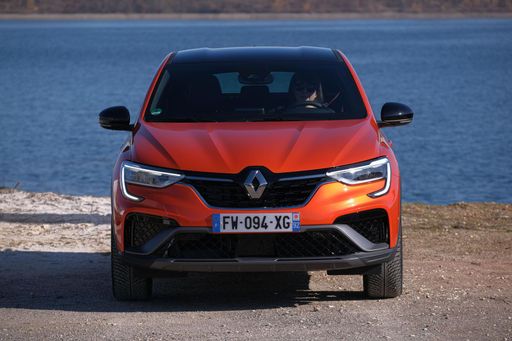
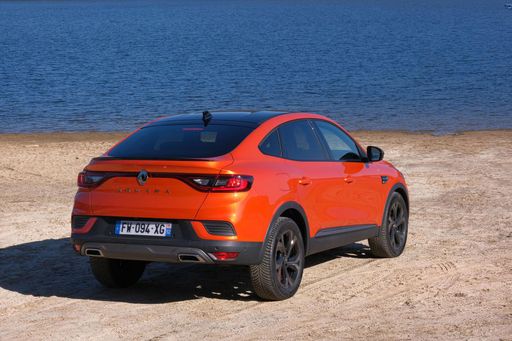
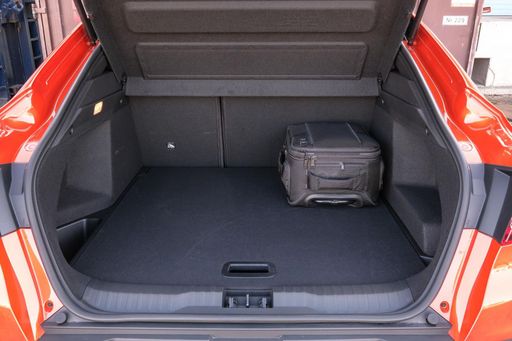
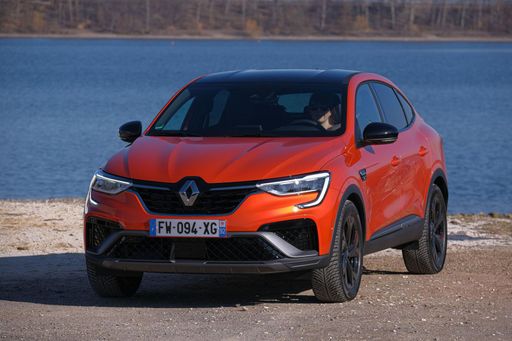
The Renault Arkana offers a striking design that merges the elegance of a coupé with the practicality of an SUV. It stretches 4,568 mm in length, offering a bolder, more substantial road presence compared to the Captur, which measures 4,239 mm. The increased length of the Arkana (over 300 mm longer) translates to more generous interior and trunk space, boasting a trunk capacity of up to 513 liters versus the Captur’s maximum of 422 liters.

Arkana

Performance and Powertrains

Both models offer a variety of powertrains, but subtle differences might influence your decision. The Arkana offers Full Hybrid and Petrol Mild Hybrid (MHEV) options, with power outputs ranging from 140 to 158 HP. Its efficient 1.6 and 1.3-liter engines provide a smooth automatic driving experience, with the quickest model achieving 0-100 km/h in just over nine seconds.

On the other hand, the Captur provides a more extensive array of engine choices, including Full Hybrid, Petrol MHEV options, and even an LPG variant. Its power output also varies, from 91 to 158 HP, delivering slightly quicker acceleration in some trims, with the sportiest version reaching 0-100 km/h in 8.5 seconds.

Captur

Fuel Efficiency

Renault has engineered both vehicles to balance performance with efficiency. The Arkana’s consumption ranges between 4.7 to 6 L/100 km depending on the chosen power unit, while the Captur offers a similar economy, consuming between 4.7 to 7.8 L/100 km. Both models provide competitive fuel economy, but the availability of an LPG option in the Captur might entice those seeking longer range or alternative fueling solutions.

Arkana

Technological Features

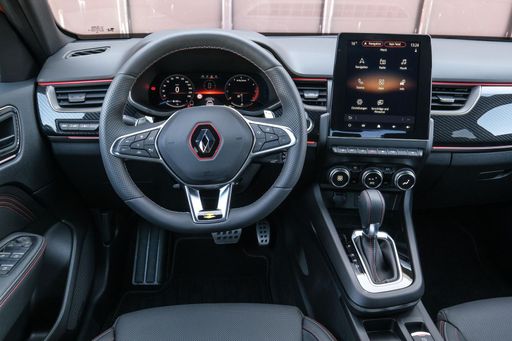
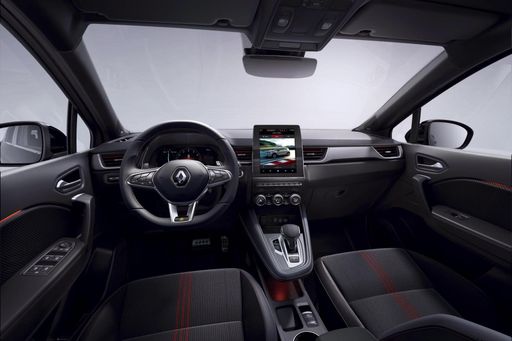
Technology is a strong suit for Renault, and both models come well-equipped. Both the Arkana and Captur feature Renault’s easy-to-use infotainment system, but the Arkana typically presents larger display options and a more premium feel. Safety technology like adaptive cruise control, lane-keeping assist, and automated emergency braking is available across both lineups, underlining Renault’s commitment to driver and passenger safety.

Captur

Practicality and Comfort

The Arkana's larger footprint provides slightly more interior space, particularly appealing to families or those needing extra cargo capacity. However, the Captur’s clever use of its more compact space includes key features like sliding rear seats, which can alter the balance between passenger room and boot space as required.

Arkana

Conclusion

In essence, the choice between the Renault Arkana and Renault Captur hinges on your individual needs. If you prioritize style and extra room, the Arkana emerges as the more appealing candidate. Conversely, the Captur offers impressive flexibility, particularly for urban driving, with diverse engine options that include environmentally friendly solutions.

Ultimately, both the Arkana and Captur encapsulate Renault’s dedication to providing vehicles that represent excellent value, innovative technology, and a drive that’s as enjoyable as it is efficient. Whichever model you choose, you’ll be investing in a well-crafted crossover that’s designed to meet modern driving demands.

Here’s where it gets real: The technical differences in detail

Arkana

Costs and Efficiency:

When it comes to price and running costs, the biggest differences usually appear. This is often where you see which car fits your budget better in the long run.

Renault Captur is clearly cheaper – starting at 21,100 £ , while the Renault Arkana costs 28,500 £ . That’s a price difference of around 7,329 £.

Fuel consumption also shows a difference: the Renault Captur uses 4.4 L/100km and is barely more efficient than the Renault Arkana with 4.7 L/100km. The difference is about 0.3 L/100km.

Captur

Engine and Performance:

Power, torque and acceleration are the classic benchmarks for car enthusiasts – and here, some clear differences start to show.

When it comes to engine power, the Renault Captur offers very slightly more power – delivering 158 HP compared to 143 HP. That’s roughly 15 HP more horsepower.

When accelerating from 0 to 100 km/h, the Renault Captur is visibly quicker – completing the sprint in 8.9 s, while the Renault Arkana takes 10.8 s. That’s about 1.9 s quicker.

There’s also a difference in torque: the Renault Captur delivers markedly more torque with 265 Nm compared to 205 Nm. That’s about 60 Nm more.

Arkana

Space and Everyday Use:

Whether family car or daily driver – which one offers more room, flexibility and comfort?

Both vehicles offer seating for 5 people.

In terms of curb weight, Renault Captur is a bit lighter – 1,323 kg compared to 1,510 kg. The difference is around 187 kg.

When it comes to payload, the Renault Captur carries marginally more – 453 kg compared to 451 kg. That’s a difference of about 2 kg.

Who wins the race in the data check?

The Renault Captur stands well ahead of its rival in the objective data comparison.
This result only shows which model scores more points on paper – not which of the two cars feels right for you.

from £21,100
Captur

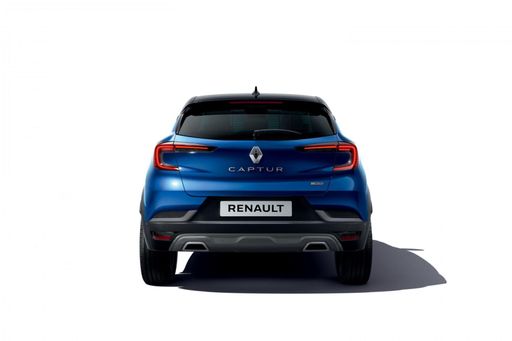
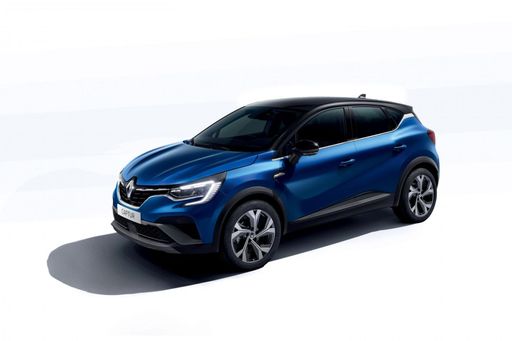
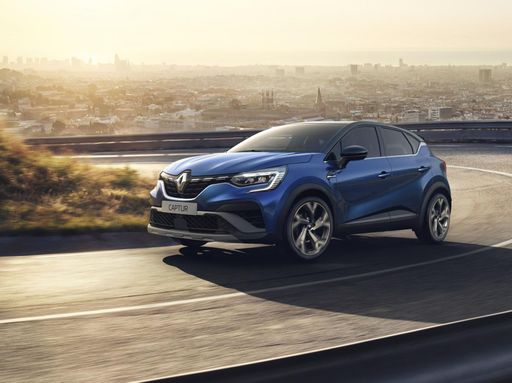
Renault Captur

  • Engine Type : Full Hybrid, Petrol, Petrol MHEV
  • Transmission : Automatic, Manuel
  • Drive Type : Front-Wheel Drive
  • Power HP : 115 - 158 HP
  • Consumption L/100km : 4.4 - 6 L/100km
Renault Arkana
Renault Captur

Costs and Consumption

View detailed analysis

Engine and Performance

View detailed analysis

Dimensions and Body

View detailed analysis

Renault Arkana

The Arkana stands out with its striking coupe-SUV design, blending sporty aesthetics with practicality. Its bold silhouette and high ride height offer a unique presence on the road, attracting attention wherever it goes. Inside, the Arkana combines modern technology with comfort, making it a versatile choice for both city driving and weekend getaways.

details

Renault Captur

The Renault Captur is a cheeky little crossover that pairs city-friendly agility with a roomy, well-thought-out cabin and enough style to turn heads at the lights. It’s a sensible choice for buyers who want practical versatility and a dash of personality on their daily drives, without taking itself too seriously.

details
Renault Arkana
Renault Captur

Costs and Consumption

Price
28,500 - 31,900 £
Price
21,100 - 28,400 £
Consumption L/100km
4.7 L/100km
Consumption L/100km
4.4 - 6 L/100km
Consumption kWh/100km
-
Consumption kWh/100km
-
Electric Range
-
Electric Range
-
Battery Capacity
-
Battery Capacity
-
co2
106 g/km
co2
100 - 137 g/km
Fuel tank capacity
-
Fuel tank capacity
48 L

Dimensions and Body

Body Type
SUV
Body Type
SUV
Seats
5
Seats
5
Doors
-
Doors
5
Curb weight
1,510 kg
Curb weight
1,323 - 1,441 kg
Trunk capacity
-
Trunk capacity
326 - 422 L
Length
-
Length
4,239 mm
Width
1,821 mm
Width
1,797 mm
Height
-
Height
1,575 mm
Max trunk capacity
-
Max trunk capacity
1,363 L
Payload
451 kg
Payload
447 - 453 kg

Engine and Performance

Engine Type
Full Hybrid
Engine Type
Full Hybrid, Petrol, Petrol MHEV
Transmission
Automatic
Transmission
Automatic, Manuel
Transmission Detail
Automatic Gearbox
Transmission Detail
Automatic Gearbox, Manual Gearbox, Dual-Clutch Automatic
Drive Type
Front-Wheel Drive
Drive Type
Front-Wheel Drive
Power HP
143 HP
Power HP
115 - 158 HP
Acceleration 0-100km/h
10.8 s
Acceleration 0-100km/h
8.9 - 12.3 s
Max Speed
-
Max Speed
180 km/h
Torque
205 Nm
Torque
160 - 265 Nm
Number of Cylinders
4
Number of Cylinders
3 - 4
Power kW
105 kW
Power kW
84 - 116 kW
Engine capacity
1,598 cm3
Engine capacity
1,199 - 1,789 cm3

General

Model Year
2,025
Model Year
2,025
CO2 Efficiency Class
C
CO2 Efficiency Class
C, D, E
Brand
Renault
Brand
Renault
DriveDuel uses data analysis and artificial intelligence to evaluate vehicle data and create content. Content is regularly reviewed and improved. The displayed prices are estimates based on German list prices, adjusted to the respective country’s VAT. Country-specific registration taxes are not included. This information is not legally binding.