VS

Audi Q3 vs Audi Q6 e-tron comparison

Compare performance (272 HP vs 490 HP), boot space and price (38,200 £ vs 54,400 £ ) at a glance. Find out which car is the better choice for you – Audi Q3 or Audi Q6 e-tron?

Audi Q3 vs Audi Q6 e-tron: Key differences

Audi Q3

5 (1 Reviews)
rate
  • significantly cheaper
  • clearly lighter

Audi Q6 e-tron

4.9 (3 Reviews)
rate
  • significantly more power
  • considerably more electric range
  • markedly quicker 0–100 km/h
  • barely more trunk space

All details on performance, efficiency, range and trunk space can be found in the technical comparison below – including user reviews for both models.

Q3

Introducing the Audi Q3 vs Audi Q6 e-tron: Fossil Fuel Meets Electric Innovation

In the competitive world of SUVs, Audi has offered two remarkable contenders: the robust Audi Q3 and the innovative Audi Q6 e-tron. Both cater to different driving needs and experiences, with the Q3 focusing on traditional internal combustion power and the Q6 e-tron embracing a fully electric future. Here’s how they stack up against each other in terms of performance, technology, and design.
Q6 e-tron

Performance Showdown: Combustion vs Electric

The Audi Q3 enters the arena with a variety of petrol and diesel engine options. With power outputs ranging from 150 HP to 245 HP and torque figures up to 400 Nm, the Q3 is built for versatility. It offers both front-wheel and all-wheel drive, with a choice between manual and dual-clutch automatic transmissions. Its top speed reaches up to 237 km/h with an acceleration of 7.3 seconds from 0 to 100 km/h in its sportiest configuration.

On the other hand, the Audi Q6 e-tron presents a game-changing electric performance. Sporting an electric drivetrain with power ranging from 292 HP to a staggering 516 HP, it offers a unique driving experience characterized by instantaneous torque delivery peaking at 855 Nm. The Q6 e-tron's acceleration can be as quick as 4.3 seconds for the 0-100 km/h sprint, outdoing many traditional engines with a maximum speed of 230 km/h.

Q3

Fuel Efficiency vs Electric Range

The Q3’s traditional engines come with varying fuel consumption levels, ranging from 5.5 to 8.5 L/100km, demonstrating a commendable balance of performance and efficiency for an SUV of its size. For those prioritizing lower emissions and fuel costs, the Q6 e-tron shines with zero emissions and a notable range between 529 km to 656 km on a single charge, depending on the variant chosen. Its battery capacities span from 75.8 kWh to 94.9 kWh, promising long-range capability without compromising power.

Q6 e-tron

Technical Innovations and Features

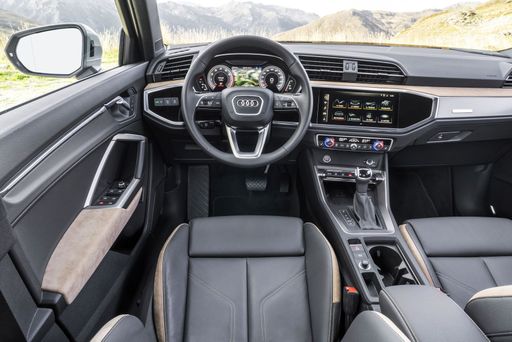
Technological advancements are pivotal in both models. The Q3 provides a seamless driving experience with its sophisticated dual-clutch automatic system and intelligent all-wheel drive technology. Interior tech includes digital instrument clusters and advanced connectivity options to enhance driver engagement.

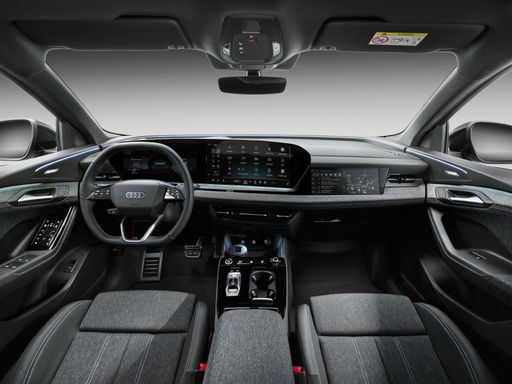
Conversely, the Q6 e-tron boasts cutting-edge electric innovations. With an advanced reduction gearbox and state-of-the-art battery technology, it is designed for both efficiency and power. Inside, the Q6 offers digital displays and an intuitive infotainment system, augmented reality head-up displays, and driver assistance features reflecting the peak of automotive innovation. Its electric architecture even allows for over-the-air updates, keeping its tech up-to-date effortlessly.

Q3

Design and Practicality

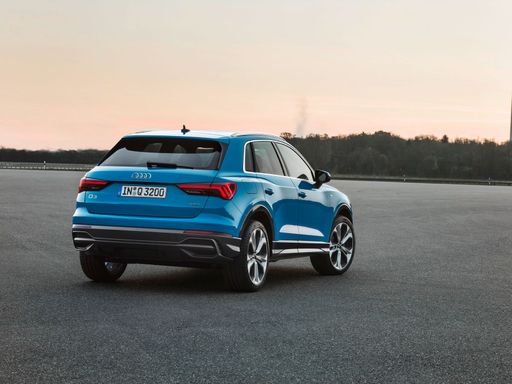
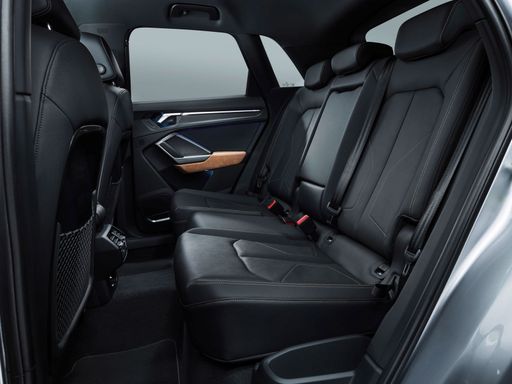
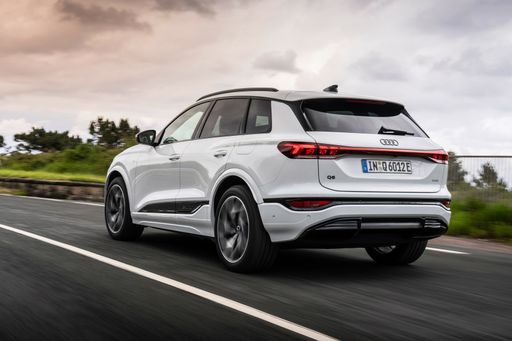
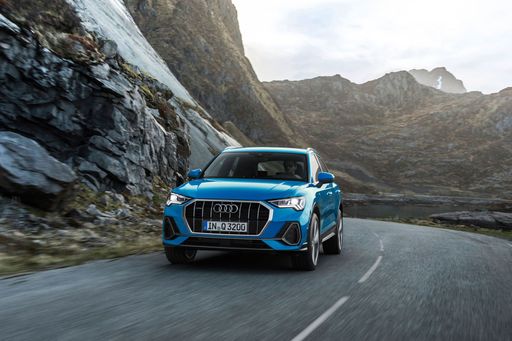
Both vehicles embody the distinguished Audi aesthetic. The Q3, measuring 4484 mm in length, offers a practical trunk capacity of 530 liters, making it a suitable family vehicle with ample interior space. Its dimensions ensure agility in urban settings without compromising interior comfort.

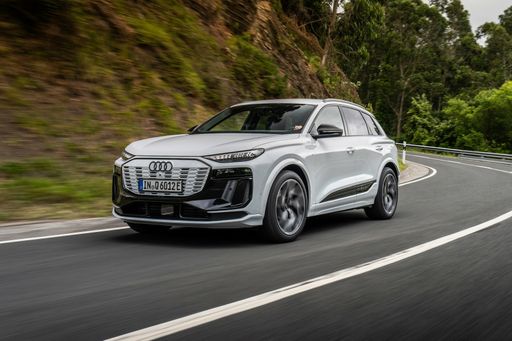
Meanwhile, the Q6 e-tron, at 4771 mm in length, slightly larger than the Q3, focuses on luxury and practicality, with a trunk capacity ranging from 499 to 526 liters. Its bold design merges aerodynamic efficiency with style, embodying the future of SUVs.

Q6 e-tron

Final Verdict: Tradition vs Future

Choosing between the Q3 and Q6 e-tron depends on the driver’s priorities. For those who appreciate traditional engine roars and familiar DNA, the Audi Q3 is an ideal option. However, for forward-looking drivers who crave the immediacy of electric power and sustainability, the Q6 e-tron is undoubtedly the smarter choice. Each car represents the best of Audi’s engineering, showcasing a commitment to excellence whether in combustion or electric domains.

Here’s where it gets real: The technical differences in detail

Q3

Costs and Efficiency:

When it comes to price and running costs, the biggest differences usually appear. This is often where you see which car fits your budget better in the long run.

Audi Q3 is significantly cheaper – starting at 38,200 £ , while the Audi Q6 e-tron costs 54,400 £ . That’s a price difference of around 16,200 £.

As for electric range, the Audi Q6 e-tron offers considerably more range – reaching up to 656 km, about 537 km more than the Audi Q3.

Q6 e-tron

Engine and Performance:

Under the bonnet, it becomes clear which model is tuned for sportiness and which one takes the lead when you hit the accelerator.

When it comes to engine power, the Audi Q6 e-tron offers significantly more power – delivering 490 HP compared to 272 HP. That’s roughly 218 HP more horsepower.

When accelerating from 0 to 100 km/h, the Audi Q6 e-tron is markedly quicker – completing the sprint in 4.4 s, while the Audi Q3 takes 5.7 s. That’s about 1.3 s quicker.

There’s also a difference in torque: the Audi Q6 e-tron delivers considerably more torque with 855 Nm compared to 400 Nm. That’s about 455 Nm more.

Q3

Space and Everyday Use:

Beyond pure performance, interior space and usability matter most in daily life. This is where you see which car is more practical and versatile.

Both vehicles offer seating for 5 people.

In terms of curb weight, Audi Q3 is clearly lighter – 1,635 kg compared to 2,200 kg. The difference is around 565 kg.

Looking at boot space, the Audi Q6 e-tron offers barely more boot space – 526 L compared to 488 L. That’s a difference of about 38 L.

When it comes to payload, the Audi Q6 e-tron carries only slightly more – 540 kg compared to 535 kg. That’s a difference of about 5 kg.

Who wins the race in the data check?

The Audi Q6 e-tron is clearly superior overall in the objective data comparison.
This result only shows which model scores more points on paper – not which of the two cars feels right for you.

from £54,400
Q6 e-tron

Audi Q6 e-tron

  • Engine Type : Electric
  • Transmission : Automatic
  • Drive Type : Rear-Wheel Drive, All-Wheel Drive
  • Power HP : 252 - 490 HP
  • Consumption kWh/100km : 15.6 - 18.4 kWh/100km
  • Electric Range : 529 - 656 km
Audi Q3
Audi Q6 e-tron

Costs and Consumption

View detailed analysis

Engine and Performance

View detailed analysis

Dimensions and Body

View detailed analysis

Audi Q3

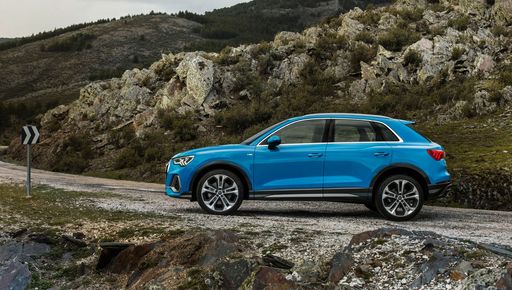
The Audi Q3 feels like a grown-up compact SUV with premium polish and city-friendly agility, the sort of car that makes weekend escapes and daily commutes equally satisfying. Inside, you get quality materials and smart packaging that keep things practical without skimping on style, so it’s an easy pick for buyers who want luxury without the drama.

details

Audi Q6 e-tron

The Audi Q6 e-tron balances sleek, coupe-like styling with a roomy, upscale interior that feels modern without being showy. It delivers refined electric performance and smart tech that make daily driving effortless — the sort of EV that might make petrolheads grudgingly admit they fancy the future.

details
Audi Q3
Audi Q6 e-tron

Costs and Consumption

Price
38,200 - 52,900 £
Price
54,400 - 82,500 £
Consumption L/100km
1.7 - 8.6 L/100km
Consumption L/100km
-
Consumption kWh/100km
-
Consumption kWh/100km
15.6 - 18.4 kWh/100km
Electric Range
118 - 119 km
Electric Range
529 - 656 km
Battery Capacity
-
Battery Capacity
75.8 - 94.9 kWh
co2
39 - 195 g/km
co2
0 g/km
Fuel tank capacity
-
Fuel tank capacity
-

Dimensions and Body

Body Type
SUV
Body Type
SUV
Seats
5
Seats
5
Doors
-
Doors
5
Curb weight
1,635 - 1,900 kg
Curb weight
2,200 - 2,425 kg
Trunk capacity
375 - 488 L
Trunk capacity
499 - 526 L
Length
-
Length
4,771 mm
Width
1,859 mm
Width
1,939 - 1,965 mm
Height
-
Height
1,665 - 1,685 mm
Max trunk capacity
-
Max trunk capacity
1,361 - 1,529 L
Payload
505 - 535 kg
Payload
540 kg

Engine and Performance

Engine Type
Petrol MHEV, Petrol, Plugin Hybrid, Diesel
Engine Type
Electric
Transmission
Automatic
Transmission
Automatic
Transmission Detail
Dual-Clutch Automatic
Transmission Detail
Reduction Gearbox
Drive Type
Front-Wheel Drive, All-Wheel Drive
Drive Type
Rear-Wheel Drive, All-Wheel Drive
Power HP
150 - 272 HP
Power HP
252 - 490 HP
Acceleration 0-100km/h
5.7 - 9.2 s
Acceleration 0-100km/h
4.4 - 7.6 s
Max Speed
-
Max Speed
210 - 230 km/h
Torque
250 - 400 Nm
Torque
450 - 855 Nm
Number of Cylinders
4
Number of Cylinders
-
Power kW
110 - 200 kW
Power kW
185 - 360 kW
Engine capacity
1,498 - 1,984 cm3
Engine capacity
-

General

Model Year
2,025
Model Year
2,024 - 2,025
CO2 Efficiency Class
E, G, B
CO2 Efficiency Class
A
Brand
Audi
Brand
Audi
DriveDuel uses data analysis and artificial intelligence to evaluate vehicle data and create content. Content is regularly reviewed and improved. The displayed prices are estimates based on German list prices, adjusted to the respective country’s VAT. Country-specific registration taxes are not included. This information is not legally binding.