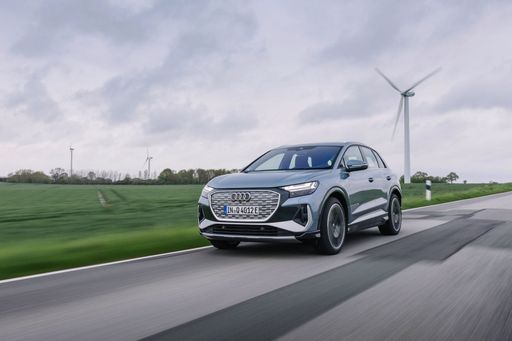
@ Audi AG
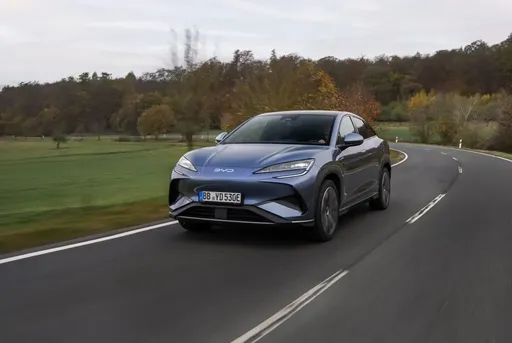
@ BYD Auto / BYD Global Media
VS

Audi Q4 e-tron vs BYD Sealion 7 – Which car suits you better?

Two cars, one duel: Audi Q4 e-tron meets BYD Sealion 7.
Which one wins in performance, efficiency and value for money? Find out now!

Q4 e-tron @ Audi AG

Ahead of the Curve: Audi Q4 e-tron vs. BYD Sealion 7

The electrified SUV segment is rapidly expanding, and two new contenders have emerged to capture the attention of the eco-conscious yet performance-driven consumers: the Audi Q4 e-tron and the BYD Sealion 7. Both models distinctly represent the innovation driver behind electric vehicles today, flaunting unique technical aspects, performance capabilities, and design philosophies.

Sealion 7 @ BYD Auto / BYD Global Media

Design and Dimensions: Carving Out a Unique Niche

The Audi Q4 e-tron embraces a classic yet futuristic aesthetic known to the brand, characterized by a length of 4588 mm, a width of 1865 mm, and a height of up to 1632 mm. It's all about a bold SUV stance balanced with sleek, aerodynamic lines, perfectly tailored for urban landscapes and highways alike.

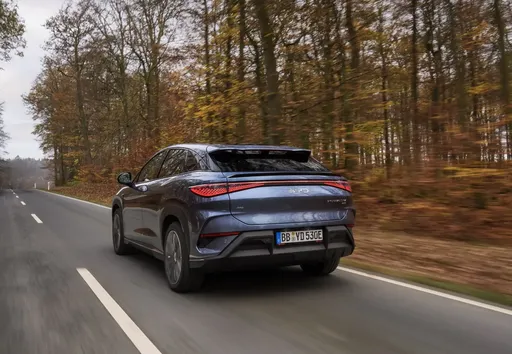
Meanwhile, the BYD Sealion 7 boasts a more spacious profile with a length of 4830 mm and a width of 1925 mm, albeit slightly shorter with a height of 1620 mm. This results in a commanding road presence, positioning it between the dimensions of mid-size and full-size SUVs.

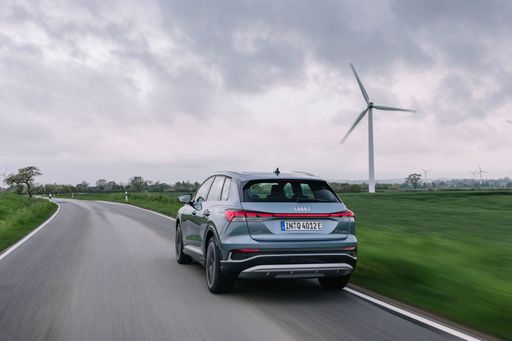
Q4 e-tron @ Audi AG

Performance: Instant Power Unleashed

When it comes to performance, the Audi Q4 e-tron offers versatility with a range of power outputs from 170 to an impressive 340 HP. It accelerates from 0 to 100 km/h in as quick as 5.4 seconds, powered by electric motors with torque reaching up to 679 Nm. The Q4 e-tron is available with both rear-wheel drive and all-wheel drive, catering to varying driving preferences.

The BYD Sealion 7, on the other hand, steps on the competition with a higher power output range from 313 to 530 HP and torque up to 690 Nm. Its top performance version dashes from 0 to 100 km/h in just 4.5 seconds, providing adrenaline-pumping acceleration. The Sealion 7 extends its prowess to an all-wheel-drive variant as well, ensuring adaptability across different terrains.

Sealion 7 @ BYD Auto / BYD Global Media

Efficiency and Range: Journey Further

In the realm of energy efficiency, Audi Q4 e-tron's consumption ranges from 15.9 to 17.4 kWh/100km, allowing for an admirable electric range up to 554 km, which is among the top in its class. This range advantage gives drivers the freedom to embark on longer journeys with fewer recharging stops.

The BYD Sealion 7 offers a competitive range as well, with an electric consumption rate from 19.9 to 21.9 kWh/100km and a maximum range up to 502 km. Although slightly less efficient than the Q4 e-tron, its performance dynamics largely compensate for the marginally higher consumption.

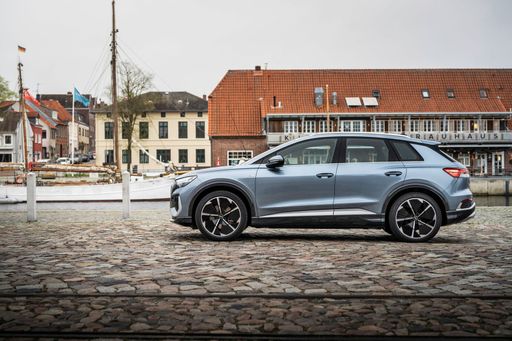
Q4 e-tron @ Audi AG

Interior and Cargo: Luxurious and Practical

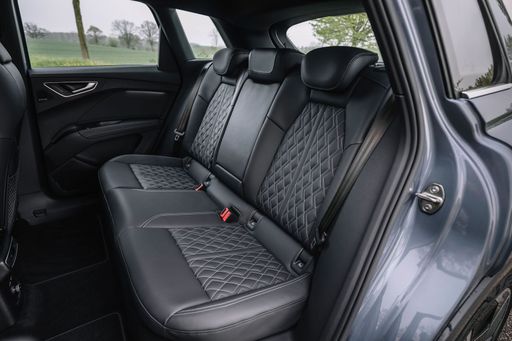
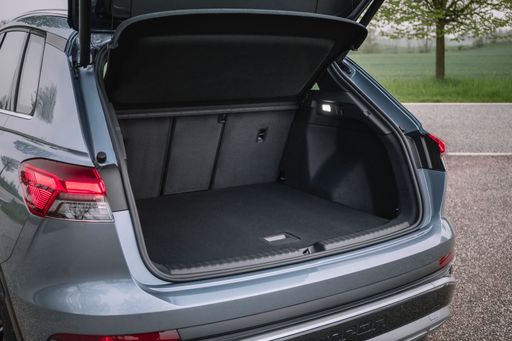
Inside, both vehicles accommodate five passengers comfortably but differ in their approach to interior space. The Audi Q4 e-tron maximizes its trunk space with a capacity of up to 535 liters, while the BYD Sealion 7 offers 520 liters, demonstrating a nuanced focus on cargo versatility.

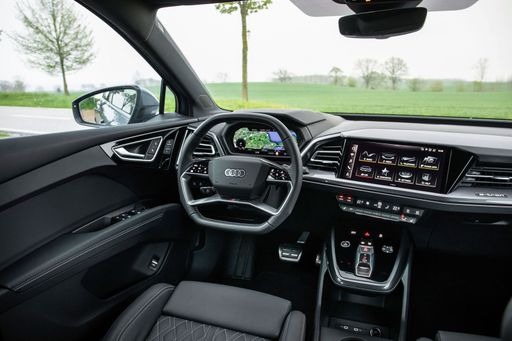
Innovation drives these models, as they incorporate top-end infotainment systems and smart connectivity features tailored for modern tech-savvy lifestyles; whether it's Audi’s MMI suite or BYD's intelligent cockpit interface, both ensure technology is well-integrated into user experience.

Sealion 7 @ BYD Auto / BYD Global Media

Conclusion: Two Titans Fighting for the Future

In summary, the Audi Q4 e-tron and the BYD Sealion 7 each bring something unique to the electric SUV market. The Q4 e-tron is a fine balance between efficiency, luxury, and performance, while the Sealion 7 edges ahead with its power and size. Potential buyers will find favor with either option depending on their primary needs—be it range, power, or space—proving that the future of automotive innovation is both diverse and exciting.

Here’s where it gets real: The technical differences in detail

Q4 e-tron @ Audi AG

Costs and Efficiency:

Looking at overall running costs, both models reveal some interesting differences in everyday economy.

Audi Q4 e-tron has a minimal advantage in terms of price – it starts at 39600 £, while the BYD Sealion 7 costs 42800 £. That’s a price difference of around 3291 £.

In terms of energy consumption, the advantage goes to the Audi Q4 e-tron: with 15.90 kWh per 100 km, it’s distinct more efficient than the BYD Sealion 7 with 19.90 kWh. That’s a difference of about 4 kWh.

As for range, the Audi Q4 e-tron performs slight better – achieving up to 554 km, about 52 km more than the BYD Sealion 7.

Engine and Performance:

Power, torque and acceleration are the classic benchmarks for car enthusiasts – and here, some clear differences start to show.

When it comes to engine power, the BYD Sealion 7 has a clearly perceptible edge – offering 530 HP compared to 340 HP. That’s roughly 190 HP more horsepower.

In acceleration from 0 to 100 km/h, the BYD Sealion 7 is noticeable quicker – completing the sprint in 4.50 s, while the Audi Q4 e-tron takes 5.40 s. That’s about 0.90 s faster.

In terms of top speed, the BYD Sealion 7 performs somewhat better – reaching 215 km/h, while the Audi Q4 e-tron tops out at 180 km/h. The difference is around 35 km/h.

There’s also a difference in torque: BYD Sealion 7 pulls barely noticeable stronger with 690 Nm compared to 679 Nm. That’s about 11 Nm difference.

Space and Everyday Use:

Whether family car or daily driver – which one offers more room, flexibility and comfort?

Both vehicles offer seating for 5 people.

In curb weight, Audi Q4 e-tron is barely noticeable lighter – 2035 kg compared to 2225 kg. The difference is around 190 kg.

In terms of boot space, the Audi Q4 e-tron offers slight more room – 535 L compared to 520 L. That’s a difference of about 15 L.

In maximum load capacity, the BYD Sealion 7 performs a bit better – up to 1789 L, which is about 299 L more than the Audi Q4 e-tron.

When it comes to payload, Audi Q4 e-tron distinct takes the win – 515 kg compared to 410 kg. That’s a difference of about 105 kg.

Who wins the race?

The BYD Sealion 7 proves to be secures victory with a clear margin and therefore becomes our DriveDuel Champion!
BYD Sealion 7 is the better all-rounder in this comparison.

from about £42,800
Sealion 7 @ BYD Auto / BYD Global Media

BYD Sealion 7

  • Engine Type : Electric
  • Transmission : Automatic
  • Drive Type : Rear-Wheel Drive, All-Wheel Drive
  • Power HP : 313 - 530 HP
  • Consumption kWh/100km : 19.9 - 21.9 kWh
  • Electric Range : 456 - 502 km

Audi Q4 e-tron

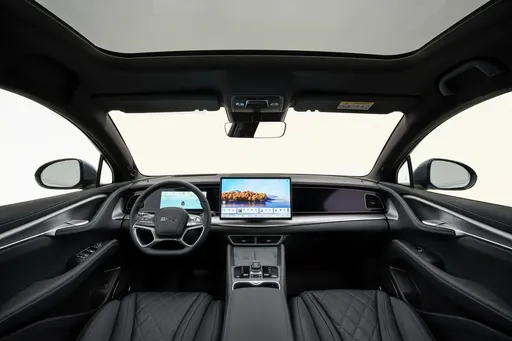
The Audi Q4 e-tron brings Audi polish into the electric crossover scene, pairing a sleek exterior with a refined, airy interior that makes everyday driving feel distinctly premium. It’s an easy-to-live-with EV that balances comfort and real-world usability with intuitive tech, making it a smart choice for buyers who want electric mobility without giving up Audi character — and yes, it still looks good in the driveway.

details

BYD Sealion 7

5 (1)
rate

The Sealion 7 captivates with its striking design and impressive performance that appeals to both enthusiasts and casual drivers alike. With a focus on comfort and advanced technology, this model redefines the driving experience, making every journey enjoyable. Its sleek silhouette coupled with an innovative interior showcases the perfect blend of style and functionality.

details
Audi Q4 e-tron
BYD Sealion 7
Q4 e-tron @ Audi AG
Sealion 7 @ BYD Auto / BYD Global Media

Costs and Consumption

Price
39600 - 58800 £
Price
42800 - 52300 £
Consumption L/100km
-
Consumption L/100km
-
Consumption kWh/100km
15.9 - 17.4 kWh
Consumption kWh/100km
19.9 - 21.9 kWh
Electric Range
406 - 554 km
Electric Range
456 - 502 km
Battery Capacity
59 - 77 kWh
Battery Capacity
-
co2
0 g/km
co2
0 g/km
Fuel tank capacity
-
Fuel tank capacity
-

Dimensions and Body

Body Type
SUV
Body Type
SUV
Seats
5
Seats
5
Doors
5
Doors
4
Curb weight
2035 - 2235 kg
Curb weight
2225 - 2435 kg
Trunk capacity
520 - 535 L
Trunk capacity
520 L
Length
4588 mm
Length
4830 mm
Width
1865 mm
Width
1925 mm
Height
1614 - 1632 mm
Height
1620 mm
Max trunk capacity
1460 - 1490 L
Max trunk capacity
1789 L
Payload
505 - 515 kg
Payload
410 kg

Engine and Performance

Engine Type
Electric
Engine Type
Electric
Transmission
Automatic
Transmission
Automatic
Transmission Detail
Reduction Gearbox
Transmission Detail
Reduction Gearbox
Drive Type
Rear-Wheel Drive, All-Wheel Drive
Drive Type
Rear-Wheel Drive, All-Wheel Drive
Power HP
204 - 340 HP
Power HP
313 - 530 HP
Acceleration 0-100km/h
5.4 - 8.1 s
Acceleration 0-100km/h
4.5 - 6.7 s
Max Speed
160 - 180 km/h
Max Speed
215 km/h
Torque
310 - 679 Nm
Torque
380 - 690 Nm
Number of Cylinders
-
Number of Cylinders
-
Power kW
150 - 250 kW
Power kW
230 - 390 kW
Engine capacity
-
Engine capacity
-

General

Model Year
2023 - 2025
Model Year
2024
CO2 Efficiency Class
A
CO2 Efficiency Class
A
Brand
Audi
Brand
BYD
What drive types are available for the Audi Q4 e-tron?

The Audi Q4 e-tron is offered with Rear-Wheel Drive or All-Wheel Drive.

The prices and data displayed are estimates based on German list prices and may vary by country. This information is not legally binding.