VS

Audi Q4 e-tron vs Peugeot 5008 comparison

Compare performance (340 HP vs 325 HP), boot space and price (39,600 £ vs 37,600 £ ) at a glance. Find out which car is the better choice for you – Audi Q4 e-tron or Peugeot 5008?

Audi Q4 e-tron vs Peugeot 5008: Key differences

Audi Q4 e-tron

4.9 (2 Reviews)
rate
  • marginally more power
  • a bit more efficient
  • clearly quicker 0–100 km/h
  • noticeably more trunk space

Peugeot 5008

4.7 (1 Reviews)
rate
  • barely cheaper
  • a bit more electric range
  • slightly lighter

All details on performance, efficiency, range and trunk space can be found in the technical comparison below – including user reviews for both models.

By Achim Sedelmaier

Q4 e-tron

The Battle of the SUVs: Audi Q4 e-tron vs. Peugeot 5008

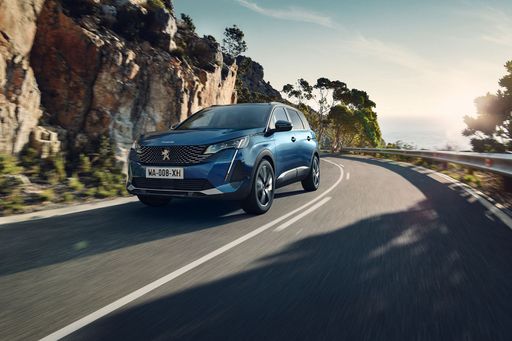
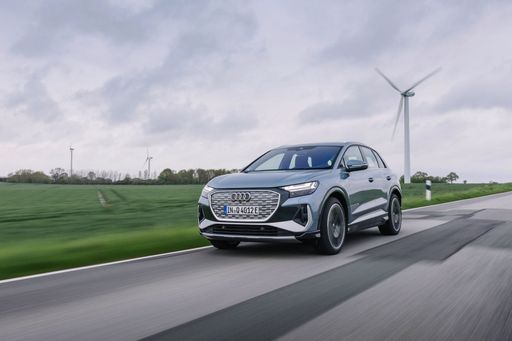
In today's bustling automotive landscape, the SUV segment is fiercely competitive. Two notable contenders vying for attention are the electric sensation, the Audi Q4 e-tron, and the versatile Peugeot 5008. Both vehicles cater to the demand for sustainability and practicality in unique ways, showcasing distinct innovations designed to capture the hearts of SUV enthusiasts.
5008

Performance and Efficiency

The Audi Q4 e-tron, available with either rear-wheel or all-wheel drive, offers a range of power outputs, from 170 HP to an impressive 340 HP. This electric SUV features a varying electric range from 351 km to a substantial 554 km, making it a versatile choice for both city drives and longer journeys. Its CO2 emissions stand at an admirable zero, thanks to its fully electric powertrain.

In contrast, the Peugeot 5008 presents a broader range of powertrains, including a petrol mild hybrid, plug-in hybrid, and an all-electric option. This flexibility allows for power configurations ranging from 136 HP to 231 HP. Although the petrol version emits up to 130 g/km of CO2, the electric variant boast a commendable zero emissions profile and offers an impressive range of up to 664 km.

Q4 e-tron

Design and Dimensions

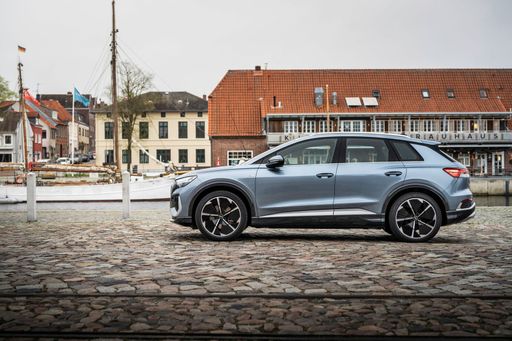
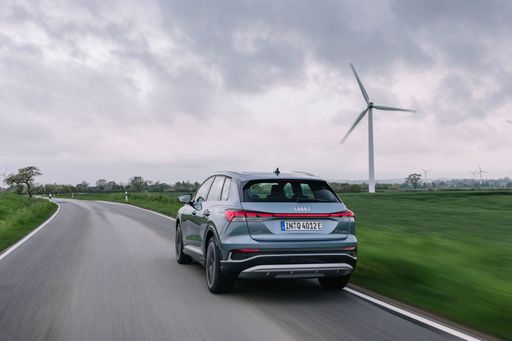
Design-wise, both SUVs exhibit modern aesthetics tailored to their respective brand philosophies. The Audi Q4 e-tron's dimensions reflect its compact, yet spacious design, emphasizing aerodynamics and a sleek silhouette with a length of 4588 mm, width of 1865 mm, and a height that varies slightly between 1614 mm and 1632 mm.

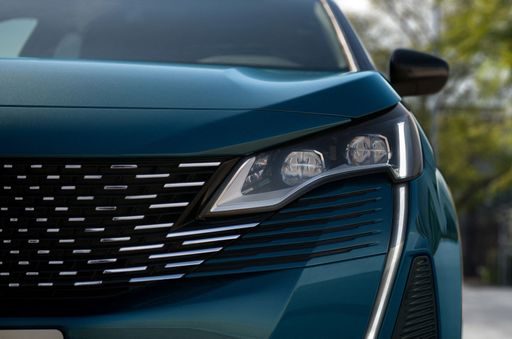
The Peugeot 5008, slightly larger, stretches at 4791 mm in length, 1895 mm in width, and stands taller at 1694 mm. This increased size contributes to its spacious interior, making it an attractive option for larger families or those seeking extra cargo space.

5008

Interior and Capacity

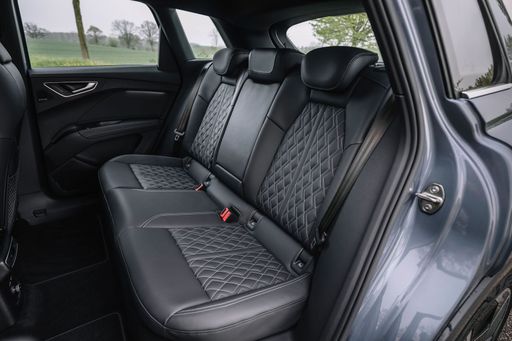
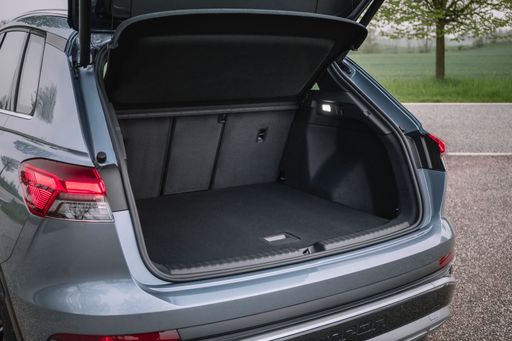
The Audi Q4 e-tron's interior offers seating for five, prioritizing luxury and advanced technology within its comfortable cabin. It features a generous trunk capacity of up to 535 liters, accommodating various storage needs without compromising passenger comfort.

On the other hand, the Peugeot 5008 offers a unique advantage with its seating capacity for up to seven passengers, without sacrificing luggage space, thanks to its 748-liter trunk. This makes it a standout choice for those needing additional passenger room for family or travel purposes.

Q4 e-tron

Technology and Innovations

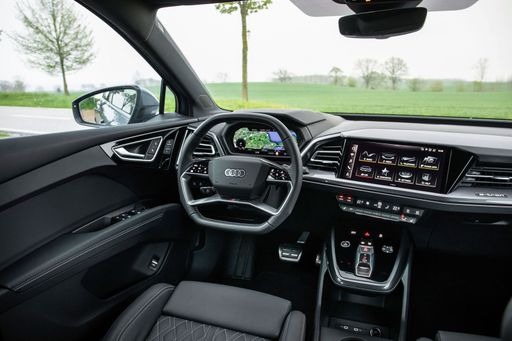
When it comes to technology, the Audi Q4 e-tron is equipped with a sophisticated digital cockpit and a list of driver assists that make daily commutes and long journeys both safe and enjoyable. Its commitment to sustainable travel is underscored by its A-class CO2 efficiency rating.

The Peugeot 5008 complements its innovative powertrains with modern connectivity options and an intuitive infotainment system that caters to tech-savvy customers. Different models come with varied efficiency ratings, ranging up to A-class for its eco-friendly variants.

5008

Final Thoughts

Both the Audi Q4 e-tron and the Peugeot 5008 emphasize that the future of SUVs includes electrification and versatility. Audi offers a luxury-focused experience with its Q4 e-tron, delivering performance and modern elegance. Peugeot, on the other hand, provides flexibility and practicality, appealing to both family-focused drivers and tech enthusiasts.

In the end, the choice between these two largely depends on what the driver values more — be it luxury and electrified performance, or versatility and passenger capacity. Both vehicles, however, signify the exciting direction the SUV segment is heading towards in the realm of innovation and sustainability.

Here’s where it gets real: The technical differences in detail

Q4 e-tron

Costs and Efficiency:

Looking at overall running costs, both models reveal some interesting differences in everyday economy.

Peugeot 5008 is barely cheaper – starting at 37,600 £ , while the Audi Q4 e-tron costs 39,600 £ . That’s a price difference of around 1,963 £.

In terms of energy consumption, the Audi Q4 e-tron is a bit more efficient: consuming 15.9 kWh/100km compared to 17.8 kWh/100km for the Peugeot 5008. That’s a difference of about 1.9 kWh/100km.

As for electric range, the Peugeot 5008 offers a bit more range – reaching up to 669 km, about 115 km more than the Audi Q4 e-tron.

5008

Engine and Performance:

Power, torque and acceleration are the classic benchmarks for car enthusiasts – and here, some clear differences start to show.

When it comes to engine power, the Audi Q4 e-tron offers marginally more power – delivering 340 HP compared to 325 HP. That’s roughly 15 HP more horsepower.

When accelerating from 0 to 100 km/h, the Audi Q4 e-tron is clearly quicker – completing the sprint in 5.4 s, while the Peugeot 5008 takes 6.5 s. That’s about 1.1 s quicker.

Looking at top speed, the Peugeot 5008 is only slightly faster – reaching 198 km/h, while the Audi Q4 e-tron tops out at 180 km/h. The difference is around 18 km/h.

There’s also a difference in torque: the Audi Q4 e-tron delivers visibly more torque with 679 Nm compared to 511 Nm. That’s about 168 Nm more.

Q4 e-tron

Space and Everyday Use:

Beyond pure performance, interior space and usability matter most in daily life. This is where you see which car is more practical and versatile.

Seats: Peugeot 5008 offers more seats – 7 vs 5.

In terms of curb weight, Peugeot 5008 is slightly lighter – 1,700 kg compared to 2,035 kg. The difference is around 335 kg.

Looking at boot space, the Audi Q4 e-tron offers noticeably more boot space – 535 L compared to 348 L. That’s a difference of about 187 L.

For maximum load capacity, the Peugeot 5008 offers clearly more capacity – up to 2,232 L, about 742 L more than the Audi Q4 e-tron.

When it comes to payload, the Peugeot 5008 carries moderately more – 640 kg compared to 515 kg. That’s a difference of about 125 kg.

Who wins the race in the data check?

The Peugeot 5008 holds a solid overall lead in the objective data comparison.
This result only shows which model scores more points on paper – not which of the two cars feels right for you.

from £37,600
5008

Peugeot 5008

  • Engine Type : Electric, Petrol MHEV, Plugin Hybrid
  • Transmission : Automatic
  • Drive Type : Front-Wheel Drive, All-Wheel Drive
  • Power HP : 145 - 325 HP
  • Consumption L/100km : 2.7 - 5.6 L/100km
  • Consumption kWh/100km : 17.8 - 18.6 kWh/100km
  • Electric Range : 78 - 669 km
Audi Q4 e-tron
Peugeot 5008

Costs and Consumption

View detailed analysis

Engine and Performance

View detailed analysis

Dimensions and Body

View detailed analysis

Audi Q4 e-tron

The Audi Q4 e-tron brings Audi polish into the electric crossover scene, pairing a sleek exterior with a refined, airy interior that makes everyday driving feel distinctly premium. It’s an easy-to-live-with EV that balances comfort and real-world usability with intuitive tech, making it a smart choice for buyers who want electric mobility without giving up Audi character — and yes, it still looks good in the driveway.

details

Peugeot 5008

The Peugeot 5008 blends Peugeot's sharp design with the space and versatility families actually need, wrapping clever packaging and a premium-feeling cabin in a crisp, SUV-like silhouette. It drives with more poise than you'd expect from a people carrier, serves up practical touches and flexible seating for everyday chaos, and still looks good when parked outside the school gates.

details
Audi Q4 e-tron
Peugeot 5008

Costs and Consumption

Price
39,600 - 58,800 £
Price
37,600 - 54,200 £
Consumption L/100km
-
Consumption L/100km
2.7 - 5.6 L/100km
Consumption kWh/100km
15.9 - 17.4 kWh/100km
Consumption kWh/100km
17.8 - 18.6 kWh/100km
Electric Range
406 - 554 km
Electric Range
78 - 669 km
Battery Capacity
77 kWh
Battery Capacity
0.4 - 96.9 kWh
co2
0 g/km
co2
0 - 127 g/km
Fuel tank capacity
-
Fuel tank capacity
55 L

Dimensions and Body

Body Type
SUV
Body Type
SUV
Seats
5
Seats
7
Doors
5
Doors
5
Curb weight
2,035 - 2,235 kg
Curb weight
1,700 - 2,344 kg
Trunk capacity
520 - 535 L
Trunk capacity
294 - 348 L
Length
4,588 mm
Length
4,791 mm
Width
1,865 mm
Width
1,895 mm
Height
1,614 - 1,632 mm
Height
1,694 mm
Max trunk capacity
1,460 - 1,490 L
Max trunk capacity
2,178 - 2,232 L
Payload
505 - 515 kg
Payload
596 - 640 kg

Engine and Performance

Engine Type
Electric
Engine Type
Electric, Petrol MHEV, Plugin Hybrid
Transmission
Automatic
Transmission
Automatic
Transmission Detail
Reduction Gearbox
Transmission Detail
Reduction Gearbox, Dual-Clutch Automatic
Drive Type
Rear-Wheel Drive, All-Wheel Drive
Drive Type
Front-Wheel Drive, All-Wheel Drive
Power HP
204 - 340 HP
Power HP
145 - 325 HP
Acceleration 0-100km/h
5.4 - 8.1 s
Acceleration 0-100km/h
6.5 - 10.2 s
Max Speed
180 km/h
Max Speed
170 - 198 km/h
Torque
310 - 679 Nm
Torque
230 - 511 Nm
Number of Cylinders
-
Number of Cylinders
3 - 4
Power kW
150 - 250 kW
Power kW
107 - 239 kW
Engine capacity
-
Engine capacity
1,199 - 1,598 cm3

General

Model Year
2,023 - 2,025
Model Year
2,024 - 2,026
CO2 Efficiency Class
A
CO2 Efficiency Class
A, D, B
Brand
Audi
Brand
Peugeot
DriveDuel uses data analysis and artificial intelligence to evaluate vehicle data and create content. Content is regularly reviewed and improved. The displayed prices are estimates based on German list prices, adjusted to the respective country’s VAT. Country-specific registration taxes are not included. This information is not legally binding.