VS

Audi Q6 e-tron vs Land Rover Range Rover Velar - Differences and prices compared

Compare performance (490 HP vs 404 HP), boot space and price (54400 £ vs 61900 £ ) at a glance. Find out which car is the better choice for you – Audi Q6 e-tron or Land Rover Range Rover Velar?

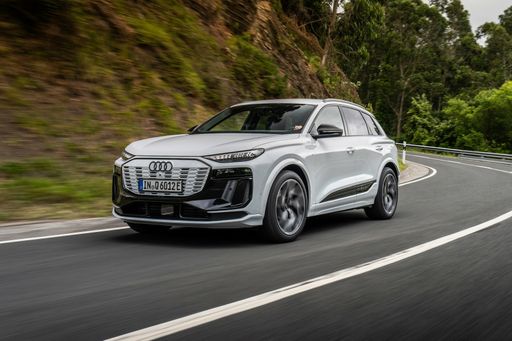
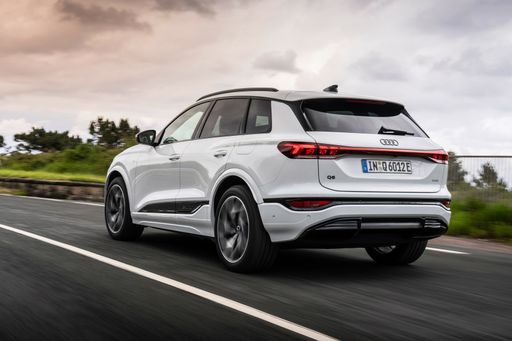
Audi Q6 e-tron

5 (2 Reviews)
rate

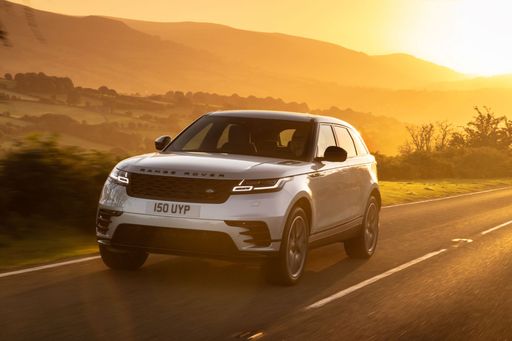
Land Rover Range Rover Velar

Here’s where it gets real: The technical differences in detail

Q6 e-tron

Costs and Efficiency:

Price and efficiency are often the first things buyers look at. Here it becomes clear which model has the long-term edge – whether at the pump, the plug, or in purchase price.

Audi Q6 e-tron has a to a small extent advantage in terms of price – it starts at 54400 £ , while the Land Rover Range Rover Velar costs 61900 £ . That’s a price difference of around 7457 £.

As for electric range, the Audi Q6 e-tron performs convincingly better – achieving up to 656 km, about 593 km more than the Land Rover Range Rover Velar.

Range Rover Velar

Engine and Performance:

Under the bonnet, it becomes clear which model is tuned for sportiness and which one takes the lead when you hit the accelerator.

When it comes to engine power, the Audi Q6 e-tron has a somewhat edge – offering 490 HP compared to 404 HP. That’s roughly 86 HP more horsepower.

In acceleration from 0 to 100 km/h, the Audi Q6 e-tron is evident quicker – completing the sprint in 4.40 s, while the Land Rover Range Rover Velar takes 5.40 s. That’s about 1 s faster.

In terms of top speed, the Land Rover Range Rover Velar performs hardly perceptible better – reaching 250 km/h, while the Audi Q6 e-tron tops out at 230 km/h. The difference is around 20 km/h.

There’s also a difference in torque: Audi Q6 e-tron pulls noticeable stronger with 855 Nm compared to 650 Nm. That’s about 205 Nm difference.

Q6 e-tron

Space and Everyday Use:

Whether family car or daily driver – which one offers more room, flexibility and comfort?

Both vehicles offer seating for 5 people.

In curb weight, Land Rover Range Rover Velar is slight lighter – 2003 kg compared to 2200 kg. The difference is around 197 kg.

In terms of boot space, the Land Rover Range Rover Velar offers hardly perceptible more room – 552 L compared to 526 L. That’s a difference of about 26 L.

In maximum load capacity, the Audi Q6 e-tron performs to a small extent better – up to 1529 L, which is about 171 L more than the Land Rover Range Rover Velar.

When it comes to payload, Land Rover Range Rover Velar slight takes the win – 587 kg compared to 540 kg. That’s a difference of about 47 kg.

Who wins the race in the data check?

The Audi Q6 e-tron is far ahead overall in the objective data comparison.
This result only shows which model scores more points on paper – not which of the two cars feels right for you.

Audi Q6 e-tron
Land Rover Range Rover Velar

Costs and Consumption

View detailed analysis

Engine and Performance

View detailed analysis

Dimensions and Body

View detailed analysis
from about £54,400
Q6 e-tron

Audi Q6 e-tron

  • Engine Type : Electric
  • Transmission : Automatic
  • Drive Type : Rear-Wheel Drive, All-Wheel Drive
  • Power HP : 252 - 490 HP
  • Consumption kWh/100km : 15.6 - 18.9 kWh
  • Electric Range : 482 - 656 km

Audi Q6 e-tron

5 (2 Reviews)
rate

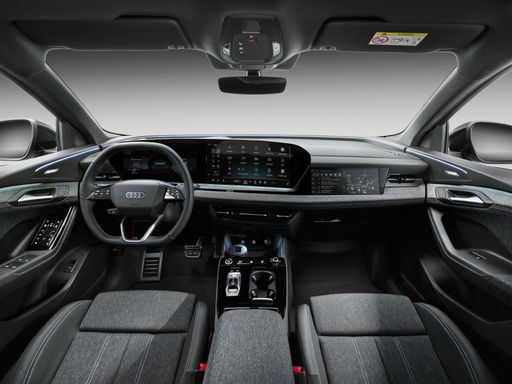
The Audi Q6 e-tron balances sleek, coupe-like styling with a roomy, upscale interior that feels modern without being showy. It delivers refined electric performance and smart tech that make daily driving effortless — the sort of EV that might make petrolheads grudgingly admit they fancy the future.

details

Land Rover Range Rover Velar

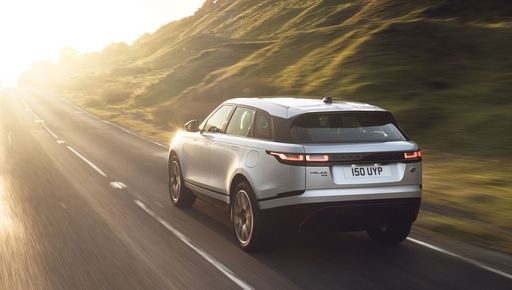
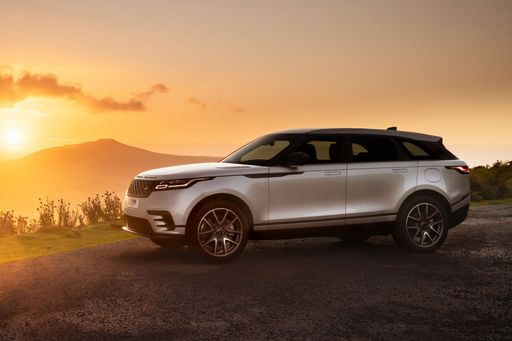
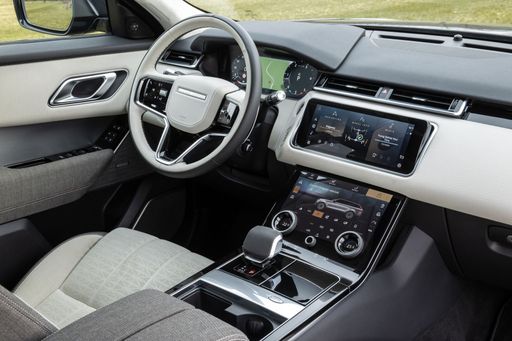
The Range Rover Velar marries sleek, pared-back styling with genuine off-road poise, so it looks at home in the city yet won’t flinch at rougher roads. Inside, a luxurious, tech-forward cabin pampers occupants while keeping the driving experience confidently in command — and yes, it somehow makes an SUV feel undeniably chic.

details
Audi Q6 e-tron
Land Rover Range Rover Velar

Costs and Consumption

Price
54400 - 91900 £
Price
61900 - 87400 £
Consumption L/100km
-
Consumption L/100km
4.8 - 10.2 L
Consumption kWh/100km
15.6 - 18.9 kWh
Consumption kWh/100km
-
Electric Range
482 - 656 km
Electric Range
63 km
Battery Capacity
75.8 - 94.9 kWh
Battery Capacity
15.40 kWh
co2
0 g/km
co2
110 - 232 g/km
Fuel tank capacity
-
Fuel tank capacity
62 - 83 L

Dimensions and Body

Body Type
SUV
Body Type
SUV
Seats
5
Seats
5
Doors
5
Doors
5
Curb weight
2200 - 2425 kg
Curb weight
2003 - 2280 kg
Trunk capacity
499 - 526 L
Trunk capacity
503 - 552 L
Length
4771 mm
Length
4797 mm
Width
1939 - 1965 mm
Width
1933 mm
Height
1665 - 1685 mm
Height
1657 - 1665 mm
Max trunk capacity
1361 - 1529 L
Max trunk capacity
1335 - 1358 L
Payload
540 kg
Payload
460 - 587 kg

Engine and Performance

Engine Type
Electric
Engine Type
Petrol MHEV, Plugin Hybrid, Diesel MHEV
Transmission
Automatic
Transmission
Automatic
Transmission Detail
Reduction Gearbox
Transmission Detail
Automatic Gearbox
Drive Type
Rear-Wheel Drive, All-Wheel Drive
Drive Type
All-Wheel Drive
Power HP
252 - 490 HP
Power HP
204 - 404 HP
Acceleration 0-100km/h
4.4 - 7.6 s
Acceleration 0-100km/h
5.4 - 8.3 s
Max Speed
210 - 230 km/h
Max Speed
209 - 250 km/h
Torque
450 - 855 Nm
Torque
430 - 650 Nm
Number of Cylinders
-
Number of Cylinders
4 - 6
Power kW
185 - 360 kW
Power kW
150 - 297 kW
Engine capacity
-
Engine capacity
1997 - 2997 cm3

General

Model Year
2024 - 2025
Model Year
2025
CO2 Efficiency Class
A
CO2 Efficiency Class
G, C
Brand
Audi
Brand
Land Rover
What drivetrain options does the Audi Q6 e-tron have?

Available configurations include Rear-Wheel Drive or All-Wheel Drive.

The prices shown are estimates based on German list prices, adjusted for local VAT. Local registration taxes (e.g. NoVA, BPM or CO2 malus) are not included. This information is not legally binding.