VS

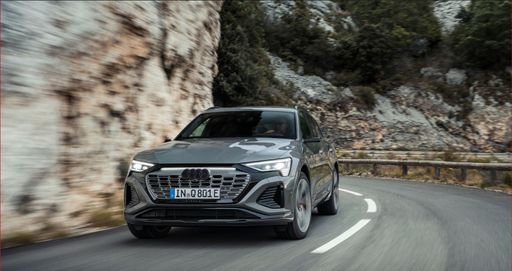
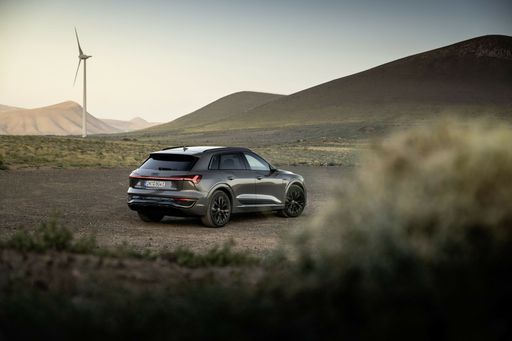
Audi Q8 e-tron vs BYD Sealion 7 comparison

Compare performance (503 HP vs 530 HP), boot space and price (65100 £ vs 42800 £ ) at a glance. Find out which car is the better choice for you – Audi Q8 e-tron or BYD Sealion 7?

Q8 e-tron

Electric Titans: Audi Q8 e-tron vs. BYD Sealion 7

The automotive world is witnessing a monumental shift as electric SUVs take center stage. Among the frontrunners in this arena are the renowned Audi Q8 e-tron and the innovative BYD Sealion 7. Both vehicles bring technological advancements and robust performance to the table, but how do they stack up against each other? Let's dive into the details.
Sealion 7

Performance and Power

The Audi Q8 e-tron is an engineering marvel with a powerful array of electric motors delivering between 340 and 503 horsepower. Designed with all-wheel drive capability, it provides impressive torque ranging from 664 Nm to 973 Nm. The rapid acceleration allows it to go from 0 to 100 km/h in as little as 4.5 seconds, supported by a top speed of 200-210 km/h.

Meanwhile, the BYD Sealion 7 combines cutting-edge innovation with raw power, offering between 313 and 530 horsepower. Available in both rear-wheel drive and all-wheel drive formats, it reaches 0 to 100 km/h in an exhilarating 4.5 seconds, slightly surpassing its rival with a peak speed of 215 km/h. Its torque output ranges from 380 Nm to 690 Nm, providing plenty of thrust.

Q8 e-tron

Range and Efficiency

Range anxiety takes a backseat when looking at these models. The Audi Q8 e-tron boasts an exceptional electric range, from 456 km up to a staggering 595 km, powered by a battery capacity of either 89 kWh or 106 kWh. Consumption varies slightly but remains efficient, fluctuating between 19.7 and 26.3 kWh/100km.

The BYD Sealion 7 is not far behind, offering a practical range between 456 km and 502 km. Its consumption rates are comparable, sitting between 19.9 and 21.9 kWh/100km, ensuring both performance and economy are catered for.

Sealion 7

Design and Comfort

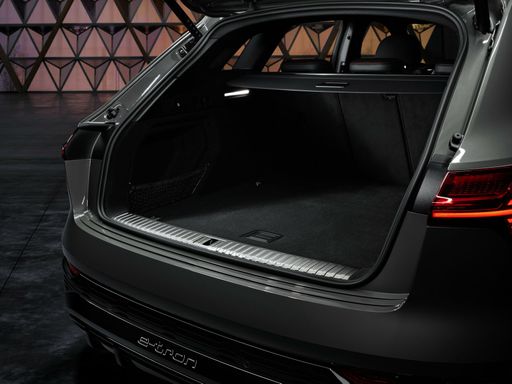
In terms of design, the Audi Q8 e-tron represents a synthesis of luxury and sportiness with its dimensions stretching to 4915 mm in length, 1937 mm to 1994 mm in width, and a height ranging from 1617 mm to 1683 mm. It accommodates five passengers and offers trunk capacities of 569 to 528 liters, ensuring practicality is not compromised.

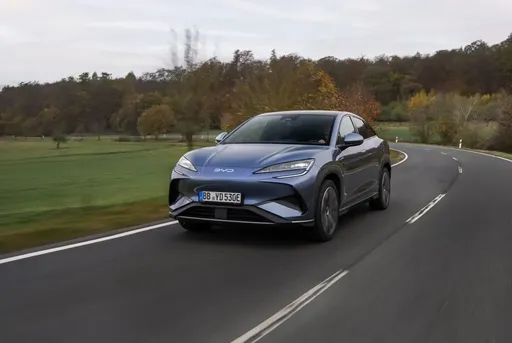
The BYD Sealion 7 pursues a slightly more compact build, measuring 4830 mm in length, 1925 mm in width, and standing at 1620 mm high. It also seats five occupants comfortably, with a trunk capacity of 520 liters, providing ample space for most needs.

Q8 e-tron

Conclusion

Both the Audi Q8 e-tron and the BYD Sealion 7 are significant contenders in the electric SUV segment, each bringing unique strengths. Audi leverages its heritage with a focus on luxury and comprehensive powertrains, whereas BYD champions innovation with formidable performance metrics and competitive pricing. Ultimately, the choice between these two electric titans hinges on individual preferences, whether prioritizing environmental efficiency, power, or luxury.

Audi Q8 e-tron vs BYD Sealion 7: Key differences

Audi Q8 e-tron

  • slight more efficient
  • a bit more electric range
  • slight more trunk space

BYD Sealion 7

5 (2 Reviews)
rate
  • clearly cheaper
  • barely noticeable more power
  • a bit lighter

All details on performance, efficiency, range and trunk space can be found in the technical comparison below – including user reviews for both models.

Here’s where it gets real: The technical differences in detail

Sealion 7

Costs and Efficiency:

When it comes to price and running costs, the biggest differences usually appear. This is often where you see which car fits your budget better in the long run.

BYD Sealion 7 has a clearly advantage in terms of price – it starts at 42800 £ , while the Audi Q8 e-tron costs 65100 £ . That’s a price difference of around 22209 £.

In terms of energy consumption, the advantage goes to the Audi Q8 e-tron: with 19.70 kWh per 100 km, it’s slight more efficient than the BYD Sealion 7 with 19.90 kWh. That’s a difference of about 0.20 kWh.

As for electric range, the Audi Q8 e-tron performs a bit better – achieving up to 595 km, about 93 km more than the BYD Sealion 7.

Q8 e-tron

Engine and Performance:

Power, torque and acceleration are the classic benchmarks for car enthusiasts – and here, some clear differences start to show.

When it comes to engine power, the BYD Sealion 7 has a barely noticeable edge – offering 530 HP compared to 503 HP. That’s roughly 27 HP more horsepower.

Both models accelerate almost equally fast – 4.50 s from 0 to 100 km/h.

There’s also a difference in torque: Audi Q8 e-tron pulls evident stronger with 973 Nm compared to 690 Nm. That’s about 283 Nm difference.

Space and Everyday Use:

Cabin size, boot volume and payload all play a role in everyday practicality. Here, comfort and flexibility make the difference.

Both vehicles offer seating for 5 people.

In curb weight, BYD Sealion 7 is a bit lighter – 2225 kg compared to 2585 kg. The difference is around 360 kg.

In terms of boot space, the Audi Q8 e-tron offers slight more room – 569 L compared to 520 L. That’s a difference of about 49 L.

When it comes to payload, Audi Q8 e-tron clearly perceptible takes the win – 595 kg compared to 410 kg. That’s a difference of about 185 kg.

Who wins the race in the data check?

The Audi Q8 e-tron holds a very small edge in the objective data comparison.
This result only shows which model scores more points on paper – not which of the two cars feels right for you.

Audi Q8 e-tron
BYD Sealion 7

Costs and Consumption

View detailed analysis

Engine and Performance

View detailed analysis

Dimensions and Body

View detailed analysis
from about £65,100
Q8 e-tron

Audi Q8 e-tron

  • Engine Type : Electric
  • Transmission : Automatic
  • Drive Type : All-Wheel Drive
  • Power HP : 340 - 503 HP
  • Consumption kWh/100km : 19.7 - 26.3 kWh
  • Electric Range : 456 - 595 km

Audi Q8 e-tron

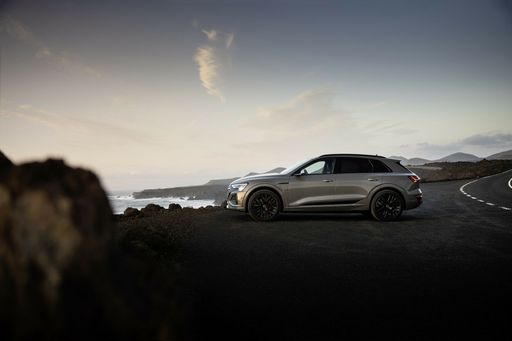
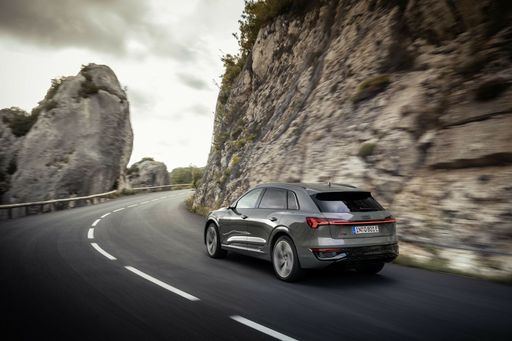
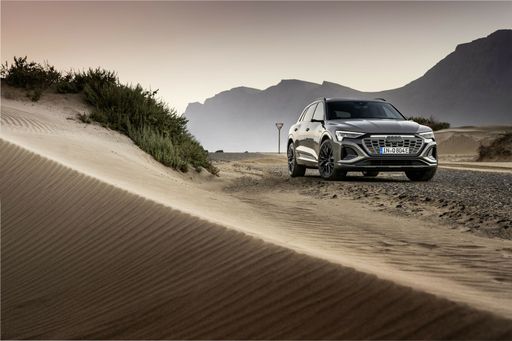
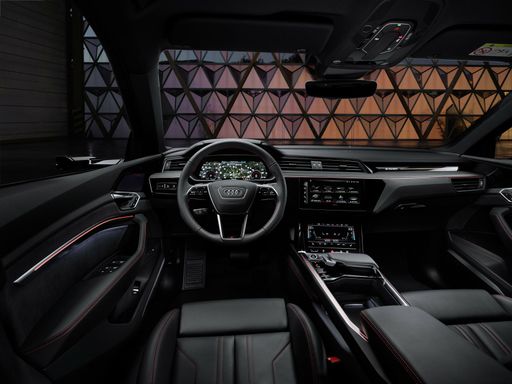
The Audi Q8 e-tron wraps Audi’s usual premium polish into a quiet, composed electric SUV that feels refined and surprisingly effortless to drive. With a spacious, tech-forward cabin and understated road presence, it’s a practical yet stylish choice for buyers who want electric motoring without losing the dignity of a proper luxury SUV.

details

BYD Sealion 7

5 (2 Reviews)
rate

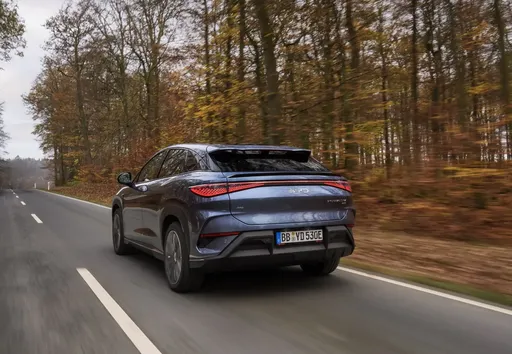
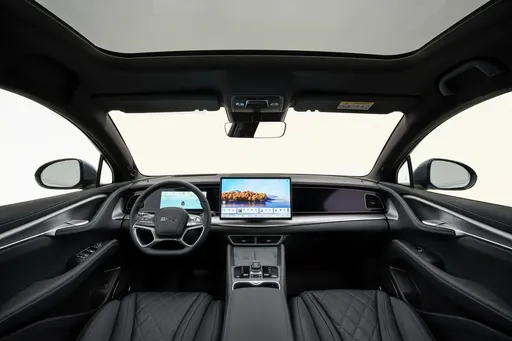
The Sealion 7 captivates with its striking design and impressive performance that appeals to both enthusiasts and casual drivers alike. With a focus on comfort and advanced technology, this model redefines the driving experience, making every journey enjoyable. Its sleek silhouette coupled with an innovative interior showcases the perfect blend of style and functionality.

details
Audi Q8 e-tron
BYD Sealion 7

Costs and Consumption

Price
65100 - 102800 £
Price
42800 - 52300 £
Consumption L/100km
-
Consumption L/100km
-
Consumption kWh/100km
19.7 - 26.3 kWh
Consumption kWh/100km
19.9 - 21.9 kWh
Electric Range
456 - 595 km
Electric Range
456 - 502 km
Battery Capacity
89 - 106 kWh
Battery Capacity
-
co2
0 g/km
co2
0 g/km
Fuel tank capacity
-
Fuel tank capacity
-

Dimensions and Body

Body Type
SUV
Body Type
SUV
Seats
5
Seats
5
Doors
5
Doors
-
Curb weight
2585 - 2725 kg
Curb weight
2225 - 2435 kg
Trunk capacity
528 - 569 L
Trunk capacity
520 L
Length
4915 mm
Length
-
Width
1937 - 1994 mm
Width
1925 mm
Height
1617 - 1683 mm
Height
-
Max trunk capacity
1567 - 1637 L
Max trunk capacity
-
Payload
515 - 595 kg
Payload
410 kg

Engine and Performance

Engine Type
Electric
Engine Type
Electric
Transmission
Automatic
Transmission
Automatic
Transmission Detail
Reduction Gearbox
Transmission Detail
Reduction Gearbox
Drive Type
All-Wheel Drive
Drive Type
Rear-Wheel Drive, All-Wheel Drive
Power HP
340 - 503 HP
Power HP
313 - 530 HP
Acceleration 0-100km/h
4.5 - 6 s
Acceleration 0-100km/h
4.5 - 6.7 s
Max Speed
200 - 210 km/h
Max Speed
-
Torque
664 - 973 Nm
Torque
380 - 690 Nm
Number of Cylinders
-
Number of Cylinders
-
Power kW
250 - 370 kW
Power kW
230 - 390 kW
Engine capacity
-
Engine capacity
-

General

Model Year
2023 - 2024
Model Year
2024
CO2 Efficiency Class
A
CO2 Efficiency Class
A
Brand
Audi
Brand
BYD
What drive types are available for the Audi Q8 e-tron?

The Audi Q8 e-tron is offered with All-Wheel Drive.

The prices shown are estimates based on German list prices, adjusted for local VAT. Local registration taxes (e.g. NoVA, BPM or CO2 malus) are not included. This information is not legally binding.