VS

Audi Q8 vs Audi Q6 e-tron comparison

Compare performance (640 HP vs 490 HP), boot space and price (77,300 £ vs 54,400 £ ) at a glance. Find out which car is the better choice for you – Audi Q8 or Audi Q6 e-tron?

Audi Q8 vs Audi Q6 e-tron: Key differences

Audi Q8

  • clearly more power
  • noticeably quicker 0–100 km/h
  • very slightly lighter
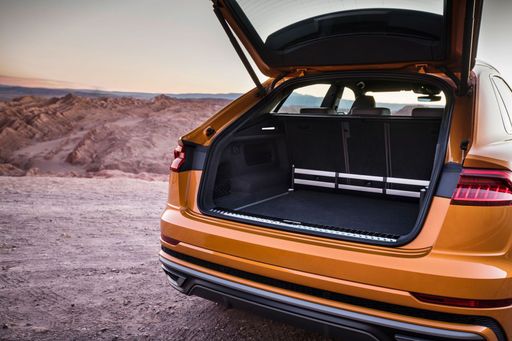
  • a bit more trunk space

Audi Q6 e-tron

4.9 (3 Reviews)
rate
  • considerably cheaper
  • considerably more electric range

All details on performance, efficiency, range and trunk space can be found in the technical comparison below – including user reviews for both models.

Q8

Introduction: The Future of Audi's SUVs

The automotive landscape is undergoing a dramatic transformation, with electric vehicles leading the charge into a sustainable future. Audi is at the forefront of this evolution, offering two powerful contenders in the SUV segment: the Audi Q6 e-tron and the Audi Q8. This article will compare these two models in terms of performance, technology, and innovation, as well as their appeal in the luxury SUV market.
Q6 e-tron

Powertrain and Performance

The Audi Q6 e-tron is a fully electric SUV designed for efficiency and power. Customers can choose from various configurations, with horsepower ranging from 292 HP to a staggering 516 HP. The Q6 e-tron features a maximum torque of up to 855 Nm, enabling remarkable acceleration, with the fastest variant hitting 0-100 km/h in just 4.3 seconds. Its electric range can extend up to 656 km, making it a fantastic choice for long trips.

In contrast, the Audi Q8 comes with a range of powertrain options including diesel, petrol, and hybrid variants. The power output varies from 231 HP to a thrilling 640 HP in the high-performance models. Torque figures are equally impressive, with a maximum output of 850 Nm available. The quickest version of the Q8 can achieve 0-100 km/h in just 3.6 seconds, showcasing its dynamic capabilities on the road.

Q8

Battery Technology and Efficiency

The Audi Q6 e-tron features a robust battery capacity of 75.8 and 94.9 kWh, ensuring impressive range and efficiency. While it stands out for its electric-only performance, the Q6 e-tron consumes between 15.6 and 18.9 kWh per 100 km, depending on the specific variant.

On the other hand, the Audi Q8, while not purely electric, presents a different kind of efficiency. Its hybrid models leverage a smaller 22 kWh battery, providing an electric range of up to 83 km, useful for short commutes. The consumption rates for the Q8 vary significantly with fuel types, but the petrol variants can reach up to 12.8 L/100 km, marking a clear distinction in fuel efficiency when compared to the e-tron.

Q6 e-tron

Dimensions and Interior Space

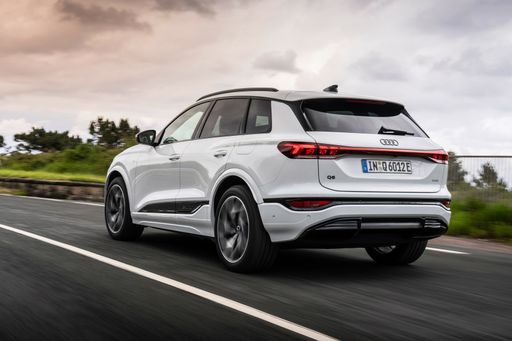
Size matters in the SUV segment, and both the Q6 e-tron and Q8 offer distinct space advantages. The Q6 e-tron measures 4771 mm in length, 1939 mm in width, and 1685 mm in height, providing ample space for five passengers and a trunk capacity of 526 liters.

Conversely, the Audi Q8 is larger with a length of up to 5022 mm and a width of 2007 mm. Its trunk capacity reaches a notable 605 liters, offering additional cargo space for families or adventures requiring extra gear. Both models are designed to provide luxury comfort with high-quality materials and advanced infotainment options.

Q8

Technological Innovations

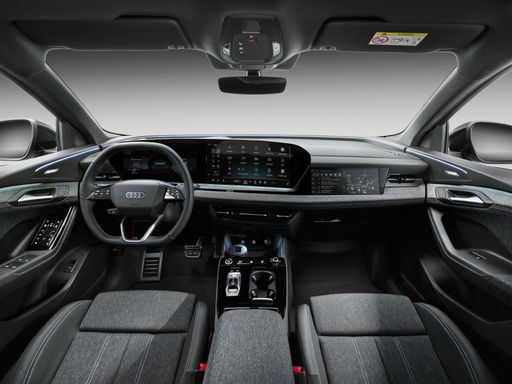
When it comes to technology, Audi continues to impress. The Q6 e-tron incorporates cutting-edge features, such as advanced driver assistance systems and a state-of-the-art MMI infotainment system, all running on sustainable electric power. Its advanced regenerative braking technology ensures maximum efficiency during driving.

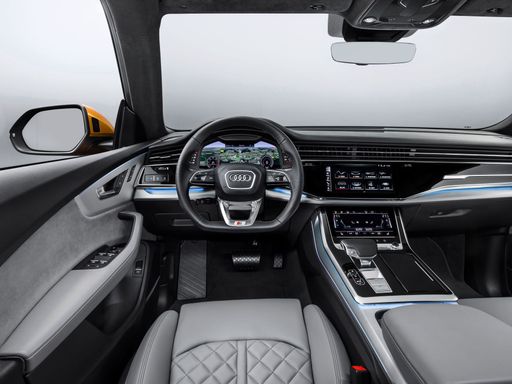
Meanwhile, the Q8 also boasts top-notch technology, featuring Audi's Virtual Cockpit, a sophisticated infotainment system, and an array of driver assistance systems. Its MHEV (Mild Hybrid Electric Vehicle) technology enhances performance and efficiency by integrating a small battery-powered system to optimize fuel consumption.

Q6 e-tron

Conclusion: Which One to Choose?

As Audi forges ahead into the era of electric mobility, the choice between the Audi Q6 e-tron and the Q8 ultimately depends on individual priorities. The Q6 e-tron is a perfect option for customers looking for a fully electric vehicle that combines cutting-edge technology with sustainability. In contrast, the Q8 caters to those who appreciate the performance and luxury of a traditional SUV with diverse engine options.

Both models showcase Audi's commitment to innovation and excellence, ensuring they remain competitive in the rapidly evolving automotive market. Choose wisely, as both vehicles offer unique advantages to elevate your driving experience.

Here’s where it gets real: The technical differences in detail

Q8

Costs and Efficiency:

Price and efficiency are often the first things buyers look at. Here it becomes clear which model has the long-term edge – whether at the pump, the plug, or in purchase price.

Audi Q6 e-tron is considerably cheaper – starting at 54,400 £ , while the Audi Q8 costs 77,300 £ . That’s a price difference of around 22,886 £.

As for electric range, the Audi Q6 e-tron offers considerably more range – reaching up to 656 km, about 576 km more than the Audi Q8.

Q6 e-tron

Engine and Performance:

Power, torque and acceleration are the classic benchmarks for car enthusiasts – and here, some clear differences start to show.

When it comes to engine power, the Audi Q8 offers clearly more power – delivering 640 HP compared to 490 HP. That’s roughly 150 HP more horsepower.

When accelerating from 0 to 100 km/h, the Audi Q8 is noticeably quicker – completing the sprint in 3.6 s, while the Audi Q6 e-tron takes 4.4 s. That’s about 0.8 s quicker.

There’s also a difference in torque: the Audi Q6 e-tron delivers barely more torque with 855 Nm compared to 850 Nm. That’s about 5 Nm more.

Q8

Space and Everyday Use:

Whether family car or daily driver – which one offers more room, flexibility and comfort?

Both vehicles offer seating for 5 people.

In terms of curb weight, Audi Q8 is very slightly lighter – 2,175 kg compared to 2,200 kg. The difference is around 25 kg.

Looking at boot space, the Audi Q8 offers a bit more boot space – 605 L compared to 526 L. That’s a difference of about 79 L.

When it comes to payload, the Audi Q8 carries slightly more – 665 kg compared to 540 kg. That’s a difference of about 125 kg.

Who wins the race in the data check?

The Audi Q6 e-tron stands well ahead of its rival in the objective data comparison.
This result only shows which model scores more points on paper – not which of the two cars feels right for you.

from £54,400
Q6 e-tron

Audi Q6 e-tron

  • Engine Type : Electric
  • Transmission : Automatic
  • Drive Type : Rear-Wheel Drive, All-Wheel Drive
  • Power HP : 252 - 490 HP
  • Consumption kWh/100km : 15.6 - 18.4 kWh/100km
  • Electric Range : 529 - 656 km
Audi Q8
Audi Q6 e-tron

Costs and Consumption

View detailed analysis

Engine and Performance

View detailed analysis

Dimensions and Body

View detailed analysis

Audi Q8

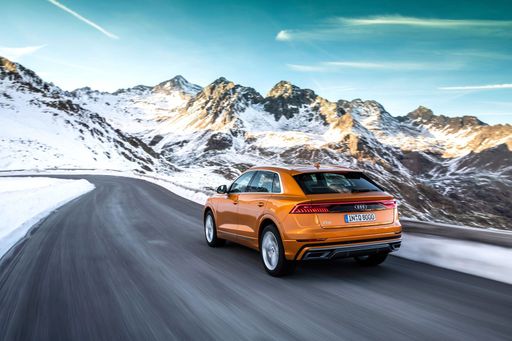
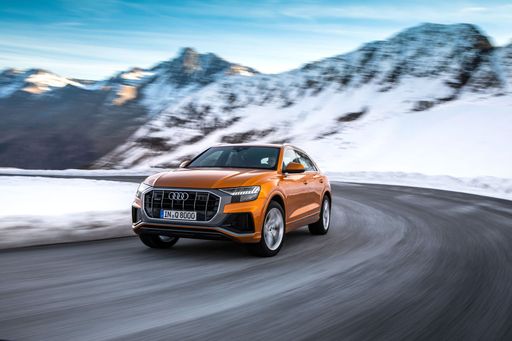
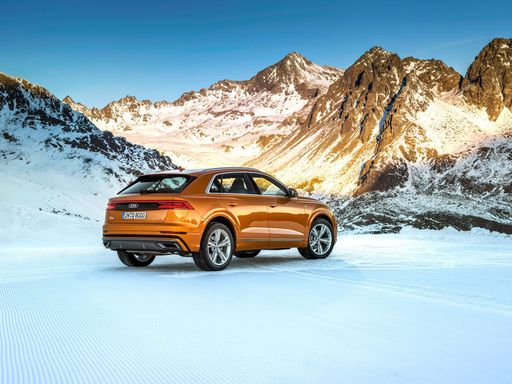
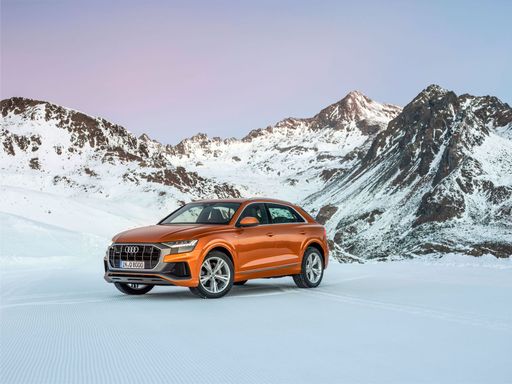
The Audi Q8 wraps coupe-like flair around a burly SUV stance, serving up a cabin dressed in premium materials and smart tech that puts comfort and swagger front and center. It’s composed and comfortable on long runs yet happy to play when asked, making it a tempting choice for buyers who want head-turning looks without surrendering everyday practicality.

details

Audi Q6 e-tron

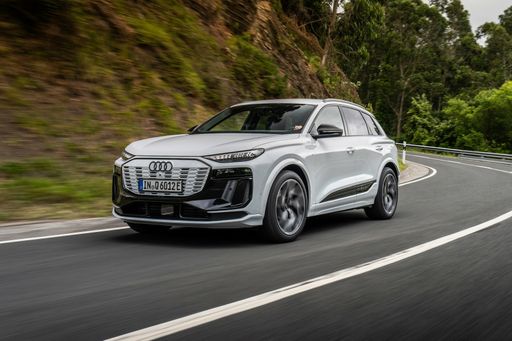
The Audi Q6 e-tron balances sleek, coupe-like styling with a roomy, upscale interior that feels modern without being showy. It delivers refined electric performance and smart tech that make daily driving effortless — the sort of EV that might make petrolheads grudgingly admit they fancy the future.

details
Audi Q8
Audi Q6 e-tron

Costs and Consumption

Price
77,300 - 137,100 £
Price
54,400 - 82,500 £
Consumption L/100km
3.9 - 13.1 L/100km
Consumption L/100km
-
Consumption kWh/100km
-
Consumption kWh/100km
15.6 - 18.4 kWh/100km
Electric Range
80 km
Electric Range
529 - 656 km
Battery Capacity
-
Battery Capacity
75.8 - 94.9 kWh
co2
88 - 297 g/km
co2
0 g/km
Fuel tank capacity
-
Fuel tank capacity
-

Dimensions and Body

Body Type
SUV
Body Type
SUV
Seats
5
Seats
5
Doors
-
Doors
5
Curb weight
2,175 - 2,490 kg
Curb weight
2,200 - 2,425 kg
Trunk capacity
439 - 605 L
Trunk capacity
499 - 526 L
Length
-
Length
4,771 mm
Width
1,995 - 2,007 mm
Width
1,939 - 1,965 mm
Height
-
Height
1,665 - 1,685 mm
Max trunk capacity
-
Max trunk capacity
1,361 - 1,529 L
Payload
620 - 665 kg
Payload
540 kg

Engine and Performance

Engine Type
Petrol MHEV, Diesel MHEV, Petrol, Plugin Hybrid
Engine Type
Electric
Transmission
Automatic
Transmission
Automatic
Transmission Detail
Automatic Gearbox
Transmission Detail
Reduction Gearbox
Drive Type
All-Wheel Drive
Drive Type
Rear-Wheel Drive, All-Wheel Drive
Power HP
231 - 640 HP
Power HP
252 - 490 HP
Acceleration 0-100km/h
3.6 - 7.1 s
Acceleration 0-100km/h
4.4 - 7.6 s
Max Speed
-
Max Speed
210 - 230 km/h
Torque
500 - 850 Nm
Torque
450 - 855 Nm
Number of Cylinders
6 - 8
Number of Cylinders
-
Power kW
170 - 471 kW
Power kW
185 - 360 kW
Engine capacity
2,967 - 3,996 cm3
Engine capacity
-

General

Model Year
2,025
Model Year
2,024 - 2,025
CO2 Efficiency Class
G, B
CO2 Efficiency Class
A
Brand
Audi
Brand
Audi
DriveDuel uses data analysis and artificial intelligence to evaluate vehicle data and create content. Content is regularly reviewed and improved. The displayed prices are estimates based on German list prices, adjusted to the respective country’s VAT. Country-specific registration taxes are not included. This information is not legally binding.