VS

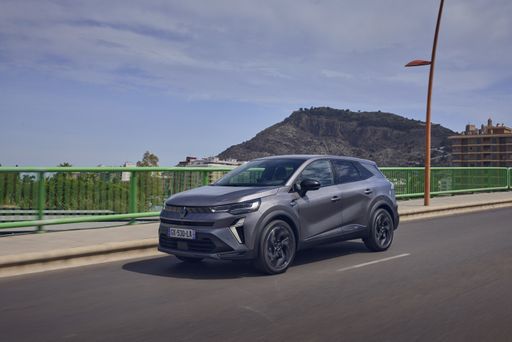
BMW 2 Series Active Tourer vs Renault Symbioz comparison

Compare performance (326 HP vs 158 HP), boot space and price (31,500 £ vs 24,700 £ ) at a glance. Find out which car is the better choice for you – BMW 2 Series Active Tourer or Renault Symbioz?

BMW 2 Series Active Tourer vs Renault Symbioz: Key differences

BMW 2 Series Active Tourer

4.1 (1 Reviews)
rate
  • clearly more power
  • clearly more efficient
  • significantly quicker 0–100 km/h
details

Renault Symbioz

4.5 (5 Reviews)
rate
  • visibly cheaper
  • moderately lighter
  • slightly more trunk space
details

All details on performance, efficiency, range and trunk space can be found in the technical comparison below – including user reviews for both models.

By Achim Sedelmaier

2 Series Active Tourer

BMW 2er Active Tourer vs Renault Symbioz: A Clash of Versatility and Innovation

As the automotive world continues to evolve, manufacturers are leaning into innovation with every model release. The clash between the BMW 2er Active Tourer and the Renault Symbioz encapsulates this trend, bringing forth a keen competition in terms of versatility and technological prowess. While both cars promise utility and performance, their distinctive offerings cater to different automotive desires.
Symbioz

Design Philosophy: MPV vs. SUV

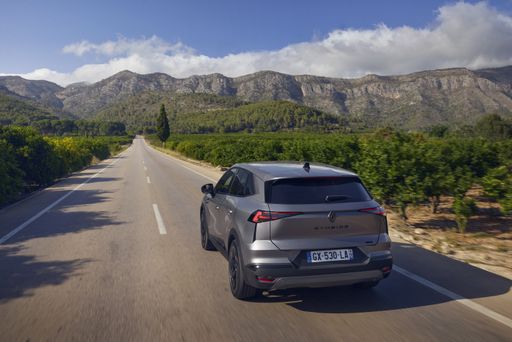
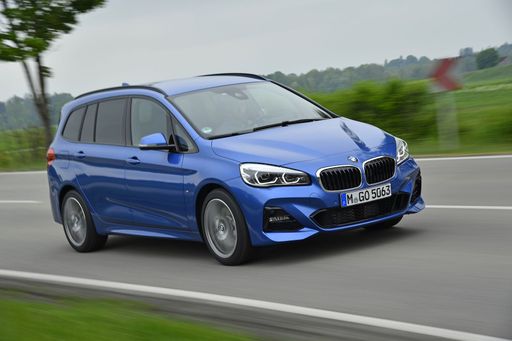
The BMW 2er Active Tourer is a dynamic MPV, boasting a design finely tuned for modern families. Its dimensions—notably 4386 mm in length and 1824 mm in width—create a compact yet spacious vehicle, making it ideal for urban environments and family life. The Renault Symbioz, an SUV at heart, stretches slightly longer at 4413 mm but is narrower at 1797 mm, signaling its ambition as a versatile transport solution for various terrains.

2 Series Active Tourer

Engine and Transmission: Powerhouse Dynamics

When delving into the heart of these vehicles, the BMW 2er Active Tourer offers a buffet of engines, including petrol, diesel, and mild and plug-in hybrids. With a top horsepower reaching up to 326 HP and electric-only capabilities covering 88 km, it stands as a formidable force in efficiency and power. Paired with a dual-clutch automatic transmission, the BMW is available in both front-wheel and all-wheel drives, catering to diverse driving preferences.

Conversely, the Renault Symbioz focuses on simplicity and economy with a full hybrid engine producing 143 HP. Its automatic gearbox offers smooth transitions, perfect for everyday city driving. Its singular engineering choice—a front-wheel drive—focuses on energy-efficient commutes, with a CO2 emission as low as 109 g/km and a consumption rate of 4.8 L/100km.

Symbioz

Performance: Acceleration and Speed

The BMW 2er Active Tourer leads with a maximum speed spectrum ranging from 195 km/h to 241 km/h. Depending on the variant and engine choice, acceleration from 0-100 km/h could take a rapid 5.5 seconds, signaling its sporty nature. In comparison, the Renault Symbioz offers a more measured pace, with a top speed of 170 km/h and an acceleration time of 10.6 seconds from 0-100 km/h—positions it as a steady, reliable performer.

2 Series Active Tourer

Features and Comfort

Both vehicles accommodate five passengers, but in terms of trunk capacity, the Renault Symbioz bests the BMW slightly with 492 liters versus the BMW’s 470 liters. However, BMW's hybrid versatility still makes it appealing as an eco-friendly option for longer travels requiring less fuel consumption due to its larger 14.2 kWh battery capacity.

Symbioz

Efficiency and Environmental Impact

Eco-conscious buyers will appreciate the differences in CO2 efficiency class: Renault's Symbioz earns a ‘C’ class rating, whereas the BMW covers a broader range from ‘B’ to ‘E’. The Symbioz, with its streamlined hybrid technology, may appeal to those prioritizing lower emissions.

2 Series Active Tourer

Conclusion: Tailoring to Different Lifestyles

Both the BMW 2er Active Tourer and the Renault Symbioz offer distinct strengths that appeal to varied audience segments. The BMW, with its myriad of powertrain options and higher performance figures, caters to those who desire sportiness and flexibility. The Renault Symbioz offers a simple and efficient driving experience ideal for eco-conscious consumers and city dwellers.

Ultimately, the choice between these two highly capable vehicles hinges on personal priorities—be it flexibility and performance with BMW, or efficiency and simplicity with Renault.

Here’s where it gets real: The technical differences in detail

2 Series Active Tourer

Costs and Efficiency:

Looking at overall running costs, both models reveal some interesting differences in everyday economy.

Renault Symbioz is visibly cheaper – starting at 24,700 £ , while the BMW 2 Series Active Tourer costs 31,500 £ . That’s a price difference of around 6,815 £.

Fuel consumption also shows a difference: the BMW 2 Series Active Tourer uses 2.9 L/100km and is clearly more efficient than the Renault Symbioz with 4.5 L/100km. The difference is about 1.6 L/100km.

Symbioz

Engine and Performance:

Under the bonnet, it becomes clear which model is tuned for sportiness and which one takes the lead when you hit the accelerator.

When it comes to engine power, the BMW 2 Series Active Tourer offers clearly more power – delivering 326 HP compared to 158 HP. That’s roughly 168 HP more horsepower.

When accelerating from 0 to 100 km/h, the BMW 2 Series Active Tourer is significantly quicker – completing the sprint in 5.5 s, while the Renault Symbioz takes 9.1 s. That’s about 3.6 s quicker.

There’s also a difference in torque: the BMW 2 Series Active Tourer delivers significantly more torque with 477 Nm compared to 265 Nm. That’s about 212 Nm more.

2 Series Active Tourer

Space and Everyday Use:

Whether family car or daily driver – which one offers more room, flexibility and comfort?

Both vehicles offer seating for 5 people.

In terms of curb weight, Renault Symbioz is moderately lighter – 1,359 kg compared to 1,545 kg. The difference is around 186 kg.

Looking at boot space, the Renault Symbioz offers slightly more boot space – 576 L compared to 470 L. That’s a difference of about 106 L.

When it comes to payload, the BMW 2 Series Active Tourer carries only slightly more – 505 kg compared to 459 kg. That’s a difference of about 46 kg.

Who wins the race in the data check?

The BMW 2 Series Active Tourer stands well ahead of its rival in the objective data comparison.
This result only shows which model scores more points on paper – not which of the two cars feels right for you.

from £31,500
2 Series Active Tourer

BMW 2 Series Active Tourer

  • Engine Type : Petrol, Petrol MHEV, Diesel, Diesel MHEV, Plugin Hybrid
  • Transmission : Automatic
  • Drive Type : Front-Wheel Drive, All-Wheel Drive
  • Power HP : 122 - 326 HP
  • Consumption L/100km : 2.9 - 6.2 L/100km
  • Electric Range : 82 km
BMW 2 Series Active Tourer
Renault Symbioz

Costs and Consumption

View detailed analysis

Engine and Performance

View detailed analysis

Dimensions and Body

View detailed analysis

BMW 2 Series Active Tourer

The BMW 2 Series Active Tourer turns the family MPV into something you’d actually want to park outside a café, pairing compact practicality with surprisingly premium cabin flair. It won’t thrill like a sports car, but it drives with the composed poise you expect from the badge and keeps daily life easy and un-fussy.

details

Renault Symbioz

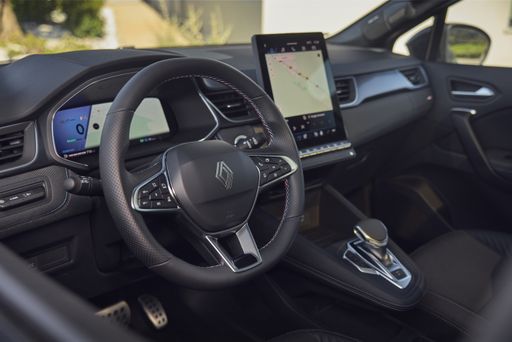
The Renault Symbioz feels less like a traditional car and more like a rolling living room that's been told it's allowed to drive — its flowing lines and minimalist cabin are pure concept-car theatre that teases the future of everyday transport. For buyers with an eye for design and a taste for tech-forward ideas, the Symbioz is an alluring vision of what Renault could offer tomorrow, even if it's not yet a model you can park in your driveway.

details
BMW 2 Series Active Tourer
Renault Symbioz

Costs and Consumption

Price
31,500 - 48,500 £
Price
24,700 - 30,700 £
Consumption L/100km
2.9 - 6.2 L/100km
Consumption L/100km
4.5 - 6 L/100km
Consumption kWh/100km
-
Consumption kWh/100km
-
Electric Range
82 km
Electric Range
-
Battery Capacity
-
Battery Capacity
-
co2
65 - 140 g/km
co2
102 - 136 g/km
Fuel tank capacity
-
Fuel tank capacity
-

Dimensions and Body

Body Type
MPV
Body Type
SUV
Seats
5
Seats
5
Doors
-
Doors
-
Curb weight
1,545 - 1,920 kg
Curb weight
1,359 - 1,465 kg
Trunk capacity
406 - 470 L
Trunk capacity
492 - 576 L
Length
-
Length
-
Width
1,824 mm
Width
1,797 mm
Height
-
Height
-
Max trunk capacity
-
Max trunk capacity
-
Payload
465 - 505 kg
Payload
455 - 459 kg

Engine and Performance

Engine Type
Petrol, Petrol MHEV, Diesel, Diesel MHEV, Plugin Hybrid
Engine Type
Full Hybrid, Petrol MHEV
Transmission
Automatic
Transmission
Automatic, Manuel
Transmission Detail
Dual-Clutch Automatic
Transmission Detail
Automatic Gearbox, Manual Gearbox, Dual-Clutch Automatic
Drive Type
Front-Wheel Drive, All-Wheel Drive
Drive Type
Front-Wheel Drive
Power HP
122 - 326 HP
Power HP
140 - 158 HP
Acceleration 0-100km/h
5.5 - 10.3 s
Acceleration 0-100km/h
9.1 - 11 s
Max Speed
-
Max Speed
-
Torque
230 - 477 Nm
Torque
250 - 265 Nm
Number of Cylinders
3 - 4
Number of Cylinders
4
Power kW
90 - 240 kW
Power kW
103 - 116 kW
Engine capacity
1,499 - 1,998 cm3
Engine capacity
1,332 - 1,789 cm3

General

Model Year
2,024 - 2,025
Model Year
2025
CO2 Efficiency Class
E, D, B
CO2 Efficiency Class
C, D, E
Brand
BMW
Brand
Renault
DriveDuel uses data analysis and artificial intelligence to evaluate vehicle data and create content. Content is regularly reviewed and improved. The displayed prices are estimates based on German list prices, adjusted to the respective country’s VAT. Country-specific registration taxes are not included. This information is not legally binding.