VS

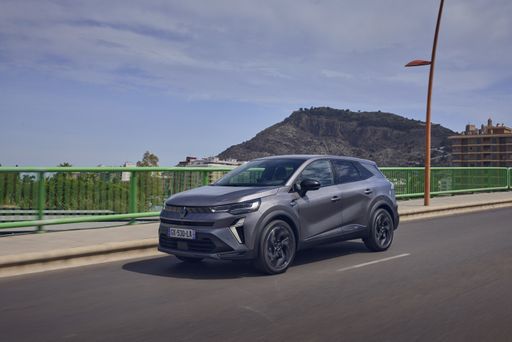
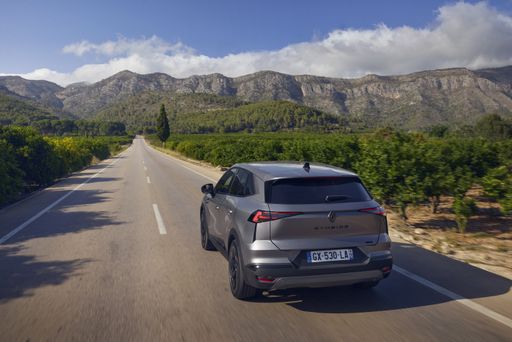
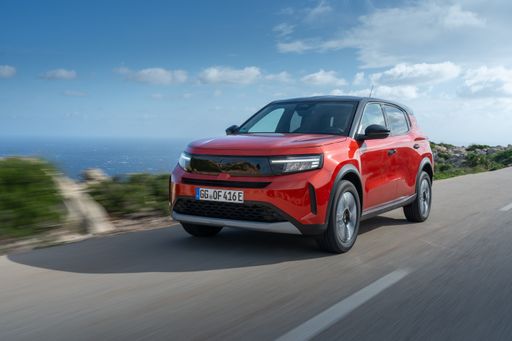
Vauxhall Frontera vs Renault Symbioz comparison

Compare performance (145 HP vs 158 HP), boot space and price (20,700 £ vs 24,700 £ ) at a glance. Find out which car is the better choice for you – Vauxhall Frontera or Renault Symbioz?

Vauxhall Frontera vs Renault Symbioz: Key differences

Vauxhall Frontera

4.2 (8 Reviews)
rate
  • somewhat cheaper
details

Renault Symbioz

4.8 (5 Reviews)
rate
  • very slightly more power
  • a bit more efficient
  • barely lighter
  • noticeably more trunk space
details

All details on performance, efficiency, range and trunk space can be found in the technical comparison below – including user reviews for both models.

By Achim Sedelmaier

Frontera

Overview: Opel Frontera VS Renault Symbioz

Opel Frontera and Renault Symbioz take two different pragmatic routes through the compact-SUV field: the Frontera bets on sheer space, simple robustness and low acquisition cost, while the Symbioz leans into efficiency, smart infotainment and modular interior tricks. The Frontera feels like a workman’s friend—roomy rear seats, a big, usable boot and straightforward controls—whereas the Symbioz pitches itself as the clever daily runner with low running costs and Google-powered convenience. That contrast plays through every decision you’ll make: choose raw room and a no-nonsense cabin or choose lower consumption, a sliding rear bench and sharper tech. Both cars keep things modest rather than luxurious, but they aim those modesties at different buyers. Read on to understand how those choices matter in everyday life before you dive into the technical numbers.
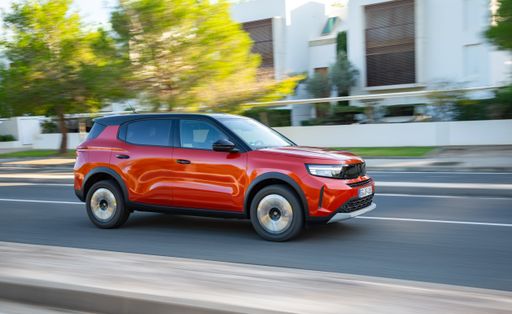
Symbioz

Driving character and handling

The Opel Frontera is tuned for comfort and confidence rather than enthusiasm, settling into a soft, steady gait over country B-roads and making occupants feel cushioned rather than connected. The Renault Symbioz rewards calm, efficient progress with a lighter, quieter cruising demeanor and steering that prioritises ease over feedback; it never excites the driver but it keeps fuel (or energy) bills down. In practice the Frontera understeers a little if you push it and feels more planted at steady motorway speeds, while the Symbioz is easier to hustle through town yet offers less tactile information through the wheel. If you favour a composed, forgiving ride for passengers go Frontera; if you prefer a relaxed, economical cruiser that feels more modern, the Symbioz is the better match. Both trade sporting agility for comfort and economy, but they reach those goals in visibly different ways.

Frontera

Comfort, cabin feel and perceived quality

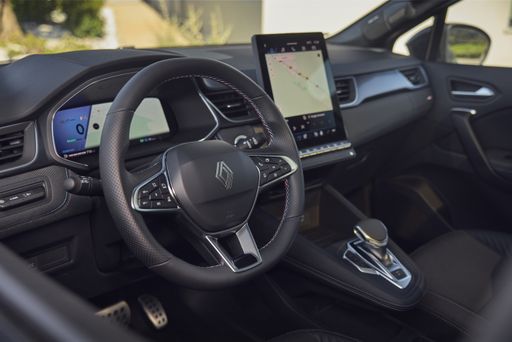
Step into the Opel Frontera and the message is functional: lots of space and practical surfaces that withstand family life but rarely impress on finesse. The Renault Symbioz feels more contemporary thanks to its smoother infotainment and tidier interface, yet its materials are still plainly aimed at pragmatism rather than premium flair. Long-distance comfort favours the Frontera’s cushioned ride for rear-seat passengers, but front seats can feel a touch short and simple on long stints; the Symbioz provides a quieter, more refined environment at speed which helps fatigue, despite firmer responses to sharp urban bumps. For tactile satisfaction and perceived quality the Symbioz edges ahead on polish and tech, while the Frontera wins on sheer space and a robust, forgiving seat-of-the-pants feel. Your choice here is whether you value a slightly nicer cabin and tech polish or maximum usable space and a soft ride.

Symbioz

Practicality and everyday usability

Practicality is where the Opel Frontera really makes its case: a notably generous second row, a deep and rectangular load bay with useful underfloor storage and the availability of a third row in some versions give families tangible flexibility. The Renault Symbioz counters with a sliding rear bench that lets you trade legroom for luggage space on the fly, and cargo volumes tend to be more consistent when you need them—though battery placement steals some boot height in electrified versions. Parking and visibility underline a clear trade-off: the Frontera’s rearward sightlines and limited front sensor options make tight manoeuvres more stressful, whereas the Symbioz is easier to place in the city even if some cameras and assist systems can feel a bit unreliable. Payload and real-world luggage handling favour the Frontera for heavy loads and larger families, while the Symbioz is smarter about everyday reconfigurability and trunk-level practicality for routine errands. In short, Frontera prioritises space and load capacity; Symbioz prioritises flexible packaging and day-to-day convenience.

Frontera

City friendliness and long‑distance behavior

In town the Renault Symbioz feels more at home thanks to its easy steering, high EV-share behaviour in hybrid setups and quick, intuitive infotainment that reduces fuss on short trips. The Opel Frontera is still city-capable, but its poorer rear visibility and chunkier ergonomics make urban parking and tight streets less relaxing without camera packages. On longer trips the Frontera’s soft suspension and roomy rear seats keep passengers comfortable for hours, while the Symbioz excels at economical motorway cruising and a quieter cabin at sustained speeds. If your commute is a mix of city and motorway and fuel/energy bills are a priority, the Symbioz will likely fit better; if you often carry people or luggage on long hauls and prefer a gentler ride, the Frontera is the sensible choice. Both have limitations for drivers who demand sporty dynamics or premium refinement on long journeys, but they achieve different kinds of long-distance comfort.

Symbioz

Buyer fit: who should choose which car?

Choose the Opel Frontera if your priority is maximum rear-seat space, a large and practical boot, straightforward controls and the option for seven seats when family life demands it—it’s pitched at buyers who want robust value and usable volume rather than gloss. Opt for the Renault Symbioz if lower real-world consumption, modern infotainment (Google/OpenR) and a versatile sliding rear bench matter more, especially for city-heavy drivers or cost-conscious commuters who appreciate tech that simplifies daily life. If you tow, carry heavy payloads or need a third row for children on occasion, the Frontera’s packaging will feel more forgiving; if you want a calmer, more efficient cruiser with smarter in-car systems, the Symbioz aligns better. Neither car is a luxury performance machine, but each nails a different set of practical priorities—next up, the technical comparison breaks down how they differ in range, charging behaviour, dimensions and equipment to help you decide which trade-offs matter most.

Here’s where it gets real: The technical differences in detail

Frontera

Costs and Efficiency:

When it comes to price and running costs, the biggest differences usually appear. This is often where you see which car fits your budget better in the long run.

Vauxhall Frontera is somewhat cheaper – starting at 20,700 £ , while the Renault Symbioz costs 24,700 £ . That’s a price difference of around 3,951 £.

Fuel consumption also shows a difference: the Renault Symbioz uses 4.5 L/100km and is a bit more efficient than the Vauxhall Frontera with 5.2 L/100km. The difference is about 0.7 L/100km.

Symbioz

Engine and Performance:

Power, torque and acceleration are the classic benchmarks for car enthusiasts – and here, some clear differences start to show.

When it comes to engine power, the Renault Symbioz offers very slightly more power – delivering 158 HP compared to 145 HP. That’s roughly 13 HP more horsepower.

Both models accelerate almost equally fast – 9.1 s from 0 to 100 km/h.

There’s also a difference in torque: the Renault Symbioz delivers moderately more torque with 265 Nm compared to 230 Nm. That’s about 35 Nm more.

Frontera

Space and Everyday Use:

Beyond pure performance, interior space and usability matter most in daily life. This is where you see which car is more practical and versatile.

Seats: Vauxhall Frontera offers more seats – 7 vs 5.

In terms of curb weight, Renault Symbioz is barely lighter – 1,359 kg compared to 1,394 kg. The difference is around 35 kg.

Looking at boot space, the Renault Symbioz offers noticeably more boot space – 576 L compared to 460 L. That’s a difference of about 116 L.

When it comes to payload, the Vauxhall Frontera carries slightly more – 570 kg compared to 459 kg. That’s a difference of about 111 kg.

Who wins the race in the data check?

The Vauxhall Frontera stands out in the key areas in the objective data comparison.
This result only shows which model scores more points on paper – not which of the two cars feels right for you.

from £20,700
Frontera

Vauxhall Frontera

  • Engine Type Electric, Petrol MHEV
  • Transmission Automatic
  • Drive Type Front-Wheel Drive
  • Power HP 110 - 145 HP
  • Consumption L/100km 5.2 L/100km
  • Consumption kWh/100km 16.7 - 18.3 kWh/100km
  • Electric Range 308 - 400 km
Vauxhall Frontera
Renault Symbioz

Costs and Consumption

View detailed analysis

Engine and Performance

View detailed analysis

Dimensions and Body

View detailed analysis

Vauxhall Frontera

The Opel Frontera is a rugged, no-nonsense SUV that balances off-road capability with comfortable everyday driving. It offers straightforward mechanics and a practical cabin, making it a sensible choice for buyers who value durability over flash.

details

Renault Symbioz

The Renault Symbioz is a forward-looking concept car that imagines a seamless link between vehicle and home, pairing a lounge-like cabin with striking, futuristic styling. More idea than production plan, it showcases Renault's vision for connected, autonomous and sustainable mobility while provoking debate about how we will live and travel.

details
Vauxhall Frontera
Renault Symbioz

Costs and Consumption

Price
20,700 - 30,000 £
Price
24,700 - 31,100 £
Consumption L/100km
5.2 L/100km
Consumption L/100km
4.5 - 6 L/100km
Consumption kWh/100km
16.7 - 18.3 kWh/100km
Consumption kWh/100km
-
Electric Range
308 - 400 km
Electric Range
-
Battery Capacity
-
Battery Capacity
-
co2
0 - 118 g/km
co2
102 - 136 g/km
Fuel tank capacity
-
Fuel tank capacity
-

Dimensions and Body

Body Type
SUV
Body Type
SUV
Seats
5 - 7
Seats
5
Doors
-
Doors
-
Curb weight
1,394 - 1,610 kg
Curb weight
1,359 - 1,465 kg
Trunk capacity
460 L
Trunk capacity
492 - 576 L
Length
-
Length
-
Width
1,795 mm
Width
1,797 mm
Height
-
Height
-
Max trunk capacity
-
Max trunk capacity
-
Payload
436 - 570 kg
Payload
455 - 459 kg

Engine and Performance

Engine Type
Electric, Petrol MHEV
Engine Type
Full Hybrid, Petrol MHEV
Transmission
Automatic
Transmission
Automatic, Manuel
Transmission Detail
Reduction Gearbox, Dual-Clutch Automatic
Transmission Detail
Automatic Gearbox, Manual Gearbox, Dual-Clutch Automatic
Drive Type
Front-Wheel Drive
Drive Type
Front-Wheel Drive
Power HP
110 - 145 HP
Power HP
140 - 158 HP
Acceleration 0-100km/h
9.1 - 14.2 s
Acceleration 0-100km/h
9.1 - 11 s
Max Speed
-
Max Speed
-
Torque
125 - 230 Nm
Torque
250 - 265 Nm
Number of Cylinders
3
Number of Cylinders
4
Power kW
81 - 107 kW
Power kW
103 - 116 kW
Engine capacity
1,199 cm3
Engine capacity
1,332 - 1,789 cm3

General

Model Year
2025
Model Year
2025
CO2 Efficiency Class
A, D
CO2 Efficiency Class
C, D, E
Brand
Vauxhall
Brand
Renault
DriveDuel uses data analysis and artificial intelligence to evaluate vehicle data and create content. Content is regularly reviewed and improved. The displayed prices are estimates based on German list prices, adjusted to the respective country’s VAT. Country-specific registration taxes are not included. This information is not legally binding.