VS

BMW 3 Series Saloon vs Mercedes GLC comparison

Compare performance (530 HP vs 680 HP), boot space and price (39,900 £ vs 50,300 £ ) at a glance. Find out which car is the better choice for you – BMW 3 Series Saloon or Mercedes GLC?

BMW 3 Series Saloon vs Mercedes GLC: Key differences

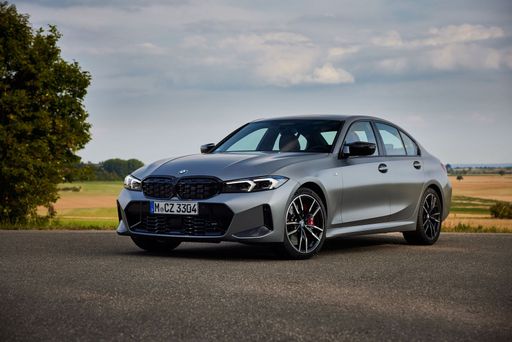
BMW 3 Series Saloon

  • clearly cheaper
  • clearly lighter

Mercedes GLC

4.4 (11 Reviews)
rate
  • noticeably more power
  • considerably more efficient
  • clearly more electric range
  • clearly more trunk space

All details on performance, efficiency, range and trunk space can be found in the technical comparison below – including user reviews for both models.

3 Series Saloon

Head to Head: BMW 3er Limousine vs. Mercedes GLC

The automotive world is a constant battleground of innovation and performance where brands continuously strive to outdo one another. Among the marquee contenders are the BMW 3er Limousine and the Mercedes GLC, each offering distinct appeal in both design and advanced technology. In this comparison, we delve into the technical specifications, performance metrics, and innovative features that set these two vehicles apart.
GLC

Body and Design: Sedan vs. SUV

First and foremost, the BMW 3er Limousine stands proud as a sedan, exuding a sporty demeanor and a focus on driving dynamics. With a length of up to 4,801 mm and a width of 1,903 mm, it offers a more streamlined profile. Its trunk capacity of 480 L caters perfectly to those in need of cargo space without compromising on style.

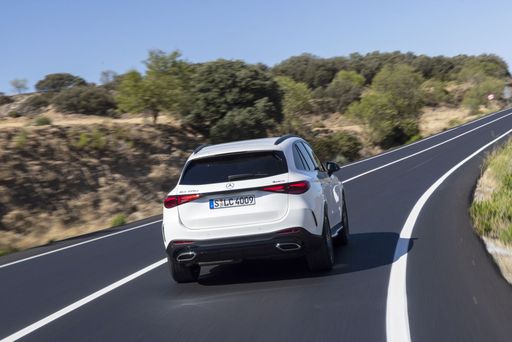
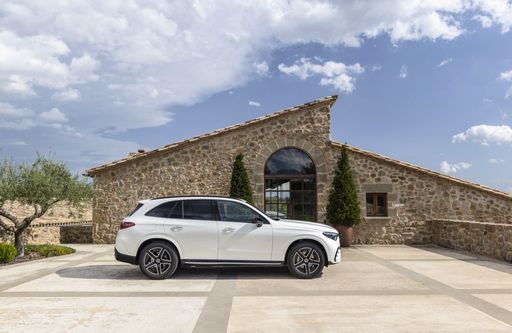
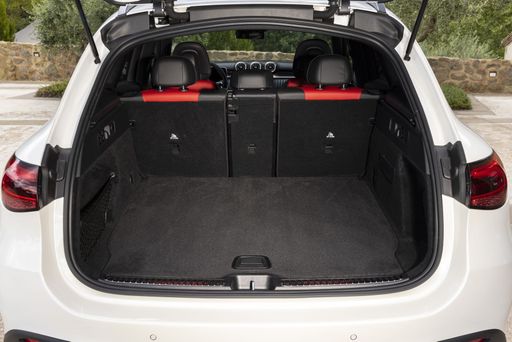
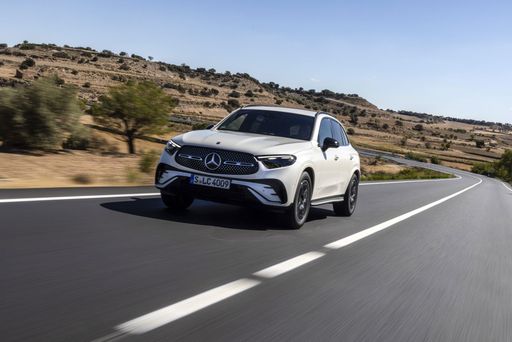
In contrast, the Mercedes GLC, classified as an SUV, measures around 4,749 mm in length and 1,890 mm in width. The higher height of 1,640 mm accentuates its robust and commanding presence on the road. With a larger trunk capacity of 620 L, the GLC is tailored for flexibility and utility, making it ideal for families and adventurous spirit-seekers alike.

3 Series Saloon

Power and Performance: Engine Options

When it comes to engine choices, both vehicles offer a variety of powertrains aimed at providing a balance of efficiency and performance. The BMW 3er Limousine offers a range of options, from a modest 150 HP to a powerful 530 HP V8. The diesel engines, particularly the 210 HP option, achieve impressive fuel efficiency of just 4.9 L/100 km, making it an excellent choice for long-distance commuters.

In comparison, the Mercedes GLC provides robust power with selections up to 680 HP, showcasing an impressive turbocharged 6-cylinder variant that can push the vehicle to 100 km/h in an astonishing 3.5 seconds. However, the fuel consumption figures are slightly higher, with the most efficient petrol hybrid version returning around 5.2 L/100 km. The GLC’s all-wheel-drive system enhances traction and stability across various terrains, making it a formidable contender in performance landscapes.

GLC

Innovations and Safety Features

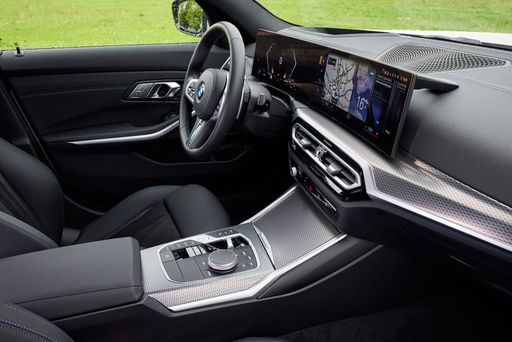
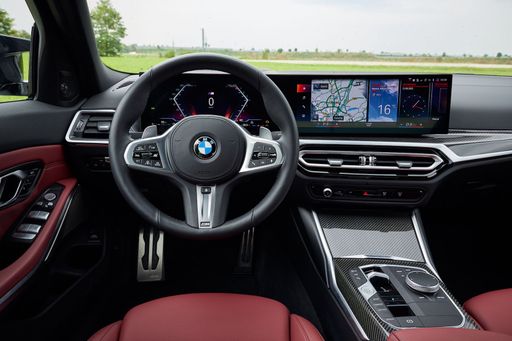
In terms of cutting-edge technology, both models are replete with advanced features. The BMW 3er Limousine includes options for the latest semi-autonomous driving aids, such as adaptive cruise control and lane-keeping assist. Additionally, BMW's infotainment system, known as iDrive, offers seamless integration of smartphone connectivity and voice controls.

Meanwhile, the Mercedes GLC accentuates luxury with its MBUX system, which utilizes voice activation to control navigation, climate, and media. Its safety package includes features like Active Brake Assist and a comprehensive surround-view camera system, ensuring a smooth drive both in urban settings and on highways.

3 Series Saloon

Environmental Considerations

As automakers pivot towards sustainability, both the BMW 3er Limousine and the Mercedes GLC offer plug-in hybrid options. The BMW's hybrid variant provides an electric range of up to 101 km, while the GLC slightly edges out with an electric range of up to 130 km. The eco-friendlier diesel options present in both models achieve respectable CO2 emissions, with the BMW averaging between 129 and 177 g/km and the GLC achieving a range between 130 and 235 g/km, placing them in competitive segments for eco-conscious consumers.

GLC

Conclusion: Which One Reigns Supreme?

Ultimately, choosing between the BMW 3er Limousine and the Mercedes GLC comes down to personal preference. If you crave a sporty driving experience paired with elegant styling, the 3er Limousine will surely meet your needs. However, if you prefer an SUV that combines comfort, ample storage, and off-road capability, the GLC stands as a formidable option. Both vehicles push the envelope in terms of technology and performance, making them champions in their respective categories.

Here’s where it gets real: The technical differences in detail

3 Series Saloon

Costs and Efficiency:

Looking at overall running costs, both models reveal some interesting differences in everyday economy.

BMW 3 Series Saloon is clearly cheaper – starting at 39,900 £ , while the Mercedes GLC costs 50,300 £ . That’s a price difference of around 10,385 £.

Fuel consumption also shows a difference: the Mercedes GLC uses 1.6 L/100km and is considerably more efficient than the BMW 3 Series Saloon with 2.4 L/100km. The difference is about 0.8 L/100km.

As for electric range, the Mercedes GLC offers clearly more range – reaching up to 714 km, about 613 km more than the BMW 3 Series Saloon.

GLC

Engine and Performance:

Power, torque and acceleration are the classic benchmarks for car enthusiasts – and here, some clear differences start to show.

When it comes to engine power, the Mercedes GLC offers noticeably more power – delivering 680 HP compared to 530 HP. That’s roughly 150 HP more horsepower.

Both models accelerate almost equally fast – 3.5 s from 0 to 100 km/h.

Looking at top speed, the Mercedes GLC is very slightly faster – reaching 275 km/h, while the BMW 3 Series Saloon tops out at 250 km/h. The difference is around 25 km/h.

There’s also a difference in torque: the Mercedes GLC delivers markedly more torque with 1,020 Nm compared to 700 Nm. That’s about 320 Nm more.

3 Series Saloon

Space and Everyday Use:

Cabin size, boot volume and payload all play a role in everyday practicality. Here, comfort and flexibility make the difference.

Both vehicles offer seating for 5 people.

In terms of curb weight, BMW 3 Series Saloon is clearly lighter – 1,575 kg compared to 1,910 kg. The difference is around 335 kg.

Looking at boot space, the Mercedes GLC offers clearly more boot space – 620 L compared to 480 L. That’s a difference of about 140 L.

When it comes to payload, the Mercedes GLC carries moderately more – 600 kg compared to 495 kg. That’s a difference of about 105 kg.

Who wins the race in the data check?

The Mercedes GLC stands well ahead of its rival in the objective data comparison.
This result only shows which model scores more points on paper – not which of the two cars feels right for you.

from £50,300
GLC

Mercedes GLC

  • Engine Type : Petrol MHEV, Plugin Hybrid, Diesel MHEV, Electric
  • Transmission : Automatic
  • Drive Type : All-Wheel Drive
  • Power HP : 186 - 680 HP
  • Consumption L/100km : 1.6 - 9.7 L/100km
  • Consumption kWh/100km : 14.9 - 16.6 kWh/100km
  • Electric Range : 12 - 714 km
BMW 3 Series Saloon
Mercedes GLC

Costs and Consumption

View detailed analysis

Engine and Performance

View detailed analysis

Dimensions and Body

View detailed analysis

BMW 3 Series Saloon

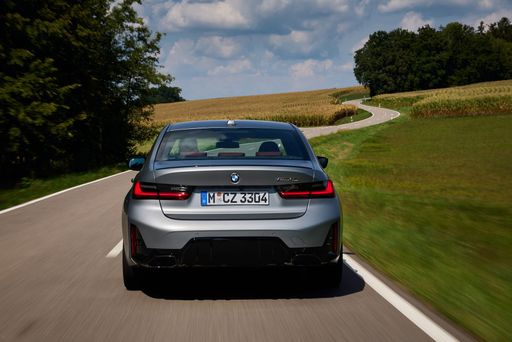
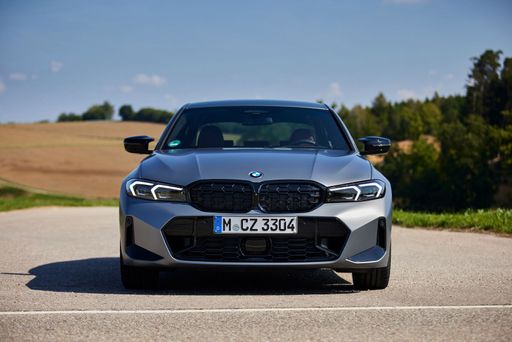
The BMW 3 Series saloon is a driver's car in a suit, blending poised handling with a cabin that feels more premium than its practicality suggests. It’s composed enough for daily duties yet playful enough to keep weekend drives interesting, making it a sensible choice for buyers who still want to have fun.

details

Mercedes GLC

The Mercedes GLC blends plush cabin comfort and composed road manners into an SUV that feels more grown-up than it looks. It won’t shout for attention, but will quietly please buyers who want refinement, usable space and a touch of luxury without the drama.

details
BMW 3 Series Saloon
Mercedes GLC

Costs and Consumption

Price
39,900 - 91,000 £
Price
50,300 - 126,600 £
Consumption L/100km
2.4 - 10.1 L/100km
Consumption L/100km
1.6 - 9.7 L/100km
Consumption kWh/100km
-
Consumption kWh/100km
14.9 - 16.6 kWh/100km
Electric Range
96 - 101 km
Electric Range
12 - 714 km
Battery Capacity
19.5 kWh
Battery Capacity
94 kWh
co2
54 - 227 g/km
co2
0 - 221 g/km
Fuel tank capacity
40 - 59 L
Fuel tank capacity
62 - 65 L

Dimensions and Body

Body Type
Sedan
Body Type
SUV
Seats
5
Seats
5
Doors
4
Doors
5
Curb weight
1,575 - 1,960 kg
Curb weight
1,910 - 2,535 kg
Trunk capacity
375 - 480 L
Trunk capacity
390 - 620 L
Length
4,713 mm
Length
4,716 - 4,845 mm
Width
1,827 - 1,903 mm
Width
1,890 - 1,913 mm
Height
1,440 - 1,446 mm
Height
1,603 - 1,644 mm
Max trunk capacity
-
Max trunk capacity
1,490 - 1,740 L
Payload
405 - 495 kg
Payload
475 - 600 kg

Engine and Performance

Engine Type
Diesel MHEV, Petrol, Petrol MHEV, Plugin Hybrid
Engine Type
Petrol MHEV, Plugin Hybrid, Diesel MHEV, Electric
Transmission
Automatic, Manuel
Transmission
Automatic
Transmission Detail
Automatic Gearbox, Manual Gearbox
Transmission Detail
Automatic Gearbox, Reduction Gearbox
Drive Type
Rear-Wheel Drive, All-Wheel Drive
Drive Type
All-Wheel Drive
Power HP
150 - 530 HP
Power HP
186 - 680 HP
Acceleration 0-100km/h
3.5 - 8.6 s
Acceleration 0-100km/h
3.5 - 9 s
Max Speed
218 - 250 km/h
Max Speed
210 - 275 km/h
Torque
250 - 700 Nm
Torque
320 - 1,020 Nm
Number of Cylinders
4 - 6
Number of Cylinders
4 - 6
Power kW
110 - 390 kW
Power kW
137 - 500 kW
Engine capacity
1,995 - 2,998 cm3
Engine capacity
1,991 - 2,989 cm3

General

Model Year
2,024 - 2,025
Model Year
2,025 - 2,026
CO2 Efficiency Class
D, E, F, G, B
CO2 Efficiency Class
F, G, D, B, E, A
Brand
BMW
Brand
Mercedes-Benz
DriveDuel uses data analysis and artificial intelligence to evaluate vehicle data and create content. Content is regularly reviewed and improved. The displayed prices are estimates based on German list prices, adjusted to the respective country’s VAT. Country-specific registration taxes are not included. This information is not legally binding.