VS

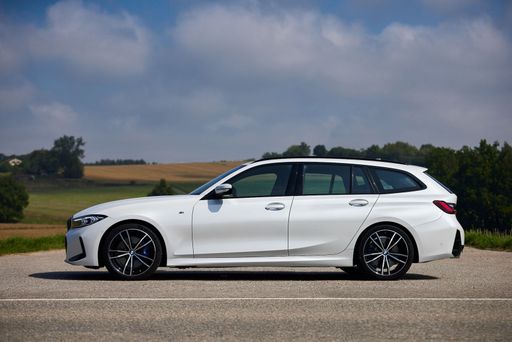
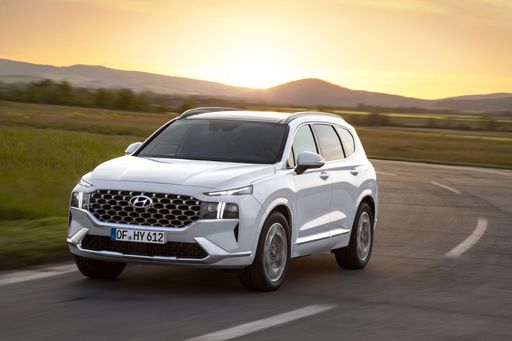
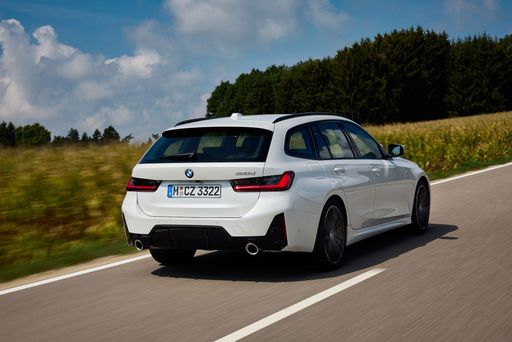
BMW 3 Series Touring vs Hyundai Santa Fe comparison

Compare performance (530 HP vs 288 HP), boot space and price (41,100 £ vs 51,700 £ ) at a glance. Find out which car is the better choice for you – BMW 3 Series Touring or Hyundai Santa Fe?

BMW 3 Series Touring vs Hyundai Santa Fe: Key differences

BMW 3 Series Touring

4.3 (1 Reviews)
rate
  • markedly cheaper
  • significantly more power
  • substantially more efficient
  • substantially more electric range
  • significantly quicker 0–100 km/h
  • slightly lighter

Hyundai Santa Fe

4.7 (1 Reviews)
rate
  • visibly more trunk space
3 Series Touring

The Ultimate Showdown: BMW 3er Touring vs Hyundai Santa Fe

The battle between luxury and practicality is a common theme in the automotive world. In this edition, we set the versatile BMW 3er Touring against the spacious Hyundai Santa Fe. Both vehicles offer unique advantages, tailored to different needs and preferences. Here’s a closer look at their technical aspects and innovations.
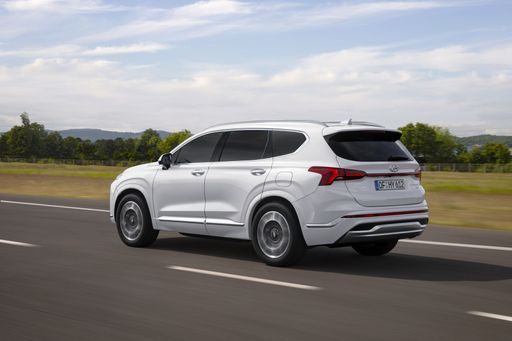
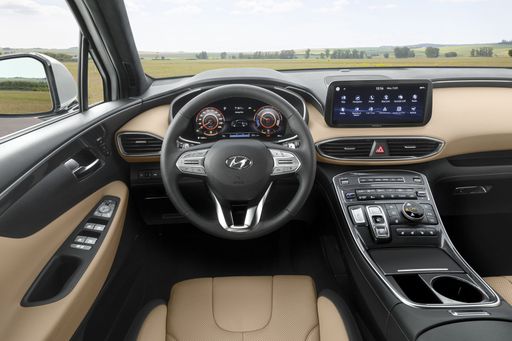
Santa Fe

Under the Hood: Performance and Efficiency

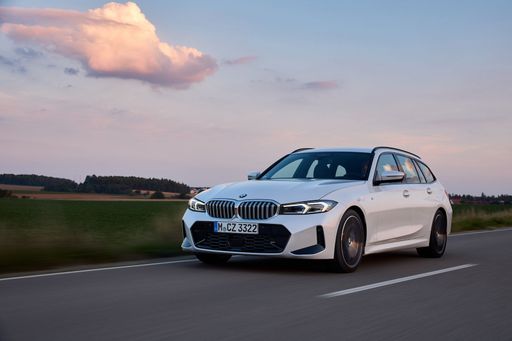
The BMW 3er Touring is a wagon that marries elegance with performance. With engine options spanning from Diesel MHEV to Plugin Hybrid, the 3er Touring caters to diverse driving styles. It packs a punch with power outputs ranging up to 550 HP and a blistering 0-100 km/h acceleration in just 3.5 seconds when opting for the top performance trims.

The Hyundai Santa Fe, categorized as an SUV, offers both a Full Hybrid and a Plugin Hybrid engine type. While its power levels peak at 253 HP, the emphasis here is on efficiency and all-weather capability. The Santa Fe achieves a respectable consumption figure, offering a fuel-efficient 1.7 L/100km in its Plugin Hybrid variant with an electric range of 54 km.

3 Series Touring

Capacities and Dimensions: Space Meets Style

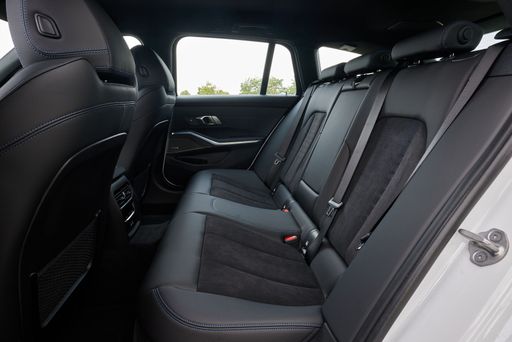
On the interior front, the BMW 3er Touring seats five comfortably, showcasing a trunk capacity of up to 500 liters. The 3er Touring's compact length of up to 4801 mm and width of 1918 mm ensures agility without compromising on luxury, making it perfect for urban driving.

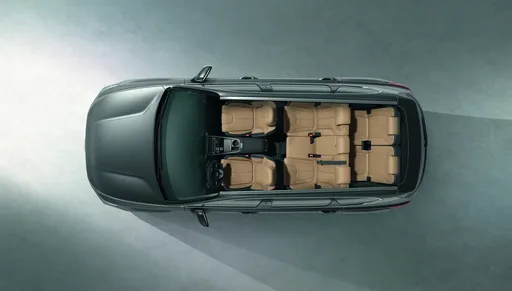
In contrast, the Hyundai Santa Fe offers flexibility with five, six, or seven-seat configurations, with a maximum trunk capacity of 711 liters. Its larger dimensions, with a length of 4830 mm and height of 1720 mm, signal its suitability for families or those needing extra hauling space, while maintaining a manageable curb weight of 1920 to 2165 kg.

Santa Fe

Transmission and Drive Dynamics

Both vehicles are equipped with automatic gearboxes; however, the driving experiences differ considerably. The BMW offers both Rear-Wheel Drive and All-Wheel Drive options, perfect for those seeking a dynamic ride with precise handling.

Conversely, the Hyundai Santa Fe is available with Front-Wheel Drive or All-Wheel Drive setups, providing flexibility with added traction for challenging terrains, making it a compelling choice for adventure-seekers.

3 Series Touring

Innovation and Technology

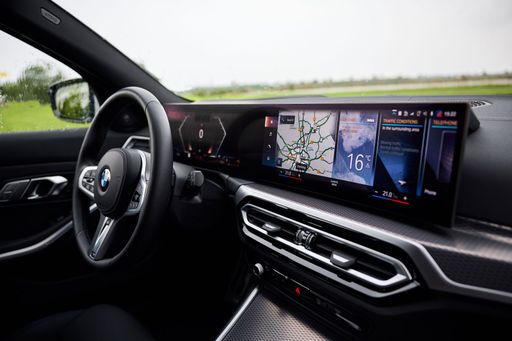
Technology in the BMW 3er Touring is abundant, from its MHEV technology to a Plugin Hybrid engine delivering a substantial electric range of up to 96 km, backed by a 19.5 kWh battery. It perfectly brings together performance and efficiency.

Hyundai Santa Fe's hybrid systems prioritize efficiency and are perfectly complemented by their CO2 output, achieving a low 38 g/km in its eco-friendliest form. These green credentials, alongside robust safety features, mark the Santa Fe as an intelligent, environmentally-conscious choice.

Santa Fe

Verdict: Which is the Right Ride?

The BMW 3er Touring is the embodiment of luxury and performance, ideal for car enthusiasts who appreciate sophisticated engineering and spirited driving dynamics. Meanwhile, the Hyundai Santa Fe offers unparalleled practicality and capacity, coupled with eco-friendly hybrid technology, making it an attractive option for families and sustainability-focused drivers.

Ultimately, the choice between these two automotive giants is dictated by personal needs, lifestyle, and driving preferences. Whether it's the thrill of the open road or the call of the family adventure, both contenders shine uniquely in their respective fields.

Here’s where it gets real: The technical differences in detail

3 Series Touring

Costs and Efficiency:

When it comes to price and running costs, the biggest differences usually appear. This is often where you see which car fits your budget better in the long run.

BMW 3 Series Touring is markedly cheaper – starting at 41,100 £ , while the Hyundai Santa Fe costs 51,700 £ . That’s a price difference of around 10,671 £.

Fuel consumption also shows a difference: the BMW 3 Series Touring uses 2.5 L/100km and is substantially more efficient than the Hyundai Santa Fe with 3.8 L/100km. The difference is about 1.3 L/100km.

As for electric range, the BMW 3 Series Touring offers substantially more range – reaching up to 97 km, about 43 km more than the Hyundai Santa Fe.

Santa Fe

Engine and Performance:

Power, torque and acceleration say a lot about how a car feels on the road. This is where you see which model delivers more driving dynamics.

When it comes to engine power, the BMW 3 Series Touring offers significantly more power – delivering 530 HP compared to 288 HP. That’s roughly 242 HP more horsepower.

When accelerating from 0 to 100 km/h, the BMW 3 Series Touring is significantly quicker – completing the sprint in 3.6 s, while the Hyundai Santa Fe takes 8 s. That’s about 4.4 s quicker.

There’s also a difference in torque: the BMW 3 Series Touring delivers significantly more torque with 700 Nm compared to 380 Nm. That’s about 320 Nm more.

3 Series Touring

Space and Everyday Use:

Beyond pure performance, interior space and usability matter most in daily life. This is where you see which car is more practical and versatile.

Seats: Hyundai Santa Fe offers more seats – 7 vs 5.

In terms of curb weight, BMW 3 Series Touring is slightly lighter – 1,650 kg compared to 1,920 kg. The difference is around 270 kg.

Looking at boot space, the Hyundai Santa Fe offers visibly more boot space – 704 L compared to 500 L. That’s a difference of about 204 L.

When it comes to payload, the Hyundai Santa Fe carries visibly more – 665 kg compared to 520 kg. That’s a difference of about 145 kg.

Who wins the race in the data check?

The BMW 3 Series Touring is far ahead overall in the objective data comparison.
This result only shows which model scores more points on paper – not which of the two cars feels right for you.

from £41,100
3 Series Touring

BMW 3 Series Touring

  • Engine Type : Diesel MHEV, Petrol, Petrol MHEV, Plugin Hybrid
  • Transmission : Automatic
  • Drive Type : Rear-Wheel Drive, All-Wheel Drive
  • Power HP : 150 - 530 HP
  • Consumption L/100km : 2.5 - 10.3 L/100km
  • Electric Range : 91 - 97 km
BMW 3 Series Touring
Hyundai Santa Fe

Costs and Consumption

View detailed analysis

Engine and Performance

View detailed analysis

Dimensions and Body

View detailed analysis

BMW 3 Series Touring

The BMW 3 Series Touring blends sporting poise with everyday practicality, wrapping sharp handling and a premium cabin into a wagon that actually makes errands feel enjoyable. It’s the kind of car that hides a family-hauler’s sense of duty beneath a driver's-car attitude — useful, classy, and just cheeky enough to make you smile on the open road.

details

Hyundai Santa Fe

The Hyundai Santa Fe blends practical family friendliness with a hint of premium style, offering roomy, sensible packaging wrapped in modern, confident design. Inside it serves up comfortable seats, straightforward tech and a calm, composed ride that makes daily drives feel a little more grown up — a solid all‑rounder that doesn’t try to be flashy.

details
BMW 3 Series Touring
Hyundai Santa Fe

Costs and Consumption

Price
41,100 - 91,900 £
Price
51,700 - 58,600 £
Consumption L/100km
2.5 - 10.3 L/100km
Consumption L/100km
3.8 - 7.2 L/100km
Consumption kWh/100km
-
Consumption kWh/100km
-
Electric Range
91 - 97 km
Electric Range
54 km
Battery Capacity
19.5 kWh
Battery Capacity
-
co2
57 - 233 g/km
co2
90 - 162 g/km
Fuel tank capacity
40 - 59 L
Fuel tank capacity
-

Dimensions and Body

Body Type
Estate
Body Type
SUV
Seats
5
Seats
5 - 7
Doors
5
Doors
-
Curb weight
1,650 - 2,025 kg
Curb weight
1,920 - 2,165 kg
Trunk capacity
410 - 500 L
Trunk capacity
621 - 704 L
Length
4,713 mm
Length
-
Width
1,827 - 1,903 mm
Width
1,900 mm
Height
1,440 - 1,448 mm
Height
-
Max trunk capacity
1,420 - 1,510 L
Max trunk capacity
-
Payload
430 - 520 kg
Payload
560 - 665 kg

Engine and Performance

Engine Type
Diesel MHEV, Petrol, Petrol MHEV, Plugin Hybrid
Engine Type
Full Hybrid, Plugin Hybrid
Transmission
Automatic
Transmission
Automatic
Transmission Detail
Automatic Gearbox
Transmission Detail
Automatic Gearbox
Drive Type
Rear-Wheel Drive, All-Wheel Drive
Drive Type
Front-Wheel Drive, All-Wheel Drive
Power HP
150 - 530 HP
Power HP
239 - 288 HP
Acceleration 0-100km/h
3.6 - 8.8 s
Acceleration 0-100km/h
8 - 9.2 s
Max Speed
213 - 250 km/h
Max Speed
-
Torque
250 - 700 Nm
Torque
380 Nm
Number of Cylinders
4 - 6
Number of Cylinders
4
Power kW
110 - 390 kW
Power kW
176 - 212 kW
Engine capacity
1,995 - 2,998 cm3
Engine capacity
1,598 cm3

General

Model Year
2,024 - 2,025
Model Year
2,025
CO2 Efficiency Class
D, E, F, G, B
CO2 Efficiency Class
E, F, B
Brand
BMW
Brand
Hyundai
DriveDuel uses data analysis and artificial intelligence to evaluate vehicle data and create content. Content is regularly reviewed and improved. The displayed prices are estimates based on German list prices, adjusted to the respective country’s VAT. Country-specific registration taxes are not included. This information is not legally binding.