
 Deutschland
 France
 Nederland
 Great Britain
 Sverige
 Danmark
 Suomi
Suomi Italia
 Polska
 Česko
Česko España
VS
BMW i4 vs Aston Martin DBX comparison
Compare performance (601 HP vs 727 HP), boot space and price (49,900 £ vs 168,900 £ ) at a glance. Find out which car is the better choice for you – BMW i4 or Aston Martin DBX?
BMW i4 vs Aston Martin DBX: Key differences
All details on performance, efficiency, range and trunk space can be found in the technical comparison below – including user reviews for both models.
i4
Costs and Efficiency:
When it comes to price and running costs, the biggest differences usually appear. This is often where you see which car fits your budget better in the long run.
BMW i4 is considerably cheaper – starting at 49,900 £ , while the Aston Martin DBX costs 168,900 £ . That’s a price difference of around 118,972 £.
DBX
Engine and Performance:
Power, torque and acceleration say a lot about how a car feels on the road. This is where you see which model delivers more driving dynamics.
When it comes to engine power, the Aston Martin DBX offers slightly more power – delivering 727 HP compared to 601 HP. That’s roughly 126 HP more horsepower.
When accelerating from 0 to 100 km/h, the Aston Martin DBX is somewhat quicker – completing the sprint in 3.3 s, while the BMW i4 takes 3.7 s. That’s about 0.4 s quicker.
There’s also a difference in torque: the Aston Martin DBX delivers moderately more torque with 900 Nm compared to 795 Nm. That’s about 105 Nm more.
i4
Space and Everyday Use:
Cabin size, boot volume and payload all play a role in everyday practicality. Here, comfort and flexibility make the difference.
Both vehicles offer seating for 5 people.
In terms of curb weight, BMW i4 is slightly lighter – 2,070 kg compared to 2,320 kg. The difference is around 250 kg.
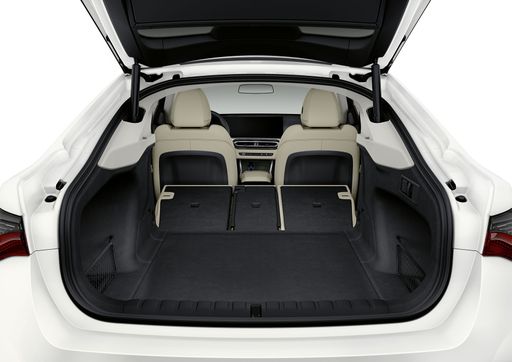
Looking at boot space, the Aston Martin DBX offers marginally more boot space – 491 L compared to 470 L. That’s a difference of about 21 L.
When it comes to payload, the Aston Martin DBX carries visibly more – 710 kg compared to 480 kg. That’s a difference of about 230 kg.
Who wins the race in the data check?
The BMW i4 is far ahead overall in the objective data comparison.
This result only shows which model scores more points on paper – not which of the two cars feels right for you.
from £49,900
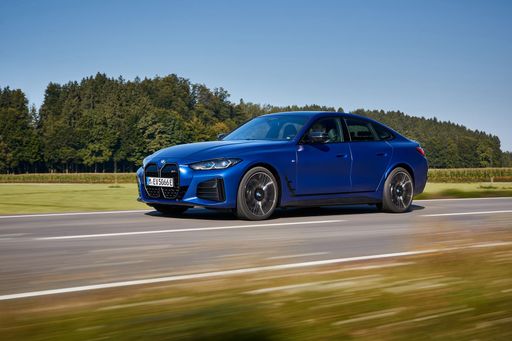
BMW i4
BMW i4
Aston Martin DBX
Costs and Consumption
View detailed analysis
View detailed analysis
Engine and Performance
View detailed analysis
View detailed analysis
Dimensions and Body
View detailed analysis
View detailed analysis
BMW i4
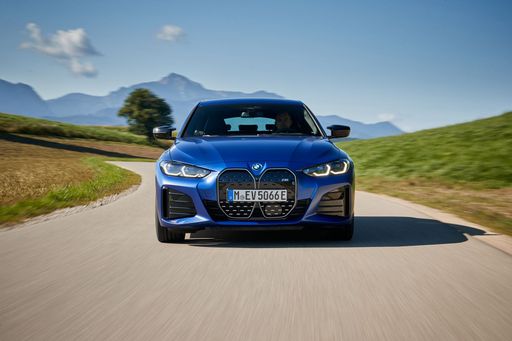
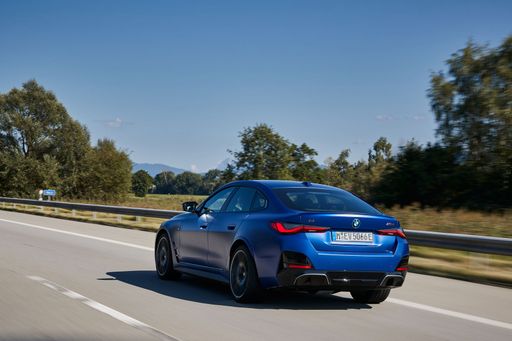
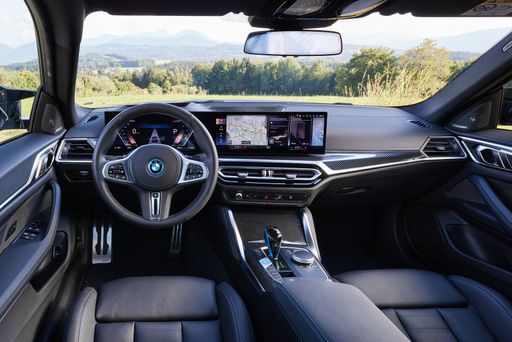
The BMW i4 arrives with the poise of a classic Gran Coupé, marrying BMW's playful handling with a sleek, modern interior that makes switching to electric feel like an upgrade rather than a compromise. For buyers who want a practical daily driver that still enjoys a spirited back-road run, the i4 quietly delivers smiles and a surprising dose of driver engagement.
details
Aston Martin DBX
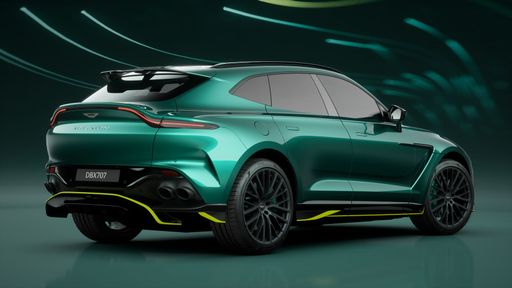
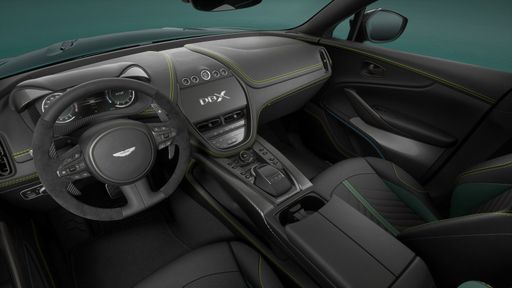
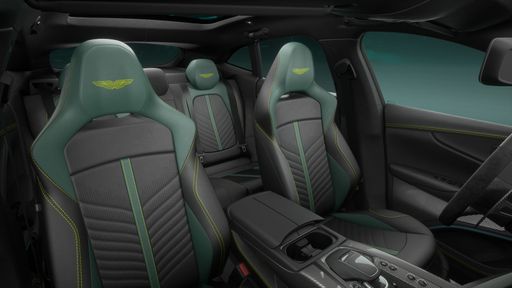
With the DBX, Aston Martin has wrapped its trademark sports-car drama into a high-riding package that looks like it could sprint off the driveway and into a gala, while the cabin pampers occupants with handcrafted leather and theatrical attention to detail. Behind the wheel it feels like a grand tourer that learned how to tackle country roads, serving up surprising agility for such a stately presence and keeping rivals honest with its rarefied blend of performance and luxury.
details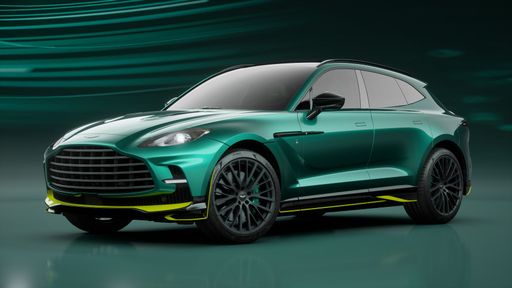
BMW i4
Aston Martin DBX
Costs and Consumption |
|
|---|---|
|
Price
49,900 - 63,200 £
|
Price
168,900 - 213,400 £
|
|
Consumption L/100km
-
|
Consumption L/100km
14.2 L/100km
|
|
Consumption kWh/100km
14.7 - 16.7 kWh/100km
|
Consumption kWh/100km
-
|
|
Electric Range
514 - 613 km
|
Electric Range
-
|
|
Battery Capacity
-
|
Battery Capacity
-
|
|
co2
0 g/km
|
co2
323 g/km
|
|
Fuel tank capacity
-
|
Fuel tank capacity
-
|
Dimensions and Body |
|
|---|---|
|
Body Type
Hatchback
|
Body Type
SUV
|
|
Seats
5
|
Seats
5
|
|
Doors
-
|
Doors
-
|
|
Curb weight
2,070 - 2,285 kg
|
Curb weight
2,320 kg
|
|
Trunk capacity
470 L
|
Trunk capacity
491 L
|
|
Length
-
|
Length
-
|
|
Width
1,852 mm
|
Width
1,998 mm
|
|
Height
-
|
Height
-
|
|
Max trunk capacity
-
|
Max trunk capacity
-
|
|
Payload
445 - 480 kg
|
Payload
710 kg
|
Engine and Performance |
|
|---|---|
|
Engine Type
Electric
|
Engine Type
Petrol
|
|
Transmission
Automatic
|
Transmission
Automatic
|
|
Transmission Detail
Reduction Gearbox
|
Transmission Detail
Automatic Gearbox
|
|
Drive Type
Rear-Wheel Drive, All-Wheel Drive
|
Drive Type
All-Wheel Drive
|
|
Power HP
286 - 601 HP
|
Power HP
707 - 727 HP
|
|
Acceleration 0-100km/h
3.7 - 6 s
|
Acceleration 0-100km/h
3.3 s
|
|
Max Speed
-
|
Max Speed
-
|
|
Torque
400 - 795 Nm
|
Torque
900 Nm
|
|
Number of Cylinders
-
|
Number of Cylinders
8
|
|
Power kW
210 - 442 kW
|
Power kW
520 - 535 kW
|
|
Engine capacity
-
|
Engine capacity
3,982 cm3
|
General |
|
|---|---|
|
Model Year
2,024 - 2,025
|
Model Year
2,022 - 2,025
|
|
CO2 Efficiency Class
A
|
CO2 Efficiency Class
G
|
|
Brand
BMW
|
Brand
Aston Martin
|
DriveDuel uses data analysis and artificial intelligence to evaluate vehicle data and create content. Content is regularly reviewed and improved.
The displayed prices are estimates based on German list prices, adjusted to the respective country’s VAT. Country-specific registration taxes are not included. This information is not legally binding.