@ BMW Group Press
@ Hyundai Motor Company
VS

BMW i4 vs Hyundai IONIQ 5 – Performance, range & efficiency compared

Two cars, one duel: BMW i4 meets Hyundai IONIQ 5.
Which one wins in performance, efficiency and value for money? Find out now!

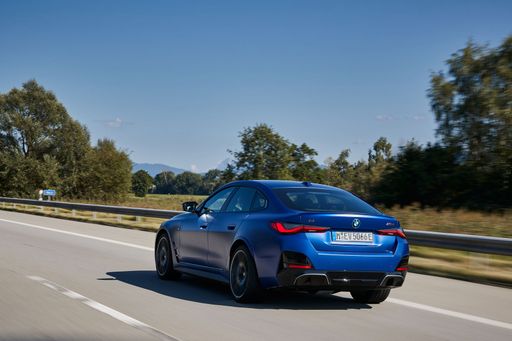
i4 @ BMW Group Press

Electric Elegance: BMW i4 vs Hyundai IONIQ 5

The automotive world is steadily moving towards an electrified future, and two stalwarts in this revolution are none other than the BMW i4 and Hyundai IONIQ 5. Both models have made a significant impact in the market with their innovative features and robust performance. Let's dive deeper into what sets these electric vehicles apart from each other.
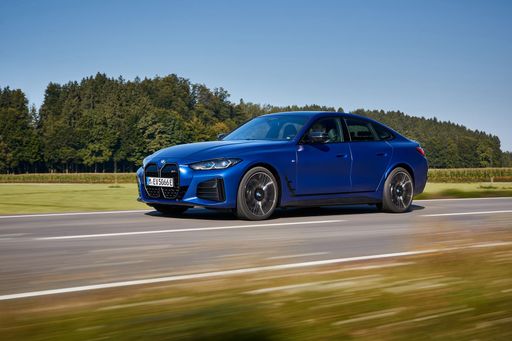
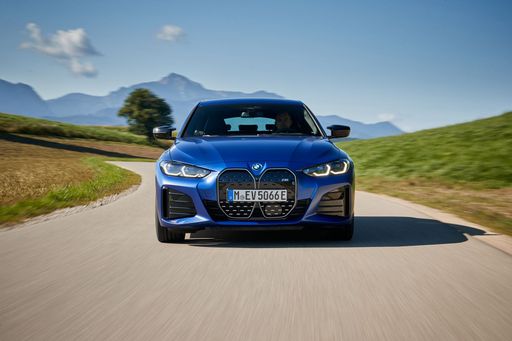
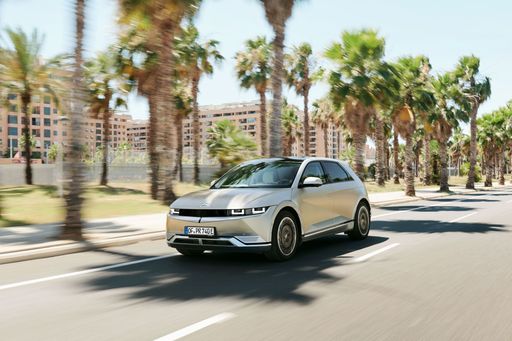
IONIQ 5 @ Hyundai Motor Company

Design and Styling

The BMW i4, with its hatchback design, embraces traditional BMW aesthetics with a modern twist. Its sporty and sleek appearance is accentuated by dimensions of 4783 mm in length, 1852 mm in width, and 1448 mm in height. The i4 effortlessly combines elegance with a purposeful stance typical of the BMW lineage.

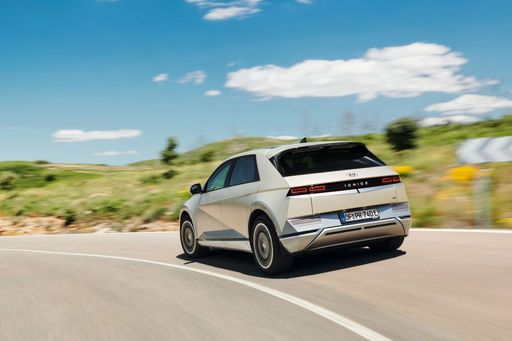
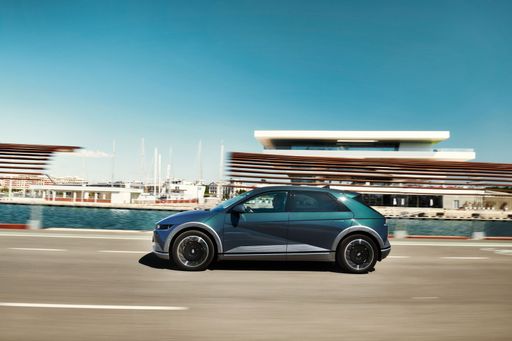
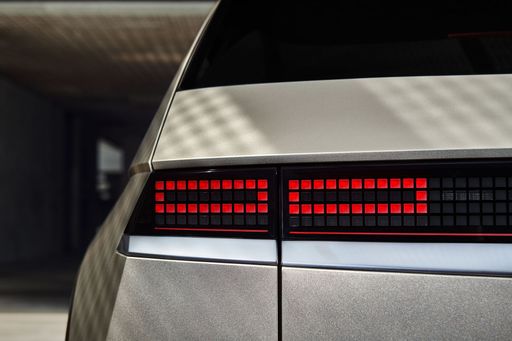
On the other hand, the Hyundai IONIQ 5 presents a bold, futuristic SUV silhouette. With a length of 4715 mm and a height of 1585 mm, it stands out with a striking design that hints at Hyundai's bold vision for the future. Its larger width, ranging up to 1940 mm, gives it a broad, planted look that’s complemented by its unique pixel-inspired lighting.

i4 @ BMW Group Press

Performance and Range

Under the hood, the BMW i4 delivers a potent dose of excitement with power output ranging from 286 to 544 HP. This translates to impressive acceleration, with 0-100 km/h achievable in just 3.9 to 6 seconds, depending on the variant. Such performance is supported by an electric range of 485 to 582 km, courtesy of its 67.1 to 81.3 kWh battery capacity.

The Hyundai IONIQ 5 doesn't lag in the performance department, offering power from 170 to 609 HP. It races from 0-100 km/h in just 3.5 to 8.5 seconds. With its larger battery option of up to 84 kWh, the IONIQ 5 covers distances ranging from 440 to 570 km on a single charge, making it both powerful and capable.

IONIQ 5 @ Hyundai Motor Company

Interior and Comfort

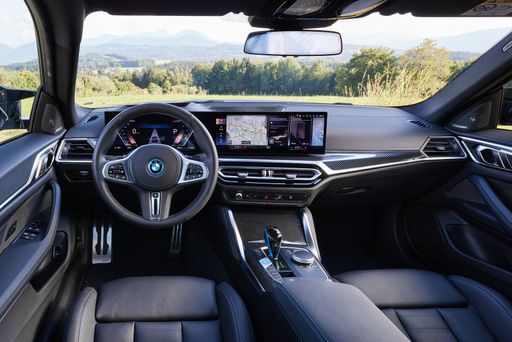
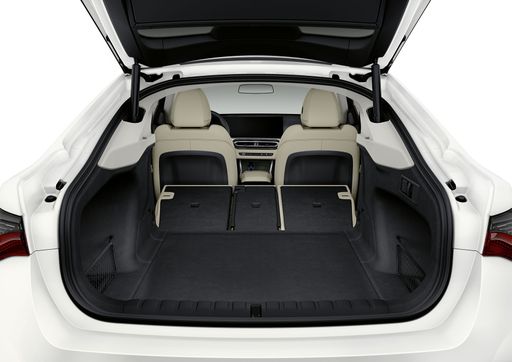
Inside, the BMW i4 prioritizes luxury with its sophisticated cabin that comfortably seats five. A trunk capacity of 470 liters ensures ample space for luggage, making it suitable for family trips. The focus is on driver-centric layout and premium materials, typical of BMW's commitment to luxury.

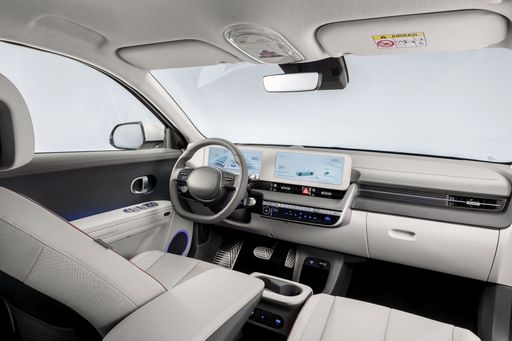
Complementing its external avant-garde looks, the IONIQ 5's interior exudes a modern charm. With a capacity for five passengers, it offers a variable trunk space ranging up to 520 liters, effectively balancing style with practicality. Its eco-friendly interior materials and advanced tech features create a harmonious blend of comfort and sustainability.

i4 @ BMW Group Press

Technology and Innovations

The BMW i4 doesn't compromise on cutting-edge technology. It features an advanced infotainment system with connectivity options that pamper both driver and passengers. Innovations in driving dynamics and energy recuperation showcase BMW's engineering prowess, emphasizing efficiency and thrill.

Similarly, the IONIQ 5 is a technological marvel, boasting an intuitive, dual-screen setup for infotainment and driver information. It also shines with its Vehicle-to-Load (V2L) technology, allowing the car to power small appliances, an innovation that underscores Hyundai's forward-thinking approach.

IONIQ 5 @ Hyundai Motor Company

Conclusion

Both the BMW i4 and Hyundai IONIQ 5 symbolize the future of electric mobility, each with distinct strengths. The i4, with its sporty elegance and luxury-driven interior, appeals to those seeking a performance-oriented experience. Meanwhile, the IONIQ 5, with its futuristic design and practical innovations, caters to tech-savvy consumers who value versatility.

Ultimately, choosing between these two hi-tech electric vehicles depends on one's priorities: whether it’s the sophisticated charm of the BMW i4 or the Hyundai IONIQ 5's bolder, more futuristic take on sustainable mobility.

Here’s where it gets real: The technical differences in detail

i4 @ BMW Group Press

Costs and Efficiency:

Price and efficiency are often the first things buyers look at. Here it becomes clear which model has the long-term edge – whether at the pump, the plug, or in purchase price.

Hyundai IONIQ 5 has a clearly perceptible advantage in terms of price – it starts at 38500 £, while the BMW i4 costs 49400 £. That’s a price difference of around 10886 £.

In terms of energy consumption, the advantage goes to the BMW i4: with 14.70 kWh per 100 km, it’s minimal more efficient than the Hyundai IONIQ 5 with 15.60 kWh. That’s a difference of about 0.90 kWh.

As for range, the BMW i4 performs hardly perceptible better – achieving up to 613 km, about 43 km more than the Hyundai IONIQ 5.

IONIQ 5 @ Hyundai Motor Company

Engine and Performance:

Under the bonnet, it becomes clear which model is tuned for sportiness and which one takes the lead when you hit the accelerator.

When it comes to engine power, the Hyundai IONIQ 5 has a barely noticeable edge – offering 650 HP compared to 601 HP. That’s roughly 49 HP more horsepower.

In acceleration from 0 to 100 km/h, the Hyundai IONIQ 5 is hardly perceptible quicker – completing the sprint in 3.50 s, while the BMW i4 takes 3.70 s. That’s about 0.20 s faster.

In terms of top speed, the Hyundai IONIQ 5 performs somewhat better – reaching 260 km/h, while the BMW i4 tops out at 225 km/h. The difference is around 35 km/h.

There’s also a difference in torque: BMW i4 pulls minimal stronger with 795 Nm compared to 770 Nm. That’s about 25 Nm difference.

i4 @ BMW Group Press

Space and Everyday Use:

Whether family car or daily driver – which one offers more room, flexibility and comfort?

Both vehicles offer seating for 5 people.

In curb weight, Hyundai IONIQ 5 is barely noticeable lighter – 1955 kg compared to 2070 kg. The difference is around 115 kg.

In terms of boot space, the Hyundai IONIQ 5 offers hardly perceptible more room – 520 L compared to 470 L. That’s a difference of about 50 L.

In maximum load capacity, the Hyundai IONIQ 5 performs slightly better – up to 1580 L, which is about 290 L more than the BMW i4.

When it comes to payload, Hyundai IONIQ 5 minimal takes the win – 530 kg compared to 480 kg. That’s a difference of about 50 kg.

Who wins the race?

The Hyundai IONIQ 5 proves to be outperforms in nearly all aspects and therefore becomes our DriveDuel Champion!
Hyundai IONIQ 5 is the better all-rounder in this comparison.

from about £38,500
IONIQ 5 @ Hyundai Motor Company

Hyundai IONIQ 5

  • Engine Type : Electric
  • Transmission : Automatic
  • Drive Type : Rear-Wheel Drive, All-Wheel Drive
  • Power HP : 170 - 650 HP
  • Consumption kWh/100km : 15.6 - 21.2 kWh
  • Electric Range : 440 - 570 km

BMW i4

5 (1)
rate

The BMW i4 arrives with the poise of a classic Gran Coupé, marrying BMW's playful handling with a sleek, modern interior that makes switching to electric feel like an upgrade rather than a compromise. For buyers who want a practical daily driver that still enjoys a spirited back-road run, the i4 quietly delivers smiles and a surprising dose of driver engagement.

details

Hyundai IONIQ 5

The Hyundai IONIQ 5 looks like a spaceship that moved into suburbia, pairing bold retro‑futuristic styling with a roomy, cleverly laid-out cabin that makes long trips surprisingly comfortable. Its electric character delivers instant, silky acceleration and low running costs, making it a smart, slightly cheeky pick for buyers who want tech, practicality and personality without the drama.

details
BMW i4
Hyundai IONIQ 5
i4 @ BMW Group Press
IONIQ 5 @ Hyundai Motor Company

Costs and Consumption

Price
49400 - 62500 £
Price
38500 - 64200 £
Consumption L/100km
-
Consumption L/100km
-
Consumption kWh/100km
14.7 - 16.7 kWh
Consumption kWh/100km
15.6 - 21.2 kWh
Electric Range
514 - 613 km
Electric Range
440 - 570 km
Battery Capacity
67.1 - 81.3 kWh
Battery Capacity
63 - 84 kWh
co2
0 g/km
co2
0 g/km
Fuel tank capacity
-
Fuel tank capacity
-

Dimensions and Body

Body Type
Hatchback
Body Type
SUV
Seats
5
Seats
5
Doors
5
Doors
5
Curb weight
2070 - 2285 kg
Curb weight
1955 - 2275 kg
Trunk capacity
470 L
Trunk capacity
480 - 520 L
Length
4783 mm
Length
4655 - 4715 mm
Width
1852 mm
Width
1890 - 1940 mm
Height
1448 mm
Height
1585 - 1605 mm
Max trunk capacity
1290 L
Max trunk capacity
1540 - 1580 L
Payload
445 - 480 kg
Payload
385 - 530 kg

Engine and Performance

Engine Type
Electric
Engine Type
Electric
Transmission
Automatic
Transmission
Automatic
Transmission Detail
Reduction Gearbox
Transmission Detail
Reduction Gearbox
Drive Type
Rear-Wheel Drive, All-Wheel Drive
Drive Type
Rear-Wheel Drive, All-Wheel Drive
Power HP
286 - 601 HP
Power HP
170 - 650 HP
Acceleration 0-100km/h
3.7 - 6 s
Acceleration 0-100km/h
3.5 - 8.5 s
Max Speed
190 - 225 km/h
Max Speed
185 - 260 km/h
Torque
400 - 795 Nm
Torque
350 - 770 Nm
Number of Cylinders
-
Number of Cylinders
-
Power kW
210 - 442 kW
Power kW
125 - 478 kW
Engine capacity
-
Engine capacity
-

General

Model Year
2025
Model Year
2024 - 2025
CO2 Efficiency Class
A
CO2 Efficiency Class
A
Brand
BMW
Brand
Hyundai
What drivetrain options does the BMW i4 have?

The BMW i4 is available as Rear-Wheel Drive or All-Wheel Drive.

The prices and data displayed are estimates based on German list prices and may vary by country. This information is not legally binding.