VS

BMW i5 Touring vs NIO ET5 comparison

Compare performance (601 HP vs 490 HP), boot space and price (62,500 £ vs 40,700 £ ) at a glance. Find out which car is the better choice for you – BMW i5 Touring or NIO ET5?

BMW i5 Touring vs NIO ET5: Key differences

BMW i5 Touring

4.4 (1 Reviews)
rate
  • moderately more power
  • markedly more efficient
  • marginally more electric range
  • barely quicker 0–100 km/h
  • noticeably more trunk space
details

NIO ET5

5 (1 Reviews)
rate
  • clearly cheaper
  • marginally lighter
details

All details on performance, efficiency, range and trunk space can be found in the technical comparison below – including user reviews for both models.

By Achim Sedelmaier

i5 Touring

An Electrifying Duel: BMW i5 Touring vs NIO ET5

In the ever-evolving landscape of electric vehicles (EVs), two models stand out for their unique philosophies and engineering excellence: the BMW i5 Touring and the NIO ET5. Both cars represent their respective brands' flagship designs within the electric domain, combining cutting-edge technology with performance and style. This article compares these compelling vehicles across several critical dimensions.
ET5

Design and Dimensions

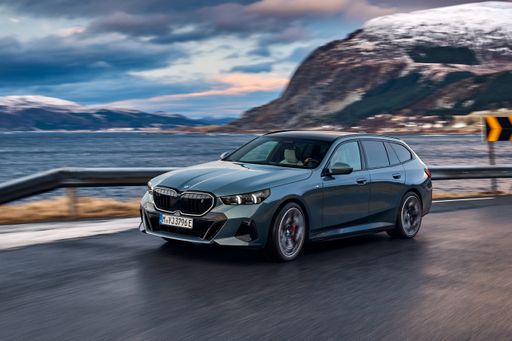
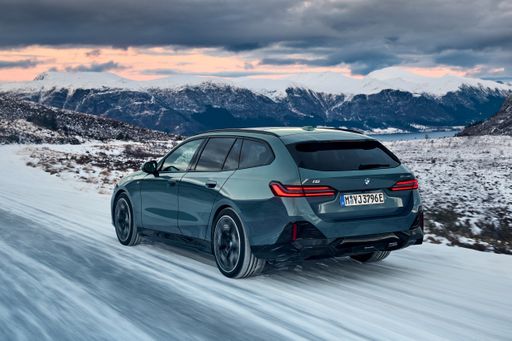
The BMW i5 Touring embraces the classic BMW wagon aesthetic while integrating modern electric styling cues. At 5060 mm in length, 1900 mm in width, and 1505 mm in height, it provides ample space and comfort for passengers and cargo alike, boasting a trunk capacity of 570 liters. The elegant lines and aerodynamic profile serve to enhance both performance and efficiency.

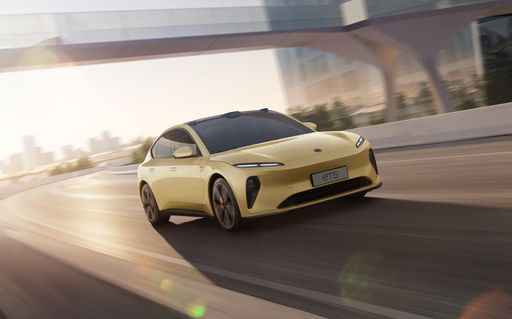
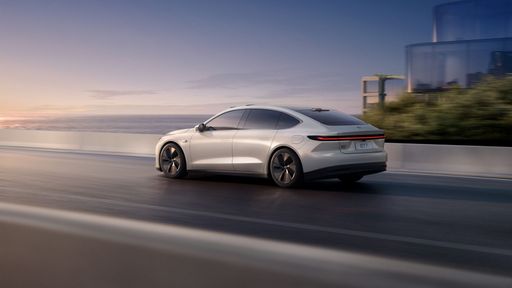
On the other hand, the NIO ET5 adopts a sleek hatchback form factor, measuring 4790 mm long, 1960 mm wide, and 1499 mm high. Despite its slightly smaller stature, the ET5 manages a respectable trunk capacity of 386 liters, making it a practical choice for urban and suburban environments. The ET5's contemporary styling and sharp edges convey a sporty and dynamic presence.

i5 Touring

Performance and Power

When it comes to performance metrics, the BMW i5 Touring impresses with up to 601 horsepower in its higher-tier models. It features an all-wheel-drive system and can accelerate from 0 to 100 km/h in a thrilling 3.9 seconds. Its torque output peaks at 820 Nm, providing an exhilarating driving experience that remains true to BMW's performance-oriented roots.

The NIO ET5, with its 490 horsepower, also offers commendable acceleration, reaching 0 to 100 km/h in approximately 4 seconds. While it lags slightly behind the BMW in terms of raw power, the ET5 offers a lower curb weight, contributing to agile handling and quick responsiveness. Its maximum torque of 700 Nm ensures an engaging driving experience, whether navigating city streets or cruising on the open road.

ET5

Battery and Range

Battery capacity plays a crucial role in the electric mobility experience. The BMW i5 Touring is outfitted with an 81.2 kWh battery, granting it an impressive electric range of up to 520 km on a full charge, depending on driving conditions and driving style. The efficiency rating ranges around 17.9 kWh/100km, aligning with BMW's commitment to sustainability and performance.

The NIO ET5, in comparison, features a larger 90 kWh battery, enabling an extraordinary electric range of 590 km. However, its energy consumption is slightly higher, resting around 18.6 kWh/100km. Both vehicles are rated with a CO2 efficiency class of A, underlining their status as environmentally friendly options in the performance electric vehicle market.

Innovation and Technology

Innovation is at the heart of both models, but their approach diverges. The i5 Touring includes BMW's latest iDrive infotainment system, a driver-centric interface with features like augmented reality navigation, advanced voice control, and a suite of driver assistance technologies designed to enhance safety and convenience. The vehicle also boasts adaptive suspension technology, offering a balanced ride that doesn’t compromise on performance.

The NIO ET5 excels in user experience with its NIO Autonomous Driving (NAD) system, which leverages advanced sensors and AI to enable features like autonomous driving capabilities and a sophisticated driver assistance suite. Moreover, NIO’s battery swap technology presents a unique solution to reducing downtime, allowing drivers to exchange depleted batteries for fully charged ones in a matter of minutes—an innovation that sets NIO apart in the EV landscape.

Final Thoughts

In the showdown between the BMW i5 Touring and the NIO ET5, car enthusiasts will find two highly capable electric vehicles, each with its strengths. The i5 Touring remains a paragon of traditional automotive excellence infused with electric prowess, while the NIO ET5 represents a forward-thinking approach to EV innovation and user experience.

Choosing between them ultimately boils down to individual preferences for performance, technology, and design. With electrification defining the future of the automotive industry, both models signal a bright horizon ahead.

Here’s where it gets real: The technical differences in detail

i5 Touring

Costs and Efficiency:

Price and efficiency are often the first things buyers look at. Here it becomes clear which model has the long-term edge – whether at the pump, the plug, or in purchase price.

NIO ET5 is clearly cheaper – starting at 40,700 £ , while the BMW i5 Touring costs 62,500 £ . That’s a price difference of around 21,771 £.

In terms of energy consumption, the BMW i5 Touring is markedly more efficient: consuming 15.4 kWh/100km compared to 18.6 kWh/100km for the NIO ET5. That’s a difference of about 3.2 kWh/100km.

As for electric range, the BMW i5 Touring offers marginally more range – reaching up to 602 km, about 12 km more than the NIO ET5.

ET5

Engine and Performance:

Power, torque and acceleration say a lot about how a car feels on the road. This is where you see which model delivers more driving dynamics.

When it comes to engine power, the BMW i5 Touring offers moderately more power – delivering 601 HP compared to 490 HP. That’s roughly 111 HP more horsepower.

When accelerating from 0 to 100 km/h, the BMW i5 Touring is barely quicker – completing the sprint in 3.9 s, while the NIO ET5 takes 4 s. That’s about 0.1 s quicker.

Looking at top speed, the BMW i5 Touring is marginally faster – reaching 215 km/h, while the NIO ET5 tops out at 200 km/h. The difference is around 15 km/h.

There’s also a difference in torque: the BMW i5 Touring delivers a bit more torque with 820 Nm compared to 700 Nm. That’s about 120 Nm more.

i5 Touring

Space and Everyday Use:

Whether family car or daily driver – which one offers more room, flexibility and comfort?

Both vehicles offer seating for 5 people.

In terms of curb weight, NIO ET5 is marginally lighter – 2,215 kg compared to 2,255 kg. The difference is around 40 kg.

Looking at boot space, the BMW i5 Touring offers noticeably more boot space – 570 L compared to 386 L. That’s a difference of about 184 L.

For maximum load capacity, the BMW i5 Touring offers visibly more capacity – up to 1,700 L, about 565 L more than the NIO ET5.

When it comes to payload, the BMW i5 Touring carries slightly more – 560 kg compared to 475 kg. That’s a difference of about 85 kg.

Who wins the race in the data check?

The BMW i5 Touring stands well ahead of its rival in the objective data comparison.
This result only shows which model scores more points on paper – not which of the two cars feels right for you.

from £62,500
i5 Touring

BMW i5 Touring

  • Engine Type : Electric
  • Transmission : Automatic
  • Drive Type : All-Wheel Drive, Rear-Wheel Drive
  • Power HP : 340 - 601 HP
  • Consumption kWh/100km : 15.4 - 17.7 kWh/100km
  • Electric Range : 522 - 602 km
BMW i5 Touring
NIO ET5

Costs and Consumption

View detailed analysis

Engine and Performance

View detailed analysis

Dimensions and Body

View detailed analysis

BMW i5 Touring

The BMW i5 Touring marries the everyday usefulness of a roomy estate with the hushed, premium feel of a modern electric BMW. It’s an appealing choice for buyers who want confident, relaxed driving and executive poise without sacrificing weekend practicality — and it even makes loading skis feel slightly glamorous.

details

NIO ET5

NIO ET5 arrives with sleek, minimalist lines and a cabin that feels more like a calm lounge than a dashboard, delivering a composed drive that keeps motorway monotony at bay. Tech is smart rather than showy, and the brand’s novel ownership options make it an appealing choice for buyers who want electric convenience without the usual headaches — plus it brings enough personality to make charging stops less boring.

details
BMW i5 Touring
NIO ET5

Costs and Consumption

Price
62,500 - 87,600 £
Price
40,700 - 58,700 £
Consumption L/100km
-
Consumption L/100km
-
Consumption kWh/100km
15.4 - 17.7 kWh/100km
Consumption kWh/100km
18.6 - 18.9 kWh/100km
Electric Range
522 - 602 km
Electric Range
456 - 590 km
Battery Capacity
81.2 kWh
Battery Capacity
73.5 - 90 kWh
co2
0 g/km
co2
0 g/km
Fuel tank capacity
-
Fuel tank capacity
-

Dimensions and Body

Body Type
Estate
Body Type
Hatchback
Seats
5
Seats
5
Doors
4
Doors
5
Curb weight
2,255 - 2,425 kg
Curb weight
2,215 - 2,235 kg
Trunk capacity
570 L
Trunk capacity
386 L
Length
5,060 mm
Length
4,790 mm
Width
1,900 mm
Width
1,960 mm
Height
1,515 mm
Height
1,499 mm
Max trunk capacity
1,700 L
Max trunk capacity
1,135 L
Payload
535 - 560 kg
Payload
455 - 475 kg

Engine and Performance

Engine Type
Electric
Engine Type
Electric
Transmission
Automatic
Transmission
Automatic
Transmission Detail
Reduction Gearbox
Transmission Detail
Reduction Gearbox
Drive Type
All-Wheel Drive, Rear-Wheel Drive
Drive Type
All-Wheel Drive
Power HP
340 - 601 HP
Power HP
490 HP
Acceleration 0-100km/h
3.9 - 6.1 s
Acceleration 0-100km/h
4 s
Max Speed
215 km/h
Max Speed
200 km/h
Torque
430 - 820 Nm
Torque
700 Nm
Number of Cylinders
-
Number of Cylinders
-
Power kW
250 - 442 kW
Power kW
360 kW
Engine capacity
-
Engine capacity
-

General

Model Year
2024
Model Year
2023
CO2 Efficiency Class
A
CO2 Efficiency Class
A
Brand
BMW
Brand
NIO
DriveDuel uses data analysis and artificial intelligence to evaluate vehicle data and create content. Content is regularly reviewed and improved. The displayed prices are estimates based on German list prices, adjusted to the respective country’s VAT. Country-specific registration taxes are not included. This information is not legally binding.