
 Deutschland
 France
 Nederland
 Great Britain
 Sverige
 Danmark
 Suomi
Suomi Italia
 Polska
 España
VS
BMW i5 vs Volvo EC40 - Differences and prices compared
Compare performance (601 HP vs 442 HP), boot space and price (60200 £ vs 46600 £ ) at a glance. Find out which car is the better choice for you – BMW i5 or Volvo EC40?
i5
Costs and Efficiency:
Looking at overall running costs, both models reveal some interesting differences in everyday economy.
Volvo EC40 has a distinct advantage in terms of price – it starts at 46600 £ , while the BMW i5 costs 60200 £ . That’s a price difference of around 13551 £.
In terms of energy consumption, the advantage goes to the BMW i5: with 14.70 kWh per 100 km, it’s a bit more efficient than the Volvo EC40 with 16.20 kWh. That’s a difference of about 1.50 kWh.
As for electric range, the BMW i5 performs minimal better – achieving up to 627 km, about 43 km more than the Volvo EC40.
EC40
Engine and Performance:
Power, torque and acceleration say a lot about how a car feels on the road. This is where you see which model delivers more driving dynamics.
When it comes to engine power, the BMW i5 has a noticeable edge – offering 601 HP compared to 442 HP. That’s roughly 159 HP more horsepower.
In acceleration from 0 to 100 km/h, the BMW i5 is noticeable quicker – completing the sprint in 3.80 s, while the Volvo EC40 takes 4.60 s. That’s about 0.80 s faster.
In terms of top speed, the BMW i5 performs noticeable better – reaching 230 km/h, while the Volvo EC40 tops out at 180 km/h. The difference is around 50 km/h.
There’s also a difference in torque: BMW i5 pulls slightly stronger with 820 Nm compared to 670 Nm. That’s about 150 Nm difference.
i5
Space and Everyday Use:
Beyond pure performance, interior space and usability matter most in daily life. This is where you see which car is more practical and versatile.
Both vehicles offer seating for 5 people.
In curb weight, Volvo EC40 is minimal lighter – 2065 kg compared to 2195 kg. The difference is around 130 kg.
In terms of boot space, the BMW i5 offers slightly more room – 490 L compared to 404 L. That’s a difference of about 86 L.
When it comes to payload, BMW i5 distinct takes the win – 545 kg compared to 435 kg. That’s a difference of about 110 kg.
Who wins the race in the data check?
The BMW i5 holds a decisive overall lead in the objective data comparison.
This result only shows which model scores more points on paper – not which of the two cars feels right for you.
BMW i5
Volvo EC40
Costs and Consumption
View detailed analysis
View detailed analysis
Engine and Performance
View detailed analysis
View detailed analysis
Dimensions and Body
View detailed analysis
View detailed analysis
from about £60,200
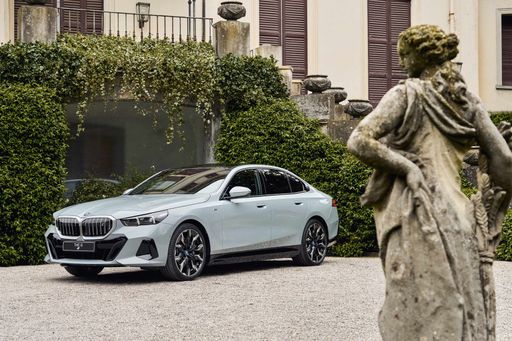
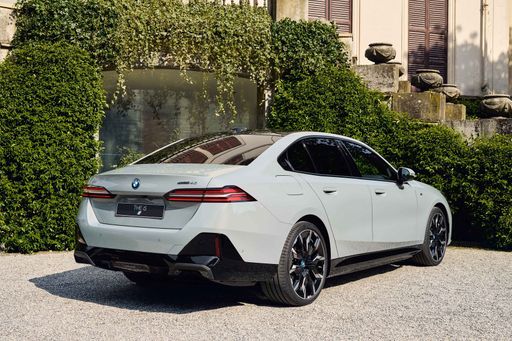
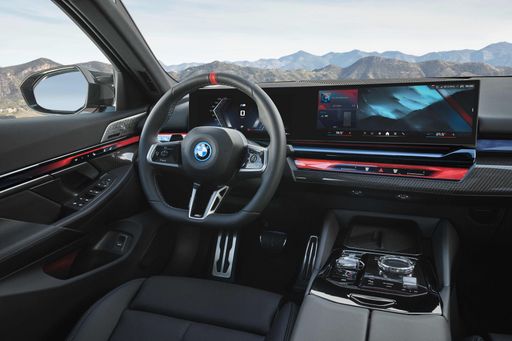
BMW i5
BMW i5
The BMW i5 swaps predictable executive-car manners for a confident electric vibe, marrying refined comfort with surprisingly engaging steering. It’s a practical choice that doesn’t feel dull, offering the kind of clean, premium experience that makes commuting feel like a small indulgence.
details
Volvo EC40
4.7 (1 Reviews)
The Volvo EC40 feels like a polished slice of Scandinavian calm on wheels, blending minimalist design with a cocoon-like interior that makes everyday driving surprisingly serene. It’s an electric compact that puts safety and comfort front and center, while still injecting enough personality and tech-savvy charm to keep city buyers smiling.
details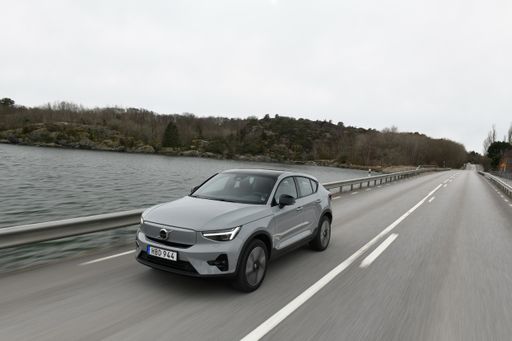
BMW i5
Volvo EC40
Costs and Consumption |
|
|---|---|
|
Price
60200 - 85300 £
|
Price
46600 - 59000 £
|
|
Consumption L/100km
-
|
Consumption L/100km
-
|
|
Consumption kWh/100km
14.7 - 17.1 kWh
|
Consumption kWh/100km
16.2 - 17.3 kWh
|
|
Electric Range
540 - 627 km
|
Electric Range
488 - 584 km
|
|
Battery Capacity
81.20 kWh
|
Battery Capacity
67 - 79 kWh
|
|
co2
0 g/km
|
co2
0 g/km
|
|
Fuel tank capacity
-
|
Fuel tank capacity
-
|
Dimensions and Body |
|
|---|---|
|
Body Type
Sedan
|
Body Type
SUV
|
|
Seats
5
|
Seats
5
|
|
Doors
4
|
Doors
5
|
|
Curb weight
2195 - 2370 kg
|
Curb weight
2065 - 2185 kg
|
|
Trunk capacity
490 L
|
Trunk capacity
404 L
|
|
Length
5060 mm
|
Length
4440 mm
|
|
Width
1900 mm
|
Width
1873 mm
|
|
Height
1505 - 1515 mm
|
Height
1591 mm
|
|
Max trunk capacity
-
|
Max trunk capacity
1196 L
|
|
Payload
525 - 545 kg
|
Payload
395 - 435 kg
|
Engine and Performance |
|
|---|---|
|
Engine Type
Electric
|
Engine Type
Electric
|
|
Transmission
Automatic
|
Transmission
Automatic
|
|
Transmission Detail
Reduction Gearbox
|
Transmission Detail
Reduction Gearbox
|
|
Drive Type
Rear-Wheel Drive, All-Wheel Drive
|
Drive Type
Rear-Wheel Drive, All-Wheel Drive
|
|
Power HP
340 - 601 HP
|
Power HP
238 - 442 HP
|
|
Acceleration 0-100km/h
3.8 - 6 s
|
Acceleration 0-100km/h
4.6 - 7.3 s
|
|
Max Speed
193 - 230 km/h
|
Max Speed
180 km/h
|
|
Torque
430 - 820 Nm
|
Torque
420 - 670 Nm
|
|
Number of Cylinders
-
|
Number of Cylinders
-
|
|
Power kW
250 - 442 kW
|
Power kW
175 - 325 kW
|
|
Engine capacity
-
|
Engine capacity
-
|
General |
|
|---|---|
|
Model Year
2023 - 2024
|
Model Year
2024
|
|
CO2 Efficiency Class
A
|
CO2 Efficiency Class
A
|
|
Brand
BMW
|
Brand
Volvo
|
What drive types are available for the BMW i5?
The BMW i5 is offered with Rear-Wheel Drive or All-Wheel Drive.
The prices shown are estimates based on German list prices, adjusted for local VAT. Local registration taxes (e.g. NoVA, BPM or CO2 malus) are not included. This information is not legally binding.