
 Deutschland
 France
 Nederland
 Great Britain
 Sverige
 Norge
Norge Danmark
 Suomi
Suomi Italia
 Polska
 España
VS
BMW iX1 vs BYD Tang - Differences and prices compared
Compare performance (313 HP vs 517 HP), boot space and price (41800 £ vs 64300 £) at a glance. Find out which car is the better choice for you – BMW iX1 or BYD Tang?
iX1
Costs and Efficiency:
Looking at overall running costs, both models reveal some interesting differences in everyday economy.
BMW iX1 has a decisively advantage in terms of price – it starts at 41800 £, while the BYD Tang costs 64300 £. That’s a price difference of around 22457 £.
In terms of energy consumption, the advantage goes to the BMW iX1: with 15.80 kWh per 100 km, it’s convincingly more efficient than the BYD Tang with 24 kWh. That’s a difference of about 8.20 kWh.
As for range, the BYD Tang performs a bit better – achieving up to 530 km, about 67 km more than the BMW iX1.
Tang
Engine and Performance:
Under the bonnet, it becomes clear which model is tuned for sportiness and which one takes the lead when you hit the accelerator.
When it comes to engine power, the BYD Tang has a distinct edge – offering 517 HP compared to 313 HP. That’s roughly 204 HP more horsepower.
In acceleration from 0 to 100 km/h, the BYD Tang is slightly quicker – completing the sprint in 4.90 s, while the BMW iX1 takes 5.60 s. That’s about 0.70 s faster.
In terms of top speed, the BYD Tang performs minimal better – reaching 190 km/h, while the BMW iX1 tops out at 180 km/h. The difference is around 10 km/h.
There’s also a difference in torque: BYD Tang pulls noticeable stronger with 680 Nm compared to 494 Nm. That’s about 186 Nm difference.
iX1
Space and Everyday Use:
Whether family car or daily driver – which one offers more room, flexibility and comfort?
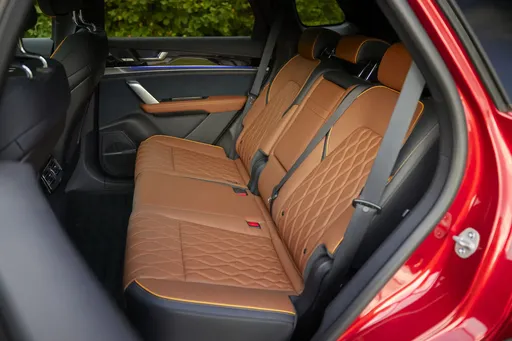
Seats: BYD Tang offers noticeable more seating capacity – 7 vs 5.
In curb weight, BMW iX1 is clearly perceptible lighter – 1940 kg compared to 2630 kg. The difference is around 690 kg.
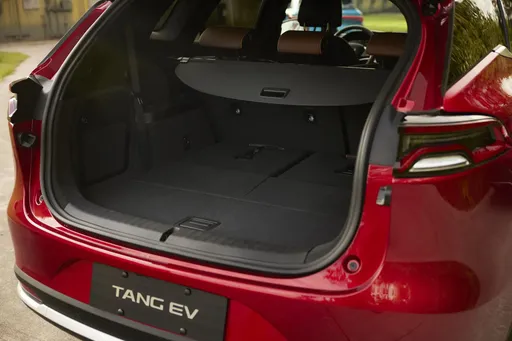
In terms of boot space, the BMW iX1 offers convincingly more room – 490 L compared to 235 L. That’s a difference of about 255 L.
In maximum load capacity, the BYD Tang performs slight better – up to 1655 L, which is about 160 L more than the BMW iX1.
When it comes to payload, BYD Tang somewhat takes the win – 575 kg compared to 495 kg. That’s a difference of about 80 kg.
Who wins the race?
The BMW iX1 proves to be won narrowly and therefore becomes our DriveDuel Champion!
BMW iX1 is the better all-rounder in this comparison.
from about £41,800
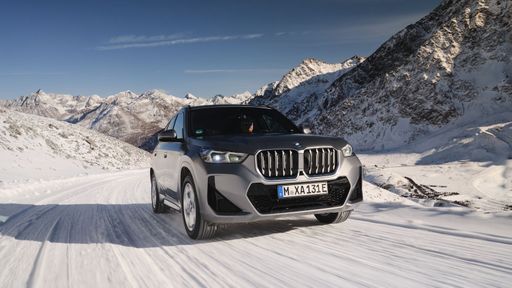
BMW iX1
BMW iX1
BYD Tang
Costs and Consumption
View detailed analysis
View detailed analysis
Engine and Performance
View detailed analysis
View detailed analysis
Dimensions and Body
View detailed analysis
View detailed analysis
BMW iX1
4.7 (3 Reviews)
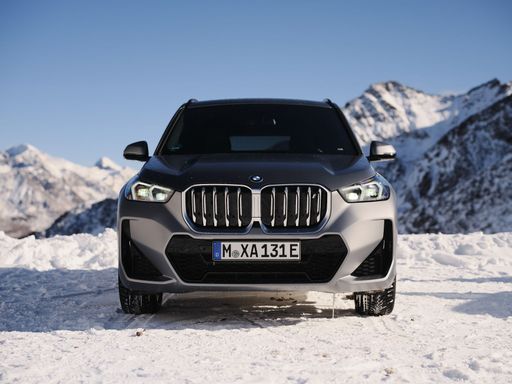
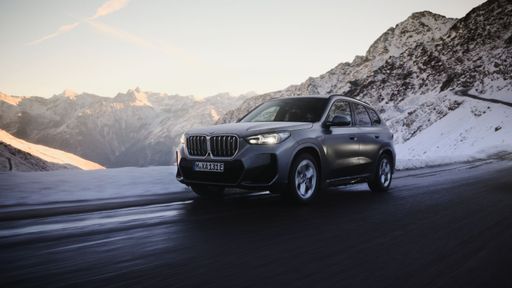
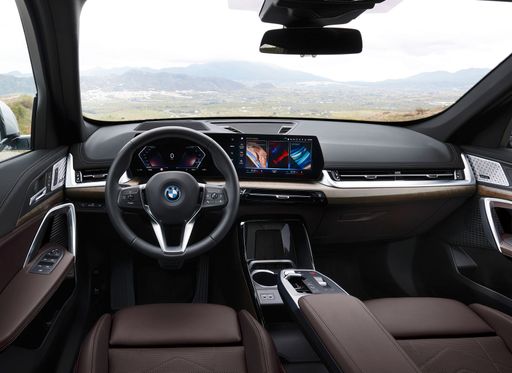
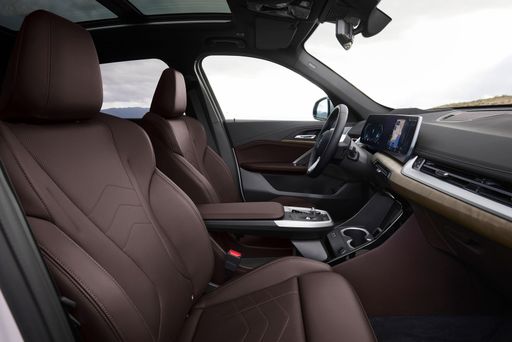
The BMW iX1 wraps BMW's electric ambition into a compact SUV package that feels unexpectedly premium, with sharp handling and a crisp, modern cabin that keeps the driver in charge. It's ideal for buyers who want a stylish, quiet daily driver with useful practicality and tech-savvy touches — plus enough character to make the commute feel less like a chore and more like a short joyride.
details
BYD Tang
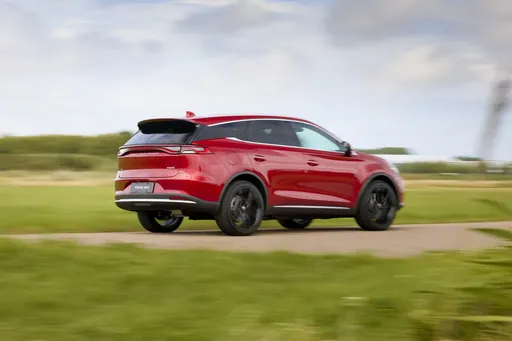
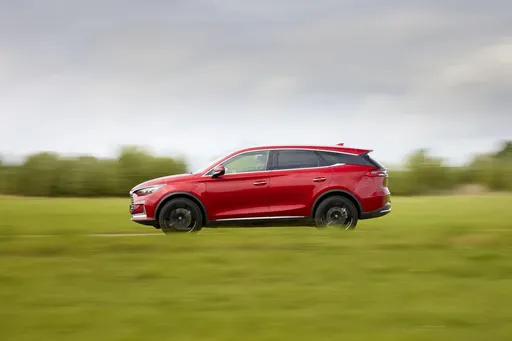
The BYD Tang is a bold, tech-loaded SUV that blends striking design with roomy practicality, making it equally at home on the school run and the open road. Packed with clever tech and a powertrain that mixes efficiency with eager performance, it’s a smart, value-focused pick for buyers who want electric-age comfort without the premium-brand fuss.
details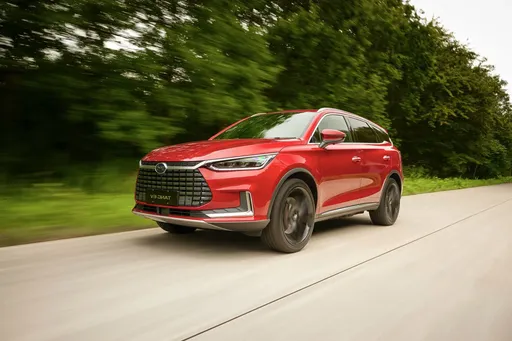
BMW iX1
BYD Tang
|
|
|
|
|
|
Costs and Consumption |
|
|---|---|
|
Price
41800 - 54600 £
|
Price
64300 £
|
|
Consumption L/100km
-
|
Consumption L/100km
-
|
|
Consumption kWh/100km
15.8 - 17.1 kWh
|
Consumption kWh/100km
24 kWh
|
|
Electric Range
436 - 463 km
|
Electric Range
530 km
|
|
Battery Capacity
64.80 kWh
|
Battery Capacity
-
|
|
co2
0 g/km
|
co2
0 g/km
|
|
Fuel tank capacity
-
|
Fuel tank capacity
-
|
Dimensions and Body |
|
|---|---|
|
Body Type
SUV
|
Body Type
SUV
|
|
Seats
5
|
Seats
7
|
|
Doors
5
|
Doors
5
|
|
Curb weight
1940 - 2085 kg
|
Curb weight
2630 kg
|
|
Trunk capacity
490 L
|
Trunk capacity
235 L
|
|
Length
4500 mm
|
Length
4970 mm
|
|
Width
1845 mm
|
Width
1955 mm
|
|
Height
1616 mm
|
Height
1745 mm
|
|
Max trunk capacity
1495 L
|
Max trunk capacity
1655 L
|
|
Payload
495 kg
|
Payload
575 kg
|
Engine and Performance |
|
|---|---|
|
Engine Type
Electric
|
Engine Type
Electric
|
|
Transmission
Automatic
|
Transmission
Automatic
|
|
Transmission Detail
Reduction Gearbox
|
Transmission Detail
Reduction Gearbox
|
|
Drive Type
Front-Wheel Drive, All-Wheel Drive
|
Drive Type
All-Wheel Drive
|
|
Power HP
204 - 313 HP
|
Power HP
517 HP
|
|
Acceleration 0-100km/h
5.6 - 8.6 s
|
Acceleration 0-100km/h
4.90 s
|
|
Max Speed
170 - 180 km/h
|
Max Speed
190 km/h
|
|
Torque
250 - 494 Nm
|
Torque
680 Nm
|
|
Number of Cylinders
-
|
Number of Cylinders
-
|
|
Power kW
150 - 230 kW
|
Power kW
380 kW
|
|
Engine capacity
-
|
Engine capacity
-
|
General |
|
|---|---|
|
Model Year
2022 - 2023
|
Model Year
2024
|
|
CO2 Efficiency Class
A
|
CO2 Efficiency Class
A
|
|
Brand
BMW
|
Brand
BYD
|
Is the BMW iX1 offered with different drivetrains?
The BMW iX1 is available as Front-Wheel Drive or All-Wheel Drive.
The prices and data displayed are estimates based on German list prices and may vary by country. This information is not legally binding.