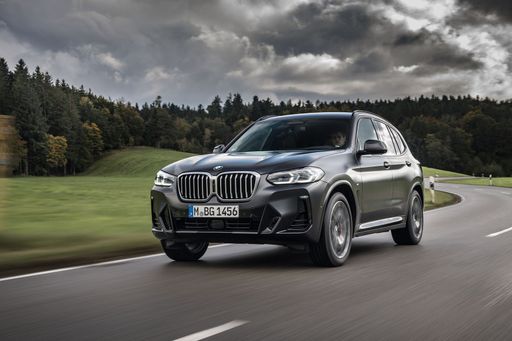
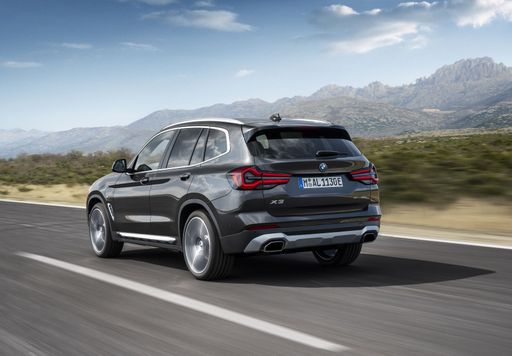
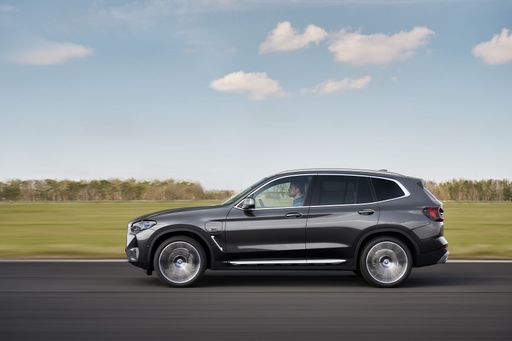
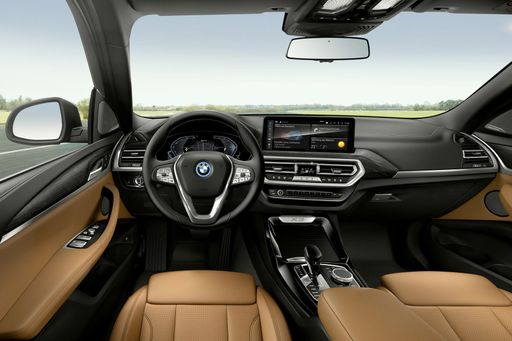
VS

BMW iX3 vs BMW X3 comparison

Compare performance (469 HP vs 398 HP), boot space and price (60,800 £ vs 51,300 £ ) at a glance. Find out which car is the better choice for you – BMW iX3 or BMW X3?

BMW iX3 vs BMW X3: Key differences

BMW iX3

4.7 (2 Reviews)
rate
  • a bit more power
  • substantially more electric range

BMW X3

4.6 (1 Reviews)
rate
  • somewhat cheaper
  • only slightly quicker 0–100 km/h
  • clearly lighter

All details on performance, efficiency, range and trunk space can be found in the technical comparison below – including user reviews for both models.

iX3

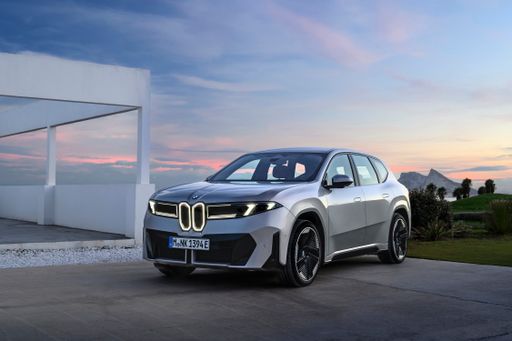
When it comes to luxury SUVs, BMW’s X3 and the fully electric iX3 have become two notable contenders in the automotive market. Both vehicles boast the quality and engineering excellence characteristic of the BMW brand but cater to different audiences. Here, we dive into the specifics of each model in terms of performance, technology, and innovation.
X3

Performance Comparison: Power and Efficiency

The BMW X3 is available with an impressive array of engine options including diesel MHEV, petrol MHEV, plug-in hybrids, and standard petrol engines. It offers power ranging from 184 HP to a robust 510 HP in its top variants, ensuring there’s an option for every type of driver. The acceleration capabilities are also noteworthy, with the fastest variant achieving 0 to 100 km/h in just 3.8 seconds.

On the other hand, the BMW iX3 presents a different performance narrative. Equipped with a single electric motor producing 286 HP, it offers a respectable acceleration of 0 to 100 km/h in 6.8 seconds. While it may not match the staggering speed of the high-performance X3 variants, its electric powertrain provides a seamless and instantaneous acceleration that many electric vehicle enthusiasts appreciate.

iX3

Range and Efficiency: The Electric Advantage

One of the most significant advantages of the BMW iX3 is its electric range of up to 471 kilometers on a full charge, making it suitable for both city commuting and longer trips. The iX3 operates with a consumption of just 17.6 kWh/100 km, representing a modern step towards efficiency in SUV design.

In contrast, the BMW X3 offers a variety of fuel consumption figures depending on the engine choice, with clean diesel variants as low as 5.8 L/100 km and hybrid options providing commendable efficiency. However, for those keen on sustainability and electric driving, the iX3’s emissions-free nature (0 g/km CO2) makes it particularly attractive.

X3

Technology and Innovations

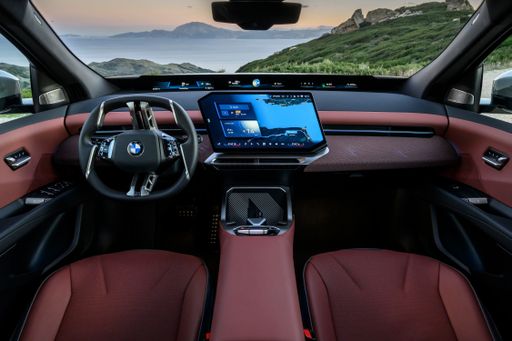
Both models are equipped with BMW's latest technology, ensuring driver assistance and infotainment systems are at the cutting edge. The X3 includes a large touchscreen interface with advanced connectivity options and driver support systems including lane keep assist and adaptive cruise control.

Meanwhile, the iX3 takes this a step further with enhanced digital features conducive to electric driving. Integrated with BMW's Intelligent Personal Assistant, it offers voice-activated controls and allows drivers to monitor vehicle performance metrics directly related to battery use and charging needs.

iX3

Dimensions and Practicality

In terms of size, the BMW X3 measures approximately 4708 mm in length, 1891 mm in width, and 1676 mm in height, with a trunk capacity ranging from 550 liters to 570 liters depending on the variant. This spacious layout ensures ample cargo room for families or adventures.

The iX3, while slightly longer at 4734 mm, shares a width of 1891 mm but stands a bit shorter at 1668 mm. Its trunk capacity of 510 liters still provides plenty of space, ensuring practicality is not sacrificed in the pursuit of electric mobility.

X3

Final Thoughts: Which One Is Right for You?

The choice between the BMW X3 and the iX3 fundamentally comes down to personal preference and lifestyle needs. If you require a high-performance SUV with various powertrains to choose from, the X3 is undoubtedly appealing. However, for those looking for a sleek electric alternative that offers sustainability without compromising on luxury, the iX3 presents a compelling case.

Ultimately, both the BMW X3 and iX3 represent the pinnacle of German engineering and innovation, but cater to drivers with different values and requirements. Whether you lean towards conventional performance or the cutting-edge of electric driving, BMW has you covered.

Here’s where it gets real: The technical differences in detail

iX3

Costs and Efficiency:

When it comes to price and running costs, the biggest differences usually appear. This is often where you see which car fits your budget better in the long run.

BMW X3 is somewhat cheaper – starting at 51,300 £ , while the BMW iX3 costs 60,800 £ . That’s a price difference of around 9,514 £.

As for electric range, the BMW iX3 offers substantially more range – reaching up to 805 km, about 717 km more than the BMW X3.

X3

Engine and Performance:

Power, torque and acceleration say a lot about how a car feels on the road. This is where you see which model delivers more driving dynamics.

When it comes to engine power, the BMW iX3 offers a bit more power – delivering 469 HP compared to 398 HP. That’s roughly 71 HP more horsepower.

When accelerating from 0 to 100 km/h, the BMW X3 is only slightly quicker – completing the sprint in 4.6 s, while the BMW iX3 takes 4.9 s. That’s about 0.3 s quicker.

There’s also a difference in torque: the BMW X3 delivers marginally more torque with 670 Nm compared to 645 Nm. That’s about 25 Nm more.

iX3

Space and Everyday Use:

Cabin size, boot volume and payload all play a role in everyday practicality. Here, comfort and flexibility make the difference.

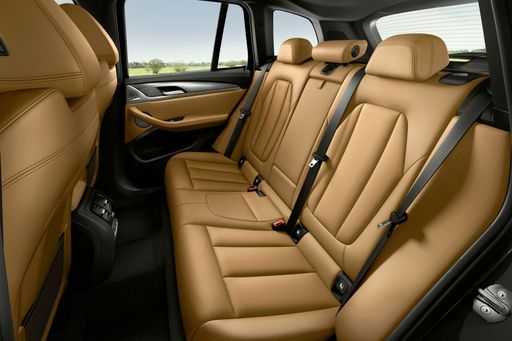
Both vehicles offer seating for 5 people.

In terms of curb weight, BMW X3 is clearly lighter – 1,930 kg compared to 2,360 kg. The difference is around 430 kg.

When it comes to payload, the BMW X3 carries a bit more – 570 kg compared to 465 kg. That’s a difference of about 105 kg.

Who wins the race in the data check?

The BMW iX3 holds a decisive overall lead in the objective data comparison.
This result only shows which model scores more points on paper – not which of the two cars feels right for you.

from £60,800
iX3

BMW iX3

  • Engine Type : Electric
  • Transmission : Automatic
  • Drive Type : All-Wheel Drive
  • Power HP : 469 HP
  • Consumption kWh/100km : 15.1 kWh/100km
  • Electric Range : 805 km
BMW iX3
BMW X3

Costs and Consumption

View detailed analysis

Engine and Performance

View detailed analysis

Dimensions and Body

View detailed analysis

BMW iX3

The BMW iX3 brings BMW's familiar SUV poise into the electric era, blending restrained styling and a comfortable, composed ride that will please traditionalists dipping their toes into electrification. It's quiet, practical and rather grown-up about going electric — a sensible choice for buyers who want BMW driving manners without the drama.

details

BMW X3

The BMW X3 mixes Bavarian poise with everyday practicality, delivering a composed ride and a cabin that feels both premium and lived-in. It’s the sort of SUV that lets you enjoy sporty handling without sacrificing family-friendly space, so you get fun and sense in one neat package.

details
BMW iX3
BMW X3

Costs and Consumption

Price
60,800 - 66,300 £
Price
51,300 - 72,400 £
Consumption L/100km
-
Consumption L/100km
2.8 - 7.7 L/100km
Consumption kWh/100km
15.1 kWh/100km
Consumption kWh/100km
-
Electric Range
805 km
Electric Range
88 km
Battery Capacity
-
Battery Capacity
-
co2
0 g/km
co2
64 - 175 g/km
Fuel tank capacity
-
Fuel tank capacity
60 - 65 L

Dimensions and Body

Body Type
SUV
Body Type
SUV
Seats
5
Seats
5
Doors
-
Doors
5
Curb weight
2,360 kg
Curb weight
1,930 - 2,140 kg
Trunk capacity
-
Trunk capacity
460 - 570 L
Length
-
Length
4,755 mm
Width
1,895 mm
Width
1,920 mm
Height
-
Height
1,660 mm
Max trunk capacity
-
Max trunk capacity
1,700 L
Payload
465 kg
Payload
570 kg

Engine and Performance

Engine Type
Electric
Engine Type
Petrol MHEV, Diesel MHEV, Plugin Hybrid
Transmission
Automatic
Transmission
Automatic
Transmission Detail
Reduction Gearbox
Transmission Detail
Automatic Gearbox
Drive Type
All-Wheel Drive
Drive Type
All-Wheel Drive
Power HP
469 HP
Power HP
197 - 398 HP
Acceleration 0-100km/h
4.9 s
Acceleration 0-100km/h
4.6 - 7.8 s
Max Speed
-
Max Speed
215 - 250 km/h
Torque
645 Nm
Torque
330 - 670 Nm
Number of Cylinders
-
Number of Cylinders
4 - 6
Power kW
345 kW
Power kW
145 - 293 kW
Engine capacity
-
Engine capacity
1,995 - 2,998 cm3

General

Model Year
2,026
Model Year
2,024 - 2,025
CO2 Efficiency Class
A
CO2 Efficiency Class
F, E, B
Brand
BMW
Brand
BMW
DriveDuel uses data analysis and artificial intelligence to evaluate vehicle data and create content. Content is regularly reviewed and improved. The displayed prices are estimates based on German list prices, adjusted to the respective country’s VAT. Country-specific registration taxes are not included. This information is not legally binding.