VS

BMW iX3 vs Polestar 4 comparison

Compare performance (469 HP vs 544 HP), boot space and price (54,300 £ vs 53,100 £ ) at a glance. Find out which car is the better choice for you – BMW iX3 or Polestar 4?

BMW iX3 vs Polestar 4: Key differences

BMW iX3

4.6 (4 Reviews)
rate
  • clearly more efficient
  • clearly more electric range
details

Polestar 4

4.8 (13 Reviews)
rate
  • marginally cheaper
  • a bit more power
  • markedly quicker 0–100 km/h
  • barely lighter
details

All details on performance, efficiency, range and trunk space can be found in the technical comparison below – including user reviews for both models.

By Achim Sedelmaier

iX3

BMW iX3 VS Polestar 4 — a concise showdown for buyers

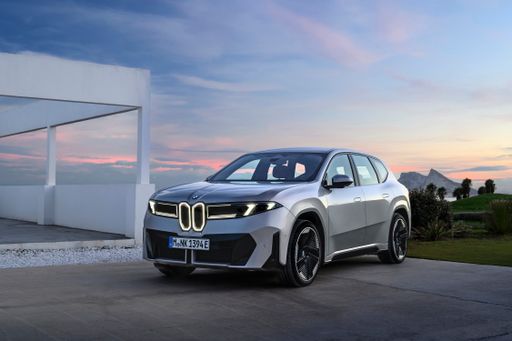
The BMW iX3 and the Polestar 4 arrive from different design kitchens and that difference defines the ownership experience. The BMW iX3 presents itself as a long‑distance specialist with a technology‑forward cockpit and a focus on efficiency and fast charging, while the Polestar 4 pitches a design‑driven, calm cruiser that prioritises rear‑seat comfort and a clean, Google‑centric interior. That contrast shows up everywhere: the iX3 feels like a technical toolkit for covering miles quickly, the Polestar 4 feels like a considered living space for passengers. Choosing between them is largely a question of whether you want travel efficiency and driver engagement or a serene, design‑led cabin for passengers.
4

Character and driving behaviour: agile vs composed

The BMW iX3 steers with surprising agility for its size and rewards drivers who want a bit of sportiness from an electric SUV, so it feels more engaging in corners and on twisty stretches. The Polestar 4, by contrast, emphasises a steady, composed ride — it soothes rather than excites, trading sharpness for stability and long‑haul calm. That trade‑off matters: if you enjoy precise steering and a car that responds to inputs, the BMW iX3 will feel livelier; if you prioritise a relaxed, confidence‑inspiring cruiser for highway miles, the Polestar 4 is the quieter choice. Each car’s tuning exposes the other’s weakness — the iX3 can feel firm over very short bumps with large wheels, the Polestar 4 can feel a touch insulated and less communicative in corners.

iX3

Long‑distance behaviour and charging practicality

On open roads the BMW iX3’s strengths become practical: it’s tuned for efficient cruising and benefits from very rapid DC charging that shortens stops on long trips, which changes real‑world travel planning. The Polestar 4 is exceptionally quiet and its seats make long hours easier, so passengers will arrive less tired even if stops may be longer or more frequent. For someone who regularly tackles long highway runs and values short recharge windows, the BMW iX3’s travel equation is attractive; for buyers who prize a tranquil cabin and passenger comfort above shaving minutes off charging time, the Polestar 4 is a better long‑distance companion. Either way, the experience on a multi‑day route is shaped as much by charging strategy as by seat comfort, and both manufacturers play to different strengths there.

4

Cabin feel, ergonomics and everyday practicality

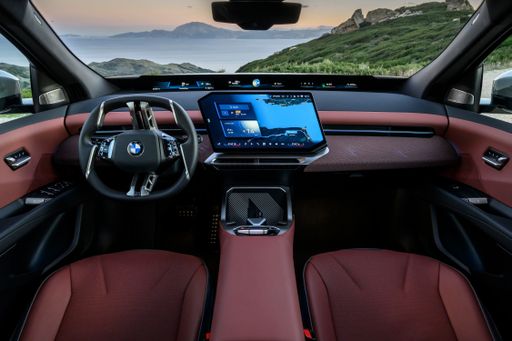
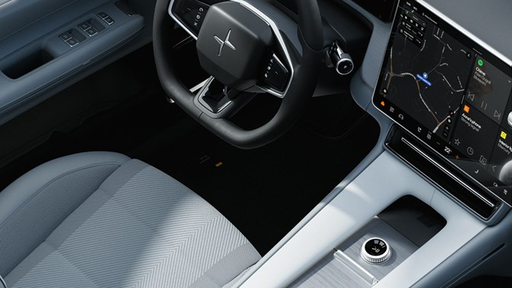
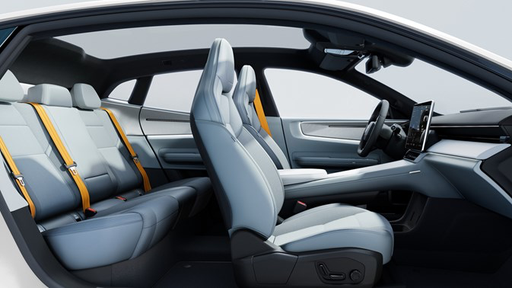
The BMW iX3 makes a statement with its Panoramic iDrive look and advanced driver‑assist integration, but that modernity brings touch‑heavy controls that some will find fiddly for routine tasks like climate adjustments. The Polestar 4 counters with a minimalist, high‑quality cabin surfaced in clear Google‑first software, delivering an organised passenger environment and particularly generous rear‑seat space with adjustable backrests. Practical differences become obvious when loading gear: the iX3 offers a more traditionally flexible luggage arrangement and an additional front storage area, while the Polestar 4’s sloping rear profile limits tall or awkward items despite otherwise usable volume. In everyday use the iX3 feels like a clever utility with a learning curve, the Polestar 4 feels like a well‑crafted lounge that asks you to accept a few design compromises.

iX3

City driving and daily usability: width, visibility and parking

In urban settings the Polestar 4’s wide stance and larger turning circle make tight parking and narrow streets more of a chore, and its camera‑based rear view takes time to get used to in crowded environments. The BMW iX3 is also broad but tends to present more traditional sightlines and parking aids that many drivers find easier when negotiating tight garages or kerbs. Both cars offer strong assist systems, yet their philosophies diverge: the iX3 leans on driver‑assistance to reduce stress on highways, while the Polestar 4 focuses on passive clarity and tech convenience for everyday use. If your life is mostly city‑centric with frequent tight manoeuvres, the BMW iX3’s practical tools will feel friendlier; if you accept a larger footprint for a calmer cabin and modern digital mirrors, the Polestar 4 still serves daily needs well but with caveats.

4

Buyer fit — who should pick which and why

Choose the BMW iX3 if your priority is efficient long‑distance travel, rapid recharging stops and a more engaging driving experience that still delivers premium tech and usable luggage solutions. Opt for the Polestar 4 if you place a premium on rear‑seat comfort, a refined, minimalist cabin with Google‑native infotainment, and a composed, quiet cruising character that favours passengers. Both appeal to tech‑minded buyers, but the iX3 leans driver‑centric while the Polestar 4 leans passenger‑centric; the right pick depends on whether you’re behind the wheel most of the time or ferrying people in comfort. Below this editorial comparison you’ll find the technical section — useful if you want to map these everyday impressions to specific range, charging and performance details.

Here’s where it gets real: The technical differences in detail

iX3

Costs and Efficiency:

Price and efficiency are often the first things buyers look at. Here it becomes clear which model has the long-term edge – whether at the pump, the plug, or in purchase price.

Polestar 4 is marginally cheaper – starting at 53,100 £ , while the BMW iX3 costs 54,300 £ . That’s a price difference of around 1,285 £.

In terms of energy consumption, the BMW iX3 is clearly more efficient: consuming 14.6 kWh/100km compared to 17.8 kWh/100km for the Polestar 4. That’s a difference of about 3.2 kWh/100km.

As for electric range, the BMW iX3 offers clearly more range – reaching up to 805 km, about 185 km more than the Polestar 4.

4

Engine and Performance:

Power, torque and acceleration are the classic benchmarks for car enthusiasts – and here, some clear differences start to show.

When it comes to engine power, the Polestar 4 offers a bit more power – delivering 544 HP compared to 469 HP. That’s roughly 75 HP more horsepower.

When accelerating from 0 to 100 km/h, the Polestar 4 is markedly quicker – completing the sprint in 3.8 s, while the BMW iX3 takes 4.9 s. That’s about 1.1 s quicker.

There’s also a difference in torque: the Polestar 4 delivers barely more torque with 686 Nm compared to 645 Nm. That’s about 41 Nm more.

iX3

Space and Everyday Use:

Whether family car or daily driver – which one offers more room, flexibility and comfort?

Both vehicles offer seating for 5 people.

In terms of curb weight, Polestar 4 is barely lighter – 2,230 kg compared to 2,360 kg. The difference is around 130 kg.

When it comes to payload, the BMW iX3 carries marginally more – 465 kg compared to 455 kg. That’s a difference of about 10 kg.

Who wins the race in the data check?

The Polestar 4 has the upper hand in the objective data comparison.
This result only shows which model scores more points on paper – not which of the two cars feels right for you.

from £53,100
4

Polestar 4

  • Engine Type Electric
  • Transmission Automatic
  • Drive Type Rear-Wheel Drive, All-Wheel Drive
  • Power HP 272 - 544 HP
  • Consumption kWh/100km 17.8 - 19 kWh/100km
  • Electric Range 590 - 620 km
BMW iX3
Polestar 4

Costs and Consumption

View detailed analysis

Engine and Performance

View detailed analysis

Dimensions and Body

View detailed analysis

BMW iX3

The BMW iX3 is an electric SUV that delivers the composed, premium driving experience BMW buyers expect. With a calm, refined cabin and practical everyday usability, it’s a strong choice for those who want electric motoring without giving up luxury and comfort.

details

Polestar 4

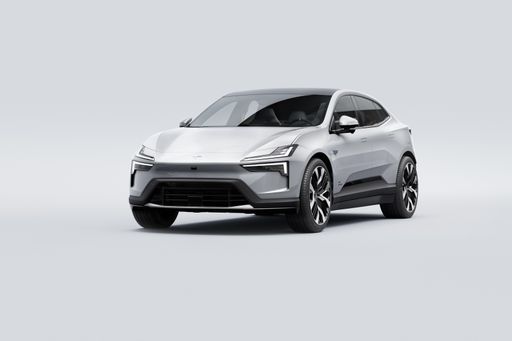
The Polestar 4 wears a coupe-like profile and a Scandinavian-minimal interior that feels premium and unexpectedly roomy, with composed handling that makes urban driving and country roads a pleasure. For buyers who want an electric car that turns heads without shouting, the Polestar 4 is a stylish, clever choice that balances practicality with personality.

details
BMW iX3
Polestar 4

Costs and Consumption

Price
54,300 - 66,300 £
Price
53,100 - 59,900 £
Consumption L/100km
-
Consumption L/100km
-
Consumption kWh/100km
14.6 - 15.1 kWh/100km
Consumption kWh/100km
17.8 - 19 kWh/100km
Electric Range
635 - 805 km
Electric Range
590 - 620 km
Battery Capacity
-
Battery Capacity
-
co2
0 g/km
co2
0 g/km
Fuel tank capacity
-
Fuel tank capacity
-

Dimensions and Body

Body Type
SUV
Body Type
SUV
Seats
5
Seats
5
Doors
-
Doors
-
Curb weight
2,360 kg
Curb weight
2,230 - 2,355 kg
Trunk capacity
-
Trunk capacity
526 L
Length
-
Length
-
Width
1,895 mm
Width
2,008 mm
Height
-
Height
-
Max trunk capacity
-
Max trunk capacity
-
Payload
465 kg
Payload
455 kg

Engine and Performance

Engine Type
Electric
Engine Type
Electric
Transmission
Automatic
Transmission
Automatic
Transmission Detail
Reduction Gearbox
Transmission Detail
Reduction Gearbox
Drive Type
All-Wheel Drive, Rear-Wheel Drive
Drive Type
Rear-Wheel Drive, All-Wheel Drive
Power HP
320 - 469 HP
Power HP
272 - 544 HP
Acceleration 0-100km/h
4.9 - 5.9 s
Acceleration 0-100km/h
3.8 - 7.1 s
Max Speed
-
Max Speed
-
Torque
500 - 645 Nm
Torque
343 - 686 Nm
Number of Cylinders
-
Number of Cylinders
-
Power kW
235 - 345 kW
Power kW
200 - 400 kW
Engine capacity
-
Engine capacity
-

General

Model Year
2026
Model Year
2026
CO2 Efficiency Class
A
CO2 Efficiency Class
A
Brand
BMW
Brand
Polestar
DriveDuel uses data analysis and artificial intelligence to evaluate vehicle data and create content. Content is regularly reviewed and improved. The displayed prices are estimates based on German list prices, adjusted to the respective country’s VAT. Country-specific registration taxes are not included. This information is not legally binding.