
 Deutschland
 France
 Nederland
 Great Britain
 Sverige
 Danmark
 Suomi
Suomi Italia
 Polska
 España
VS
BMW X7 vs Tesla Model Y comparison
Compare performance (530 HP vs 460 HP), boot space and price (90,800 £ vs 34,300 £ ) at a glance. Find out which car is the better choice for you – BMW X7 or Tesla Model Y?
X7
Costs and Efficiency:
When it comes to price and running costs, the biggest differences usually appear. This is often where you see which car fits your budget better in the long run.
Tesla Model Y is considerably cheaper – starting at 34,300 £ , while the BMW X7 costs 90,800 £ . That’s a price difference of around 56,494 £.
Model Y
Engine and Performance:
Under the bonnet, it becomes clear which model is tuned for sportiness and which one takes the lead when you hit the accelerator.
When it comes to engine power, the BMW X7 offers moderately more power – delivering 530 HP compared to 460 HP. That’s roughly 70 HP more horsepower.
When accelerating from 0 to 100 km/h, the Tesla Model Y is noticeably quicker – completing the sprint in 3.5 s, while the BMW X7 takes 4.7 s. That’s about 1.2 s quicker.
Looking at top speed, the BMW X7 is moderately faster – reaching 250 km/h, while the Tesla Model Y tops out at 201 km/h. The difference is around 49 km/h.
There’s also a difference in torque: the BMW X7 delivers moderately more torque with 750 Nm compared to 660 Nm. That’s about 90 Nm more.
X7
Space and Everyday Use:
Beyond pure performance, interior space and usability matter most in daily life. This is where you see which car is more practical and versatile.
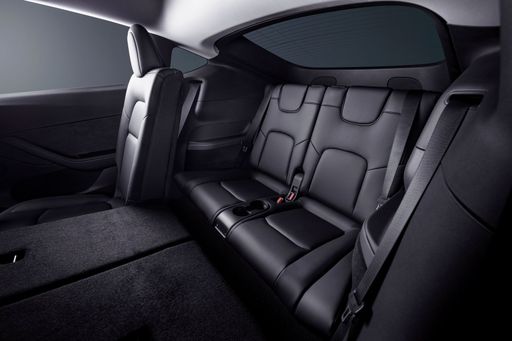
Both vehicles offer seating for 7 people.
In terms of curb weight, Tesla Model Y is markedly lighter – 1,953 kg compared to 2,490 kg. The difference is around 537 kg.
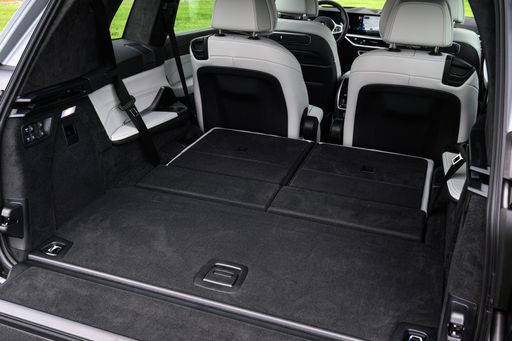
Looking at boot space, the Tesla Model Y offers very slightly more boot space – 822 L compared to 750 L. That’s a difference of about 72 L.
For maximum load capacity, the Tesla Model Y offers very slightly more capacity – up to 2,138 L, about 18 L more than the BMW X7.
When it comes to payload, the BMW X7 carries noticeably more – 760 kg compared to 472 kg. That’s a difference of about 288 kg.
Who wins the race in the data check?
The Tesla Model Y is clearly superior overall in the objective data comparison.
This result only shows which model scores more points on paper – not which of the two cars feels right for you.
from £34,300
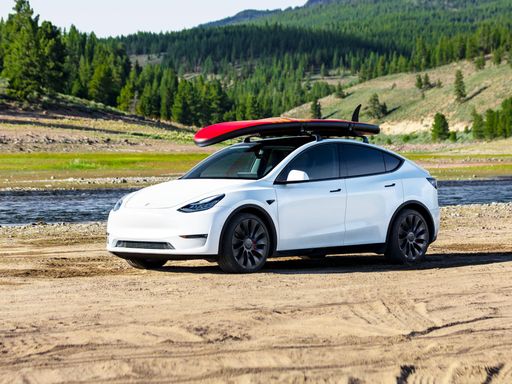
Tesla Model Y
BMW X7
Tesla Model Y
Costs and Consumption
View detailed analysis
View detailed analysis
Engine and Performance
View detailed analysis
View detailed analysis
Dimensions and Body
View detailed analysis
View detailed analysis
BMW X7
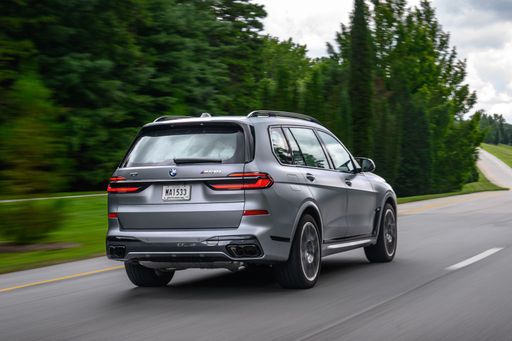
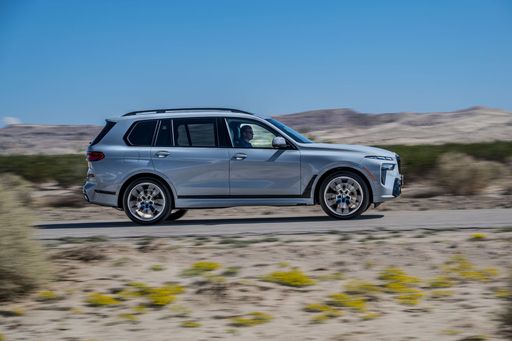
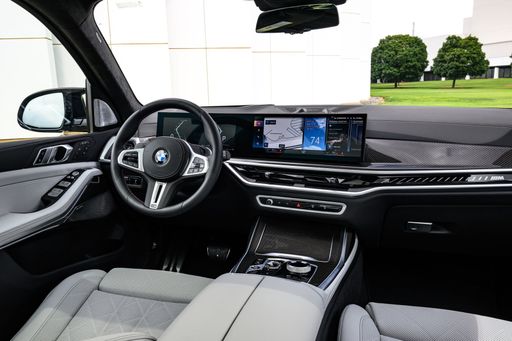
The BMW X7 sits at the top of BMW’s SUV range, wrapping executive-level luxury and a cavernous cabin in a bold, road-commanding package. It’s ideal for buyers who want first-class comfort and presence on the road — think chauffeur-level refinement without hiring one, though you’ll need a confident approach to parking.
details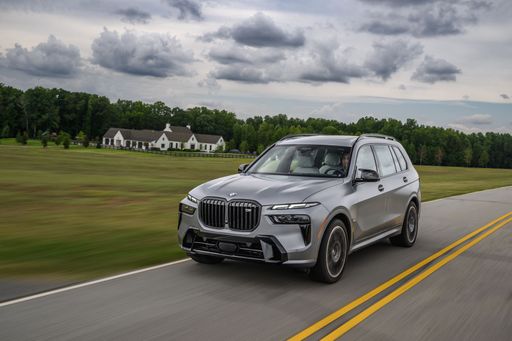
Tesla Model Y
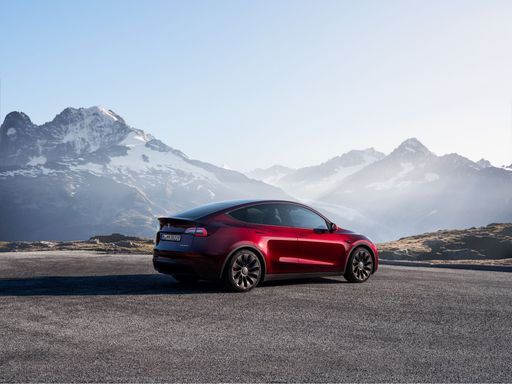
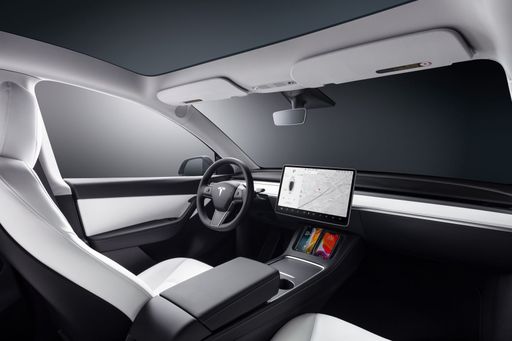
The Tesla Model Y blends SUV practicality with sports-car poke, wrapping a roomy, minimalist cabin and handy hatch into a slick, aerodynamic package that feels more Silicon Valley gadget than garage ornament. It’s an ideal pick for buyers who want effortless electric driving, regular software improvements and access to Tesla’s convenient charging network, though style-conscious shoppers should know it’s more about tech and efficiency than classic luxury.
details
BMW X7
Tesla Model Y
Costs and Consumption |
|
|---|---|
|
Price
90,800 - 117,500 £
|
Price
34,300 - 53,100 £
|
|
Consumption L/100km
8 - 12.1 L/100km
|
Consumption L/100km
-
|
|
Consumption kWh/100km
-
|
Consumption kWh/100km
12.7 - 16.2 kWh/100km
|
|
Electric Range
-
|
Electric Range
534 - 657 km
|
|
Battery Capacity
-
|
Battery Capacity
64.5 - 83 kWh
|
|
co2
210 - 274 g/km
|
co2
0 g/km
|
|
Fuel tank capacity
80 - 83 L
|
Fuel tank capacity
-
|
Dimensions and Body |
|
|---|---|
|
Body Type
SUV
|
Body Type
SUV
|
|
Seats
7
|
Seats
5 - 7
|
|
Doors
5
|
Doors
5
|
|
Curb weight
2,490 - 2,675 kg
|
Curb weight
1,953 - 2,108 kg
|
|
Trunk capacity
750 L
|
Trunk capacity
822 L
|
|
Length
5,181 mm
|
Length
4,790 - 4,797 mm
|
|
Width
2,000 mm
|
Width
1,920 - 1,921 mm
|
|
Height
1,835 mm
|
Height
1,621 - 1,624 mm
|
|
Max trunk capacity
2,120 L
|
Max trunk capacity
2,118 - 2,138 L
|
|
Payload
680 - 760 kg
|
Payload
435 - 472 kg
|
Engine and Performance |
|
|---|---|
|
Engine Type
Petrol MHEV, Diesel MHEV
|
Engine Type
Electric
|
|
Transmission
Automatic
|
Transmission
Automatic
|
|
Transmission Detail
Automatic Gearbox
|
Transmission Detail
Reduction Gearbox
|
|
Drive Type
All-Wheel Drive
|
Drive Type
All-Wheel Drive, Rear-Wheel Drive
|
|
Power HP
352 - 530 HP
|
Power HP
299 - 460 HP
|
|
Acceleration 0-100km/h
4.7 - 5.9 s
|
Acceleration 0-100km/h
3.5 - 7.2 s
|
|
Max Speed
245 - 250 km/h
|
Max Speed
201 km/h
|
|
Torque
520 - 750 Nm
|
Torque
420 - 660 Nm
|
|
Number of Cylinders
6 - 8
|
Number of Cylinders
-
|
|
Power kW
259 - 390 kW
|
Power kW
220 - 338 kW
|
|
Engine capacity
2,993 - 4,395 cm3
|
Engine capacity
-
|
General |
|
|---|---|
|
Model Year
2,025
|
Model Year
2,025 - 2,026
|
|
CO2 Efficiency Class
G
|
CO2 Efficiency Class
A
|
|
Brand
BMW
|
Brand
Tesla
|
DriveDuel uses data analysis and artificial intelligence to evaluate vehicle data and create content. Content is regularly reviewed and improved.
The displayed prices are estimates based on German list prices, adjusted to the respective country’s VAT. Country-specific registration taxes are not included. This information is not legally binding.