VS

BYD Atto 2 vs Toyota Yaris Cross comparison

Compare performance (212 HP vs 130 HP), boot space and price (30,800 £ vs 23,700 £ ) at a glance. Find out which car is the better choice for you – BYD Atto 2 or Toyota Yaris Cross?

BYD Atto 2 vs Toyota Yaris Cross: Key differences

BYD Atto 2

4.8 (5 Reviews)
rate
  • markedly more power
  • considerably quicker 0–100 km/h
  • somewhat more trunk space
details

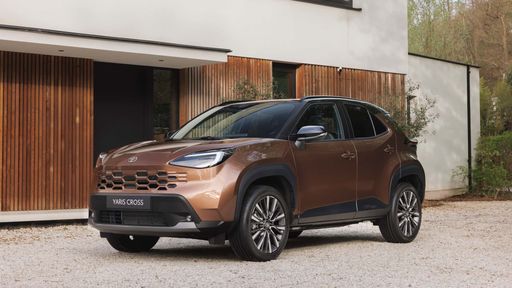
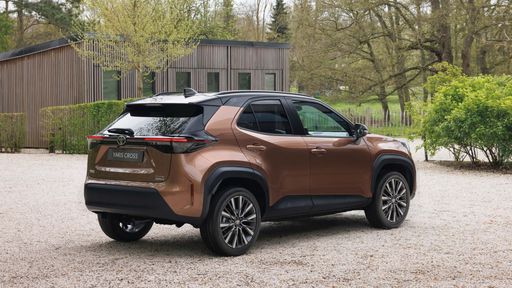
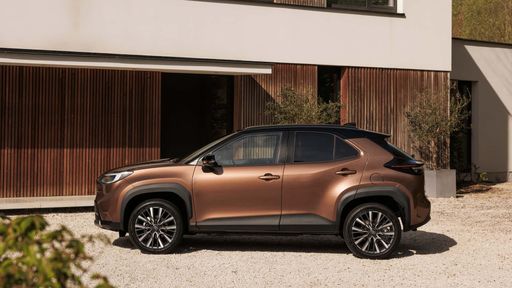
Toyota Yaris Cross

4.2 (15 Reviews)
rate
  • noticeably cheaper
  • markedly lighter
details

All details on performance, efficiency, range and trunk space can be found in the technical comparison below – including user reviews for both models.

By Achim Sedelmaier

Atto 2

Head-to-head: Toyota Yaris Cross VS BYD Atto 2 — which suits your daily life?

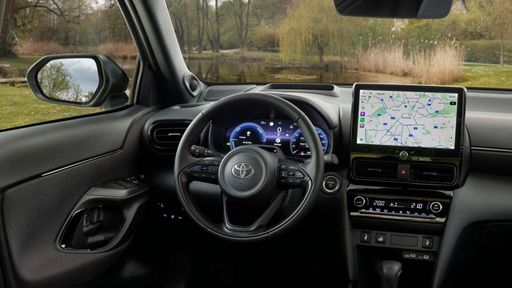
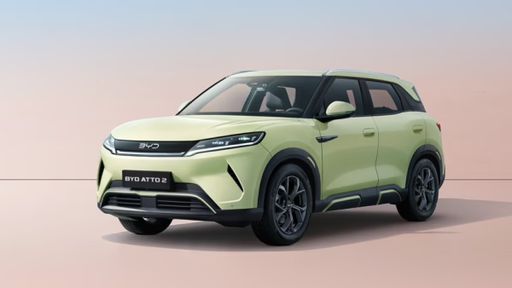
Toyota Yaris Cross VS BYD Atto 2 sets a clear choice between a small, frugal hybrid crossover and a compact, well‑equipped electric SUV. The Toyota Yaris Cross presents itself as a pragmatic, economy‑first option that excels in stop‑start town driving and long‑term running costs, whereas the BYD Atto 2 offers an all‑electric package with strong kit levels and a more premium cabin feel. That trade‑off — lower fuel use and Toyota simplicity versus EV convenience, tech and a roomier rear — is the headline for most buyers. Price expectations, charging access and how often you carry adults in the back are the practical filters that decide which direction makes sense. Read on for how those differences play out in city maneuvering, cabin comfort, luggage space and long‑distance behavior.
Yaris Cross

City manners and everyday drivability

The Toyota Yaris Cross thrives in urban routines: its hybrid system frequently runs in electric mode at low speeds and the transmission smooths stop‑and‑go traffic, making commuting effortless and economical. The BYD Atto 2 is equally at home in town through its light steering, tight turning circle and a cushioned ride that makes parking and short hops relaxing. Where they diverge is sensation — the Yaris Cross feels engineered around efficiency and discreet control, while the Atto 2 feels more like a modern EV living room with instant shove but a softer, less communicative chassis. If your day is mainly city trips and you prize low refuelling costs the Toyota is compelling; if you have access to charging and prefer a calmer, feature‑rich cabin the BYD will win more smiles on short runs. Both are urban‑friendly, but they reward different routines: frugal predictability versus electric convenience and creature comforts.

Atto 2

Comfort, cabin quality and rear‑seat reality

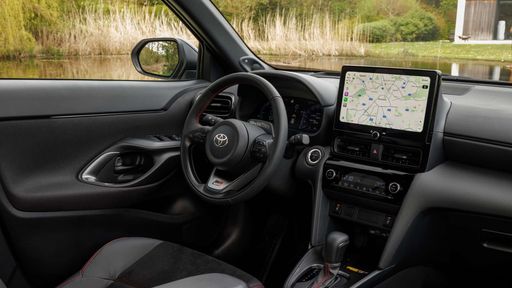
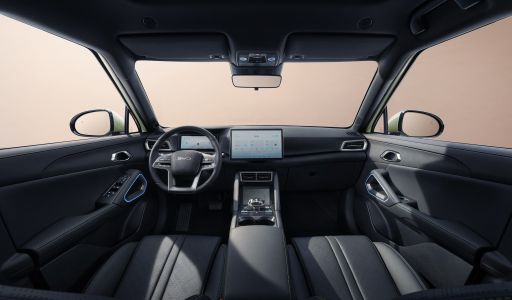
Step inside the BYD Atto 2 and the impression is of higher material quality and a more spacious rear passenger area; its seats and soft surfaces lift the perceived class of the cabin. The Toyota Yaris Cross is tidy and functional with comfy front seats and an ergonomically simple layout, but its rear bench is noticeably tighter and taller adults feel constrained on longer trips. Acoustic character also splits them: Atto 2 is quiet from the drivetrain, though wind noise appears sooner on the motorway, whereas Yaris Cross masks urban clatter well but becomes more vocal when pushed. Buyers who ferry adults often will prefer BYD’s rear room and refinement, while those prioritising front‑seat comfort, straightforward controls and Toyota’s familiar ergonomics will find the Yaris Cross perfectly convincing. Both cabins work, but the difference is a question of space and finish versus classic, utilitarian comfort.

Yaris Cross

Practicality and real‑world usability

On day‑to‑day practicality the Toyota Yaris Cross leans heavily on efficient packaging: a user‑friendly boot arrangement, clever load floor options and straightforward use make errands and weekend trips simple. The BYD Atto 2 brings useful modern tricks — generous standard equipment, clever tech such as vehicle‑to‑load capability and a generally tidy interior — but its rear cargo claims can be optimistic so you should test‑pack luggage before committing. The Yaris Cross also offers an optional small‑SUV all‑wheel drive for slippery conditions, though that comes with a compromise on cargo volume; the Atto 2 avoids that specific trade‑off but replaces it with the trade‑off of battery choice: city‑centric or longer‑range focus. If you regularly cram in strollers or longer items the Toyota’s practical load floor will feel familiar and dependable; if you want a tech‑rich cabin and flexible daily accessories the BYD hands you more kit. Practicality comes down to what you carry most often: luggage and kit, or passengers and gadgets.

Long‑distance behavior, noise and touring comfort

Longer trips expose the different engineering philosophies: the Toyota Yaris Cross delivers predictable range and easy refuelling, with a composed highway ride but a three‑cylinder character that becomes audible under sustained load. The BYD Atto 2 is hushed from the electric motor and can be very relaxing on cruise if you choose the larger battery option, yet it can also show wind noise and a softer body control that feels less planted at high speeds. For people who routinely cover motorway miles without charging infrastructure nearby the Yaris Cross’s hybrid security and low consumption are reassuring, while those able to plug in regularly will appreciate the Atto 2’s near‑silent acceleration and lower running noise. Neither is a silence‑sealed GT cruiser, but the balance shifts: Toyota for steady economy and refuelling convenience, BYD for electric serenity and potential longer‑range touring when specified with the bigger battery. Your preferred highway routine — topping up liquid fuel versus planning charging stops — will decide which compromise you accept.

Buyer fit: who should choose which car?

If your life is built around mixed urban commuting, infrequent long trips, tight parking and the lowest everyday running costs, the Toyota Yaris Cross is the pragmatic pick that rewards conservative use and offers an optional traction boost for winter conditions. If you have reliable access to charging, want a well‑equipped cabin, better rear‑seat space and the immediate responsiveness of electric drive, the BYD Atto 2 is the more modern, comfort‑oriented choice — but pick the battery spec that matches your travel pattern. Families who regularly carry tall adults or need a predictable, easy‑to‑pack boot will tilt to the Toyota’s packaging; tech‑minded buyers who value interior quality and standard features will favor BYD. Both cars make sense for city‑centric buyers but in different ways, and the technical comparison below will clarify battery/engine options, driving performance and exact cargo dimensions to help you finalise the decision.

Here’s where it gets real: The technical differences in detail

Atto 2

Costs and Efficiency:

Price and efficiency are often the first things buyers look at. Here it becomes clear which model has the long-term edge – whether at the pump, the plug, or in purchase price.

Toyota Yaris Cross is noticeably cheaper – starting at 23,700 £ , while the BYD Atto 2 costs 30,800 £ . That’s a price difference of around 7,157 £.

Yaris Cross

Engine and Performance:

Under the bonnet, it becomes clear which model is tuned for sportiness and which one takes the lead when you hit the accelerator.

When it comes to engine power, the BYD Atto 2 offers markedly more power – delivering 212 HP compared to 130 HP. That’s roughly 82 HP more horsepower.

When accelerating from 0 to 100 km/h, the BYD Atto 2 is considerably quicker – completing the sprint in 7.5 s, while the Toyota Yaris Cross takes 10.7 s. That’s about 3.2 s quicker.

Atto 2

Space and Everyday Use:

Beyond pure performance, interior space and usability matter most in daily life. This is where you see which car is more practical and versatile.

Both vehicles offer seating for 5 people.

In terms of curb weight, Toyota Yaris Cross is markedly lighter – 1,180 kg compared to 1,510 kg. The difference is around 330 kg.

Looking at boot space, the BYD Atto 2 offers somewhat more boot space – 450 L compared to 397 L. That’s a difference of about 53 L.

When it comes to payload, the Toyota Yaris Cross carries marginally more – 510 kg compared to 490 kg. That’s a difference of about 20 kg.

Who wins the race in the data check?

The BYD Atto 2 is clearly superior overall in the objective data comparison.
This result only shows which model scores more points on paper – not which of the two cars feels right for you.

from £30,800
Atto 2

BYD Atto 2

  • Engine Type Plugin Hybrid, Electric
  • Transmission Automatic
  • Drive Type Front-Wheel Drive
  • Power HP 166 - 212 HP
  • Consumption kWh/100km 15.8 - 17.4 kWh/100km
  • Electric Range 40 - 430 km
BYD Atto 2
Toyota Yaris Cross

Costs and Consumption

View detailed analysis

Engine and Performance

View detailed analysis

Dimensions and Body

View detailed analysis

BYD Atto 2

The BYD Atto 2 is a stylish compact electric SUV that blends bold exterior design with a roomy, tech-focused interior, making it well suited to daily driving and urban life. It delivers a comfortable ride and practical features that will appeal to buyers looking for a modern, user-friendly EV.

details

Toyota Yaris Cross

The Toyota Yaris Cross blends the maneuverability of a small hatch with the higher driving position and practicality of a crossover, wrapped in Toyota's dependable build quality. It suits urban buyers who need easy parking, flexible cargo space and a comfortable, economical daily driver.

details
BYD Atto 2
Toyota Yaris Cross

Costs and Consumption

Price
30,800 - 36,000 £
Price
23,700 - 34,300 £
Consumption L/100km
-
Consumption L/100km
4.5 - 4.8 L/100km
Consumption kWh/100km
15.8 - 17.4 kWh/100km
Consumption kWh/100km
-
Electric Range
40 - 430 km
Electric Range
-
Battery Capacity
-
Battery Capacity
-
co2
0 - 72 g/km
co2
101 - 108 g/km
Fuel tank capacity
-
Fuel tank capacity
-

Dimensions and Body

Body Type
SUV
Body Type
SUV
Seats
5
Seats
5
Doors
-
Doors
-
Curb weight
1,510 - 1,720 kg
Curb weight
1,180 - 1,290 kg
Trunk capacity
425 - 450 L
Trunk capacity
320 - 397 L
Length
-
Length
-
Width
1,830 mm
Width
1,765 mm
Height
-
Height
-
Max trunk capacity
-
Max trunk capacity
-
Payload
420 - 490 kg
Payload
485 - 510 kg

Engine and Performance

Engine Type
Plugin Hybrid, Electric
Engine Type
Full Hybrid
Transmission
Automatic
Transmission
Automatic
Transmission Detail
Automatic Gearbox, Reduction Gearbox
Transmission Detail
CVT
Drive Type
Front-Wheel Drive
Drive Type
Front-Wheel Drive, All-Wheel Drive
Power HP
166 - 212 HP
Power HP
116 - 130 HP
Acceleration 0-100km/h
7.5 - 9.1 s
Acceleration 0-100km/h
10.7 - 11.3 s
Max Speed
-
Max Speed
-
Torque
310 Nm
Torque
-
Number of Cylinders
4
Number of Cylinders
3
Power kW
122 - 156 kW
Power kW
85 - 96 kW
Engine capacity
1,498 cm3
Engine capacity
1,490 cm3

General

Model Year
2,025 - 2,026
Model Year
2026
CO2 Efficiency Class
B, A
CO2 Efficiency Class
C
Brand
BYD
Brand
Toyota
DriveDuel uses data analysis and artificial intelligence to evaluate vehicle data and create content. Content is regularly reviewed and improved. The displayed prices are estimates based on German list prices, adjusted to the respective country’s VAT. Country-specific registration taxes are not included. This information is not legally binding.