VS

BYD Atto 3 vs BYD Dolphin comparison

Compare performance (449 HP vs 204 HP), boot space and price (33,400 £ vs 29,700 £ ) at a glance. Find out which car is the better choice for you – BYD Atto 3 or BYD Dolphin?

BYD Atto 3 vs BYD Dolphin: Key differences

BYD Atto 3

5 (2 Reviews)
rate
  • significantly more power
  • a bit more electric range
  • considerably quicker 0–100 km/h
  • noticeably more trunk space

BYD Dolphin

3.7 (3 Reviews)
rate
  • somewhat cheaper
  • barely more efficient
  • somewhat lighter

All details on performance, efficiency, range and trunk space can be found in the technical comparison below – including user reviews for both models.

Atto 3

In an era where electric vehicles (EVs) are becoming a staple on the roads, BYD is increasingly recognized for its innovative offerings. Among its latest models are the BYD Atto 3 and the BYD Dolphin, both of which embody the brand's commitment to electric mobility. While they serve distinct market niches, a close comparison reveals their technical prowess and innovations.
Dolphin

Body Design and Dimensions

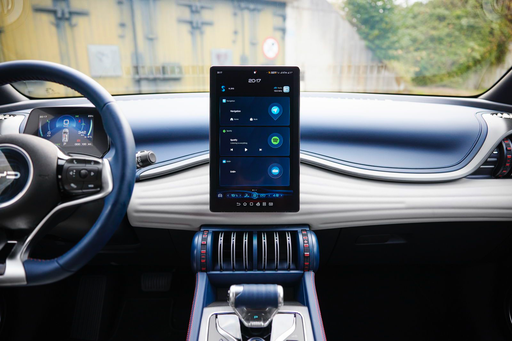
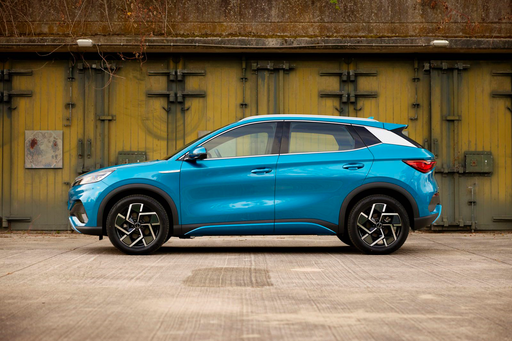
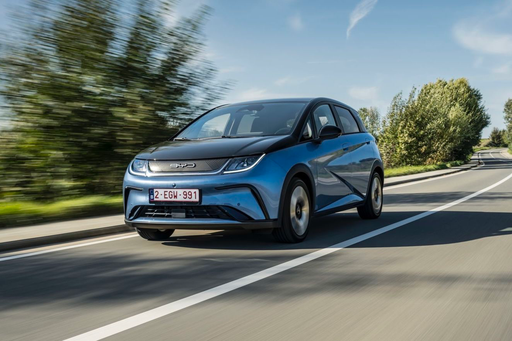
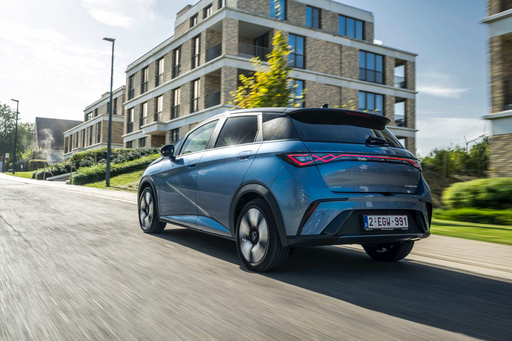
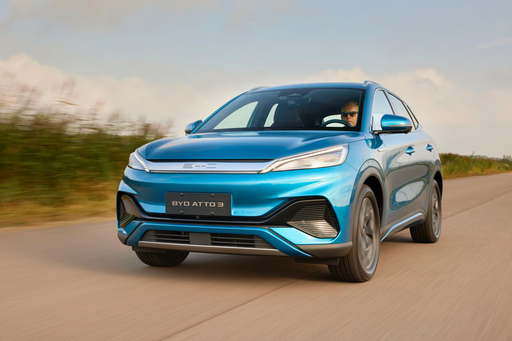
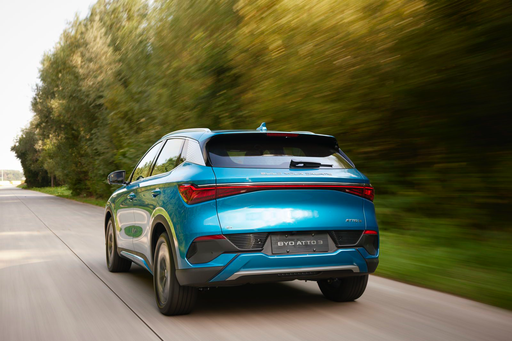
The BYD Atto 3 is classified as an SUV, featuring a robust and bold body type that appeals to families and adventure-seekers. With dimensions measuring 4455 mm in length, 1875 mm in width, and 1615 mm in height, it offers a commanding road presence. In contrast, the BYD Dolphin adopts a hatchback design, making it a more compact and agile option for urban driving. The Dolphin's dimensions are slightly smaller, with a length of 4290 mm, width of 1770 mm, and height of 1570 mm, providing it a blend of efficiency and practicality in crowded environments.

Atto 3

Powertrain Performance

Both models share the same powertrain specifications which include a 204 HP electric motor, delivering a torque of 310 Nm. They are equipped with a front-wheel-drive system and utilize an automatic transmission with a reduction gearbox. This setup ensures smooth acceleration and efficient power delivery. The BYD Atto 3 has a noteworthy acceleration time of 7.3 seconds to reach 100 km/h, while the Dolphin is slightly quicker, achieving the same in just 7 seconds. This showcases the Dolphin's agile performance, especially suited for city roads.

Dolphin

Energy Consumption and Range

When it comes to energy efficiency, the BYD Dolphin leads slightly ahead with a consumption rate of 15.9 kWh/100 km, compared to the Atto 3’s consumption of 16 kWh/100 km. Despite this marginal difference, both models provide impressive electric ranges; the Atto 3 boasts a range of up to 420 km, while the Dolphin is close behind with 427 km. This makes both vehicles suitable for daily commutes as well as longer journeys without the anxiety of frequent recharging.

Atto 3

Interior and Cargo Space

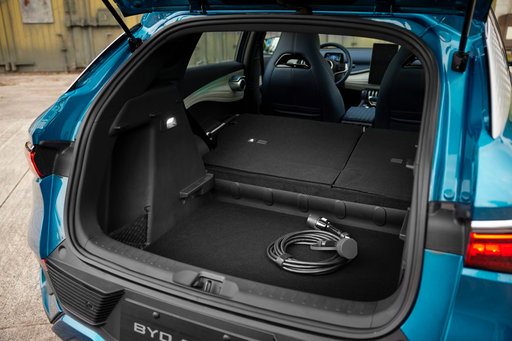
Interior space is always a consideration for potential buyers. The BYD Atto 3 offers a generous trunk capacity of 440 liters, making it ideal for families or those needing to transport larger cargo. Meanwhile, the Dolphin provides a smaller trunk space of 345 liters, fitting its hatchback style. However, both vehicles can comfortably seat five passengers, ensuring adequate space for both driver and passengers on any journey.

Dolphin

Technological Innovations

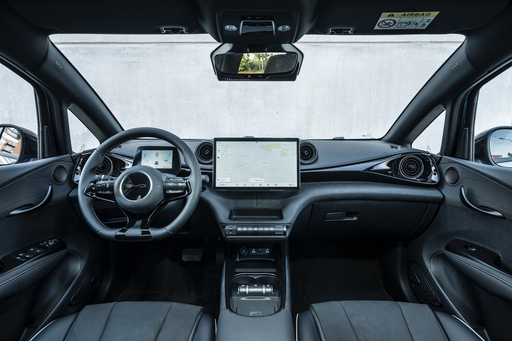
BYD has embedded advanced technology into both models, prioritizing safety and user experience. Both vehicles come with a range of driver-assistance features, including advanced braking systems and stability control. The Atto 3, with its SUV stature, also provides an elevated seating position, enhancing the driver's visibility. Meanwhile, the Dolphin, with its compact size, offers nimble handling, making it a joy to navigate busy streets.

Atto 3

Conclusion

In summary, the BYD Atto 3 and BYD Dolphin are remarkable representatives of BYD's commitment to the electric vehicle era. The Atto 3 stands out for those who favor a spacious SUV, while the Dolphin appeals to urban drivers seeking agility and efficiency. Ultimately, the choice between the two will depend on individual preferences regarding space, body type, and driving dynamics. Regardless of the model chosen, both offer a glimpse into the future of sustainable transportation.

Here’s where it gets real: The technical differences in detail

Atto 3

Costs and Efficiency:

Price and efficiency are key factors when choosing a car – and this is often where the real differences emerge.

BYD Dolphin is somewhat cheaper – starting at 29,700 £ , while the BYD Atto 3 costs 33,400 £ . That’s a price difference of around 3,729 £.

In terms of energy consumption, the BYD Dolphin is barely more efficient: consuming 15.9 kWh/100km compared to 16 kWh/100km for the BYD Atto 3. That’s a difference of about 0.1 kWh/100km.

As for electric range, the BYD Atto 3 offers a bit more range – reaching up to 510 km, about 83 km more than the BYD Dolphin.

Dolphin

Engine and Performance:

Power, torque and acceleration say a lot about how a car feels on the road. This is where you see which model delivers more driving dynamics.

When it comes to engine power, the BYD Atto 3 offers significantly more power – delivering 449 HP compared to 204 HP. That’s roughly 245 HP more horsepower.

When accelerating from 0 to 100 km/h, the BYD Atto 3 is considerably quicker – completing the sprint in 3.9 s, while the BYD Dolphin takes 7 s. That’s about 3.1 s quicker.

There’s no difference in top speed – both reach 160 km/h.

There’s also a difference in torque: the BYD Atto 3 delivers considerably more torque with 560 Nm compared to 310 Nm. That’s about 250 Nm more.

Atto 3

Space and Everyday Use:

Beyond pure performance, interior space and usability matter most in daily life. This is where you see which car is more practical and versatile.

Both vehicles offer seating for 5 people.

In terms of curb weight, BYD Dolphin is somewhat lighter – 1,658 kg compared to 1,825 kg. The difference is around 167 kg.

Looking at boot space, the BYD Atto 3 offers noticeably more boot space – 440 L compared to 345 L. That’s a difference of about 95 L.

For maximum load capacity, the BYD Atto 3 offers only slightly more capacity – up to 1,338 L, about 28 L more than the BYD Dolphin.

When it comes to payload, the BYD Dolphin carries somewhat more – 410 kg compared to 335 kg. That’s a difference of about 75 kg.

Who wins the race in the data check?

The BYD Atto 3 is clearly superior overall in the objective data comparison.
This result only shows which model scores more points on paper – not which of the two cars feels right for you.

from £33,400
Atto 3

BYD Atto 3

  • Engine Type : Electric
  • Transmission : Automatic
  • Drive Type : Front-Wheel Drive, Rear-Wheel Drive, All-Wheel Drive
  • Power HP : 204 - 449 HP
  • Consumption kWh/100km : 16 kWh/100km
  • Electric Range : 420 - 510 km
BYD Atto 3
BYD Dolphin

Costs and Consumption

View detailed analysis

Engine and Performance

View detailed analysis

Dimensions and Body

View detailed analysis

BYD Atto 3

The BYD Atto 3 mixes quirky crossover styling with a cleverly packaged interior that feels more premium than its price suggests. Easy to drive, surprisingly practical and loaded with user-friendly tech, it's a strong choice for buyers who want an EV that's fun without being fussy.

details

BYD Dolphin

The BYD Dolphin is a cheeky electric hatchback that blends playful styling with surprising practicality, making it a brilliant city companion for buyers who want modern tech without the showroom bravado. It’s comfy, efficient and easy to live with, and while it won’t blind you with supercar drama, it will quietly get the job done with plenty of character.

details
BYD Atto 3
BYD Dolphin

Costs and Consumption

Price
33,400 - 43,700 £
Price
29,700 - 31,400 £
Consumption L/100km
-
Consumption L/100km
-
Consumption kWh/100km
16 kWh/100km
Consumption kWh/100km
15.9 kWh/100km
Electric Range
420 - 510 km
Electric Range
427 km
Battery Capacity
-
Battery Capacity
-
co2
0 g/km
co2
0 g/km
Fuel tank capacity
-
Fuel tank capacity
-

Dimensions and Body

Body Type
SUV
Body Type
Hatchback
Seats
5
Seats
5
Doors
5
Doors
5
Curb weight
1,825 kg
Curb weight
1,658 kg
Trunk capacity
440 L
Trunk capacity
345 L
Length
4,455 mm
Length
4,290 mm
Width
1,875 mm
Width
1,770 mm
Height
1,615 mm
Height
1,570 mm
Max trunk capacity
1,338 L
Max trunk capacity
1,310 L
Payload
335 kg
Payload
410 kg

Engine and Performance

Engine Type
Electric
Engine Type
Electric
Transmission
Automatic
Transmission
Automatic
Transmission Detail
Reduction Gearbox
Transmission Detail
Reduction Gearbox
Drive Type
Front-Wheel Drive, Rear-Wheel Drive, All-Wheel Drive
Drive Type
Front-Wheel Drive
Power HP
204 - 449 HP
Power HP
204 HP
Acceleration 0-100km/h
3.9 - 7.3 s
Acceleration 0-100km/h
7 s
Max Speed
160 km/h
Max Speed
160 km/h
Torque
310 - 560 Nm
Torque
310 Nm
Number of Cylinders
-
Number of Cylinders
-
Power kW
150 - 330 kW
Power kW
150 kW
Engine capacity
-
Engine capacity
-

General

Model Year
2,023 - 2,026
Model Year
2,023
CO2 Efficiency Class
A
CO2 Efficiency Class
A
Brand
BYD
Brand
BYD
DriveDuel uses data analysis and artificial intelligence to evaluate vehicle data and create content. Content is regularly reviewed and improved. The displayed prices are estimates based on German list prices, adjusted to the respective country’s VAT. Country-specific registration taxes are not included. This information is not legally binding.