
 Deutschland
 France
 Nederland
 Great Britain
 Sverige
 Danmark
 Suomi
Suomi Italia
 Polska
 España
VS
BYD Han vs Peugeot 208 comparison
Compare performance (517 HP vs 156 HP), boot space and price (59200 £ vs 21000 £ ) at a glance. Find out which car is the better choice for you – BYD Han or Peugeot 208?
Han
Costs and Efficiency:
When it comes to price and running costs, the biggest differences usually appear. This is often where you see which car fits your budget better in the long run.
Peugeot 208 has a convincingly advantage in terms of price – it starts at 21000 £ , while the BYD Han costs 59200 £ . That’s a price difference of around 38178 £.
In terms of energy consumption, the advantage goes to the Peugeot 208: with 14.10 kWh per 100 km, it’s evident more efficient than the BYD Han with 18.50 kWh. That’s a difference of about 4.40 kWh.
As for electric range, the BYD Han performs somewhat better – achieving up to 521 km, about 89 km more than the Peugeot 208.
208
Engine and Performance:
Power, torque and acceleration say a lot about how a car feels on the road. This is where you see which model delivers more driving dynamics.
When it comes to engine power, the BYD Han has a significantly edge – offering 517 HP compared to 156 HP. That’s roughly 361 HP more horsepower.
In acceleration from 0 to 100 km/h, the BYD Han is significantly quicker – completing the sprint in 3.90 s, while the Peugeot 208 takes 8.30 s. That’s about 4.40 s faster.
In terms of top speed, the Peugeot 208 performs hardly perceptible better – reaching 200 km/h, while the BYD Han tops out at 180 km/h. The difference is around 20 km/h.
There’s also a difference in torque: BYD Han pulls convincingly stronger with 700 Nm compared to 270 Nm. That’s about 430 Nm difference.
Han
Space and Everyday Use:
Beyond pure performance, interior space and usability matter most in daily life. This is where you see which car is more practical and versatile.
Both vehicles offer seating for 5 people.
In curb weight, Peugeot 208 is clearly lighter – 1165 kg compared to 2325 kg. The difference is around 1160 kg.
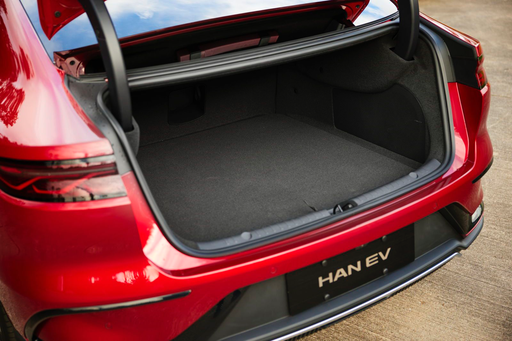
In terms of boot space, the BYD Han offers somewhat more room – 410 L compared to 352 L. That’s a difference of about 58 L.
When it comes to payload, Peugeot 208 noticeable takes the win – 430 kg compared to 335 kg. That’s a difference of about 95 kg.
Who wins the race in the data check?
The BYD Han is barely ahead in the objective data comparison.
This result only shows which model scores more points on paper – not which of the two cars feels right for you.
BYD Han
Peugeot 208
Costs and Consumption
View detailed analysis
View detailed analysis
Engine and Performance
View detailed analysis
View detailed analysis
Dimensions and Body
View detailed analysis
View detailed analysis
from about £59,200
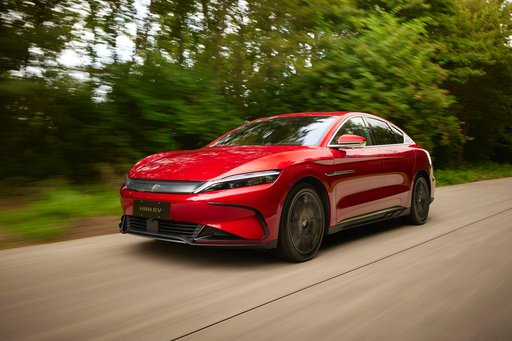
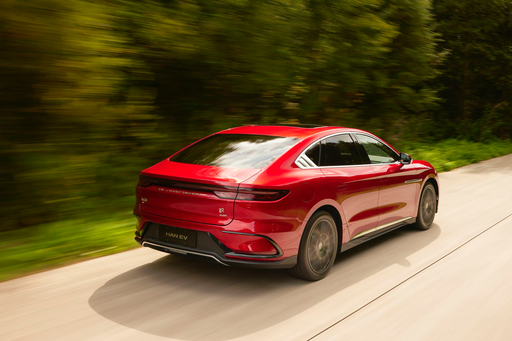
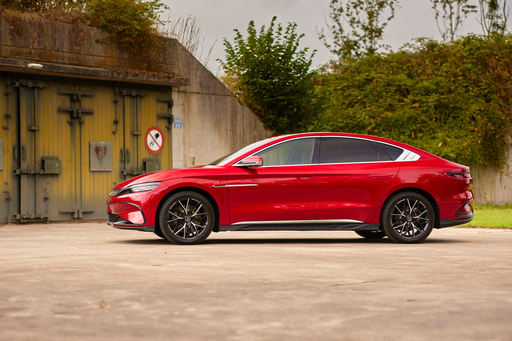
BYD Han
BYD Han
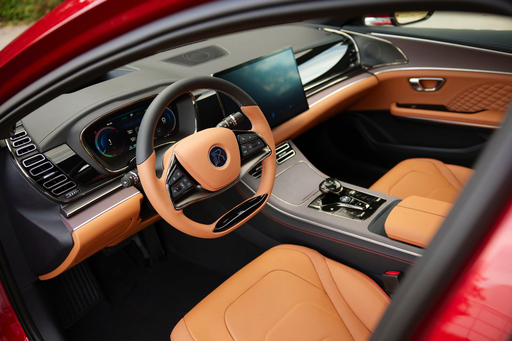
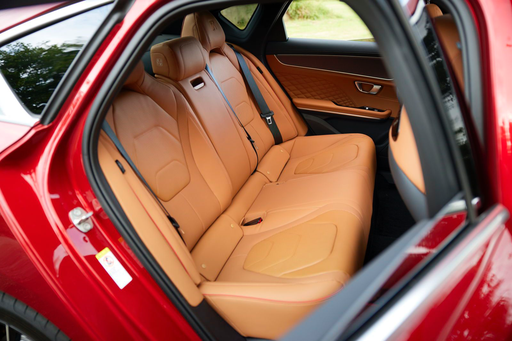
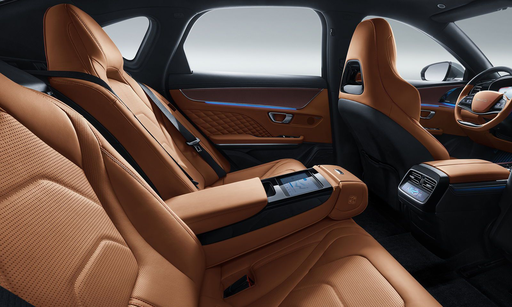
The BYD Han is a sleek, cinematic fastback saloon that pairs dramatic styling with a surprisingly plush cabin and a genuinely high-tech feel. It undercuts established rivals on price while delivering composed handling, generous equipment and long-legged electric confidence — a car that will make badge-conscious buyers sit up and take notice.
details
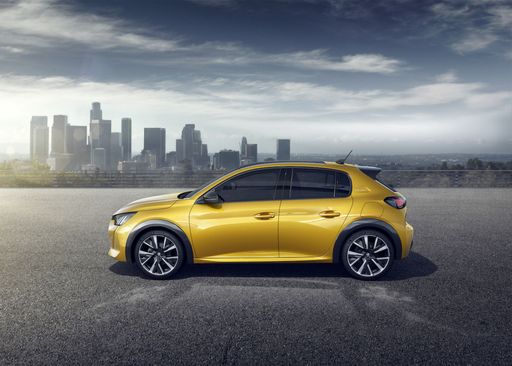
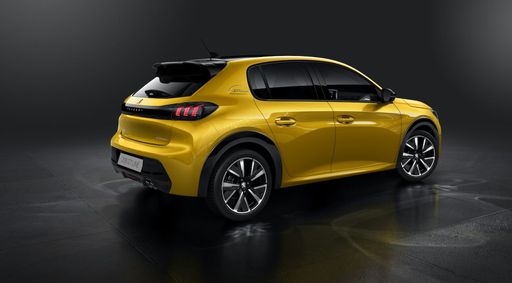
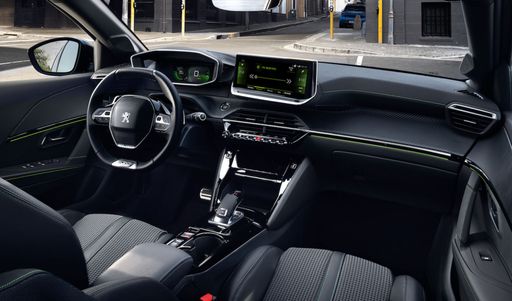
Peugeot 208
4 (2 Reviews)
The Peugeot 208 feels like a city-savvy fox: compact, stylish and surprisingly grown-up, with a cabin that punches above its weight and enough personality to make daily commutes a little less boring. It’s a smart pick for buyers who want chic practicality without the showroom bluster — easy to park, thrifty to run and oddly fun when the road tightens up.
details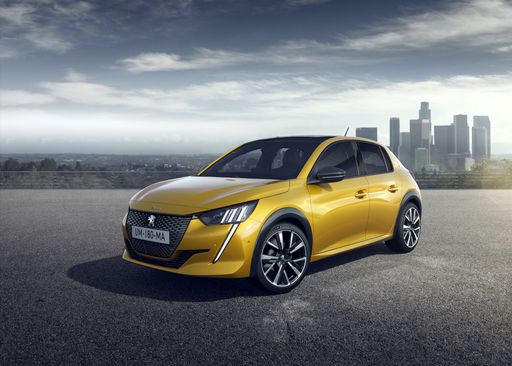
BYD Han
Peugeot 208
Costs and Consumption |
|
|---|---|
|
Price
59200 - 62200 £
|
Price
21000 - 35200 £
|
|
Consumption L/100km
-
|
Consumption L/100km
4.5 - 5.1 L
|
|
Consumption kWh/100km
18.50 kWh
|
Consumption kWh/100km
14.1 - 15.4 kWh
|
|
Electric Range
521 km
|
Electric Range
362 - 432 km
|
|
Battery Capacity
-
|
Battery Capacity
46 - 51 kWh
|
|
co2
0 g/km
|
co2
0 - 116 g/km
|
|
Fuel tank capacity
-
|
Fuel tank capacity
44 L
|
Dimensions and Body |
|
|---|---|
|
Body Type
Sedan
|
Body Type
Hatchback
|
|
Seats
5
|
Seats
5
|
|
Doors
4
|
Doors
5
|
|
Curb weight
2325 kg
|
Curb weight
1165 - 1530 kg
|
|
Trunk capacity
410 L
|
Trunk capacity
309 - 352 L
|
|
Length
4995 mm
|
Length
4055 mm
|
|
Width
1910 mm
|
Width
1745 mm
|
|
Height
1495 mm
|
Height
1430 mm
|
|
Max trunk capacity
-
|
Max trunk capacity
1118 - 1163 L
|
|
Payload
335 kg
|
Payload
380 - 430 kg
|
Engine and Performance |
|
|---|---|
|
Engine Type
Electric
|
Engine Type
Electric, Petrol MHEV, Petrol
|
|
Transmission
Automatic
|
Transmission
Automatic, Manuel
|
|
Transmission Detail
-
|
Transmission Detail
Reduction Gearbox, Dual-Clutch Automatic, Manual Gearbox
|
|
Drive Type
All-Wheel Drive
|
Drive Type
Front-Wheel Drive
|
|
Power HP
517 HP
|
Power HP
101 - 156 HP
|
|
Acceleration 0-100km/h
3.90 s
|
Acceleration 0-100km/h
8.3 - 10.9 s
|
|
Max Speed
180 km/h
|
Max Speed
150 - 200 km/h
|
|
Torque
700 Nm
|
Torque
205 - 270 Nm
|
|
Number of Cylinders
-
|
Number of Cylinders
3
|
|
Power kW
380 kW
|
Power kW
74 - 115 kW
|
|
Engine capacity
-
|
Engine capacity
1199 cm3
|
General |
|
|---|---|
|
Model Year
2023
|
Model Year
2023 - 2026
|
|
CO2 Efficiency Class
A
|
CO2 Efficiency Class
A, C, D
|
|
Brand
BYD
|
Brand
Peugeot
|
What drivetrain options does the BYD Han have?
Available configurations include All-Wheel Drive.
The prices shown are estimates based on German list prices, adjusted for local VAT. Local registration taxes (e.g. NoVA, BPM or CO2 malus) are not included. This information is not legally binding.