VS

BYD Sealion 7 vs XPeng G6 comparison

Compare performance (530 HP vs 487 HP), boot space and price (42,800 £ vs 37,400 £ ) at a glance. Find out which car is the better choice for you – BYD Sealion 7 or XPeng G6?

BYD Sealion 7 vs XPeng G6: Key differences

BYD Sealion 7

4.9 (3 Reviews)
rate
  • very slightly more power
details

XPeng G6

4.7 (6 Reviews)
rate
  • slightly cheaper
  • moderately more efficient
  • marginally more electric range
  • very slightly quicker 0–100 km/h
  • barely lighter
  • barely more trunk space
details

All details on performance, efficiency, range and trunk space can be found in the technical comparison below – including user reviews for both models.

By Achim Sedelmaier

Sealion 7

XPeng G6 VS BYD Sealion 7: which electric SUV‑coupé fits you?

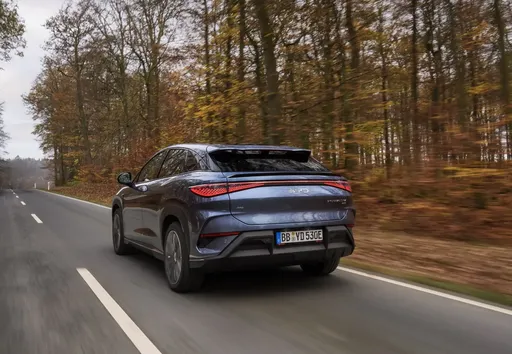
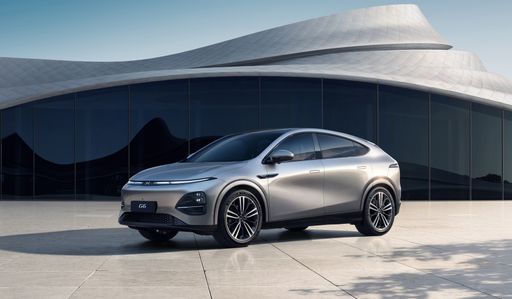
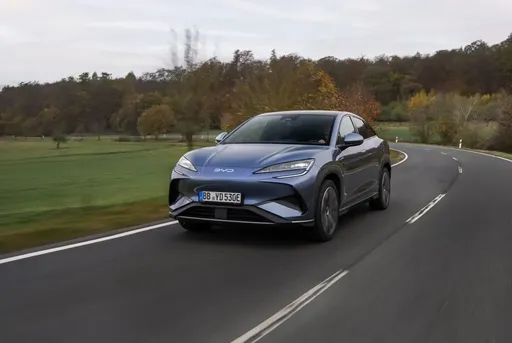
The XPeng G6 and BYD Sealion 7 go after the same brief: spacious, tech‑rich electric SUV‑coupés for family life and long journeys. The XPeng leans on value, very quick roadside top‑ups and a big, easy‑to‑use cabin. The BYD counters with a quieter, more lounge‑like feel, richer materials and effortless shove when you need it. In most markets the G6 undercuts the Sealion 7 while still piling in standard kit, yet the BYD’s finish and calmness give it a more premium sheen. This matchup is less about raw speed and more about how you like your everyday driving to feel.
G6

On‑road character and comfort

The BYD Sealion 7 rides with a relaxed, heavy‑set calm and keeps wind and road noise low, which takes the edge off long days on the motorway. Its steering is light and not especially talkative, and the body can gently waver over a series of bumps, so it’s a cruiser more than a curve carver. The XPeng G6 feels tidier to place thanks to a slightly leaner feel in town, but it can thump over short, sharp imperfections and doesn’t offer much feedback through the wheel. Both are rapid when you ask, with the BYD feeling stronger in rolling overtakes while the XPeng snaps off the line more eagerly. If you chase serenity, the BYD’s hush wins; if you want something a touch easier to guide day to day, the XPeng edges it.

Sealion 7

Efficiency, range and charging rhythm

The XPeng G6’s party trick is ultra‑short DC fast charging stops that reset your range quickly and painlessly, and it tends to sip a bit less energy on mixed routes. The BYD Sealion 7 charges at an impressive clip too, but it uses more on the motorway, so your stints between stops are usually shorter even if the plug‑in time itself is strong. That means the G6 often makes better overall progress on big trips, especially if you lean on rapid chargers regularly. The BYD’s smoothness takes the sting out of extra pauses, though a few reports still mention fussy sessions in cold conditions. If your calendar is ruled by arrival times, XPeng’s charging tempo is the safer bet; if you prize calm more than outright efficiency, BYD’s rhythm still satisfies.

G6

Cabin feel, tech and everyday usability

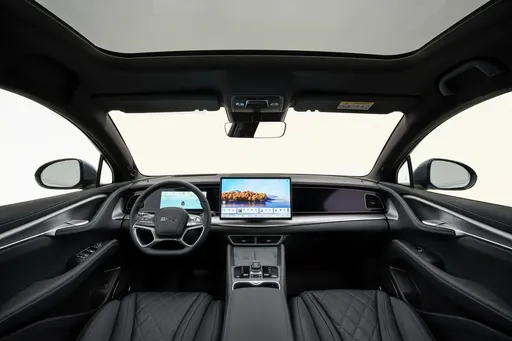
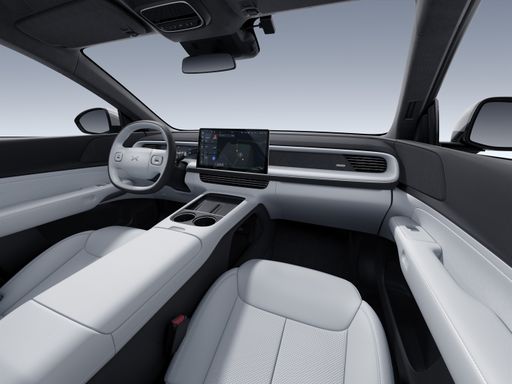
The BYD Sealion 7 greets you with plush materials, clean fit and a rotating central screen that can genuinely help with navigation and camera views. Its driver aids feel capable, but the pop‑ups and warnings can be overzealous, and some menu logic and translations are a beat off. The XPeng G6 goes minimalist with crisp screens and lots of features, yet too many basics hide in sub‑menus and the small driver display asks more of your eyes. Both offer crisp 360‑degree camera systems and phone mirroring, but the BYD’s cabin reads more “finished” while the XPeng’s interface asks for a learning curve. If you want a richer tactile impression, pick the BYD; if you’re happy to trade some ergonomics for tech breadth and updates, the XPeng plays to that brief.

Sealion 7

Space, practicality and visibility

Rear legroom is generous in both, with reclining backrests that make family trips easier; tall passengers will find the BYD’s coupé roof a bit tighter on headroom. The XPeng G6 offers a more accommodating main boot, while the BYD fights back with underfloor cubbies and a handy front storage bay for cables. Day to day, the G6’s tailgate space feels simpler for bulky shopping or a folded pram, although its sloping rear glass narrows your view. The Sealion 7 is easier to see out of directly, but its width makes tight car parks more of a squeeze. Choose the XPeng if you prioritise rear‑seat comfort with a bigger everyday load bay; choose the BYD if you value neat storage touches and a tidier cabin finish over outright volume.

Buyer fit: value tempo vs quiet confidence

The XPeng G6 suits buyers who live on public fast‑charging, want family‑friendly space and appreciate a keener purchase price without feeling short‑changed on kit. It’s also the better pick if you cover frequent motorway miles and care about total journey time more than ultimate cabin plushness. The BYD Sealion 7 fits drivers who crave a quieter, more premium‑leaning atmosphere, stronger mid‑range shove and a deep roster of comfort and assistance features. Company‑car users and commuters who put refinement first will likely gel with the BYD’s character, while cost‑ and time‑savvy travellers will gravitate to the XPeng’s efficiency and charging speed. From here, the detailed differences will help you confirm which strengths matter most in your daily life.

Here’s where it gets real: The technical differences in detail

Sealion 7

Costs and Efficiency:

Price and efficiency are often the first things buyers look at. Here it becomes clear which model has the long-term edge – whether at the pump, the plug, or in purchase price.

XPeng G6 is slightly cheaper – starting at 37,400 £ , while the BYD Sealion 7 costs 42,800 £ . That’s a price difference of around 5,477 £.

In terms of energy consumption, the XPeng G6 is moderately more efficient: consuming 17.3 kWh/100km compared to 19.9 kWh/100km for the BYD Sealion 7. That’s a difference of about 2.6 kWh/100km.

As for electric range, the XPeng G6 offers marginally more range – reaching up to 525 km, about 23 km more than the BYD Sealion 7.

G6

Engine and Performance:

Power, torque and acceleration say a lot about how a car feels on the road. This is where you see which model delivers more driving dynamics.

When it comes to engine power, the BYD Sealion 7 offers very slightly more power – delivering 530 HP compared to 487 HP. That’s roughly 43 HP more horsepower.

When accelerating from 0 to 100 km/h, the XPeng G6 is very slightly quicker – completing the sprint in 4.1 s, while the BYD Sealion 7 takes 4.5 s. That’s about 0.4 s quicker.

There’s also a difference in torque: the BYD Sealion 7 delivers only slightly more torque with 690 Nm compared to 660 Nm. That’s about 30 Nm more.

Sealion 7

Space and Everyday Use:

Cabin size, boot volume and payload all play a role in everyday practicality. Here, comfort and flexibility make the difference.

Both vehicles offer seating for 5 people.

In terms of curb weight, XPeng G6 is barely lighter – 2,065 kg compared to 2,225 kg. The difference is around 160 kg.

Looking at boot space, the XPeng G6 offers barely more boot space – 571 L compared to 520 L. That’s a difference of about 51 L.

When it comes to payload, the XPeng G6 carries a bit more – 475 kg compared to 410 kg. That’s a difference of about 65 kg.

Who wins the race in the data check?

The XPeng G6 holds a solid overall lead in the objective data comparison.
This result only shows which model scores more points on paper – not which of the two cars feels right for you.

from £37,400
G6

XPeng G6

  • Engine Type Electric
  • Transmission Automatic
  • Drive Type Rear-Wheel Drive, All-Wheel Drive
  • Power HP 252 - 487 HP
  • Consumption kWh/100km 17.3 - 18.4 kWh/100km
  • Electric Range 455 - 525 km
BYD Sealion 7
XPeng G6

Costs and Consumption

View detailed analysis

Engine and Performance

View detailed analysis

Dimensions and Body

View detailed analysis

BYD Sealion 7

The BYD Sealion 7 is a sleek electric wagon that blends sporty styling with surprising practicality, making it a compelling choice for drivers who want something different from the usual hatchback or SUV. Its refined interior and composed road manners give it an upscale feel, while clever packaging keeps it versatile for daily use.

details

XPeng G6

The XPeng G6 is a sleek, tech-focused electric crossover that pairs modern styling with a spacious, comfortable cabin. It delivers a refined, engaging driving experience and comes loaded with advanced driver-assistance and infotainment features that make it feel like a smarter, more connected car.

details
BYD Sealion 7
XPeng G6

Costs and Consumption

Price
42,800 - 52,300 £
Price
37,400 - 44,200 £
Consumption L/100km
-
Consumption L/100km
-
Consumption kWh/100km
19.9 - 21.9 kWh/100km
Consumption kWh/100km
17.3 - 18.4 kWh/100km
Electric Range
456 - 502 km
Electric Range
455 - 525 km
Battery Capacity
-
Battery Capacity
-
co2
0 g/km
co2
0 g/km
Fuel tank capacity
-
Fuel tank capacity
-

Dimensions and Body

Body Type
SUV
Body Type
SUV
Seats
5
Seats
5
Doors
-
Doors
-
Curb weight
2,225 - 2,435 kg
Curb weight
2,065 - 2,220 kg
Trunk capacity
520 L
Trunk capacity
571 L
Length
-
Length
-
Width
1,925 mm
Width
1,920 mm
Height
-
Height
-
Max trunk capacity
-
Max trunk capacity
-
Payload
410 kg
Payload
470 - 475 kg

Engine and Performance

Engine Type
Electric
Engine Type
Electric
Transmission
Automatic
Transmission
Automatic
Transmission Detail
Reduction Gearbox
Transmission Detail
Reduction Gearbox
Drive Type
Rear-Wheel Drive, All-Wheel Drive
Drive Type
Rear-Wheel Drive, All-Wheel Drive
Power HP
313 - 530 HP
Power HP
252 - 487 HP
Acceleration 0-100km/h
4.5 - 6.7 s
Acceleration 0-100km/h
4.1 - 6.9 s
Max Speed
-
Max Speed
-
Torque
380 - 690 Nm
Torque
440 - 660 Nm
Number of Cylinders
-
Number of Cylinders
-
Power kW
230 - 390 kW
Power kW
185 - 358 kW
Engine capacity
-
Engine capacity
-

General

Model Year
2024
Model Year
2025
CO2 Efficiency Class
A
CO2 Efficiency Class
A
Brand
BYD
Brand
XPeng
DriveDuel uses data analysis and artificial intelligence to evaluate vehicle data and create content. Content is regularly reviewed and improved. The displayed prices are estimates based on German list prices, adjusted to the respective country’s VAT. Country-specific registration taxes are not included. This information is not legally binding.