VS

Citroen C5 Aircross vs Peugeot 308 comparison

Compare performance (225 HP vs 195 HP), boot space and price (29,100 £ vs 29,200 £ ) at a glance. Find out which car is the better choice for you – Citroen C5 Aircross or Peugeot 308?

Citroen C5 Aircross vs Peugeot 308: Key differences

Citroen C5 Aircross

4 (6 Reviews)
rate
  • marginally cheaper
  • a bit more power
  • moderately more electric range
  • clearly more trunk space
details

Peugeot 308

5 (2 Reviews)
rate
  • marginally more efficient
  • barely more efficient
  • only slightly quicker 0–100 km/h
  • a bit lighter
details

All details on performance, efficiency, range and trunk space can be found in the technical comparison below – including user reviews for both models.

By Achim Sedelmaier

C5 Aircross

A New Era of French Flair: Citroen C5 Aircross vs Peugeot 308

In the competitive landscape of European automobiles, Citroën and Peugeot have long stood as icons of innovative engineering and French style. As we dive into the latest offerings, the Citroën C5 Aircross and the Peugeot 308, it becomes apparent these vehicles are crafted to cater to different niches yet somehow cross paths in the modern car buyer's consideration set. Here's an in-depth comparison to help you decipher which could aptly fit your automotive needs.
308

A Closer Look at Engine Options and Performance

The Citroën C5 Aircross, an SUV through and through, boasts a diverse engine lineup with options like Diesel, Petrol Mild Hybrid Electric Vehicle (MHEV), and a Plug-in Hybrid, giving a range of power outputs from 131 to 224 HP. Coupled with automatic transmission – either an Automatic Gearbox or Dual-Clutch Automatic – it offers Front-Wheel Drive dynamics. The acceleration spans from 10.6 seconds in the base model to a zippier 8.9 seconds in the hybrid, with top speeds reaching up to 225 km/h.

On the other hand, the Peugeot 308 presents a variety as well with its array of Diesel, Petrol, and Full Electric options. The most powerful offering surges to 225 HP in the hybrid configuration, while the pure electric version delivers a calm 156 HP. This hatchback variant provides a range of speed, with a maximum velocity of 235 km/h. The electric acceleration peaks at a brisk 7.5 seconds for 0 to 100 km/h, reflecting its swift urban maneuverability.

C5 Aircross

Dimension and Design: Choosing Your Space

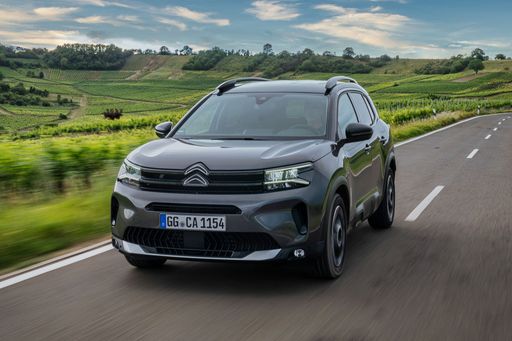
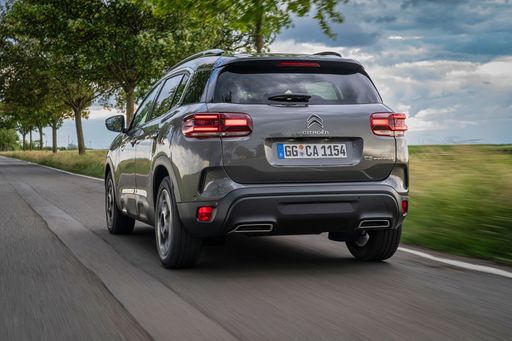
Dimensionally, the Citroën C5 Aircross is tailored to those who value space on their journeys, boasting a length of 4500 mm, a width of 1859 mm, and a height of 1688 mm. This spaciousness snowballs into a trunk capacity of 580 liters, fit for any weekend getaway.

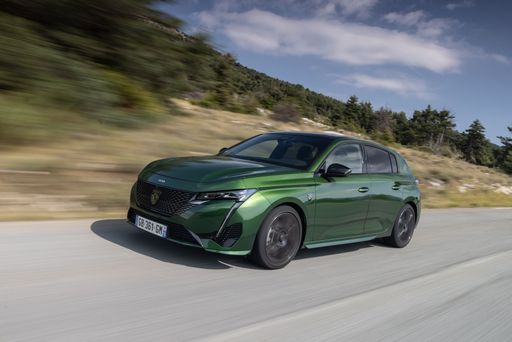
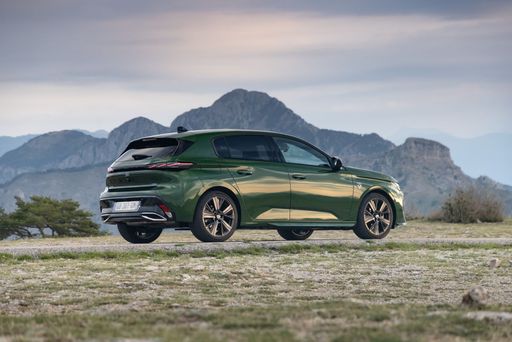
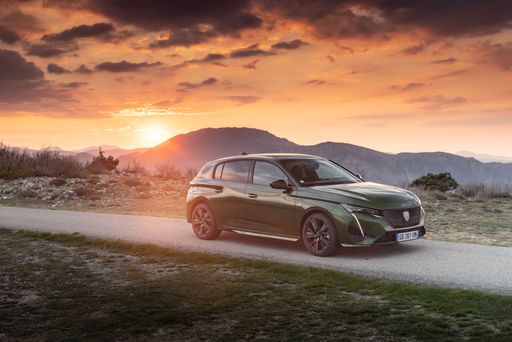
Contrastingly, the more compact Peugeot 308 clocks in at 4367 mm in length, 1852 mm in width, and stands at 1441 mm in height. Its hatchback style caters to urban excursions with a trunk capacity of 412 liters, promising adequate cargo space for everyday expeditions.

308

Efficiency and Environmental Considerations

Both models highlight meticulous attention to fuel efficiency and environmental impact. The C5 Aircross hybrid leads with low consumption figures at 1.4 L/100 km, and an electric range of 58 km, accompanied by a manageable CO2 emission figure of 32 g/km.

The Peugeot 308 electric variant stretches an impressive 419 km on a full charge with an efficient consumption rate of 15.6 kWh/100 km. The plug-in hybrid also shines with a consumption rate of 1.3 L/100 km, boasting an eco-friendly edge that could appeal to future-conscious drivers.

C5 Aircross

Advanced Features and Innovations

Innovations have always been a vital element of both brands. The Citroën C5 Aircross integrates the brand's signature Hydraulic Cushion Suspension to create a ‘magic carpet’ ride quality that absorbs road imperfections for a smoother journey.

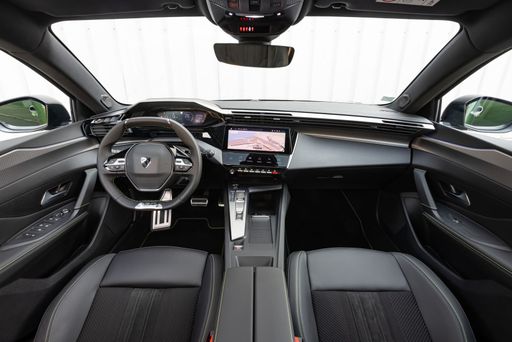
Meanwhile, the Peugeot 308 showcases cutting-edge technology with its i-Cockpit design, which includes an advanced infotainment system and head-up display intended to enhance driving experiences through better ergonomics and more intuitive controls.

308

Conclusion: A Stylish Dilemma

In essence, the choice between the Citroën C5 Aircross and the Peugeot 308 fundamentally rests on your preferences for size, power, and purpose. The Citroën C5 Aircross offers SUV versatility and comfort, ideal for the family-oriented traveler, while the Peugeot 308 captivates with its compact dynamism suited for urban conquests and electrifying commutes.

Whichever you choose, both are poised to deliver time-tested French elegance and state-of-the-art technological advancements to revamp your driving experience in 2024.

Here’s where it gets real: The technical differences in detail

C5 Aircross

Costs and Efficiency:

Price and efficiency are key factors when choosing a car – and this is often where the real differences emerge.

Citroen C5 Aircross is marginally cheaper – starting at 29,100 £ , while the Peugeot 308 costs 29,200 £ . That’s a price difference of around 103 £.

Fuel consumption also shows a difference: the Peugeot 308 uses 2.3 L/100km and is marginally more efficient than the Citroen C5 Aircross with 2.5 L/100km. The difference is about 0.2 L/100km.

In terms of energy consumption, the Peugeot 308 is barely more efficient: consuming 15.6 kWh/100km compared to 17 kWh/100km for the Citroen C5 Aircross. That’s a difference of about 1.4 kWh/100km.

As for electric range, the Citroen C5 Aircross offers moderately more range – reaching up to 520 km, about 70 km more than the Peugeot 308.

308

Engine and Performance:

Power, torque and acceleration are the classic benchmarks for car enthusiasts – and here, some clear differences start to show.

When it comes to engine power, the Citroen C5 Aircross offers a bit more power – delivering 225 HP compared to 195 HP. That’s roughly 30 HP more horsepower.

When accelerating from 0 to 100 km/h, the Peugeot 308 is only slightly quicker – completing the sprint in 7.6 s, while the Citroen C5 Aircross takes 8.3 s. That’s about 0.7 s quicker.

Both models offer the same torque – 300 Nm.

C5 Aircross

Space and Everyday Use:

Beyond pure performance, interior space and usability matter most in daily life. This is where you see which car is more practical and versatile.

Both vehicles offer seating for 5 people.

In terms of curb weight, Peugeot 308 is a bit lighter – 1,453 kg compared to 1,629 kg. The difference is around 176 kg.

Looking at boot space, the Citroen C5 Aircross offers clearly more boot space – 565 L compared to 412 L. That’s a difference of about 153 L.

When it comes to payload, the Peugeot 308 carries very slightly more – 503 kg compared to 471 kg. That’s a difference of about 32 kg.

Who wins the race in the data check?

The Citroen C5 Aircross has the upper hand in the objective data comparison.
This result only shows which model scores more points on paper – not which of the two cars feels right for you.

from £29,100
C5 Aircross

Citroen C5 Aircross

  • Engine Type Petrol MHEV, Electric, Plugin Hybrid
  • Transmission Automatic
  • Drive Type Front-Wheel Drive
  • Power HP 145 - 225 HP
  • Consumption L/100km 2.5 - 5.4 L/100km
  • Consumption kWh/100km 17 kWh/100km
  • Electric Range 81 - 520 km
Citroen C5 Aircross
Peugeot 308

Costs and Consumption

View detailed analysis

Engine and Performance

View detailed analysis

Dimensions and Body

View detailed analysis

Citroen C5 Aircross

The Citroën C5 Aircross feels like a sofa on wheels, delivering a calm, floaty ride and clever packaging that makes life with luggage and kids noticeably easier. Quirky French styling and a supremely practical, family-focused cabin mean it quietly wins hearts by prioritising comfort over showroom bravado.

details

Peugeot 308

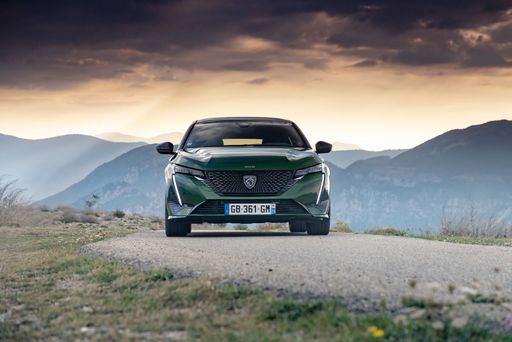
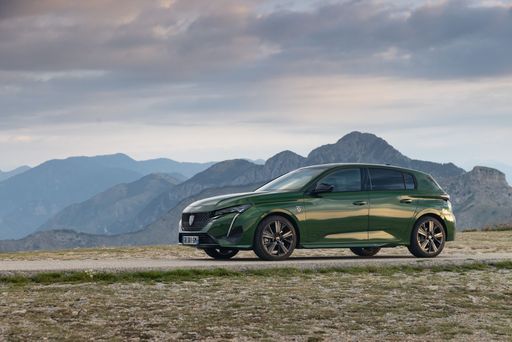
The Peugeot 308 brings a sleek, feline profile and an unexpectedly upscale cabin, with clever packaging and materials that feel a touch more premium than you might expect. It’s composed on the road, easy to live with for daily life, and a smart choice if you want a stylish hatch that still behaves when the road gets interesting.

details
Citroen C5 Aircross
Peugeot 308

Costs and Consumption

Price
29,100 - 43,000 £
Price
29,200 - 42,600 £
Consumption L/100km
2.5 - 5.4 L/100km
Consumption L/100km
2.3 - 5.1 L/100km
Consumption kWh/100km
17 kWh/100km
Consumption kWh/100km
15.6 kWh/100km
Electric Range
81 - 520 km
Electric Range
81 - 450 km
Battery Capacity
-
Battery Capacity
-
co2
0 - 121 g/km
co2
0 - 133 g/km
Fuel tank capacity
-
Fuel tank capacity
-

Dimensions and Body

Body Type
SUV
Body Type
Hatchback
Seats
5
Seats
5
Doors
-
Doors
-
Curb weight
1,629 - 2,184 kg
Curb weight
1,453 - 1,749 kg
Trunk capacity
565 L
Trunk capacity
314 - 412 L
Length
-
Length
-
Width
1,870 mm
Width
1,852 mm
Height
-
Height
-
Max trunk capacity
-
Max trunk capacity
-
Payload
446 - 471 kg
Payload
430 - 503 kg

Engine and Performance

Engine Type
Petrol MHEV, Electric, Plugin Hybrid
Engine Type
Petrol MHEV, Diesel, Plugin Hybrid, Electric
Transmission
Automatic
Transmission
Automatic
Transmission Detail
Dual-Clutch Automatic, Reduction Gearbox
Transmission Detail
Dual-Clutch Automatic, Automatic Gearbox, Reduction Gearbox
Drive Type
Front-Wheel Drive
Drive Type
Front-Wheel Drive
Power HP
145 - 225 HP
Power HP
131 - 195 HP
Acceleration 0-100km/h
8.3 - 11.2 s
Acceleration 0-100km/h
7.6 - 10.6 s
Max Speed
-
Max Speed
-
Torque
230 - 300 Nm
Torque
230 - 300 Nm
Number of Cylinders
3 - 4
Number of Cylinders
3 - 4
Power kW
107 - 165 kW
Power kW
96 - 143 kW
Engine capacity
1,199 - 1,598 cm3
Engine capacity
1,199 - 1,598 cm3

General

Model Year
2,025 - 2,026
Model Year
2,025 - 2,026
CO2 Efficiency Class
D, A, B
CO2 Efficiency Class
C, D, B, A
Brand
Citroen
Brand
Peugeot
DriveDuel uses data analysis and artificial intelligence to evaluate vehicle data and create content. Content is regularly reviewed and improved. The displayed prices are estimates based on German list prices, adjusted to the respective country’s VAT. Country-specific registration taxes are not included. This information is not legally binding.