
VS

Citroen Jumpy Bus vs Renault Trafic Transporter - Differences and prices compared

Compare performance (136 HP vs 170 HP), boot space and price (37900 £ vs 33200 £ ) at a glance. Find out which car is the better choice for you – Citroen Jumpy Bus or Renault Trafic Transporter?

Electric Versus Hybrid: Citroen Jumpy Bus vs Renault Trafic Transporter

In an era where sustainable transportation is key, the Citroen Jumpy Bus and Renault Trafic Transporter stand out with their innovative fuel systems and practical designs. As two of the most versatile vehicles in their class, they cater to diverse needs while pushing the boundaries of eco-friendly automotive technology. Here's a deep dive into their technical aspects and unique features.
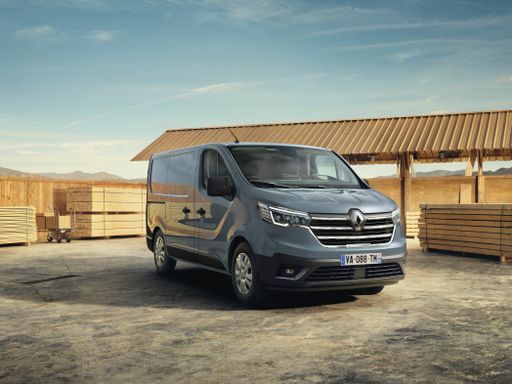
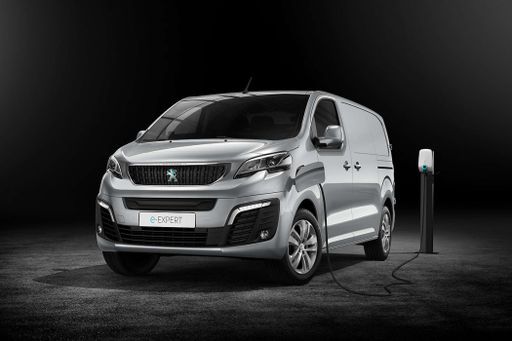
The Power Within: Engine and Performance

The Citroen Jumpy Bus is powered exclusively by an electric engine. With a robust output of 100 kW (136 HP) and a torque of 260 Nm, it is designed for smooth, emission-free driving. Its reduction gearbox complements the automatic transmission, ensuring ease for front-wheel driving enthusiasts. The Jumpy Bus delivers a CO2 efficiency class of A, making it an environmentally responsible choice with a CO2 output of zero g/km.

On the other hand, the Renault Trafic Transporter offers both diesel and electric options, presenting greater flexibility. With a power spectrum ranging from 81 kW (110 HP) to 125 kW (170 HP), it caters to various performance needs. The diesel models feature a manual gearbox, whereas the electric version adopts an automatic or dual-clutch transmission, maintaining the front-wheel drive standard across the board. Regardless of engine type, the Trafic boasts a broad range of torque, reaching up to 380 Nm.

Sustainability in Focus: Consumption and Range

The Citroen Jumpy Bus offers satisfactory electric consumption, ranging from 24.1 to 24.4 kWh/100km. Its electric range impresses with figures between 223 km to 352 km, making it an excellent choice for urban commuting and short trips with minimal environmental impact.

In contrast, the Renault Trafic Transporter features both traditional and electric consumption metrics. The diesel engines consume between 6.7 to 7.8 L/100km, whereas the electric variants boast a consumption rate of 21.3 to 21.5 kWh/100km. The electric range between 289 km to 292 km provides ample scope for eco-conscious transport tasks.

Design and Space: Body and Capability

The Citroen Jumpy Bus is an exemplar of modern design with an emphasis on passenger comfort. With seating for nine and a trunk capacity stretching between 3061 L to 3497 L, practicality is at its core. Its length spans from 4983 mm to 5333 mm, striking a balance between space and maneuverability. Moreover, the Jumpy Bus maintains a maximal weight from 2018 kg to 2240 kg, with payload capacities up to 982 kg, catering to light to moderate transport needs.

Conversely, the Renault Trafic Transporter is chiefly a cargo van that flexibly transforms to suit people transport when needed. Its design encapsulates functionality with seating options for up to six passengers. The body stretches between 5080 mm to 5480 mm in length, allowing ample storage, highlighted by payload capabilities reaching an impressive 1185 kg. With its substantial fuel tank capacity of 80 L, the Trafic proves adept for longer hauls as well.

Final Thoughts: The Choice Dilemma

Both the Citroen Jumpy Bus and Renault Trafic Transporter showcase that cutting-edge technology and environmental respect can coexist in modern transportation. The Jumpy Bus appeals to those prioritizing a sustainable drive with passenger comfort, whereas the Trafic Transporter caters to those needing cargo versatility and power flexibility. Choosing between them depends on your specific needs and the nature of your journeys. In either scenario, stepping towards these models contributes to a greener planet.

Citroen Jumpy Bus

Renault Trafic Transporter

Here’s where it gets real: The technical differences in detail

Costs and Efficiency:

Price and efficiency are often the first things buyers look at. Here it becomes clear which model has the long-term edge – whether at the pump, the plug, or in purchase price.

Renault Trafic Transporter has a to a small extent advantage in terms of price – it starts at 33200 £ , while the Citroen Jumpy Bus costs 37900 £ . That’s a price difference of around 4710 £.

In terms of energy consumption, the advantage goes to the Renault Trafic Transporter: with 21.20 kWh per 100 km, it’s slightly more efficient than the Citroen Jumpy Bus with 24.10 kWh. That’s a difference of about 2.90 kWh.

As for electric range, the Citroen Jumpy Bus performs hardly perceptible better – achieving up to 352 km, about 34 km more than the Renault Trafic Transporter.

Engine and Performance:

Under the bonnet, it becomes clear which model is tuned for sportiness and which one takes the lead when you hit the accelerator.

When it comes to engine power, the Renault Trafic Transporter has a somewhat edge – offering 170 HP compared to 136 HP. That’s roughly 34 HP more horsepower.

In terms of top speed, the Renault Trafic Transporter performs evident better – reaching 180 km/h, while the Citroen Jumpy Bus tops out at 130 km/h. The difference is around 50 km/h.

There’s also a difference in torque: Renault Trafic Transporter pulls noticeable stronger with 380 Nm compared to 260 Nm. That’s about 120 Nm difference.

Space and Everyday Use:

Cabin size, boot volume and payload all play a role in everyday practicality. Here, comfort and flexibility make the difference.

Seats: Citroen Jumpy Bus offers noticeable more seating capacity – 9 vs 6.

In curb weight, Renault Trafic Transporter is minimal lighter – 1848 kg compared to 2018 kg. The difference is around 170 kg.

In maximum load capacity, the Renault Trafic Transporter performs clearly better – up to 8900 L, which is about 4346 L more than the Citroen Jumpy Bus.

When it comes to payload, Renault Trafic Transporter somewhat takes the win – 1222 kg compared to 982 kg. That’s a difference of about 240 kg.

Who wins the race in the data check?

The Renault Trafic Transporter holds a decisive overall lead in the objective data comparison.
This result only shows which model scores more points on paper – not which of the two cars feels right for you.

Citroen Jumpy Bus
Renault Trafic Transporter

Costs and Consumption

View detailed analysis

Engine and Performance

View detailed analysis

Dimensions and Body

View detailed analysis
from about £33,200
default

Renault Trafic Transporter

  • Engine Type : Diesel, Electric
  • Transmission : Manuel, Automatic
  • Drive Type : Front-Wheel Drive
  • Power HP : 110 - 170 HP
  • Consumption L/100km : 6.6 - 7.8 L
  • Consumption kWh/100km : 21.2 - 22.2 kWh
  • Electric Range : 240 - 318 km

Citroen Jumpy Bus

The Citroën Jumpy bus is a no-nonsense people carrier that prioritises interior space and comfort over flash, making it an obvious choice for families and shuttle operators who need to move people efficiently. It won’t turn heads, but with predictable driving manners, flexible seating and a practical, unpretentious charm it gets the job done with the kind of quiet confidence you’ll soon take for granted.

details

Renault Trafic Transporter

The Renault Trafic is a practical, workhorse transporter that hides thoughtful cabin comfort behind a tough, utilitarian exterior, so you can tackle a busy week without sacrificing sanity. It’s a sensible choice for buyers who want reliability and clever flexibility rather than flash, with just enough character to make daily hauling feel less like a chore.

details
Citroen Jumpy Bus
Renault Trafic Transporter

Costs and Consumption

Price
37900 - 43900 £
Price
33200 - 43500 £
Consumption L/100km
-
Consumption L/100km
6.6 - 7.8 L
Consumption kWh/100km
24.1 - 24.4 kWh
Consumption kWh/100km
21.2 - 22.2 kWh
Electric Range
221 - 352 km
Electric Range
240 - 318 km
Battery Capacity
-
Battery Capacity
-
co2
0 g/km
co2
0 - 206 g/km
Fuel tank capacity
-
Fuel tank capacity
80 L

Dimensions and Body

Body Type
Bus
Body Type
Cargo Van
Seats
9
Seats
3 - 6
Doors
4
Doors
4
Curb weight
2018 - 2240 kg
Curb weight
1848 - 2075 kg
Trunk capacity
3061 - 3497 L
Trunk capacity
-
Length
4983 - 5333 mm
Length
5080 - 5480 mm
Width
1920 mm
Width
1956 mm
Height
1895 - 1935 mm
Height
1967 - 2509 mm
Max trunk capacity
3968 - 4554 L
Max trunk capacity
3300 - 8900 L
Payload
850 - 982 kg
Payload
848 - 1222 kg

Engine and Performance

Engine Type
Electric
Engine Type
Diesel, Electric
Transmission
Automatic
Transmission
Manuel, Automatic
Transmission Detail
Reduction Gearbox
Transmission Detail
Manual Gearbox, Reduction Gearbox, Automatic Gearbox
Drive Type
Front-Wheel Drive
Drive Type
Front-Wheel Drive
Power HP
136 HP
Power HP
110 - 170 HP
Acceleration 0-100km/h
-
Acceleration 0-100km/h
10.8 - 15.1 s
Max Speed
130 km/h
Max Speed
110 - 180 km/h
Torque
260 Nm
Torque
245 - 380 Nm
Number of Cylinders
-
Number of Cylinders
4
Power kW
100 kW
Power kW
81 - 125 kW
Engine capacity
-
Engine capacity
1997 cm3

General

Model Year
2024
Model Year
2022 - 2025
CO2 Efficiency Class
A
CO2 Efficiency Class
F, G, A
Brand
Citroen
Brand
Renault
What drivetrain options does the Citroen Jumpy Bus have?

Available configurations include Front-Wheel Drive.

The prices shown are estimates based on German list prices, adjusted for local VAT. Local registration taxes (e.g. NoVA, BPM or CO2 malus) are not included. This information is not legally binding.








