
 Deutschland
 France
 Nederland
 Great Britain
 Sverige
 Danmark
 Suomi
Suomi Italia
 Polska
 Česko
Česko España
VS
CUPRA Born vs Peugeot 208 comparison
Compare performance (326 HP vs 156 HP), boot space and price (34,300 £ vs 21,000 £ ) at a glance. Find out which car is the better choice for you – CUPRA Born or Peugeot 208?
CUPRA Born vs Peugeot 208: Key differences
All details on performance, efficiency, range and trunk space can be found in the technical comparison below – including user reviews for both models.
Born
Costs and Efficiency:
Price and efficiency are often the first things buyers look at. Here it becomes clear which model has the long-term edge – whether at the pump, the plug, or in purchase price.
Peugeot 208 is substantially cheaper – starting at 21,000 £ , while the CUPRA Born costs 34,300 £ . That’s a price difference of around 13,295 £.
When it comes to electricity consumption, both models perform equally – each averaging 14.1 kWh/100km.
As for electric range, the CUPRA Born offers clearly more range – reaching up to 630 km, about 198 km more than the Peugeot 208.
208
Engine and Performance:
Under the bonnet, it becomes clear which model is tuned for sportiness and which one takes the lead when you hit the accelerator.
When it comes to engine power, the CUPRA Born offers considerably more power – delivering 326 HP compared to 156 HP. That’s roughly 170 HP more horsepower.
When accelerating from 0 to 100 km/h, the CUPRA Born is considerably quicker – completing the sprint in 5.6 s, while the Peugeot 208 takes 8.3 s. That’s about 2.7 s quicker.
There’s also a difference in torque: the CUPRA Born delivers substantially more torque with 545 Nm compared to 270 Nm. That’s about 275 Nm more.
Born
Space and Everyday Use:
Cabin size, boot volume and payload all play a role in everyday practicality. Here, comfort and flexibility make the difference.
Both vehicles offer seating for 5 people.
In terms of curb weight, Peugeot 208 is clearly lighter – 1,165 kg compared to 1,899 kg. The difference is around 734 kg.
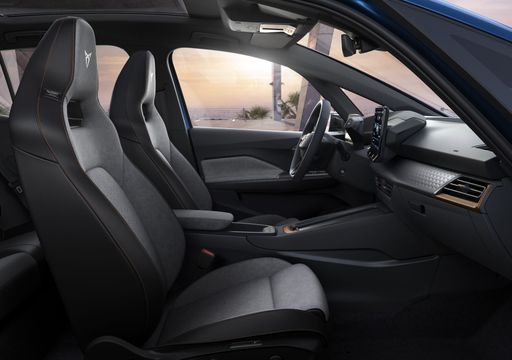
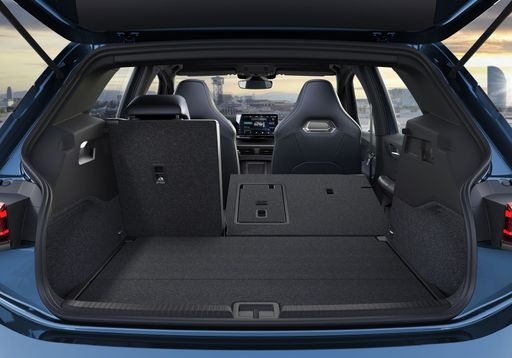
Looking at boot space, the CUPRA Born offers barely more boot space – 385 L compared to 352 L. That’s a difference of about 33 L.
When it comes to payload, the CUPRA Born carries marginally more – 461 kg compared to 430 kg. That’s a difference of about 31 kg.
Who wins the race in the data check?
The CUPRA Born is far ahead overall in the objective data comparison.
This result only shows which model scores more points on paper – not which of the two cars feels right for you.
from £34,300
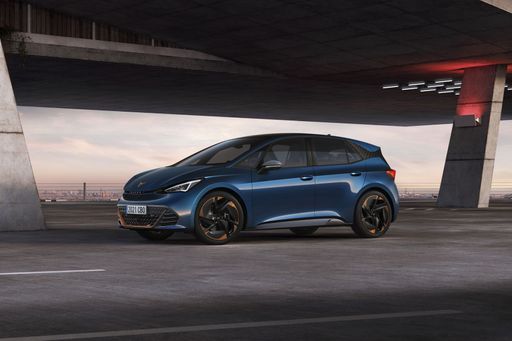
CUPRA Born
CUPRA Born
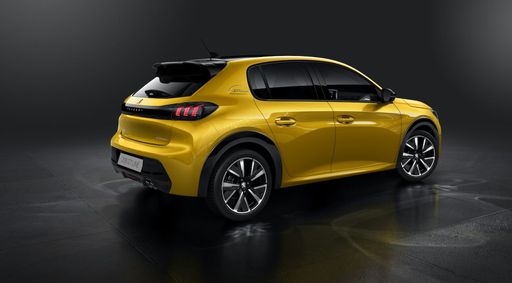
Peugeot 208
Costs and Consumption
View detailed analysis
View detailed analysis
Engine and Performance
View detailed analysis
View detailed analysis
Dimensions and Body
View detailed analysis
View detailed analysis
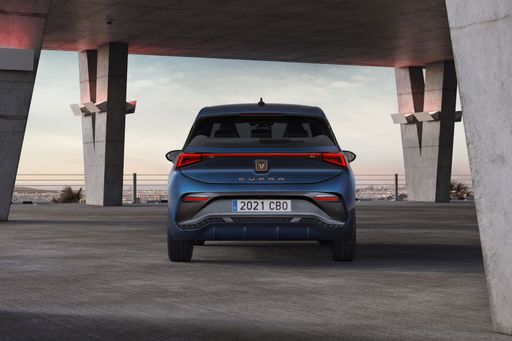
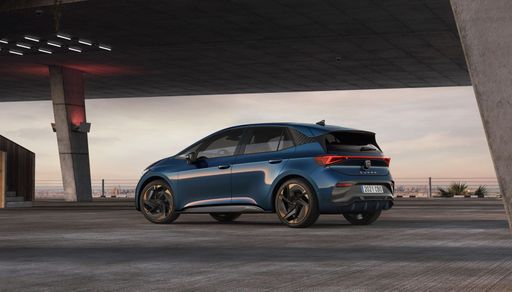
CUPRA Born
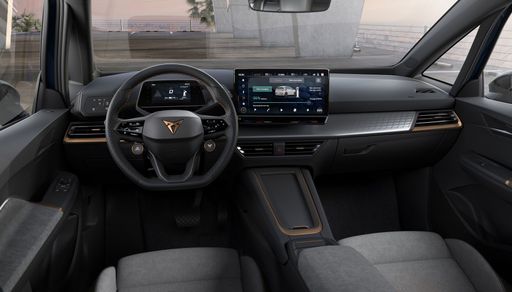
The CUPRA Born blends sharp, athletic styling with a playful electric character, delivering hatchback agility and hot-hatch attitude whether you're darting through the city or cruising the open road. Inside, the cabin punches above its weight with smart materials and practical space, making it a compelling pick for buyers who want electric motoring without surrendering the grin.
details
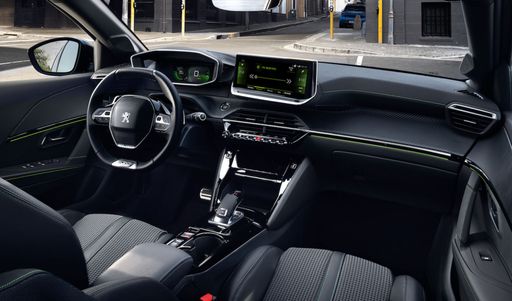
Peugeot 208
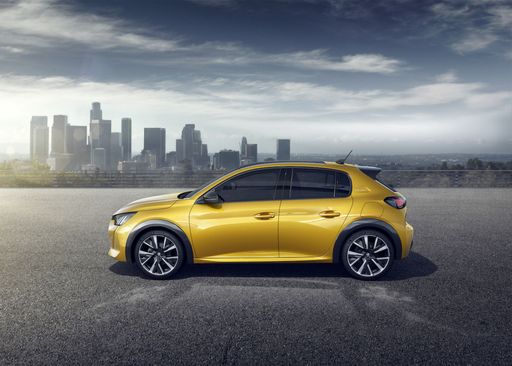
The Peugeot 208 feels like a city-savvy fox: compact, stylish and surprisingly grown-up, with a cabin that punches above its weight and enough personality to make daily commutes a little less boring. It’s a smart pick for buyers who want chic practicality without the showroom bluster — easy to park, thrifty to run and oddly fun when the road tightens up.
details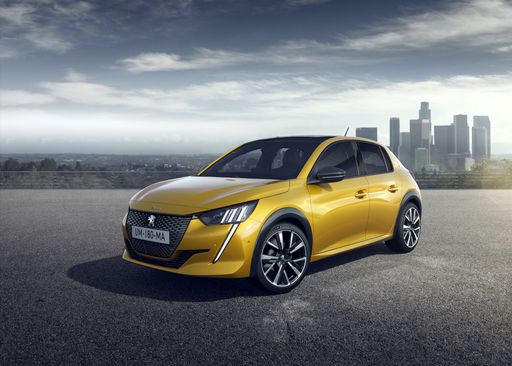
CUPRA Born
Peugeot 208
Costs and Consumption |
|
|---|---|
|
Price
34,300 - 43,700 £
|
Price
21,000 - 33,200 £
|
|
Consumption L/100km
-
|
Consumption L/100km
4.5 - 5.1 L/100km
|
|
Consumption kWh/100km
14.1 - 14.4 kWh/100km
|
Consumption kWh/100km
14.1 - 15.4 kWh/100km
|
|
Electric Range
484 - 630 km
|
Electric Range
363 - 432 km
|
|
Battery Capacity
-
|
Battery Capacity
-
|
|
co2
0 g/km
|
co2
0 - 116 g/km
|
|
Fuel tank capacity
-
|
Fuel tank capacity
-
|
Dimensions and Body |
|
|---|---|
|
Body Type
Hatchback
|
Body Type
Hatchback
|
|
Seats
5
|
Seats
5
|
|
Doors
-
|
Doors
-
|
|
Curb weight
1,899 - 2,004 kg
|
Curb weight
1,165 - 1,530 kg
|
|
Trunk capacity
385 L
|
Trunk capacity
309 - 352 L
|
|
Length
-
|
Length
-
|
|
Width
1,809 mm
|
Width
1,745 mm
|
|
Height
-
|
Height
-
|
|
Max trunk capacity
-
|
Max trunk capacity
-
|
|
Payload
426 - 461 kg
|
Payload
380 - 430 kg
|
Engine and Performance |
|
|---|---|
|
Engine Type
Electric
|
Engine Type
Petrol MHEV, Electric, Petrol
|
|
Transmission
Automatic
|
Transmission
Automatic, Manuel
|
|
Transmission Detail
Reduction Gearbox
|
Transmission Detail
Dual-Clutch Automatic, Reduction Gearbox, Manual Gearbox
|
|
Drive Type
Rear-Wheel Drive
|
Drive Type
Front-Wheel Drive
|
|
Power HP
190 - 326 HP
|
Power HP
101 - 156 HP
|
|
Acceleration 0-100km/h
5.6 - 8 s
|
Acceleration 0-100km/h
8.3 - 10.9 s
|
|
Max Speed
-
|
Max Speed
-
|
|
Torque
350 - 545 Nm
|
Torque
205 - 270 Nm
|
|
Number of Cylinders
-
|
Number of Cylinders
3
|
|
Power kW
140 - 240 kW
|
Power kW
74 - 115 kW
|
|
Engine capacity
-
|
Engine capacity
1,199 cm3
|
General |
|
|---|---|
|
Model Year
2026
|
Model Year
2,025 - 2,026
|
|
CO2 Efficiency Class
A
|
CO2 Efficiency Class
C, A, D
|
|
Brand
CUPRA
|
Brand
Peugeot
|
DriveDuel uses data analysis and artificial intelligence to evaluate vehicle data and create content. Content is regularly reviewed and improved.
The displayed prices are estimates based on German list prices, adjusted to the respective country’s VAT. Country-specific registration taxes are not included. This information is not legally binding.