VS

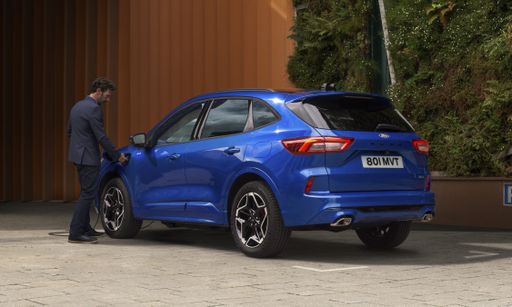
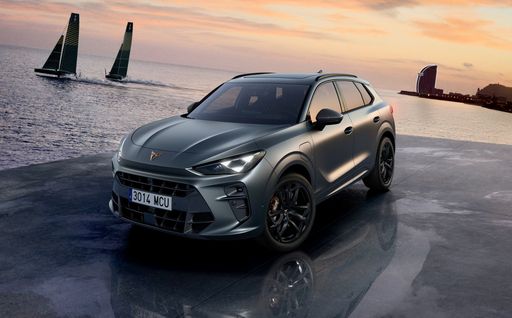
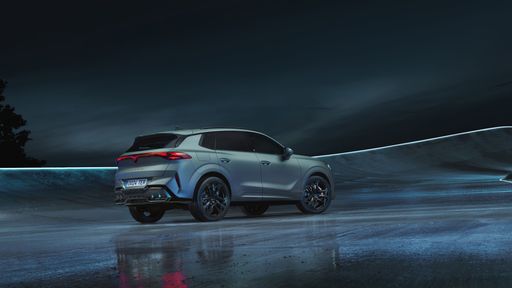
CUPRA Terramar vs Ford Kuga comparison

Compare performance (272 HP vs 243 HP), boot space and price (41,400 £ vs 34,200 £ ) at a glance. Find out which car is the better choice for you – CUPRA Terramar or Ford Kuga?

CUPRA Terramar vs Ford Kuga: Key differences

CUPRA Terramar

5 (5 Reviews)
rate
  • a bit more power
  • clearly more efficient
  • considerably more electric range
  • clearly quicker 0–100 km/h
details

Ford Kuga

4.2 (6 Reviews)
rate
  • visibly cheaper
  • marginally lighter
details

All details on performance, efficiency, range and trunk space can be found in the technical comparison below – including user reviews for both models.

By Achim Sedelmaier

Terramar

The automotive world is witnessing an exciting evolution in the SUV segment, with brands like CUPRA and Ford pushing the boundaries of innovation and performance. The CUPRA Terramar and the Ford Kuga are two compelling contenders that bring a mix of style, technology, and efficiency to the table. Let's dive into a detailed comparison that highlights their technical aspects, features, and innovations.
Kuga

Design and Dimensions

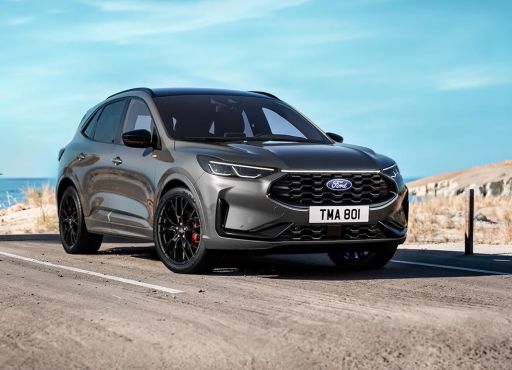
Both the CUPRA Terramar and Ford Kuga are designed with an SUV aesthetic that combines practicality and sophistication. The CUPRA Terramar measures 4,519 mm in length, 1,869 mm in width, and stands 1,586 mm tall, while the Ford Kuga is slightly larger, with lengths ranging from 4,604 mm to 4,645 mm and a height varying from 1,673 mm to 1,681 mm.

In terms of trunk capacity, the CUPRA excels with 450 liters, compared to the Kuga’s 412 liters, which may offer greater utility for carrying luggage and gear. Both vehicles maintain a five-door configuration, making access straightforward and convenient.

Terramar

Engine Performance and Efficiency

The powertrains offered by CUPRA and Ford reflect their commitment to embracing hybrid and petrol technologies. The CUPRA Terramar showcases a range of engines, including a striking 272 HP petrol engine and efficient plug-in hybrid options providing an electric range of up to 120 km. In terms of consumption, the Terramar achieves a commendable 0.4 L/100 km in electric mode, making it exceptionally eco-friendly.

The Ford Kuga features a diverse lineup as well, from a 150 HP petrol variant to a powerful 243 HP hybrid engine. Though its electric range peaks at 69 km, the Kuga stands out for its full hybrid variant with a consumption rate as low as 5.3 L/100 km. These efficiencies emphasize Ford’s focus on sustainability without compromising performance.

Kuga

Acceleration and Driving Dynamics

When it comes to acceleration, the CUPRA Terramar takes the lead with its flagship model capable of reaching 0 to 100 km/h in just 5.3 seconds. This is bolstered by its advanced all-wheel drive options and dual-clutch automatic transmission, ensuring a dynamic driving experience.

The Ford Kuga, while slightly less nimble in base configurations, offers a respectable acceleration time of 7.3 seconds in their most powerful hybrid variant. With both cars available in front-wheel and all-wheel drive configurations, they cater to a wide array of driving preferences and conditions.

Terramar

Technological Innovations

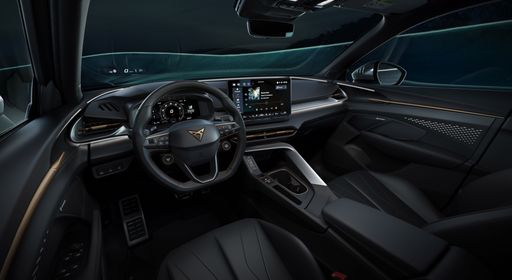
Both SUVs are equipped with cutting-edge technology that enhances driver convenience and safety. The CUPRA Terramar boasts a sophisticated infotainment system that integrates seamlessly with smartphones, featuring navigation, voice commands, and advanced driver-assistance systems.

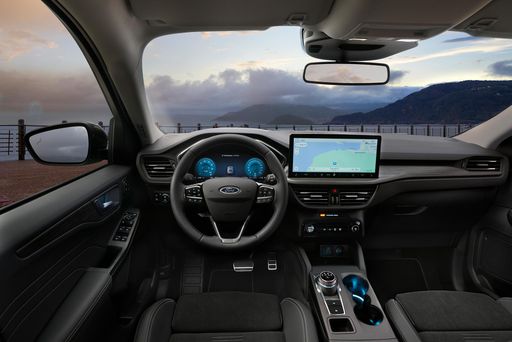
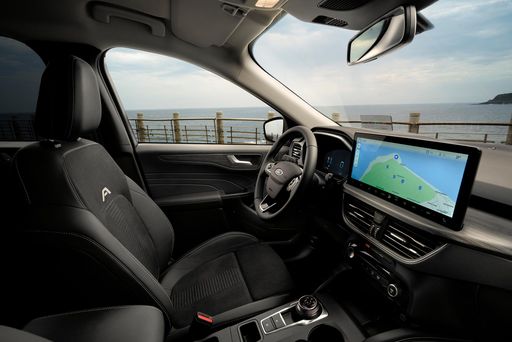
On the other hand, Ford's Kuga comes packed with its Ford SYNC system, providing cloud-based services, real-time traffic updates, and an array of connectivity options. The Kuga’s safety technology, including adaptive cruise control and lane-keeping assistance, underscores Ford’s dedication to passenger security.

Kuga

Eco-Friendly Features

The advent of hybrid options in both models marks an important step toward eco-friendliness. The CUPRA Terramar’s plug-in variants, combined with its impressive electric range and low CO2 emissions (as low as 10 g/km), help contribute to a greener environment. This is a significant consideration for environmentally-conscious consumers.

Ford also contributes to sustainability with its impressive hybrid technologies. The Kuga’s efficient engines and lower emissions across its range make it a competitive choice for those looking to minimize their carbon footprint.

Conclusion

In the ultimate showdown between the CUPRA Terramar and Ford Kuga, it is clear that both SUVs hold their own in today’s competitive market. The CUPRA Terramar stands out with its performance and elegant design, while the Ford Kuga impresses with its versatility and hybrid offerings. Ultimately, your choice may depend on your preference for performance versus practicality, but both models reflect the exciting future of the SUV landscape.

Here’s where it gets real: The technical differences in detail

Terramar

Costs and Efficiency:

Price and efficiency are often the first things buyers look at. Here it becomes clear which model has the long-term edge – whether at the pump, the plug, or in purchase price.

Ford Kuga is visibly cheaper – starting at 34,200 £ , while the CUPRA Terramar costs 41,400 £ . That’s a price difference of around 7,175 £.

Fuel consumption also shows a difference: the CUPRA Terramar uses 1.6 L/100km and is clearly more efficient than the Ford Kuga with 2.8 L/100km. The difference is about 1.2 L/100km.

As for electric range, the CUPRA Terramar offers considerably more range – reaching up to 118 km, about 50 km more than the Ford Kuga.

Kuga

Engine and Performance:

Power, torque and acceleration say a lot about how a car feels on the road. This is where you see which model delivers more driving dynamics.

When it comes to engine power, the CUPRA Terramar offers a bit more power – delivering 272 HP compared to 243 HP. That’s roughly 29 HP more horsepower.

When accelerating from 0 to 100 km/h, the CUPRA Terramar is clearly quicker – completing the sprint in 5.9 s, while the Ford Kuga takes 7.3 s. That’s about 1.4 s quicker.

There’s also a difference in torque: the CUPRA Terramar delivers noticeably more torque with 400 Nm compared to 240 Nm. That’s about 160 Nm more.

Terramar

Space and Everyday Use:

Whether family car or daily driver – which one offers more room, flexibility and comfort?

Both vehicles offer seating for 5 people.

In terms of curb weight, Ford Kuga is marginally lighter – 1,526 kg compared to 1,638 kg. The difference is around 112 kg.

When it comes to payload, the Ford Kuga carries only slightly more – 550 kg compared to 542 kg. That’s a difference of about 8 kg.

Who wins the race in the data check?

The CUPRA Terramar is far ahead overall in the objective data comparison.
This result only shows which model scores more points on paper – not which of the two cars feels right for you.

from £41,400
Terramar

CUPRA Terramar

  • Engine Type : Petrol, Petrol MHEV, Plugin Hybrid
  • Transmission : Automatic
  • Drive Type : All-Wheel Drive, Front-Wheel Drive
  • Power HP : 150 - 272 HP
  • Consumption L/100km : 1.6 - 8.4 L/100km
  • Electric Range : 118 km
CUPRA Terramar
Ford Kuga

Costs and Consumption

View detailed analysis

Engine and Performance

View detailed analysis

Dimensions and Body

View detailed analysis

CUPRA Terramar

The CUPRA Terramar is a sharply styled, sporty SUV that brings athletic handling and bold design to buyers who want performance with everyday usability. Inside, premium finishes meet driver-focused flair and family-friendly practicality, making it a tempting pick for anyone who wants thrills without turning their daily routine into a chore.

details

Ford Kuga

The Kuga is Ford’s adaptable family SUV that blends usable space with a surprisingly lively driving character, making daily commutes and weekend escapes equally enjoyable. With smart interior packaging, an easy-to-use infotainment setup and composed road manners, it’s a sensible choice for buyers who want a bit of fun without the fuss.

details
CUPRA Terramar
Ford Kuga

Costs and Consumption

Price
41,400 - 50,600 £
Price
34,200 - 46,300 £
Consumption L/100km
1.6 - 8.4 L/100km
Consumption L/100km
2.8 - 6.8 L/100km
Consumption kWh/100km
-
Consumption kWh/100km
-
Electric Range
118 km
Electric Range
68 km
Battery Capacity
-
Battery Capacity
-
co2
36 - 191 g/km
co2
55 - 154 g/km
Fuel tank capacity
-
Fuel tank capacity
-

Dimensions and Body

Body Type
SUV
Body Type
SUV
Seats
5
Seats
5
Doors
-
Doors
-
Curb weight
1,638 - 1,904 kg
Curb weight
1,526 - 1,859 kg
Trunk capacity
450 - 540 L
Trunk capacity
-
Length
-
Length
-
Width
1,869 mm
Width
1,882 mm
Height
-
Height
-
Max trunk capacity
-
Max trunk capacity
-
Payload
512 - 542 kg
Payload
541 - 550 kg

Engine and Performance

Engine Type
Petrol, Petrol MHEV, Plugin Hybrid
Engine Type
Petrol, Full Hybrid, Plugin Hybrid
Transmission
Automatic
Transmission
Manuel, Automatic
Transmission Detail
Dual-Clutch Automatic
Transmission Detail
Manual Gearbox, CVT, Automatic Gearbox
Drive Type
All-Wheel Drive, Front-Wheel Drive
Drive Type
Front-Wheel Drive, All-Wheel Drive
Power HP
150 - 272 HP
Power HP
150 - 243 HP
Acceleration 0-100km/h
5.9 - 9.3 s
Acceleration 0-100km/h
7.3 - 9.9 s
Max Speed
-
Max Speed
-
Torque
250 - 400 Nm
Torque
240 Nm
Number of Cylinders
4
Number of Cylinders
3 - 4
Power kW
110 - 200 kW
Power kW
111 - 178 kW
Engine capacity
1,498 - 1,984 cm3
Engine capacity
1,496 - 2,488 cm3

General

Model Year
2,024 - 2,025
Model Year
2025
CO2 Efficiency Class
F, E, B, G
CO2 Efficiency Class
E, D, B
Brand
CUPRA
Brand
Ford
DriveDuel uses data analysis and artificial intelligence to evaluate vehicle data and create content. Content is regularly reviewed and improved. The displayed prices are estimates based on German list prices, adjusted to the respective country’s VAT. Country-specific registration taxes are not included. This information is not legally binding.