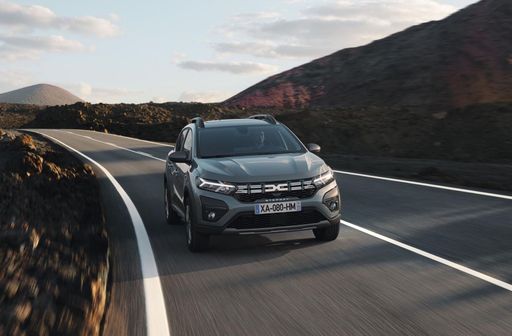
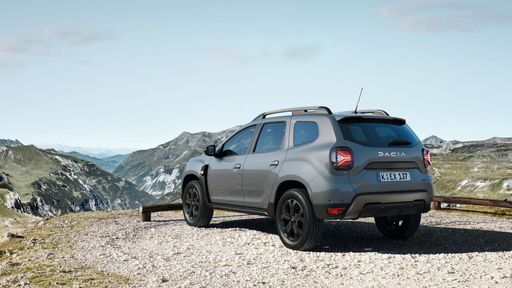
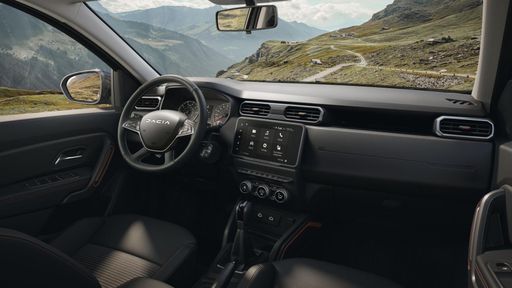
@ Dacia / Renault Group Media
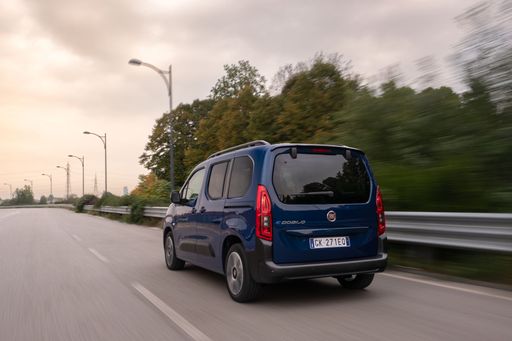
@ Fiat / Stellantis Media
VS

Dacia Duster vs Fiat Doblò Van – Differences & prices compared

Compare performance, boot capacity, efficiency and price at a glance.
Find out which car is the better choice for you – Dacia Duster or Fiat Doblò Van?

Duster @ Dacia / Renault Group Media

Introduction: An In-Depth Comparison

The automotive market presents a diverse range of options to meet various needs, from families requiring reliable transportation to businesses seeking efficient commercial vehicles. In this article, we delve into a comparison between the Dacia Duster and the Fiat Doblò Van. While the Duster stands tall as a modern SUV, the Doblò Van plays its role as a practical cargo van. Let's explore their technical specifications, innovations, and what each vehicle has to offer.
Doblò Van @ Fiat / Stellantis Media

Body Type and Design

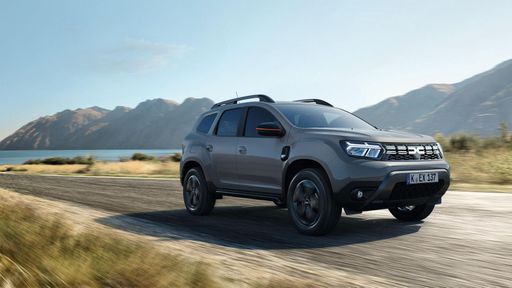
The Dacia Duster is a compact SUV that combines rugged styling with practicality. With a length of 4,343 mm, width of 1,813 mm, and a height ranging from 1,656 mm to 1,661 mm, it offers a robust presence on the road. The Duster features a generous ground clearance, making it suitable for both urban environments and off-road adventures.

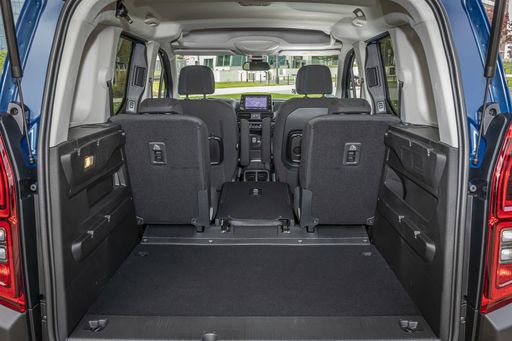
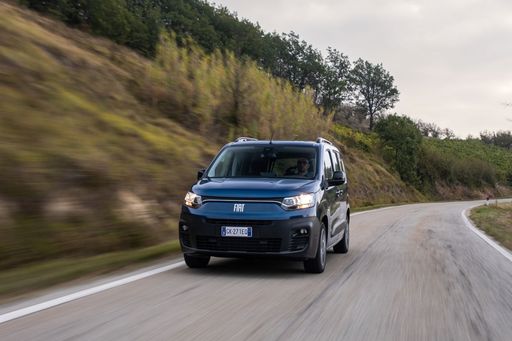
On the other hand, the Fiat Doblò Van is a versatile cargo van designed for commercial use. Its larger dimensions, with an overall length of 4,403 mm to 4,753 mm and a width of 1,848 mm, provide ample cargo space. The Doblò's design emphasizes functionality, with a boxy shape that maximizes interior capacity.

Duster @ Dacia / Renault Group Media

Powertrains and Performance

The Duster offers an array of engine options, including LPG, full hybrid, and petrol MHEV configurations. Power output ranges from 91 HP to 140 HP, with torque figures between 160 Nm to 230 Nm. The SUV is available with both manual and automatic transmissions, alongside the choice of front-wheel drive or all-wheel drive capabilities. Fuel consumption varies, with figures ranging from 5.0 to 8.1 L/100 km.

Conversely, the Fiat Doblò Van presents a diverse lineup of petrol, diesel, and electric powertrains with power outputs varying from 102 HP to 136 HP. The Doblò also accommodates manual and automatic gearbox options, ensuring a customizable driving experience. Notably, the electric variant boasts a range of up to 354 km, making it a great option for urban deliveries.

Doblò Van @ Fiat / Stellantis Media

Interior Comfort and Technology

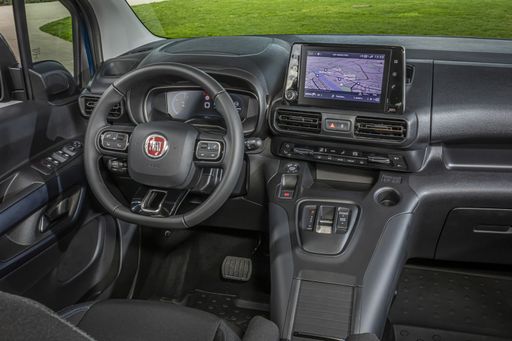
Inside the Dacia Duster, five seats provide ample space for passengers, while the cargo area boasts a trunk capacity ranging from 430 L to 517 L, depending on the configuration. The state-of-the-art infotainment system includes a touchscreen interface, compatibility with smartphone setups, and various safety features, transforming every journey into a seamless experience.

The Fiat Doblò Van, primarily designed for two occupants, prioritizes functionality with practical storage options throughout the cabin. The van's technology package includes modern connectivity features, allowing drivers to stay connected on the go. Additionally, the Doblò comes equipped with essential safety systems, underscoring Fiat's commitment to the security and efficiency of commercial driving.

Duster @ Dacia / Renault Group Media

Environmental Impact and Efficiency

Both vehicles address contemporary environmental concerns, albeit in different manners. The Duster's CO2 emissions range from 114 to 147 g/km, qualifying some variants for a CO2 Efficiency Class as high as C. The hybrid and LPG options further contribute to reduced emissions, aligning with the growing demand for eco-friendly vehicles.

In comparison, the Doblò Van offers options with superior emissions ratings, particularly the electric model, which emits zero tailpipe emissions. The petrol and diesel models do have higher emissions, with figures between 136 g/km to 172 g/km. However, they deliver commendable fuel efficiency, with consumption figures ranging from 5.2 to 7.3 L/100 km.

Doblò Van @ Fiat / Stellantis Media

Conclusion: Which Vehicle Reigns Supreme?

Choosing between the Dacia Duster and the Fiat Doblò Van ultimately depends on individual needs. The Duster excels as a family-friendly SUV with off-road credentials, providing ample passenger and cargo space, advanced technology, and an eco-friendly engine lineup. In contrast, the Doblò Van stands out as a reliable workhorse, delivering practical solutions for businesses in need of a versatile vehicle.

Whether you prioritize family adventures or commercial efficiency, both vehicles bring unique strengths to the table. Your final decision will hinge on your specific requirements, yet both the Duster and the Doblò Van represent noteworthy choices in their respective segments.

Here’s where it gets real: The technical differences in detail

Duster @ Dacia / Renault Group Media

Costs and Efficiency:

Price and efficiency are key factors when choosing a car – and this is often where the real differences emerge.

Dacia Duster has a evident advantage in terms of price – it starts at 16300 £, while the Fiat Doblò Van costs 20300 £. That’s a price difference of around 4021 £.

Fuel consumption also shows a difference: Dacia Duster manages with 4.70 L and is therefore to a small extent more efficient than the Fiat Doblò Van with 5.20 L. The difference is about 0.50 L per 100 km.

Doblò Van @ Fiat / Stellantis Media

Engine and Performance:

Power, torque and acceleration say a lot about how a car feels on the road. This is where you see which model delivers more driving dynamics.

When it comes to engine power, the Dacia Duster has a to a small extent edge – offering 158 HP compared to 136 HP. That’s roughly 22 HP more horsepower.

In terms of top speed, the Fiat Doblò Van performs barely noticeable better – reaching 183 km/h, while the Dacia Duster tops out at 180 km/h. The difference is around 3 km/h.

There’s also a difference in torque: Fiat Doblò Van pulls evident stronger with 300 Nm compared to 230 Nm. That’s about 70 Nm difference.

Space and Everyday Use:

Cabin size, boot volume and payload all play a role in everyday practicality. Here, comfort and flexibility make the difference.

Both vehicles offer seating for 5 people.

In curb weight, Fiat Doblò Van is slight lighter – 1329 kg compared to 1377 kg. The difference is around 48 kg.

In maximum load capacity, the Fiat Doblò Van performs significantly better – up to 4400 L, which is about 2791 L more than the Dacia Duster.

When it comes to payload, Fiat Doblò Van decisively takes the win – 991 kg compared to 453 kg. That’s a difference of about 538 kg.

Who comes out on top?

Overall, the Fiat Doblò Van shows itself to be leaves the rival little chance and secures the title of DriveDuel Champion.
It convinces with the more balanced overall package and proves to be the more versatile choice for everyday use.

from about £20,300
Doblò Van @ Fiat / Stellantis Media

Fiat Doblò Van

  • Engine Type : Petrol, Diesel, Electric
  • Transmission : Manuel, Automatic
  • Drive Type : Front-Wheel Drive
  • Power HP : 102 - 136 HP
  • Consumption L/100km : 5.2 - 6.3 L
  • Consumption kWh/100km : 17.40 kWh
  • Electric Range : 354 km

Dacia Duster

5 (1)
rate

The Dacia Duster is a no-nonsense compact SUV that delivers rugged practicality and surprisingly comfortable everyday driving without fuss. It might not win any beauty contests, but its honest design, easy-to-live-with cabin and tough attitude make it a smart pick for buyers who want reliable transport without luxury frills.

details

Fiat Doblò Van

The Fiat Doblò van is renowned for its practicality, offering ample cargo space that can accommodate a variety of transport needs. Its manoeuvrability makes it an ideal choice for navigating urban environments, while the comfortable cabin ensures a pleasant driving experience. The vehicle's efficient fuel consumption further enhances its appeal as a cost-effective option for businesses and individuals alike.

details
Dacia Duster
Fiat Doblò Van
Duster @ Dacia / Renault Group Media
Doblò Van @ Fiat / Stellantis Media

Costs and Consumption

Price
16300 - 24900 £
Price
20300 - 33800 £
Consumption L/100km
4.7 - 7.5 L
Consumption L/100km
5.2 - 6.3 L
Consumption kWh/100km
-
Consumption kWh/100km
17.40 kWh
Electric Range
-
Electric Range
354 km
Battery Capacity
0.60 kWh
Battery Capacity
-
co2
107 - 124 g/km
co2
0 - 143 g/km
Fuel tank capacity
50 L
Fuel tank capacity
53 - 61 L

Dimensions and Body

Body Type
SUV
Body Type
Cargo Van
Seats
5
Seats
2 - 5
Doors
5
Doors
4 - 5
Curb weight
1377 - 1455 kg
Curb weight
1329 - 1813 kg
Trunk capacity
348 - 517 L
Trunk capacity
-
Length
4343 mm
Length
4403 - 4753 mm
Width
1813 mm
Width
1848 mm
Height
1656 - 1659 mm
Height
1796 - 1812 mm
Max trunk capacity
1414 - 1609 L
Max trunk capacity
3300 - 4400 L
Payload
450 - 453 kg
Payload
611 - 991 kg

Engine and Performance

Engine Type
Petrol MHEV, Full Hybrid, LPG
Engine Type
Petrol, Diesel, Electric
Transmission
Manuel, Automatic
Transmission
Manuel, Automatic
Transmission Detail
Manual Gearbox, Automated Manual, Dual-Clutch Automatic
Transmission Detail
Manual Gearbox, Automatic Gearbox, Reduction Gearbox
Drive Type
Front-Wheel Drive, All-Wheel Drive
Drive Type
Front-Wheel Drive
Power HP
115 - 158 HP
Power HP
102 - 136 HP
Acceleration 0-100km/h
9.4 - 11.6 s
Acceleration 0-100km/h
-
Max Speed
180 km/h
Max Speed
135 - 183 km/h
Torque
190 - 230 Nm
Torque
205 - 300 Nm
Number of Cylinders
3 - 4
Number of Cylinders
3 - 4
Power kW
84 - 116 kW
Power kW
75 - 100 kW
Engine capacity
1199 - 1789 cm3
Engine capacity
1199 - 1499 cm3

General

Model Year
2025
Model Year
2024
CO2 Efficiency Class
D, C
CO2 Efficiency Class
E, A
Brand
Dacia
Brand
Fiat
What drivetrain options does the Dacia Duster have?

The Dacia Duster is offered with Front-Wheel Drive or All-Wheel Drive.

The prices and data displayed are estimates based on German list prices and may vary by country. This information is not legally binding.