VS

Dacia Duster vs Renault Austral comparison

Compare performance (158 HP vs 200 HP), boot space and price (16,300 £ vs 29,900 £ ) at a glance. Find out which car is the better choice for you – Dacia Duster or Renault Austral?

Dacia Duster vs Renault Austral: Key differences

Dacia Duster

5 (2 Reviews)
rate
  • significantly cheaper
  • only slightly more efficient
  • a bit lighter

Renault Austral

4.9 (5 Reviews)
rate
  • clearly more power
  • slightly quicker 0–100 km/h
  • barely more trunk space

All details on performance, efficiency, range and trunk space can be found in the technical comparison below – including user reviews for both models.

Duster

A Tale of Two SUVs: Dacia Duster vs. Renault Austral

In the competitive world of SUVs, the Dacia Duster and Renault Austral stand out for their versatility and value. Both vehicles, produced by brands under the Renault Group, may share some lineage yet target distinct audiences with unique needs. This article dives into key aspects like design, performance, and innovation to see how these two models compare.
Austral

Design and Dimensions

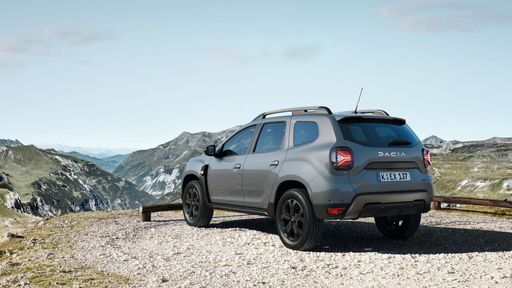
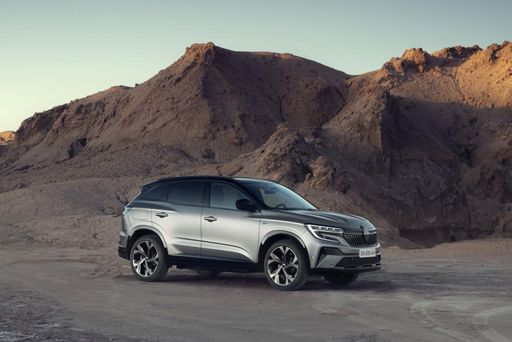
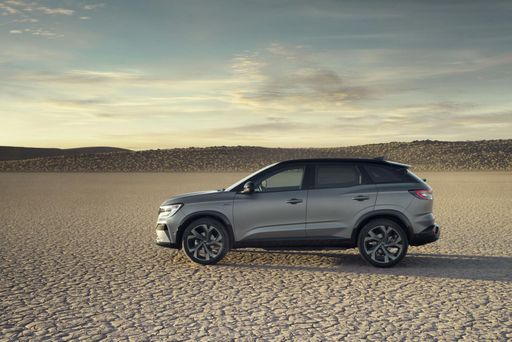
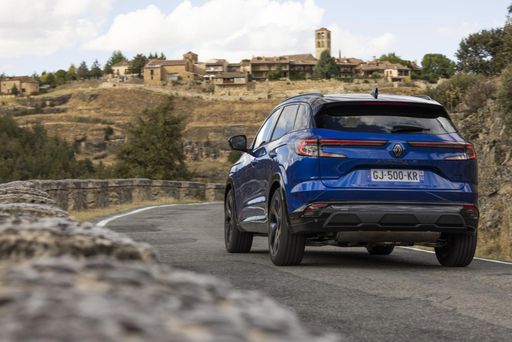
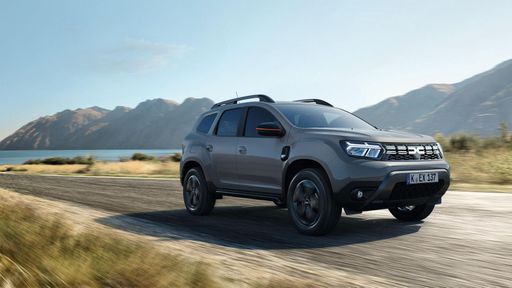
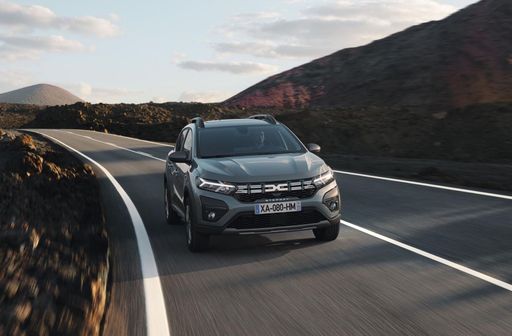
Both the Dacia Duster and Renault Austral embrace the robust SUV body type, yet they cater to diverse design philosophies. The Duster, with a length of 4343mm, width of 1813mm, and height up to 1661mm, is compact yet rugged, portraying off-road readiness. In comparison, the Renault Austral is slightly larger with a length of 4533mm, width of 1825mm, and height of 1645mm, emphasizing style and cruising comfort.

Duster

Performance and Drivetrain

Under the hood, the Dacia Duster offers flexibility with its engine options spanning LPG, Full Hybrid, and Petrol MHEV. Its power output ranges between 91 to 140 HP, with optional front-wheel or all-wheel drive providing versatile driving dynamics. For performance enthusiasts, Duster's acceleration ranges from 9.9 to 14 seconds to hit 100km/h.

The Renault Austral steps up with two powerful offerings: a 158 HP Petrol MHEV and a more robust 200 HP Full Hybrid. Exclusively front-wheel driven with automatic transmission, it offers a smooth ride. The Austral performs the 0-100 km/h dash in a nimble 8.4 to 9.7 seconds, appealing to those valuing both performance and efficiency.

Austral

Fuel Efficiency and Eco-friendliness

Sustainability and efficiency are significant purchasing factors today. The Dacia Duster offers a consumption range from 5 to 8.1 L/100km, reflecting its diverse engine options. Meanwhile, the Austral impresses with a commendable 4.8 to 6.5 L/100km combined consumption, showcasing the benefits of its full hybrid technology.

Carbon footprint is another area of interest. Duster's CO2 emissions range from 114 to 147 g/km, while the Austral boasts 109 to 148 g/km, further reinforcing the eco-friendly nature inherent to hybrids.

Duster

Technology and Comfort

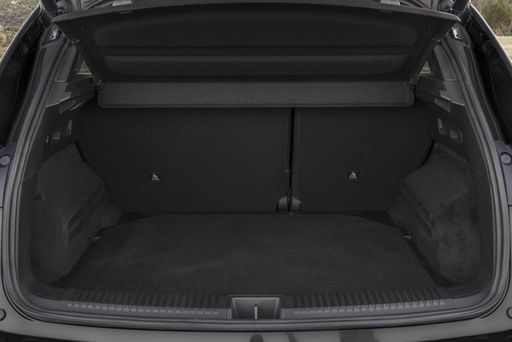
Inside, both SUVs are equipped to accommodate five passengers, focusing on comfort and space. The Duster provides a trunk capacity between 430 and 517 liters, suitable for adventure seekers with ample luggage. The Renault Austral, however, edges ahead with an impressive trunk capacity ranging from 527 to 555 liters, allowing more room for cargo.

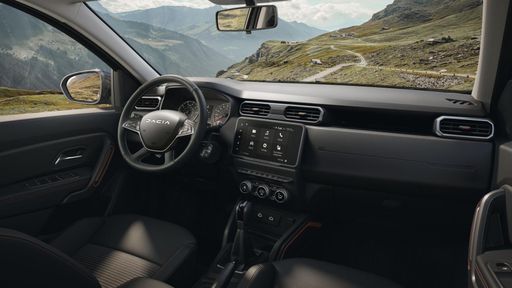
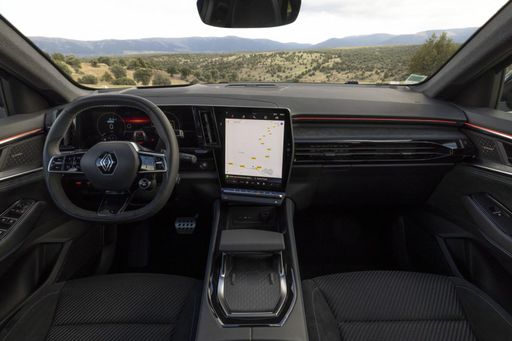
Renault stands out with well-refined interiors and tech advancements, concentrating on driver assistance and connectivity, while the Duster appeals to pragmatic drivers seeking straightforward, reliable functionality at an attractive price.

Austral

Conclusion: Which SUV Suits You?

For budget-conscious buyers driven by rugged practicality and functionality, the Dacia Duster is a strong contender, offering an adaptable choice between front-wheel and all-wheel-drive variants with varying engine configurations.

On the other hand, the Renault Austral appeals to those inclined towards a smoother, more sophisticated driving experience packed with modern technology and efficient hybrid powertrains.

Ultimately, the decision hinges on personal priorities—be it cost, adventure, technology, or green credentials—each SUV presents unique strengths to potential buyers.

Here’s where it gets real: The technical differences in detail

Duster

Costs and Efficiency:

Looking at overall running costs, both models reveal some interesting differences in everyday economy.

Dacia Duster is significantly cheaper – starting at 16,300 £ , while the Renault Austral costs 29,900 £ . That’s a price difference of around 13,637 £.

Fuel consumption also shows a difference: the Dacia Duster uses 4.7 L/100km and is only slightly more efficient than the Renault Austral with 4.8 L/100km. The difference is about 0.1 L/100km.

Austral

Engine and Performance:

Power, torque and acceleration say a lot about how a car feels on the road. This is where you see which model delivers more driving dynamics.

When it comes to engine power, the Renault Austral offers clearly more power – delivering 200 HP compared to 158 HP. That’s roughly 42 HP more horsepower.

When accelerating from 0 to 100 km/h, the Renault Austral is slightly quicker – completing the sprint in 8.4 s, while the Dacia Duster takes 9.4 s. That’s about 1 s quicker.

There’s no difference in top speed – both reach 180 km/h.

There’s also a difference in torque: the Renault Austral delivers a bit more torque with 270 Nm compared to 230 Nm. That’s about 40 Nm more.

Duster

Space and Everyday Use:

Cabin size, boot volume and payload all play a role in everyday practicality. Here, comfort and flexibility make the difference.

Both vehicles offer seating for 5 people.

In terms of curb weight, Dacia Duster is a bit lighter – 1,377 kg compared to 1,548 kg. The difference is around 171 kg.

Looking at boot space, the Renault Austral offers barely more boot space – 527 L compared to 517 L. That’s a difference of about 10 L.

For maximum load capacity, the Renault Austral offers very slightly more capacity – up to 1,736 L, about 127 L more than the Dacia Duster.

When it comes to payload, the Renault Austral carries only slightly more – 477 kg compared to 453 kg. That’s a difference of about 24 kg.

Who wins the race in the data check?

The Dacia Duster has the upper hand in the objective data comparison.
This result only shows which model scores more points on paper – not which of the two cars feels right for you.

from £16,300
Duster

Dacia Duster

  • Engine Type : Petrol MHEV, Full Hybrid, LPG
  • Transmission : Manuel, Automatic
  • Drive Type : Front-Wheel Drive, All-Wheel Drive
  • Power HP : 115 - 158 HP
  • Consumption L/100km : 4.7 - 7.6 L/100km
Dacia Duster
Renault Austral

Costs and Consumption

View detailed analysis

Engine and Performance

View detailed analysis

Dimensions and Body

View detailed analysis

Dacia Duster

The Dacia Duster is a no-nonsense compact SUV that delivers rugged practicality and surprisingly comfortable everyday driving without fuss. It might not win any beauty contests, but its honest design, easy-to-live-with cabin and tough attitude make it a smart pick for buyers who want reliable transport without luxury frills.

details

Renault Austral

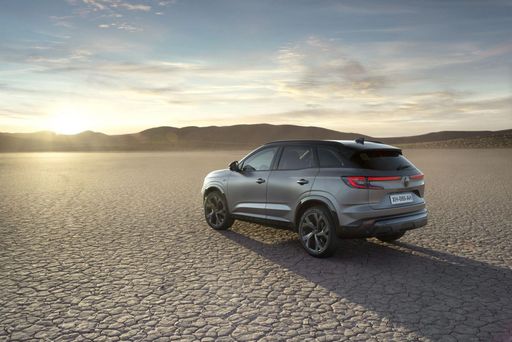
The Renault Austral dresses the family SUV in elegant modern looks and a surprisingly grown-up cabin that feels thoughtful and livable. It balances comfort and clever technology with a relaxed road presence—an appealing choice for buyers who want style and everyday sense without fuss.

details
Dacia Duster
Renault Austral

Costs and Consumption

Price
16,300 - 24,900 £
Price
29,900 - 37,800 £
Consumption L/100km
4.7 - 7.6 L/100km
Consumption L/100km
4.8 - 6.4 L/100km
Consumption kWh/100km
-
Consumption kWh/100km
-
Electric Range
-
Electric Range
-
Battery Capacity
0.6 kWh
Battery Capacity
-
co2
107 - 140 g/km
co2
109 - 145 g/km
Fuel tank capacity
50 L
Fuel tank capacity
55 L

Dimensions and Body

Body Type
SUV
Body Type
SUV
Seats
5
Seats
5
Doors
5
Doors
5
Curb weight
1,377 - 1,455 kg
Curb weight
1,548 - 1,613 kg
Trunk capacity
348 - 517 L
Trunk capacity
527 L
Length
4,343 mm
Length
4,533 mm
Width
1,813 mm
Width
1,825 mm
Height
1,656 - 1,659 mm
Height
1,645 mm
Max trunk capacity
1,414 - 1,609 L
Max trunk capacity
1,736 L
Payload
402 - 453 kg
Payload
455 - 477 kg

Engine and Performance

Engine Type
Petrol MHEV, Full Hybrid, LPG
Engine Type
Full Hybrid, Petrol MHEV
Transmission
Manuel, Automatic
Transmission
Automatic
Transmission Detail
Manual Gearbox, Automated Manual, Dual-Clutch Automatic
Transmission Detail
Automatic Gearbox, CVT
Drive Type
Front-Wheel Drive, All-Wheel Drive
Drive Type
Front-Wheel Drive
Power HP
115 - 158 HP
Power HP
148 - 200 HP
Acceleration 0-100km/h
9.4 - 11.7 s
Acceleration 0-100km/h
8.4 - 9.9 s
Max Speed
180 km/h
Max Speed
180 km/h
Torque
190 - 230 Nm
Torque
270 Nm
Number of Cylinders
3 - 4
Number of Cylinders
3 - 4
Power kW
84 - 116 kW
Power kW
109 - 147 kW
Engine capacity
1,199 - 1,789 cm3
Engine capacity
1,199 - 1,332 cm3

General

Model Year
2,025 - 2,026
Model Year
2,025
CO2 Efficiency Class
D, C
CO2 Efficiency Class
C, E
Brand
Dacia
Brand
Renault
DriveDuel uses data analysis and artificial intelligence to evaluate vehicle data and create content. Content is regularly reviewed and improved. The displayed prices are estimates based on German list prices, adjusted to the respective country’s VAT. Country-specific registration taxes are not included. This information is not legally binding.