VS

Dacia Duster vs Renault Arkana comparison

Compare performance (158 HP vs 143 HP), boot space and price (16,300 £ vs 28,500 £ ) at a glance. Find out which car is the better choice for you – Dacia Duster or Renault Arkana?

Dacia Duster vs Renault Arkana: Key differences

Dacia Duster

4.8 (3 Reviews)
rate
  • substantially cheaper
  • barely more power
  • moderately quicker 0–100 km/h
  • barely lighter
details

Renault Arkana

4 (7 Reviews)
rate
details

All details on performance, efficiency, range and trunk space can be found in the technical comparison below – including user reviews for both models.

By Achim Sedelmaier

Duster

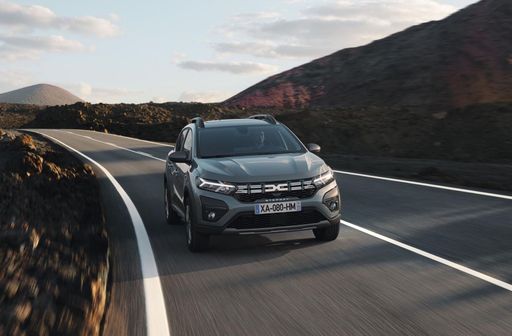
In the ever-evolving world of SUVs, two models have captured the attention of automotive enthusiasts: the Dacia Duster and the Renault Arkana. Both vehicles offer unique features and specifications that cater to a diverse range of consumer needs. This article will delve into a comprehensive comparison of the Dacia Duster and Renault Arkana, focusing on their technical aspects and innovations.
Arkana

Body Design and Dimensions

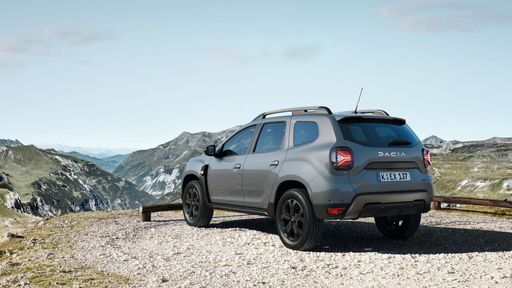
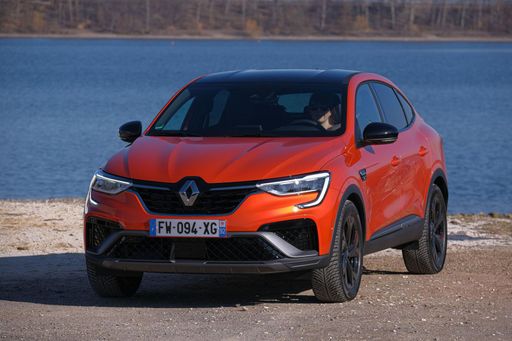
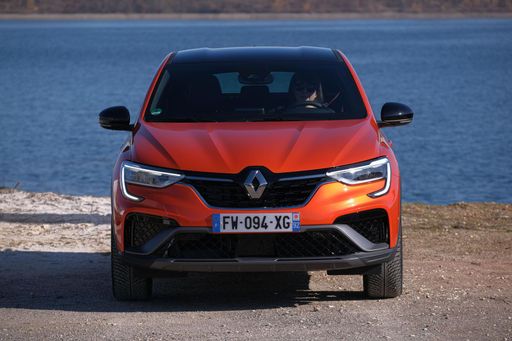
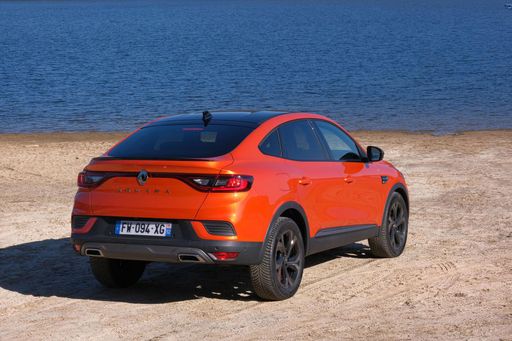
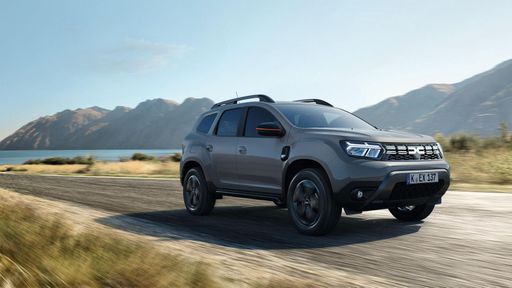
The Dacia Duster, renowned for its rugged SUV aesthetic, measures 4343 mm in length and 1813 mm in width. Its imposing height of 1656 mm gives it a robust road presence, making it an appealing choice for those who enjoy an adventurous driving experience. In contrast, the Renault Arkana embraces a sportier coupe-style SUV design, measuring 4568 mm in length and 1821 mm in width. With a height of 1576 mm, the Arkana presents a sleeker profile while maintaining ample space for passengers and cargo.

Duster

Powertrains and Performance

The Duster offers a diverse range of powertrain options, including LPG, petrol MHEV, and full hybrid engines, with power outputs ranging from 91 to 140 HP. It provides a choice between manual and automated manual transmissions, accommodating various driving preferences. The Duster also supports both front-wheel drive and all-wheel drive configurations, appealing to off-road enthusiasts.

On the other hand, the Renault Arkana is powered exclusively by full hybrid and petrol MHEV engines, delivering between 140 and 158 HP. Its automatic transmission enhances driving convenience and offers a smooth driving experience. The Arkana's front-wheel drive system contributes to its agility on urban roads.

Arkana

Fuel Efficiency

When it comes to fuel consumption, the Dacia Duster showcases an impressive range, with figures between 5.0 to 8.1 L/100 km. Depending on the engine variant, this gives it a competitive edge in terms of efficiency in the SUV segment. The Duster is going green with its LPG and hybrid options, aligning with the demands of eco-conscious consumers.

The Renault Arkana, with its advanced engine technology, highlights superior fuel efficiency, achieving as low as 4.7 L/100 km under optimal conditions. This makes it a strong contender for those who prioritize economy alongside performance.

Duster

Interior and Technology

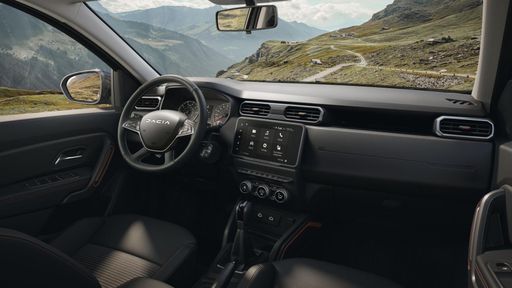
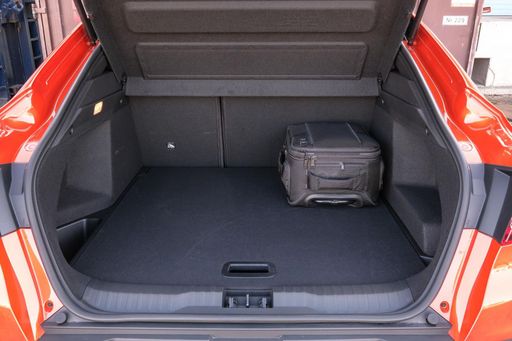
Both vehicles support a five-seat configuration, providing sufficient room for families and friends. The Duster features a functional interior designed for durability, while the Arkana leans towards a modern and sophisticated design, offering comfort and style. With trunk capacities of up to 517 L for the Duster and 513 L for the Arkana, both vehicles facilitate convenient storage for everyday needs.

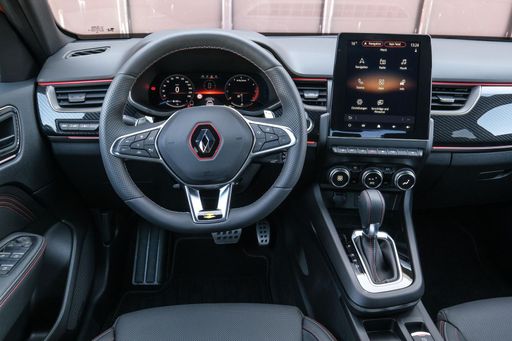
In terms of innovations, the Duster integrates a straightforward infotainment system with essential connectivity features. Meanwhile, the Arkana likely comes equipped with more advanced technology, including a digital dashboard, enhanced driver assistance features, and smart connectivity options.

Arkana

Driving Dynamics and Comfort

Driving dynamics vary significantly between the two models. The Dacia Duster is celebrated for its ruggedness and off-road capabilities, particularly with its all-wheel-drive option, which is perfect for challenging terrains. Its suspension is tuned for comfort, providing a balanced ride in various driving conditions.

In contrast, the Renault Arkana offers a sportier ride with a focus on agility and responsiveness. Its suspension system is optimized for urban driving, delivering a smooth and exhilarating experience on city roads. The acceleration times for the Arkana range between 9.1 to 10.8 seconds for 0-100 km/h, showcasing its performance pedigree.

Duster

Conclusion: Which One to Choose?

Ultimately, the choice between the Dacia Duster and the Renault Arkana boils down to personal preferences and lifestyle needs. The Duster suits those who appreciate ruggedness, off-road capability, and versatility, while the Arkana appeals to buyers seeking a stylish, efficient, and technologically advanced SUV. Whichever model you choose, both the Dacia Duster and Renault Arkana represent commendable options in the SUV market, each ready to impress in its unique way.

Here’s where it gets real: The technical differences in detail

Duster

Costs and Efficiency:

Price and efficiency are key factors when choosing a car – and this is often where the real differences emerge.

Dacia Duster is substantially cheaper – starting at 16,300 £ , while the Renault Arkana costs 28,500 £ . That’s a price difference of around 12,180 £.

Both cars consume an average of 4.7 L/100km – no difference here.

Arkana

Engine and Performance:

Power, torque and acceleration are the classic benchmarks for car enthusiasts – and here, some clear differences start to show.

When it comes to engine power, the Dacia Duster offers barely more power – delivering 158 HP compared to 143 HP. That’s roughly 15 HP more horsepower.

When accelerating from 0 to 100 km/h, the Dacia Duster is moderately quicker – completing the sprint in 9.4 s, while the Renault Arkana takes 10.8 s. That’s about 1.4 s quicker.

There’s also a difference in torque: the Dacia Duster delivers a bit more torque with 230 Nm compared to 205 Nm. That’s about 25 Nm more.

Duster

Space and Everyday Use:

Cabin size, boot volume and payload all play a role in everyday practicality. Here, comfort and flexibility make the difference.

Both vehicles offer seating for 5 people.

In terms of curb weight, Dacia Duster is barely lighter – 1,377 kg compared to 1,510 kg. The difference is around 133 kg.

When it comes to payload, the Dacia Duster carries marginally more – 453 kg compared to 451 kg. That’s a difference of about 2 kg.

Who wins the race in the data check?

The Dacia Duster is clearly superior overall in the objective data comparison.
This result only shows which model scores more points on paper – not which of the two cars feels right for you.

from £16,300
Duster

Dacia Duster

  • Engine Type : Petrol MHEV, Full Hybrid, LPG
  • Transmission : Manuel, Automatic
  • Drive Type : Front-Wheel Drive, All-Wheel Drive
  • Power HP : 115 - 158 HP
  • Consumption L/100km : 4.7 - 7.6 L/100km
Dacia Duster
Renault Arkana

Costs and Consumption

View detailed analysis

Engine and Performance

View detailed analysis

Dimensions and Body

View detailed analysis

Dacia Duster

The Dacia Duster is a straightforward, budget-friendly SUV that prioritizes practicality and value over flashy features. Its rugged styling and simple, roomy interior make it a sensible choice for buyers who want capable everyday transport without paying for extras they won’t use.

details

Renault Arkana

The Renault Arkana turns heads with its coupe-like roofline and SUV practicality, offering stylish presence without pretending to be a supercar. It feels composed and economical on everyday roads, making it a savvy choice for buyers who want flair and sensible running costs with a wink rather than a roar.

details
Dacia Duster
Renault Arkana

Costs and Consumption

Price
16,300 - 24,900 £
Price
28,500 - 31,900 £
Consumption L/100km
4.7 - 7.6 L/100km
Consumption L/100km
4.7 L/100km
Consumption kWh/100km
-
Consumption kWh/100km
-
Electric Range
-
Electric Range
-
Battery Capacity
-
Battery Capacity
-
co2
107 - 140 g/km
co2
106 g/km
Fuel tank capacity
-
Fuel tank capacity
-

Dimensions and Body

Body Type
SUV
Body Type
SUV
Seats
5
Seats
5
Doors
-
Doors
-
Curb weight
1,377 - 1,559 kg
Curb weight
1,510 kg
Trunk capacity
348 - 517 L
Trunk capacity
-
Length
-
Length
-
Width
1,813 mm
Width
1,821 mm
Height
-
Height
-
Max trunk capacity
-
Max trunk capacity
-
Payload
402 - 453 kg
Payload
451 kg

Engine and Performance

Engine Type
Petrol MHEV, Full Hybrid, LPG
Engine Type
Full Hybrid
Transmission
Manuel, Automatic
Transmission
Automatic
Transmission Detail
Manual Gearbox, Automated Manual, Dual-Clutch Automatic
Transmission Detail
Automatic Gearbox
Drive Type
Front-Wheel Drive, All-Wheel Drive
Drive Type
Front-Wheel Drive
Power HP
115 - 158 HP
Power HP
143 HP
Acceleration 0-100km/h
9.4 - 11.7 s
Acceleration 0-100km/h
10.8 s
Max Speed
-
Max Speed
-
Torque
190 - 230 Nm
Torque
205 Nm
Number of Cylinders
3 - 4
Number of Cylinders
4
Power kW
84 - 116 kW
Power kW
105 kW
Engine capacity
1,199 - 1,789 cm3
Engine capacity
1,598 cm3

General

Model Year
2,025 - 2,026
Model Year
2025
CO2 Efficiency Class
D, C
CO2 Efficiency Class
C
Brand
Dacia
Brand
Renault
DriveDuel uses data analysis and artificial intelligence to evaluate vehicle data and create content. Content is regularly reviewed and improved. The displayed prices are estimates based on German list prices, adjusted to the respective country’s VAT. Country-specific registration taxes are not included. This information is not legally binding.