VS

Dacia Spring vs Fiat Grande Panda comparison

Compare performance (100 HP vs 113 HP), boot space and price (14,500 £ vs 16,300 £ ) at a glance. Find out which car is the better choice for you – Dacia Spring or Fiat Grande Panda?

Dacia Spring vs Fiat Grande Panda: Key differences

Dacia Spring

4.8 (3 Reviews)
rate
  • slightly cheaper
  • markedly more efficient
  • a bit quicker 0–100 km/h
  • noticeably lighter

Fiat Grande Panda

3.8 (1 Reviews)
rate
  • moderately more power
  • markedly more electric range
  • visibly more trunk space

All details on performance, efficiency, range and trunk space can be found in the technical comparison below – including user reviews for both models.

By Achim Sedelmaier

Spring

In the ever-evolving automotive landscape, the battle of compact SUVs takes an exciting turn with the comparison of the Dacia Spring and Fiat Grande Panda. Both vehicles offer distinct characteristics tailored to modern urban lifestyles, but how do they measure up against one another? This article delves into their technical aspects, innovations, and overall practicality to help you decide which one might be the better fit for your needs.
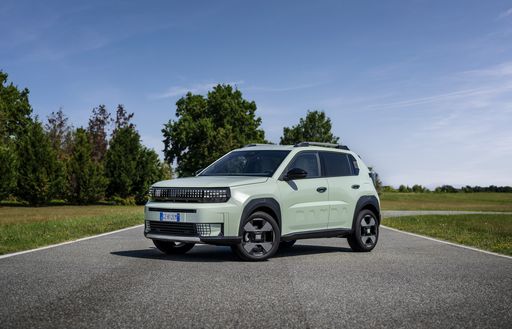
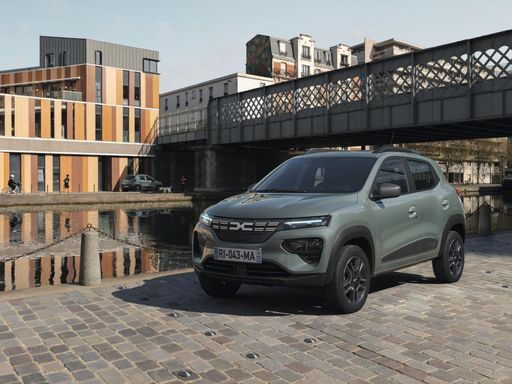
Grande Panda

Design and Dimensions: A Closer Look

Starting with the design, both models embody the SUV style but cater to slightly different aesthetics and dimensions.

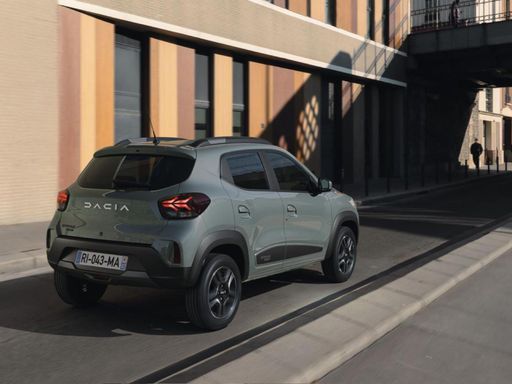
The Dacia Spring showcases a compact form, measuring 3701 mm in length, 1583 mm in width, and a height of 1519 mm. This compactness facilitates easy maneuvering and parking in city environments, appealing to urban drivers.

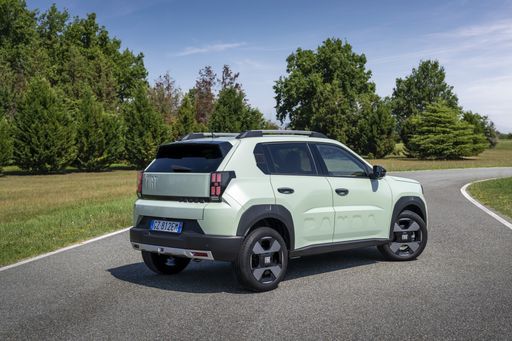
On the other hand, the Fiat Grande Panda is marginally larger, with a length of 3999 mm and a width of 1763 mm. Its height ranges from 1586 mm to 1629 mm, offering a spacious interior that accommodates up to five occupants comfortably. The increased trunk capacity of 361 to 412 liters in the Grande Panda also provides an advantage for families or those needing extra space for luggage.

Spring

Powertrain and Performance

When it comes to powertrains, the Dacia Spring is equipped solely with an electric motor, producing 44 to 65 HP, making it a perfect choice for eco-conscious drivers. It features an automatic transmission with a reduction gearbox and front-wheel drive, achieving acceleration from 0-100 km/h in between 13.7 and 19.1 seconds. With a battery capacity of 26.8 kWh, it has an impressive electric range of up to 228 km, making it ideal for city commutes.

Conversely, the Fiat Grande Panda offers versatility with options for both electric and petrol MHEV (mild hybrid electric vehicle) engines. The electric version boasts 83 HP and a remarkable electric range of up to 320 km. The petrol variant is slightly more powerful, with 101 HP, while still providing efficient fuel consumption at 5.4 L/100 km. It accelerates from 0-100 km/h in as little as 10 seconds, highlighting its sporty edge.

Grande Panda

Technological Innovations

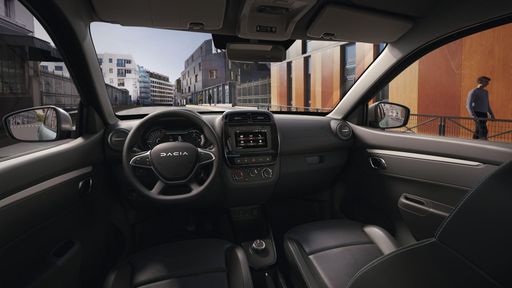
In today's automotive market, technology plays a pivotal role in enhancing the driver experience. The Dacia Spring is embedded with several innovative features designed for efficiency and simplicity. Its digital cockpit provides essential information in a user-friendly manner, while the compact build means that less energy is needed for everyday travel.

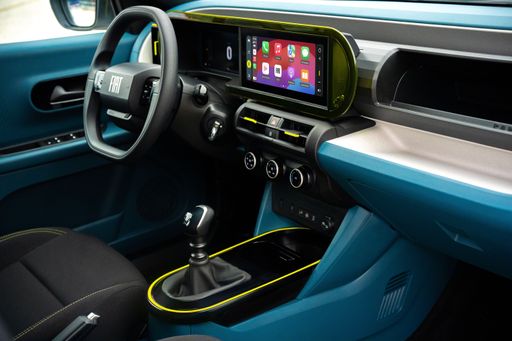
The Grande Panda, however, amps up the competition with a host of technological advancements. Its infotainment system includes a user-friendly touchscreen interface, alongside connectivity options such as Bluetooth and smartphone integration. The new model also incorporates safety features like adaptive cruise control and lane-keeping assistance, ensuring peace of mind on the road.

Spring

Efficiency and Environmental Impact

The Dacia Spring stands out with its impressive CO2 efficiency class of A, producing zero emissions, making it environmentally friendly. It consumes as low as 13.2 kWh/100 km, positioning it as a cost-effective choice for daily driving.

While the Fiat Grande Panda also offers an electric variant that produces no emissions, its petrol version has a CO2 efficiency rating of D, emitting 123 g/km. Although the Grande Panda remains economical for city driving, the fully electric Spring is a strong contender for those prioritizing sustainability.

Grande Panda

Conclusion: Which SUV Should You Choose?

Ultimately, the choice between the Dacia Spring and Fiat Grande Panda comes down to individual needs and preferences. If you're searching for an affordable, all-electric solution for urban driving, the Spring is hard to beat with its compact design and zero emissions. However, if you value versatility, more space, and a combination of powertrain options, the Grande Panda is a compelling choice, particularly with its efficient petrol and electric variants.

Each vehicle brings unique benefits to the table, and as the automotive industry continues to evolve, these two models showcase the innovative spirit driving the future of compact SUVs.

Here’s where it gets real: The technical differences in detail

Spring

Costs and Efficiency:

When it comes to price and running costs, the biggest differences usually appear. This is often where you see which car fits your budget better in the long run.

Dacia Spring is slightly cheaper – starting at 14,500 £ , while the Fiat Grande Panda costs 16,300 £ . That’s a price difference of around 1,792 £.

In terms of energy consumption, the Dacia Spring is markedly more efficient: consuming 12.4 kWh/100km compared to 16.8 kWh/100km for the Fiat Grande Panda. That’s a difference of about 4.4 kWh/100km.

As for electric range, the Fiat Grande Panda offers markedly more range – reaching up to 320 km, about 95 km more than the Dacia Spring.

Grande Panda

Engine and Performance:

Power, torque and acceleration say a lot about how a car feels on the road. This is where you see which model delivers more driving dynamics.

When it comes to engine power, the Fiat Grande Panda offers moderately more power – delivering 113 HP compared to 100 HP. That’s roughly 13 HP more horsepower.

When accelerating from 0 to 100 km/h, the Dacia Spring is a bit quicker – completing the sprint in 9.6 s, while the Fiat Grande Panda takes 11.2 s. That’s about 1.6 s quicker.

There’s also a difference in torque: the Fiat Grande Panda delivers markedly more torque with 205 Nm compared to 137 Nm. That’s about 68 Nm more.

Spring

Space and Everyday Use:

Beyond pure performance, interior space and usability matter most in daily life. This is where you see which car is more practical and versatile.

Seats: Fiat Grande Panda offers more seats – 5 vs 4.

In terms of curb weight, Dacia Spring is noticeably lighter – 1,070 kg compared to 1,295 kg. The difference is around 225 kg.

Looking at boot space, the Fiat Grande Panda offers visibly more boot space – 412 L compared to 308 L. That’s a difference of about 104 L.

When it comes to payload, the Fiat Grande Panda carries visibly more – 453 kg compared to 274 kg. That’s a difference of about 179 kg.

Who wins the race in the data check?

The Fiat Grande Panda holds a decisive overall lead in the objective data comparison.
This result only shows which model scores more points on paper – not which of the two cars feels right for you.

from £16,300
Grande Panda

Fiat Grande Panda

  • Engine Type : Electric, Petrol MHEV, Petrol
  • Transmission : Automatic, Manuel
  • Drive Type : Front-Wheel Drive
  • Power HP : 100 - 113 HP
  • Consumption L/100km : 5.1 - 5.7 L/100km
  • Consumption kWh/100km : 16.8 kWh/100km
  • Electric Range : 320 km
Dacia Spring
Fiat Grande Panda

Costs and Consumption

View detailed analysis

Engine and Performance

View detailed analysis

Dimensions and Body

View detailed analysis

Dacia Spring

The Dacia Spring is an unpretentious city electric that strips EV ownership down to the essentials, offering clean, fuss-free transport for daily urban life. It won't impress luxury-seekers, but its cheerful practicality and rock-bottom running costs make it a clever, no-nonsense choice for anyone who wants electric mobility without the drama.

details

Fiat Grande Panda

The Grande Panda is a delightful blend of practicality and charm, making it a popular choice for urban dwellers and families alike. With its compact design, the car navigates city streets effortlessly while providing ample interior space for passengers and cargo. Its quirky styling and user-friendly features make the Grande Panda not just a mode of transport, but a fun driving experience.

details
Dacia Spring
Fiat Grande Panda

Costs and Consumption

Price
14,500 - 16,900 £
Price
16,300 - 25,700 £
Consumption L/100km
-
Consumption L/100km
5.1 - 5.7 L/100km
Consumption kWh/100km
12.4 - 12.7 kWh/100km
Consumption kWh/100km
16.8 kWh/100km
Electric Range
221 - 225 km
Electric Range
320 km
Battery Capacity
-
Battery Capacity
-
co2
0 g/km
co2
0 - 131 g/km
Fuel tank capacity
-
Fuel tank capacity
44 L

Dimensions and Body

Body Type
SUV
Body Type
SUV
Seats
4
Seats
5
Doors
-
Doors
5
Curb weight
1,070 kg
Curb weight
1,295 - 1,554 kg
Trunk capacity
308 L
Trunk capacity
361 - 412 L
Length
-
Length
3,999 mm
Width
1,583 mm
Width
1,763 mm
Height
-
Height
1,598 mm
Max trunk capacity
-
Max trunk capacity
1,366 L
Payload
274 kg
Payload
353 - 453 kg

Engine and Performance

Engine Type
Electric
Engine Type
Electric, Petrol MHEV, Petrol
Transmission
Automatic
Transmission
Automatic, Manuel
Transmission Detail
Reduction Gearbox
Transmission Detail
Reduction Gearbox, Dual-Clutch Automatic, Manual Gearbox
Drive Type
Front-Wheel Drive
Drive Type
Front-Wheel Drive
Power HP
70 - 100 HP
Power HP
100 - 113 HP
Acceleration 0-100km/h
9.6 - 12.3 s
Acceleration 0-100km/h
11.2 - 11.5 s
Max Speed
-
Max Speed
160 km/h
Torque
137 Nm
Torque
122 - 205 Nm
Number of Cylinders
-
Number of Cylinders
3
Power kW
52 - 75 kW
Power kW
74 - 83 kW
Engine capacity
-
Engine capacity
1,199 cm3

General

Model Year
2,025
Model Year
2,025
CO2 Efficiency Class
A
CO2 Efficiency Class
A, D
Brand
Dacia
Brand
Fiat
DriveDuel uses data analysis and artificial intelligence to evaluate vehicle data and create content. Content is regularly reviewed and improved. The displayed prices are estimates based on German list prices, adjusted to the respective country’s VAT. Country-specific registration taxes are not included. This information is not legally binding.