VS

Dacia Spring vs Suzuki Jimny comparison

Compare performance (102 HP vs 102 HP), boot space and price (14,500 £ vs 25,300 £ ) at a glance. Find out which car is the better choice for you – Dacia Spring or Suzuki Jimny?

Dacia Spring vs Suzuki Jimny: Key differences

Dacia Spring

4.7 (4 Reviews)
rate
  • clearly cheaper
  • noticeably quicker 0–100 km/h
  • marginally lighter
details

Suzuki Jimny

details

All details on performance, efficiency, range and trunk space can be found in the technical comparison below – including user reviews for both models.

By Achim Sedelmaier

Spring

A Clash of Cultures: Dacia Spring vs. Suzuki Jimny

In the ever-evolving world of automobiles, two vehicles stand at an interesting crossroads: the Dacia Spring and the Suzuki Jimny. Each car brings unique strengths to the table, catering to distinct audiences yet captivating in their own right. As the automotive world gravitates between sustainability and adventure, let's take a closer look at how these two rivals compare.
Jimny

Electric Efficiency Meets Rugged Agility

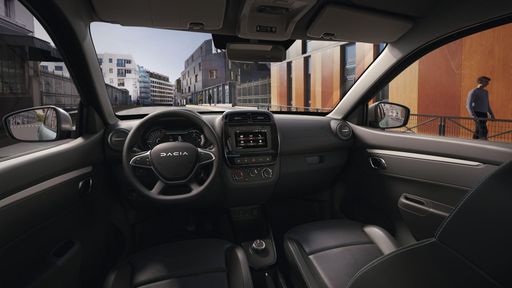
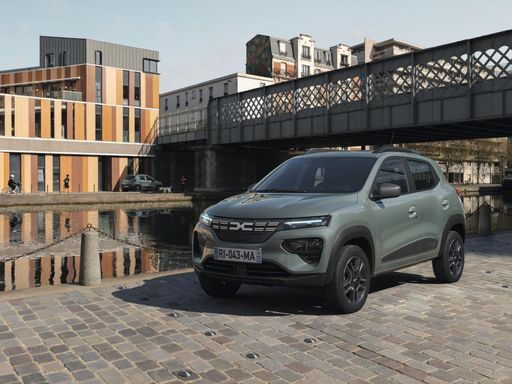
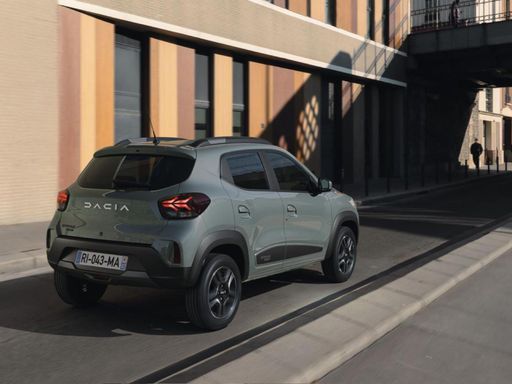
The Dacia Spring represents the forefront of eco-friendly transportation. With a compact SUV body type, it boasts a fully electric drivetrain with front-wheel drive, an ideal choice for urban dwellers. The Spring's electric motor produces up to 48 kW (65 HP) with a torque of 113 Nm, providing a practical driving range of approximately 228 km on a single charge thanks to its 26.8 kWh battery. The vehicle shines with an impressive CO2 efficiency rating of Class A, emitting zero CO2 g/km — a significant advantage for environmentally conscious drivers.

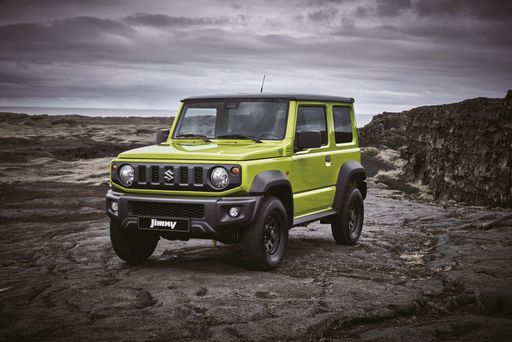
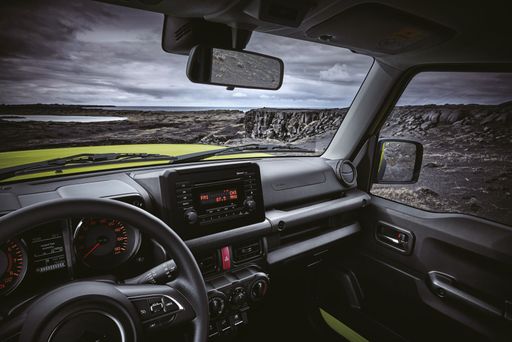
On the other hand, the Suzuki Jimny embodies the essence of adventure with its robust off-roader design. It features an all-wheel-drive system powered by a 1.5-liter petrol engine, generating 102 HP and 130 Nm of torque. Despite its higher CO2 emissions class rating of F, the Jimny’s rugged construction and all-terrain capability make it a formidable force on and off the road. Although its fuel consumption of 7.7 L/100km doesn't match electric efficiency, its capability to traverse various landscapes is where it excels.

Spring

Design and Practicality

Both models present a unique approach to design and practicality. The Dacia Spring, with its sleek dimensions of 3701 mm in length and a height of 1519 mm, showcases a modern, urban-centric design perfect for navigating crowded city streets. Inside, it comfortably seats four passengers with a generous trunk capacity of 308 liters. This compact SUV's design targets urban efficiency, making it an attractive option for city commuters.

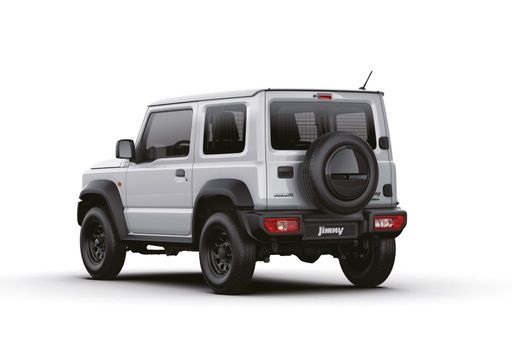
The Suzuki Jimny contrasts with its bold, boxy exterior, measuring 3645 mm in length and 1705 mm in height. Its off-road credentials are apparent in every line, with the capability to accommodate two passengers and sufficient space for adventure gear. The Jimny's distinct three-door configuration enhances its rugged charm, making it a stylish choice for those seeking off-road escapades.

Jimny

Performance and Versatility

Performance remains a key factor differentiating these two models. The Dacia Spring achieves a 0-100 km/h acceleration in 13.7 seconds, satisfactory for urban environments, with a top speed of 125 km/h. It's perfect for those prioritizing efficiency in daily commutes.

Contrastingly, the Suzuki Jimny accelerates to 100 km/h in 12.8 seconds, reflecting its focus on straightforward, raw power delivery suitable for varied terrains. Its maximum speed of 145 km/h allows it to handle highway drives and the occasional off-road adventure with ease.

Spring

Conclusion

The Dacia Spring and Suzuki Jimny epitomize two different automotive philosophies. The Spring serves as an ideal solution for eco-friendly urban living with its refined electric drive and city-friendly features, whereas the Jimny offers an adventurous lifestyle with its robust design and all-terrain capability. Whether your heart leans towards sustainability or adventure, both models offer compelling reasons to make them a part of your journey. As technology advances, the choice remains yours to drive into a future that either prioritizes conservation or exploration.

Here’s where it gets real: The technical differences in detail

Spring

Costs and Efficiency:

When it comes to price and running costs, the biggest differences usually appear. This is often where you see which car fits your budget better in the long run.

Dacia Spring is clearly cheaper – starting at 14,500 £ , while the Suzuki Jimny costs 25,300 £ . That’s a price difference of around 10,792 £.

Jimny

Engine and Performance:

Power, torque and acceleration say a lot about how a car feels on the road. This is where you see which model delivers more driving dynamics.

Both models deliver identical power – 102 HP each.

When accelerating from 0 to 100 km/h, the Dacia Spring is noticeably quicker – completing the sprint in 9.6 s, while the Suzuki Jimny takes 12.8 s. That’s about 3.2 s quicker.

There’s also a difference in torque: the Dacia Spring delivers very slightly more torque with 137 Nm compared to 130 Nm. That’s about 7 Nm more.

Spring

Space and Everyday Use:

Cabin size, boot volume and payload all play a role in everyday practicality. Here, comfort and flexibility make the difference.

Seats: Dacia Spring offers more seats – 4 vs 2.

In terms of curb weight, Dacia Spring is marginally lighter – 1,070 kg compared to 1,165 kg. The difference is around 95 kg.

When it comes to payload, the Dacia Spring carries barely more – 274 kg compared to 270 kg. That’s a difference of about 4 kg.

Who wins the race in the data check?

The Dacia Spring holds a decisive overall lead in the objective data comparison.
This result only shows which model scores more points on paper – not which of the two cars feels right for you.

from £14,500
Spring

Dacia Spring

  • Engine Type Electric
  • Transmission Automatic
  • Drive Type Front-Wheel Drive
  • Power HP 70 - 102 HP
  • Consumption kWh/100km 12.4 - 12.7 kWh/100km
  • Electric Range 221 - 225 km
Dacia Spring
Suzuki Jimny

Costs and Consumption

View detailed analysis

Engine and Performance

View detailed analysis

Dimensions and Body

View detailed analysis

Dacia Spring

The Dacia Spring is an unpretentious city electric that strips EV ownership down to the essentials, offering clean, fuss-free transport for daily urban life. It won't impress luxury-seekers, but its cheerful practicality and rock-bottom running costs make it a clever, no-nonsense choice for anyone who wants electric mobility without the drama.

details

Suzuki Jimny

Brimming with raucous charm and unabashed off-road spirit, the Suzuki Jimny makes light work of rough tracks while remaining surprisingly at home in city streets. It's a cheeky, no-nonsense companion for buyers who prefer character over conformity — think go-anywhere attitude in a pocket-sized package.

details
Dacia Spring
Suzuki Jimny

Costs and Consumption

Price
14,500 - 16,900 £
Price
25,300 - 27,700 £
Consumption L/100km
-
Consumption L/100km
7.7 L/100km
Consumption kWh/100km
12.4 - 12.7 kWh/100km
Consumption kWh/100km
-
Electric Range
221 - 225 km
Electric Range
-
Battery Capacity
-
Battery Capacity
-
co2
0 g/km
co2
173 g/km
Fuel tank capacity
-
Fuel tank capacity
40 L

Dimensions and Body

Body Type
SUV
Body Type
Off-Roader
Seats
4
Seats
2
Doors
-
Doors
3
Curb weight
1,070 kg
Curb weight
1,165 kg
Trunk capacity
308 L
Trunk capacity
-
Length
-
Length
3,645 mm
Width
1,583 mm
Width
1,645 mm
Height
-
Height
1,705 mm
Max trunk capacity
-
Max trunk capacity
863 L
Payload
274 kg
Payload
270 kg

Engine and Performance

Engine Type
Electric
Engine Type
Petrol
Transmission
Automatic
Transmission
Manuel
Transmission Detail
Reduction Gearbox
Transmission Detail
Manual Gearbox
Drive Type
Front-Wheel Drive
Drive Type
All-Wheel Drive
Power HP
70 - 102 HP
Power HP
102 HP
Acceleration 0-100km/h
9.6 - 12.3 s
Acceleration 0-100km/h
12.8 s
Max Speed
-
Max Speed
145 km/h
Torque
137 Nm
Torque
130 Nm
Number of Cylinders
-
Number of Cylinders
4
Power kW
52 - 75 kW
Power kW
75 kW
Engine capacity
-
Engine capacity
1,462 cm3

General

Model Year
2025
Model Year
2,021 - 2,024
CO2 Efficiency Class
A
CO2 Efficiency Class
F
Brand
Dacia
Brand
Suzuki
DriveDuel uses data analysis and artificial intelligence to evaluate vehicle data and create content. Content is regularly reviewed and improved. The displayed prices are estimates based on German list prices, adjusted to the respective country’s VAT. Country-specific registration taxes are not included. This information is not legally binding.