@ DS Automobiles / Stellantis Media
@ Renault Group Media
VS

DS Automobiles DS 3 vs Renault Captur – Performance, range & efficiency compared

Compare performance, boot capacity, efficiency and price at a glance.
Find out which car is the better choice for you – DS Automobiles DS 3 or Renault Captur?

DS Automobiles DS 3

Renault Captur

5 (1 Reviews)
rate
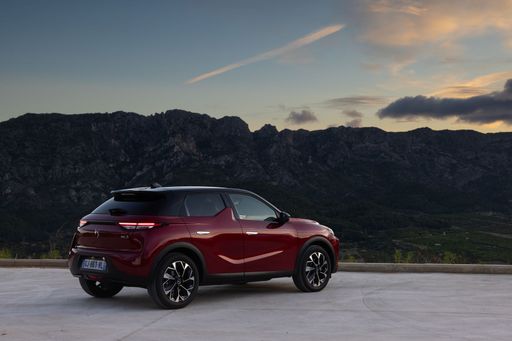
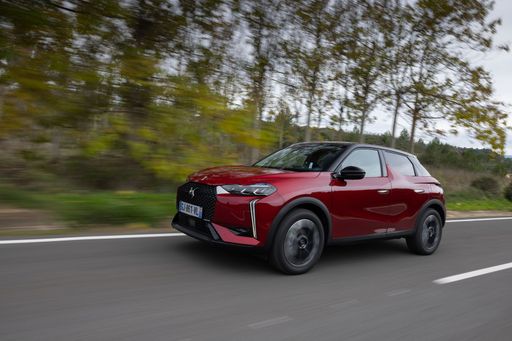
DS 3 @ DS Automobiles / Stellantis Media

Urban Elegance: DS 3 VS Renault Captur

In the bustling world of compact SUVs, two models stand out for their style and innovation: the DS 3 from DS Automobiles and the Renault Captur. Both cars promise a blend of elegance, performance, and cutting-edge technology, but which one takes the lead in the modern urban landscape?
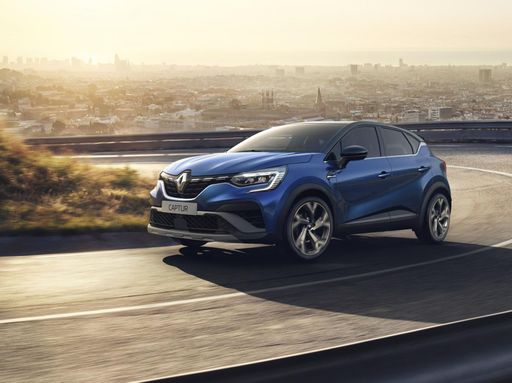
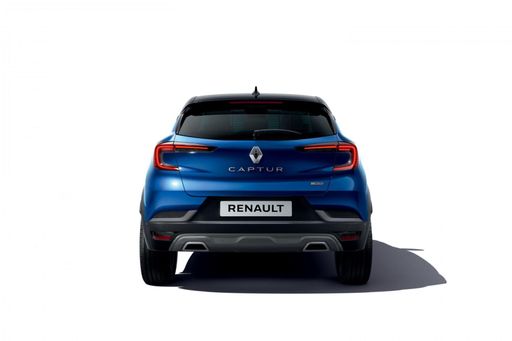
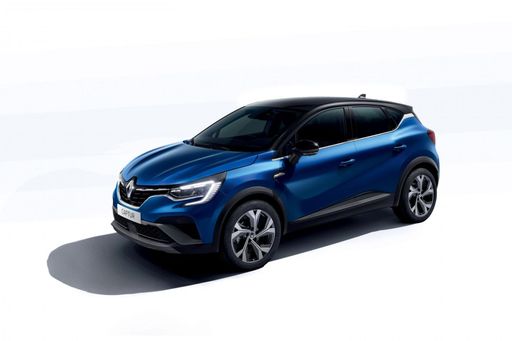
Captur @ Renault Group Media

Design and Dimensions

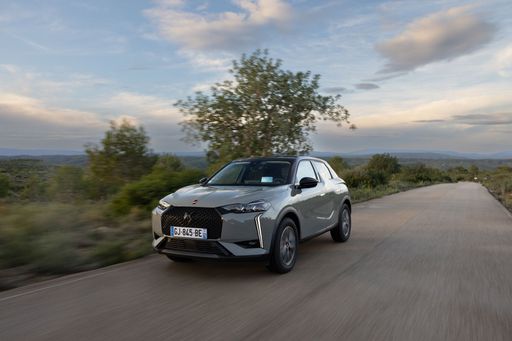
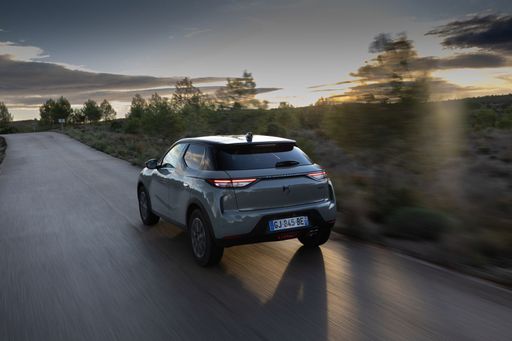
The DS 3 embraces a sleek and sophisticated design. With a length of 4118 mm, width of 1791 mm, and a height of 1534 mm, it exudes a refined, compact persona that suits city life. In comparison, the Renault Captur stretches slightly longer at 4239 mm and is marginally wider and taller, providing an assertive presence that easily captures attention.

DS 3 @ DS Automobiles / Stellantis Media

Powertrain and Performance

Both vehicles offer a diversified portfolio of powertrains, covering a spectrum of consumer needs and preferences. The DS 3 brings forth a set of diesel, petrol MHEV, and electric options, achieving power outputs ranging from 130 to 156 HP. Notably, its electric model offers an impressive range of 400 km on a single charge.

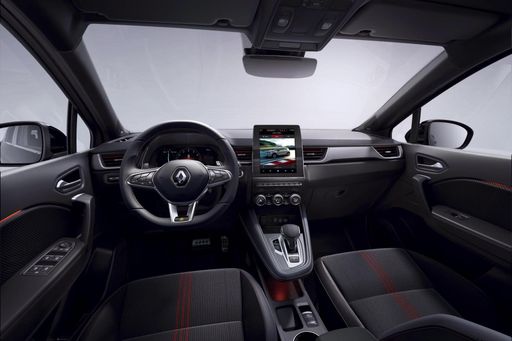
On the other hand, the Captur showcases a myriad of engine types, including full hybrid and LPG options, with power capabilities spanning 91 to 158 HP. Although less environmentally ambitious than its rival, the hybrid configuration marks a versatile offering in Renault's lineup.

Captur @ Renault Group Media

Transmission and Drivability

The DS 3 is available exclusively with an automatic transmission, whether through its conventional automatic gearbox or the sophisticated dual-clutch and reduction gear systems. This setup fosters a smooth and responsive driving experience, harmonious with its urban luxury theme.

The Captur provides the flexibility of both manual and automatic transmissions, catering to a wider range of driving preferences. The inclusion of a manual gearbox option could be key for those desiring a more hands-on driving experience.

DS 3 @ DS Automobiles / Stellantis Media

Efficiency and Environmental Impact

Efficiency is a cornerstone of both models, albeit approached from slightly different angles. The DS 3 achieves an optimal blend of performance and fuel economy, with diesel consumption at 5 to 5.2 L/100km and an all-electric variant consuming 15.5 kWh/100km while emitting zero CO2.

The Captur stakes its claim with a full hybrid variant consuming as little as 4.7 L/100km. However, CO2 emissions across its petrol and LPG engines remain slightly higher, highlighting an area for potential improvement.

Captur @ Renault Group Media

Space and Practicality

When it comes to space, the Captur shines with an impressive trunk capacity of up to 422 liters, outpacing the DS 3’s 350 liters. This advantage may appeal to families and adventurers needing more cargo space without sacrificing on style and agility.

DS 3 @ DS Automobiles / Stellantis Media

Conclusion

The DS 3 and Renault Captur both make compelling cases in the compact SUV market. The DS 3 leans on premium touches and electric innovation to attract the eco-conscious urbanite, while the Renault Captur balances versatility and practicality with its diverse range of powertrains and spacious design.

Ultimately, the choice between these two will hinge on individual priorities—whether that’s embracing advanced electric mobility with DS Automobiles or opting for the adaptable and spacious design that the Renault Captur offers.

Here’s where it gets real: The technical differences in detail

Captur @ Renault Group Media

Costs and Efficiency:

When it comes to price and running costs, the biggest differences usually appear. This is often where you see which car fits your budget better in the long run.

Renault Captur has a evident advantage in terms of price – it starts at 21100 £, while the DS Automobiles DS 3 costs 28400 £. That’s a price difference of around 7320 £.

Fuel consumption also shows a difference: Renault Captur manages with 4.50 L and is therefore slightly more efficient than the DS Automobiles DS 3 with 5 L. The difference is about 0.50 L per 100 km.

DS 3 @ DS Automobiles / Stellantis Media

Engine and Performance:

Power, torque and acceleration say a lot about how a car feels on the road. This is where you see which model delivers more driving dynamics.

When it comes to engine power, the DS Automobiles DS 3 has a minimal edge – offering 156 HP compared to 143 HP. That’s roughly 13 HP more horsepower.

In acceleration from 0 to 100 km/h, the Renault Captur is barely noticeable quicker – completing the sprint in 8.90 s, while the DS Automobiles DS 3 takes 9.10 s. That’s about 0.20 s faster.

In terms of top speed, the DS Automobiles DS 3 performs minimal better – reaching 196 km/h, while the Renault Captur tops out at 180 km/h. The difference is around 16 km/h.

There’s also a difference in torque: Renault Captur pulls barely noticeable stronger with 265 Nm compared to 260 Nm. That’s about 5 Nm difference.

Space and Everyday Use:

Beyond pure performance, interior space and usability matter most in daily life. This is where you see which car is more practical and versatile.

Both vehicles offer seating for 5 people.

In curb weight, DS Automobiles DS 3 is barely noticeable lighter – 1249 kg compared to 1323 kg. The difference is around 74 kg.

In terms of boot space, the Renault Captur offers a bit more room – 422 L compared to 350 L. That’s a difference of about 72 L.

In maximum load capacity, the Renault Captur performs evident better – up to 1363 L, which is about 313 L more than the DS Automobiles DS 3.

When it comes to payload, DS Automobiles DS 3 barely noticeable takes the win – 466 kg compared to 453 kg. That’s a difference of about 13 kg.

Who wins the race?

The Renault Captur proves to be has the upper hand and therefore becomes our DriveDuel Champion!
Renault Captur is the better all-rounder in this comparison.

DS Automobiles DS 3
Renault Captur

Costs and Consumption

View detailed analysis

Engine and Performance

View detailed analysis

Dimensions and Body

View detailed analysis
from about £21,100
Captur @ Renault Group Media

Renault Captur

  • Engine Type : Full Hybrid, Petrol, Petrol MHEV
  • Transmission : Automatic, Manuel
  • Drive Type : Front-Wheel Drive
  • Power HP : 115 - 143 HP
  • Consumption L/100km : 4.5 - 6 L

DS Automobiles DS 3

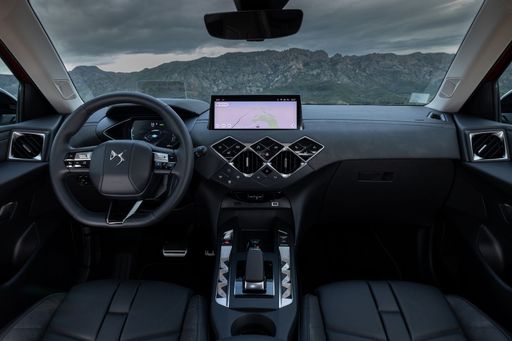
The DS 3 is a chic, compact premium hatch that stands out with couture styling and an interior that feels more boutique than bargain-bin. It serves up a poised, city-friendly drive with plenty of French flair — ideal for buyers who want personality as much as practicality and don’t mind turning heads at the lights.

details

Renault Captur

5 (1 Reviews)
rate

The Renault Captur is a cheeky little crossover that pairs city-friendly agility with a roomy, well-thought-out cabin and enough style to turn heads at the lights. It’s a sensible choice for buyers who want practical versatility and a dash of personality on their daily drives, without taking itself too seriously.

details
DS Automobiles DS 3
Renault Captur
DS 3 @ DS Automobiles / Stellantis Media
Captur @ Renault Group Media

Costs and Consumption

Price
28400 - 40500 £
Price
21100 - 28300 £
Consumption L/100km
5 L
Consumption L/100km
4.5 - 6 L
Consumption kWh/100km
15.50 kWh
Consumption kWh/100km
-
Electric Range
400 km
Electric Range
-
Battery Capacity
51 kWh
Battery Capacity
-
co2
0 - 112 g/km
co2
102 - 137 g/km
Fuel tank capacity
44 L
Fuel tank capacity
48 L

Dimensions and Body

Body Type
SUV
Body Type
SUV
Seats
5
Seats
5
Doors
5
Doors
5
Curb weight
1249 - 1646 kg
Curb weight
1323 - 1514 kg
Trunk capacity
350 L
Trunk capacity
326 - 422 L
Length
4118 mm
Length
4239 mm
Width
1791 mm
Width
1797 mm
Height
1534 mm
Height
1575 mm
Max trunk capacity
1050 L
Max trunk capacity
1276 - 1363 L
Payload
362 - 466 kg
Payload
376 - 453 kg

Engine and Performance

Engine Type
Electric, Petrol MHEV
Engine Type
Full Hybrid, Petrol, Petrol MHEV
Transmission
Automatic
Transmission
Automatic, Manuel
Transmission Detail
Reduction Gearbox, Dual-Clutch Automatic
Transmission Detail
Automatic Gearbox, Manual Gearbox, Dual-Clutch Automatic
Drive Type
Front-Wheel Drive
Drive Type
Front-Wheel Drive
Power HP
145 - 156 HP
Power HP
115 - 143 HP
Acceleration 0-100km/h
9.1 - 9.2 s
Acceleration 0-100km/h
8.9 - 12.3 s
Max Speed
150 - 196 km/h
Max Speed
180 km/h
Torque
230 - 260 Nm
Torque
160 - 265 Nm
Number of Cylinders
3
Number of Cylinders
3 - 4
Power kW
107 - 115 kW
Power kW
84 - 116 kW
Engine capacity
1199 cm3
Engine capacity
1199 - 1789 cm3

General

Model Year
2024 - 2025
Model Year
2025
CO2 Efficiency Class
A, C
CO2 Efficiency Class
C, D, E
Brand
DS Automobiles
Brand
Renault
What drive types are available for the DS Automobiles DS 3?

The DS Automobiles DS 3 is offered with Front-Wheel Drive.

The prices and data displayed are estimates based on German list prices and may vary by country. This information is not legally binding.

do not click