
VS

Fiat Scudo vs Peugeot Boxer - Differences and prices compared

Compare performance (180 HP vs 279 HP), boot space and price (30900 £ vs 33500 £ ) at a glance. Find out which car is the better choice for you – Fiat Scudo or Peugeot Boxer?

Fiat Scudo vs Peugeot Boxer: A Battle of European Cargo Vans

In the rapidly evolving world of cargo vans, the Fiat Scudo and Peugeot Boxer stand out as two formidable contenders. Both vehicles bring a mix of traditional diesel and innovative electric options, catering to a wide range of logistical needs. In this comparison, we delve into their technical aspects, innovations, and what sets them apart.
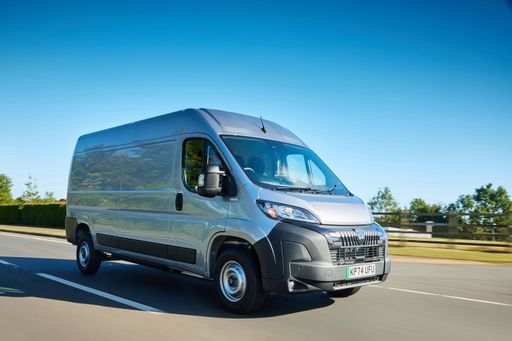
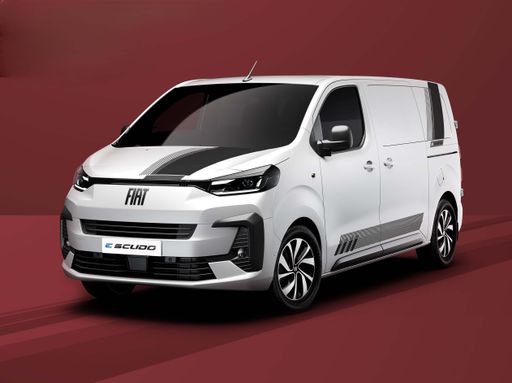
Engine Options and Performance

The Fiat Scudo offers a diverse range of engine types, including both diesel and electric variants. With power outputs ranging from 100 HP to 180 HP in diesel, and 101 HP to 177 HP in electric, the Scudo caters to varied performance needs. It boasts a front-wheel drive system, providing stability and efficiency.

On the other hand, the Peugeot Boxer presents a slightly more powerful lineup, with diesel engines ranging from 120 HP to an impressive 180 HP, and electric options reaching up to 279 HP. The Boxer also features a front-wheel drive system, ensuring good road handling across urban environments.

Fuel and Energy Efficiency

When it comes to fuel efficiency, the Fiat Scudo diesels offer a consumption range between 6.5 L/100km to 7.8 L/100km, while its electric counterparts consume between 23.6 kWh/100km and 27 kWh/100km. This makes the Scudo a competitive option for those looking for economical running costs.

The Peugeot Boxer, however, follows close behind with its diesel consumption of 7.5 L/100km to 8.9 L/100km. On the electric side, the Boxer's energy usage scales between 26.2 kWh/100km and 36.2 kWh/100km, slightly higher than the Scudo.

Electric Range and Battery

For the all-important electric range, the Fiat Scudo achieves distances from 218 km up to an impressive 352 km, making it an excellent choice for those longer distance hauls without frequent charging stops.

The Peugeot Boxer offers an electric range varying from 116 km to a substantial 424 km, backed by a larger battery capacity of 97.8 kWh. This makes the Boxer particularly appealing for operators who require extended range capabilities.

Comfort and Payload

Inside, the Fiat Scudo provides seating options for up to six passengers and boasts a varied payload capacity, handling between 926 kg and 1805 kg. This adaptability ensures that the Scudo can be tailored to many different cargo-carrying tasks.

The Peugeot Boxer, while typically seating three, impresses with a payload handling capacity from 560 kg to an extensive 2020 kg. Such versatility is crucial for businesses needing to move a range of goods efficiently.

Conclusion

Choosing between the Fiat Scudo and the Peugeot Boxer depends on specific operational needs. The Scudo excels in cost-effective fuel efficiency and offers flexibility in seating and payload options. Meanwhile, the Boxer shines with a potent electric range and higher maximum power options, essential for more demanding transport responsibilities.

Both models encapsulate European engineering prowess in the cargo van segment, championing both traditional diesel and progressive electric technologies to serve the needs of modern businesses.

Fiat Scudo

Peugeot Boxer

Here’s where it gets real: The technical differences in detail

Costs and Efficiency:

When it comes to price and running costs, the biggest differences usually appear. This is often where you see which car fits your budget better in the long run.

Fiat Scudo has a slight advantage in terms of price – it starts at 30900 £ , while the Peugeot Boxer costs 33500 £ . That’s a price difference of around 2550 £.

Fuel consumption also shows a difference: Fiat Scudo manages with 6.20 L and is therefore distinct more efficient than the Peugeot Boxer with 7.50 L. The difference is about 1.30 L per 100 km.

In terms of energy consumption, the advantage goes to the Fiat Scudo: with 23.60 kWh per 100 km, it’s slightly more efficient than the Peugeot Boxer with 26.20 kWh. That’s a difference of about 2.60 kWh.

As for electric range, the Peugeot Boxer performs a bit better – achieving up to 424 km, about 72 km more than the Fiat Scudo.

Engine and Performance:

Under the bonnet, it becomes clear which model is tuned for sportiness and which one takes the lead when you hit the accelerator.

When it comes to engine power, the Peugeot Boxer has a noticeable edge – offering 279 HP compared to 180 HP. That’s roughly 99 HP more horsepower.

In terms of top speed, the Peugeot Boxer performs evident better – reaching 170 km/h, while the Fiat Scudo tops out at 130 km/h. The difference is around 40 km/h.

There’s also a difference in torque: Peugeot Boxer pulls to a small extent stronger with 450 Nm compared to 400 Nm. That’s about 50 Nm difference.

Space and Everyday Use:

Beyond pure performance, interior space and usability matter most in daily life. This is where you see which car is more practical and versatile.

Seats: Peugeot Boxer offers slightly more seating capacity – 7 vs 6.

In curb weight, Fiat Scudo is evident lighter – 1722 kg compared to 2075 kg. The difference is around 353 kg.

In maximum load capacity, the Peugeot Boxer performs convincingly better – up to 17000 L, which is about 10400 L more than the Fiat Scudo.

When it comes to payload, Peugeot Boxer to a small extent takes the win – 2080 kg compared to 1805 kg. That’s a difference of about 275 kg.

Who wins the race in the data check?

The Peugeot Boxer holds a decisive overall lead in the objective data comparison.
This result only shows which model scores more points on paper – not which of the two cars feels right for you.

Fiat Scudo
Peugeot Boxer

Costs and Consumption

View detailed analysis

Engine and Performance

View detailed analysis

Dimensions and Body

View detailed analysis
from about £33,500
default

Peugeot Boxer

  • Engine Type : Diesel, Electric
  • Transmission : Manuel, Automatic
  • Drive Type : Front-Wheel Drive
  • Power HP : 120 - 279 HP
  • Consumption L/100km : 7.5 - 9 L
  • Consumption kWh/100km : 26.20 kWh
  • Electric Range : 424 km

Fiat Scudo

The Fiat Scudo is a practical and unpretentious van that balances hardworking utility with a surprisingly polished cabin, making it a sensible choice for tradespeople and families who need space without fuss. It doesn't pretend to be flashy, but its clever packaging, sensible driving manners and affordable running costs make the Scudo a dependable partner for the daily grind and weekend projects — and it even manages to look tidy in the car park.

details

Peugeot Boxer

The Peugeot Boxer wears its workmanlike practicality with a surprising amount of style, offering an interior that’s easy to live with for tradespeople and small businesses. It’s a sensible, no-nonsense choice if you need reliable load space and low running costs, with clever details that make daily life easier and an exterior that won’t embarrass when you arrive on site.

details
Fiat Scudo
Peugeot Boxer

Costs and Consumption

Price
30900 - 51300 £
Price
33500 - 57800 £
Consumption L/100km
6.2 - 6.5 L
Consumption L/100km
7.5 - 9 L
Consumption kWh/100km
23.6 - 24 kWh
Consumption kWh/100km
26.20 kWh
Electric Range
221 - 352 km
Electric Range
424 km
Battery Capacity
-
Battery Capacity
97.80 kWh
co2
0 - 172 g/km
co2
0 - 233 g/km
Fuel tank capacity
69 L
Fuel tank capacity
90 L

Dimensions and Body

Body Type
Cargo Van
Body Type
Cargo Van
Seats
2 - 6
Seats
3 - 7
Doors
4
Doors
4
Curb weight
1722 - 2260 kg
Curb weight
2075 - 2940 kg
Trunk capacity
-
Trunk capacity
-
Length
4980 - 5330 mm
Length
5413 - 6363 mm
Width
1920 mm
Width
2050 mm
Height
1895 - 1935 mm
Height
2254 - 2850 mm
Max trunk capacity
5300 - 6600 L
Max trunk capacity
10000 - 17000 L
Payload
840 - 1805 kg
Payload
560 - 2080 kg

Engine and Performance

Engine Type
Electric, Diesel
Engine Type
Diesel, Electric
Transmission
Automatic, Manuel
Transmission
Manuel, Automatic
Transmission Detail
Reduction Gearbox, Manual Gearbox, Automatic Gearbox
Transmission Detail
Manual Gearbox, Automatic Gearbox, Reduction Gearbox
Drive Type
Front-Wheel Drive
Drive Type
Front-Wheel Drive
Power HP
120 - 180 HP
Power HP
120 - 279 HP
Acceleration 0-100km/h
10.5 - 11.2 s
Acceleration 0-100km/h
-
Max Speed
130 km/h
Max Speed
90 - 170 km/h
Torque
260 - 400 Nm
Torque
320 - 450 Nm
Number of Cylinders
4
Number of Cylinders
4
Power kW
88 - 132 kW
Power kW
88 - 205 kW
Engine capacity
1499 - 2184 cm3
Engine capacity
2184 cm3

General

Model Year
2024 - 2025
Model Year
2024 - 2025
CO2 Efficiency Class
A, F
CO2 Efficiency Class
G, A
Brand
Fiat
Brand
Peugeot
What drive types are available for the Fiat Scudo?

The Fiat Scudo is offered with Front-Wheel Drive.

The prices shown are estimates based on German list prices, adjusted for local VAT. Local registration taxes (e.g. NoVA, BPM or CO2 malus) are not included. This information is not legally binding.








