VS

Ford Capri vs Ford Mustang Coupe comparison

Compare performance (340 HP vs 453 HP), boot space and price (36,300 £ vs 51,800 £ ) at a glance. Find out which car is the better choice for you – Ford Capri or Ford Mustang Coupe?

Ford Capri vs Ford Mustang Coupe: Key differences

Ford Capri

5 (2 Reviews)
rate
  • substantially cheaper
  • clearly more trunk space

Ford Mustang Coupe

  • noticeably more power
  • visibly quicker 0–100 km/h
  • a bit lighter

All details on performance, efficiency, range and trunk space can be found in the technical comparison below – including user reviews for both models.

Capri

In the world of classic muscle cars, the Ford Capri and the Ford Mustang Coupe stand as two distinct icons, each representing different eras and philosophies of automotive design and engineering. As we delve into the details of these powerful machines, we’ll explore their technical aspects, innovative features, and how they compare against each other.

Mustang Coupe

The Ford Capri: A Modern Electric Icon

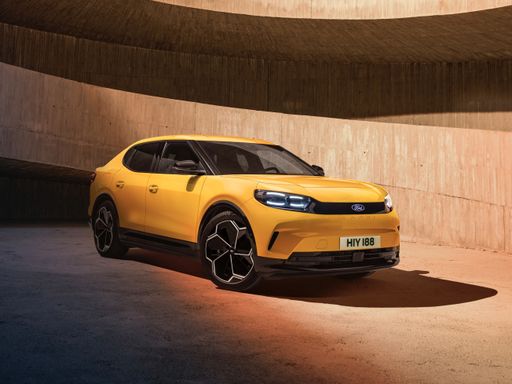
The Ford Capri has undergone a remarkable transformation in recent years, emerging as a futuristic electric vehicle. With its SUV body type, the latest models offer a spacious five-seat arrangement that appeals to a broad audience looking for practicality coupled with performance. The Capri's sleek design is not just for looks; it features an aerodynamic silhouette that enhances efficiency and reduces drag.

Under the hood, the Capri is available with several electric power configurations, providing options ranging from 170 HP to a robust 340 HP. The electric motors provide instantaneous torque that sets the Capri apart in its acceleration capability, achieving 0-100 km/h in as little as 5.3 seconds. Additionally, its impressive electric range of up to 627 km means that it's not just a car for city driving; it’s ready for long-distance journeys.

With a focus on sustainability, the Capri produces zero CO2 emissions, making it an attractive option for those conscious of their environmental impact. Its two drive types—Rear-Wheel Drive and All-Wheel Drive—further enhance its versatility, allowing drivers to choose performance characteristics that suit their individual preferences.

Capri

The Ford Mustang Coupe: A Classic Powerhouse

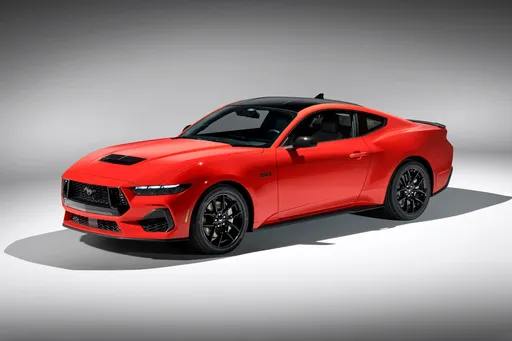
The Ford Mustang Coupe, on the other hand, embodies the spirit of classic American muscle. Its petrol engine options deliver robust power performance, with horsepower ranging from 446 to 453 HP. This powerhouse is all about raw performance, with a traditional Rear-Wheel Drive setup that enthusiasts crave for an engaging driving experience.

Typical of muscle cars, the Mustang Coupe is impressively quick, clocking in 0-100 km/h times between 4.4 to 5.3 seconds, depending on the trim. Its powerful 5.0L V8 engine exemplifies the Mustang’s heritage, and with a top speed reaching up to 263 km/h, it maintains its position as a leader in performance and speed.

The Mustang’s design also pays homage to its roots, marked by a bold stance and aggressive lines. However, some may argue that this charm comes at a cost—fuel consumption is relatively higher at around 12 to 12.2 L/100km, and its CO2 emissions range from 274 to 282 g/km, placing it in a less favorable efficiency class compared to the Capri.


Technical Comparison: Innovations and Features

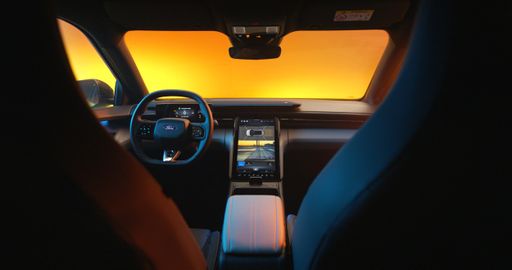
When analyzing the technical aspects, the Ford Capri clearly leans into modern innovations. The transition to electric power means lower operating costs, quiet operation, and less maintenance compared to traditional petrol engines. Moreover, safety and tech features in the Capri are typically more advanced, aligning with contemporary consumer expectations.

Conversely, the Mustang's engineering brilliance lies in its original muscle car ethos. Features such as a heavy-duty suspension and performance brakes contribute to its sportiness, but it lacks the eco-friendly advancements seen in the Capri. Additionally, it integrates modern technology like an advanced info-tainment system and driver-assist features, though it remains fundamentally grounded in the thrilling experience that muscle cars are known for.

Conclusion: Choosing Between Two Legends

Ultimately, the choice between the Ford Capri and the Ford Mustang Coupe comes down to personal preference and lifestyle needs. The Capri appeals to those seeking a combination of performance, practicality, and eco-conscious driving, while the Mustang captures the hearts of traditional automotive enthusiasts who value raw horsepower and classic muscle car culture. Each of these vehicles represents a different path Ford has taken through its illustrious history, and both have firmly established their place in automotive lore.

Here’s where it gets real: The technical differences in detail

Capri

Costs and Efficiency:

Looking at overall running costs, both models reveal some interesting differences in everyday economy.

Ford Capri is substantially cheaper – starting at 36,300 £ , while the Ford Mustang Coupe costs 51,800 £ . That’s a price difference of around 15,429 £.

Mustang Coupe

Engine and Performance:

Power, torque and acceleration are the classic benchmarks for car enthusiasts – and here, some clear differences start to show.

When it comes to engine power, the Ford Mustang Coupe offers noticeably more power – delivering 453 HP compared to 340 HP. That’s roughly 113 HP more horsepower.

When accelerating from 0 to 100 km/h, the Ford Mustang Coupe is visibly quicker – completing the sprint in 4.4 s, while the Ford Capri takes 5.3 s. That’s about 0.9 s quicker.

There’s also a difference in torque: the Ford Capri delivers markedly more torque with 679 Nm compared to 540 Nm. That’s about 139 Nm more.

Capri

Space and Everyday Use:

Beyond pure performance, interior space and usability matter most in daily life. This is where you see which car is more practical and versatile.

Seats: Ford Capri offers more seats – 5 vs 4.

In terms of curb weight, Ford Mustang Coupe is a bit lighter – 1,808 kg compared to 2,001 kg. The difference is around 193 kg.

Looking at boot space, the Ford Capri offers clearly more boot space – 572 L compared to 381 L. That’s a difference of about 191 L.

When it comes to payload, the Ford Capri carries clearly more – 587 kg compared to 334 kg. That’s a difference of about 253 kg.

Who wins the race in the data check?

The Ford Capri is far ahead overall in the objective data comparison.
This result only shows which model scores more points on paper – not which of the two cars feels right for you.

from £36,300
Capri

Ford Capri

  • Engine Type : Electric
  • Transmission : Automatic
  • Drive Type : Rear-Wheel Drive, All-Wheel Drive
  • Power HP : 190 - 340 HP
  • Consumption kWh/100km : 13.8 - 16.5 kWh/100km
  • Electric Range : 439 - 627 km
Ford Capri
Ford Mustang Coupe

Costs and Consumption

View detailed analysis

Engine and Performance

View detailed analysis

Dimensions and Body

View detailed analysis

Ford Capri

The Ford Capri turned the family car into something cheekily sporty, with a long, rakish profile that still promises fun at a glance. Today it lives on as a lovable classic — easy to tinker with, enjoyable to drive and guaranteed to raise smiles at any meet.

details

Ford Mustang Coupe

The Ford Mustang Coupe wears its muscle on its sleeve, delivering a raw, grin-inducing driving experience that turns everyday roads into a little theater of noise and swagger. Inside it's surprisingly livable for regular use, so if you want headline-grabbing looks and a proper driver's car without pretending to be a luxury cruiser, the Mustang coupe is a very entertaining choice.

details
Ford Capri
Ford Mustang Coupe

Costs and Consumption

Price
36,300 - 50,900 £
Price
51,800 - 65,600 £
Consumption L/100km
-
Consumption L/100km
12 - 12.4 L/100km
Consumption kWh/100km
13.8 - 16.5 kWh/100km
Consumption kWh/100km
-
Electric Range
439 - 627 km
Electric Range
-
Battery Capacity
-
Battery Capacity
-
co2
0 g/km
co2
275 - 282 g/km
Fuel tank capacity
-
Fuel tank capacity
61 L

Dimensions and Body

Body Type
SUV
Body Type
Coupe
Seats
5
Seats
4
Doors
-
Doors
2
Curb weight
2,001 - 2,175 kg
Curb weight
1,808 - 1,837 kg
Trunk capacity
572 L
Trunk capacity
381 L
Length
-
Length
4,810 - 4,819 mm
Width
1,872 mm
Width
1,916 - 1,917 mm
Height
-
Height
1,398 - 1,404 mm
Max trunk capacity
-
Max trunk capacity
-
Payload
559 - 587 kg
Payload
327 - 334 kg

Engine and Performance

Engine Type
Electric
Engine Type
Petrol
Transmission
Automatic
Transmission
Manuel, Automatic
Transmission Detail
Reduction Gearbox
Transmission Detail
Manual Gearbox, Automatic Gearbox
Drive Type
Rear-Wheel Drive, All-Wheel Drive
Drive Type
Rear-Wheel Drive
Power HP
190 - 340 HP
Power HP
446 - 453 HP
Acceleration 0-100km/h
5.3 - 8 s
Acceleration 0-100km/h
4.4 - 5.3 s
Max Speed
-
Max Speed
250 - 263 km/h
Torque
350 - 679 Nm
Torque
540 Nm
Number of Cylinders
-
Number of Cylinders
8
Power kW
140 - 250 kW
Power kW
328 - 334 kW
Engine capacity
-
Engine capacity
5,038 cm3

General

Model Year
2,026
Model Year
2,024
CO2 Efficiency Class
A
CO2 Efficiency Class
G
Brand
Ford
Brand
Ford
DriveDuel uses data analysis and artificial intelligence to evaluate vehicle data and create content. Content is regularly reviewed and improved. The displayed prices are estimates based on German list prices, adjusted to the respective country’s VAT. Country-specific registration taxes are not included. This information is not legally binding.