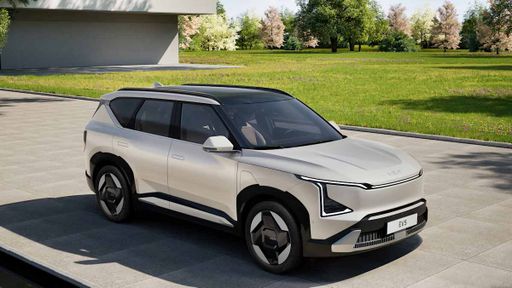
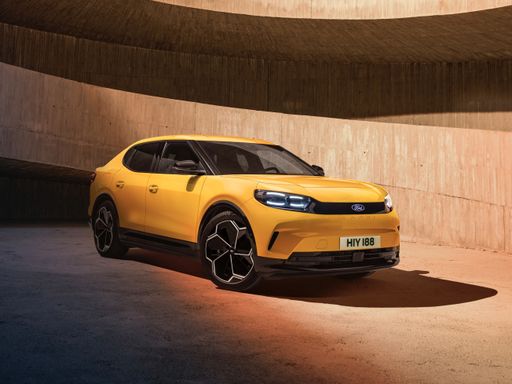
VS

Ford Capri vs Kia EV5 comparison

Compare performance (340 HP vs 306 HP), boot space and price (36,300 £ vs 39,400 £ ) at a glance. Find out which car is the better choice for you – Ford Capri or Kia EV5?

Ford Capri vs Kia EV5: Key differences

Ford Capri

4.8 (4 Reviews)
rate
  • marginally cheaper
  • only slightly more power
  • markedly more efficient
  • a bit more electric range
  • moderately quicker 0–100 km/h
  • only slightly lighter
details

Kia EV5

4.7 (1 Reviews)
rate
details

All details on performance, efficiency, range and trunk space can be found in the technical comparison below – including user reviews for both models.

By Achim Sedelmaier

Capri

Ford Capri VS Kia EV5: a quick editorial snapshot

Ford Capri and Kia EV5 present two distinct takes on the electric family SUV: the Capri is a coupé‑style, highway‑calm crossover with a big, usable boot and driver‑focused packaging, while the EV5 prioritises interior space, effortless comfort and everyday practicality. The Capri leans toward souverain highway manners and a more assertive feel under hard acceleration, whereas the EV5 is softer, roomier and engineered around rear‑seat comfort. Buyers will notice the Capri’s more purposeful presentation in cabin layout and body control, and the EV5’s emphasis on quiet, placid cruising and easy living. Those differences set the tone for how each car performs in commute, school run and long trips. This comparison explains where those choices matter in daily life, not just on paper.
EV5

Driving character and usability

The Ford Capri drives with a sense of composure that rewards steady speeds and confident overtakes, making the Capri feel like an older‑schooled cruiser with a sharper midrange shove when you ask for pace. The Kia EV5 answers in a gentler voice: the EV5 sacrifices twitch and feedback for a forgiving, glide‑like progress that most passengers will happily accept. In town the EV5’s light steering and clear forward view make manoeuvres effortless, while the Capri’s steering is direct enough for quick lanes changes but its high dash and lower rear visibility require more camera reliance. Both cars are easy to live with day‑to‑day, but the buyer who wants a bit more engagement will prefer the Ford Capri, and the buyer who values seamless, relaxed progress will prefer the Kia EV5.

Capri

Cabin comfort and perceived quality

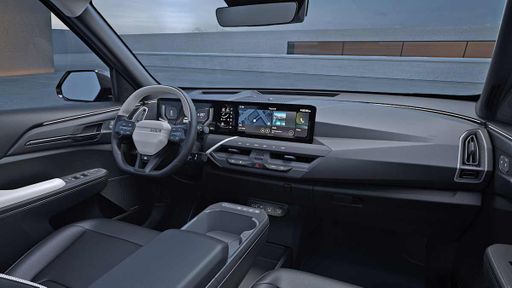
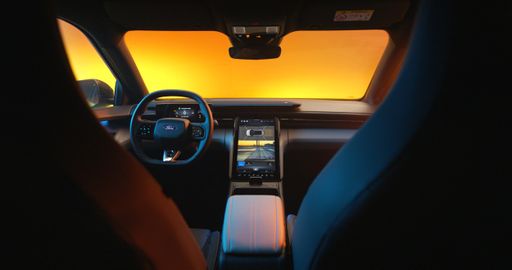
Open the doors and the differences become practical: the Capri offers a large, vertical touchscreen and clever storage touches that feel purposeful, but many surfaces are functional rather than plush and the rear bench sits low under a sloping roofline. The EV5 gives a more conventional, family‑friendly cabin where rear occupants enjoy space and headroom, and materials read as solid and durable even if the design is restrained. The Capri’s high armoured dash can hamper forward sightlines and makes the driving position feel a touch cocooned, while the EV5’s layout keeps the horizon visible but introduces some awkward touch controls for climate. In short, the Capri feels tech‑forward and driver‑centric with a utilitarian finish, whereas the EV5 feels roomy, comfortable and unapologetically family‑oriented.

EV5

Practicality, load space and everyday cargo use

Both cars score on luggage and usefulness, but in different ways: the Capri’s boot is exceptionally easy to pack thanks to clever floor options and a long, accessible opening that suits weekend gear and awkward items. The EV5 counters with breadth and modularity — a very generous rear area and the ability to fold to create a long, flat load surface that better serves bigger families or DIY trips. The Capri’s layout feels engineered for sensible, frequent loading and long pieces, while the EV5 is the more flexible one for mixed cargo and passenger duties, including extra stowage and a front trunk for small items. If you prioritise trunk usability above all, the Capri will win many everyday loading fights; if you need maximum cabin versatility and passenger space, the EV5 will be more forgiving.

Long‑distance manners versus city friendliness

On motorways the Ford Capri impresses with steady noise levels and surefooted tracking that make long hours behind the wheel less tiring, giving the Capri an edge for frequent long‑distance drivers who value calm confidence. The Kia EV5 is no slouch on long trips either — it soaks up road irregularities and keeps occupants comfortable — but its charging architecture and gentler pace mean longer or more frequent stops on some routes compared with the Capri’s more stretched efficiency. Around town the EV5’s visibility, easy steering and simple regen control feel more convenient for daily errands, while the Capri’s smaller turn radius and intuitive infotainment are helpful but its limited one‑pedal feel and higher dash reduce urban grace slightly. Each car therefore excels in different travel patterns: the Capri leans toward motorway efficiency and decisive acceleration, the EV5 toward suburban ease and passenger comfort.

Who should choose which car — clear buyer fit

Choose the Ford Capri if you prize a large, user‑friendly boot, composed high‑speed stability and a more driver‑focused electric experience; the Capri suits those who do longer runs, need practical luggage space and want a car that feels alert under load. Opt for the Kia EV5 if interior room, a relaxed ride and straightforward family usability are top priorities; the EV5 fits parents, frequent passengers and anyone who prefers a softer, quieter daily companion. Both cars bring sensible equipment and safety, but the trade‑offs remain: Capri trades some rear comfort and plushness for cargo practicality and a firmer drive, while EV5 trades charging speed and driver feedback for space and ease. If you want the numbers and charging/acceleration data that explain those trade‑offs precisely, the technical comparison that follows lays out the specifics.

Here’s where it gets real: The technical differences in detail

Capri

Costs and Efficiency:

Price and efficiency are key factors when choosing a car – and this is often where the real differences emerge.

Ford Capri is marginally cheaper – starting at 36,300 £ , while the Kia EV5 costs 39,400 £ . That’s a price difference of around 3,078 £.

In terms of energy consumption, the Ford Capri is markedly more efficient: consuming 13.8 kWh/100km compared to 16.9 kWh/100km for the Kia EV5. That’s a difference of about 3.1 kWh/100km.

As for electric range, the Ford Capri offers a bit more range – reaching up to 627 km, about 97 km more than the Kia EV5.

EV5

Engine and Performance:

Under the bonnet, it becomes clear which model is tuned for sportiness and which one takes the lead when you hit the accelerator.

When it comes to engine power, the Ford Capri offers only slightly more power – delivering 340 HP compared to 306 HP. That’s roughly 34 HP more horsepower.

When accelerating from 0 to 100 km/h, the Ford Capri is moderately quicker – completing the sprint in 5.3 s, while the Kia EV5 takes 6.2 s. That’s about 0.9 s quicker.

There’s also a difference in torque: the Ford Capri delivers markedly more torque with 679 Nm compared to 480 Nm. That’s about 199 Nm more.

Capri

Space and Everyday Use:

Cabin size, boot volume and payload all play a role in everyday practicality. Here, comfort and flexibility make the difference.

Both vehicles offer seating for 5 people.

In terms of curb weight, Ford Capri is only slightly lighter – 2,001 kg compared to 2,069 kg. The difference is around 68 kg.

When it comes to payload, the Ford Capri carries moderately more – 587 kg compared to 511 kg. That’s a difference of about 76 kg.

Who wins the race in the data check?

The Ford Capri is far ahead overall in the objective data comparison.
This result only shows which model scores more points on paper – not which of the two cars feels right for you.

from £36,300
Capri

Ford Capri

  • Engine Type : Electric
  • Transmission : Automatic
  • Drive Type : Rear-Wheel Drive, All-Wheel Drive
  • Power HP : 190 - 340 HP
  • Consumption kWh/100km : 13.8 - 16.5 kWh/100km
  • Electric Range : 439 - 627 km
Ford Capri
Kia EV5

Costs and Consumption

View detailed analysis

Engine and Performance

View detailed analysis

Dimensions and Body

View detailed analysis

Ford Capri

The Ford Capri turned the family car into something cheekily sporty, with a long, rakish profile that still promises fun at a glance. Today it lives on as a lovable classic — easy to tinker with, enjoyable to drive and guaranteed to raise smiles at any meet.

details

Kia EV5

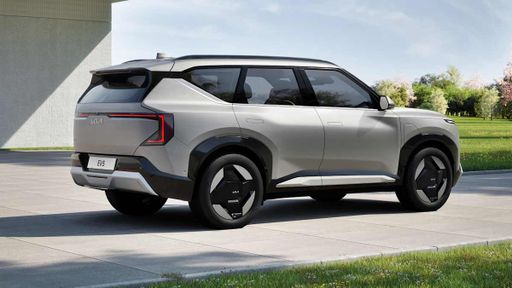
Kia's EV5 is an exciting entry into the electric SUV market, showcasing the brand's commitment to sustainable mobility. With its modern design and advanced technology features, the EV5 promises to deliver a smooth and environmentally friendly driving experience. The interior offers a spacious and comfortable ride, making it an appealing choice for families and eco-conscious drivers alike.

details
Ford Capri
Kia EV5

Costs and Consumption

Price
36,300 - 51,800 £
Price
39,400 - 51,400 £
Consumption L/100km
-
Consumption L/100km
-
Consumption kWh/100km
13.8 - 16.5 kWh/100km
Consumption kWh/100km
16.9 - 18.6 kWh/100km
Electric Range
439 - 627 km
Electric Range
476 - 530 km
Battery Capacity
-
Battery Capacity
-
co2
0 g/km
co2
0 g/km
Fuel tank capacity
-
Fuel tank capacity
-

Dimensions and Body

Body Type
SUV
Body Type
SUV
Seats
5
Seats
5
Doors
-
Doors
-
Curb weight
2,001 - 2,206 kg
Curb weight
2,069 - 2,205 kg
Trunk capacity
572 L
Trunk capacity
-
Length
-
Length
-
Width
1,872 mm
Width
1,875 mm
Height
-
Height
-
Max trunk capacity
-
Max trunk capacity
-
Payload
539 - 587 kg
Payload
465 - 511 kg

Engine and Performance

Engine Type
Electric
Engine Type
Electric
Transmission
Automatic
Transmission
Automatic
Transmission Detail
Reduction Gearbox
Transmission Detail
Reduction Gearbox
Drive Type
Rear-Wheel Drive, All-Wheel Drive
Drive Type
Front-Wheel Drive, All-Wheel Drive
Power HP
190 - 340 HP
Power HP
218 - 306 HP
Acceleration 0-100km/h
5.3 - 8 s
Acceleration 0-100km/h
6.2 - 8.4 s
Max Speed
-
Max Speed
-
Torque
350 - 679 Nm
Torque
295 - 480 Nm
Number of Cylinders
-
Number of Cylinders
-
Power kW
140 - 250 kW
Power kW
160 - 225 kW
Engine capacity
-
Engine capacity
-

General

Model Year
2026
Model Year
2,025 - 2,026
CO2 Efficiency Class
A
CO2 Efficiency Class
A
Brand
Ford
Brand
Kia
DriveDuel uses data analysis and artificial intelligence to evaluate vehicle data and create content. Content is regularly reviewed and improved. The displayed prices are estimates based on German list prices, adjusted to the respective country’s VAT. Country-specific registration taxes are not included. This information is not legally binding.