VS

Ford Capri vs Mercedes EQE comparison

Compare performance (340 HP vs 625 HP), boot space and price (36,300 £ vs 57,600 £ ) at a glance. Find out which car is the better choice for you – Ford Capri or Mercedes EQE?

Ford Capri vs Mercedes EQE: Key differences

Ford Capri

5 (3 Reviews)
rate
  • considerably cheaper
  • slightly more efficient
  • moderately lighter
  • markedly more trunk space

Mercedes EQE

4.3 (2 Reviews)
rate
  • clearly more power
  • marginally more electric range
  • clearly quicker 0–100 km/h

All details on performance, efficiency, range and trunk space can be found in the technical comparison below – including user reviews for both models.

By Achim Sedelmaier

Capri

Ford Capri vs. Mercedes EQE: A Clash of Electric Titans

The automotive landscape is evolving rapidly, with electric vehicles (EVs) taking center stage. In this comparison, we delve deep into two fascinating models: the Ford Capri and the Mercedes EQE. While one embodies a traditional sporty SUV appeal, the other emerges as a symbol of luxury and advanced technology. Let’s explore what makes each model unique, focusing on their technical aspects and innovations.
EQE

Performance and Powertrain

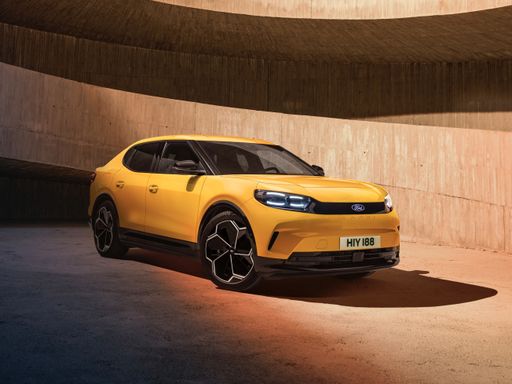
Starting with the Ford Capri, the model offers a robust electric powertrain across various trims. With power outputs ranging from 170 HP to a sporty 340 HP, the Capri comes with a selection of rear-wheel and all-wheel drive options. Its 0-100 km/h acceleration times span from 5.3 seconds up to a respectable 6.4 seconds, making it an exciting choice for performance enthusiasts.

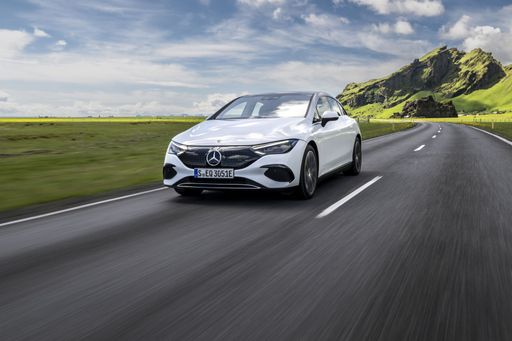
In contrast, the Mercedes EQE boasts an impressive lineup featuring power options from 245 HP to a commanding 625 HP. The EQE further enhances its competitive edge with acceleration times as swift as 3.5 seconds for the higher trims. This remarkable performance can be attributed to advanced engineering and a highly responsive electric drivetrain.

Capri

Efficiency and Range

Efficiency is a key consideration for electric vehicle buyers, and both the Ford Capri and Mercedes EQE excel in this domain. The Capri has an average consumption of 13.3 kWh to 15.8 kWh per 100 km, with an electric range that can stretch up to 627 km, depending on the battery configuration.

The EQE, however, slightly edges out in terms of electric range, providing options that can reach an impressive 690 km. Its energy consumption varies from 15.9 kWh to 20.8 kWh per 100 km, showcasing a balance between performance and efficiency in its design.

EQE

Battery Technology

Battery capacity is a crucial aspect of any electric vehicle, and both the Ford Capri and the Mercedes EQE utilize cutting-edge technology. The Capri comes equipped with battery capacities ranging from 52 kWh to 79 kWh, which provide a good balance between range and performance.

The EQE takes things a step further, with battery capacities starting at 89 kWh and reaching up to 96 kWh. This larger battery size not only supports a longer range but also enhances the vehicle's performance capabilities, allowing for quicker charging and better overall efficiency.

Interior and Technology Features

Inside the cabin, both models promise comfort and innovation, tailored to meet modern consumer demands. The Ford Capri boasts spacious seating for five, with a trunk capacity of up to 572 liters, making it suitable for day-to-day use and longer journeys alike.

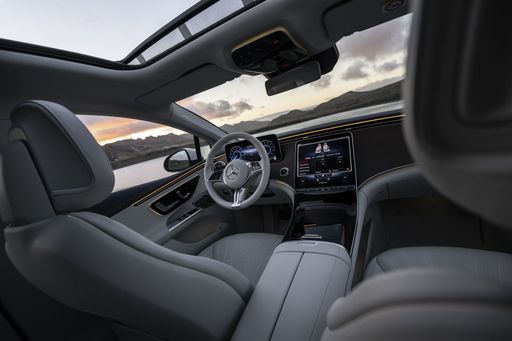
The Mercedes EQE, while also offering seating for five, prioritizes luxury with high-quality materials and an elegant design. Its trunk capacity, though slightly smaller at 430 liters, is still practical for everyday needs. Moreover, the EQE is laden with innovative technology such as a customizable digital display, advanced driver-assistance systems, and infotainment features, setting a high standard in the luxury EV market.

Conclusion: Which Model Reigns Supreme?

In the battle of the Ford Capri versus the Mercedes EQE, the choice ultimately boils down to personal preference and priorities. If you’re looking for a sporty SUV with commendable performance and efficiency, the Ford Capri deserves a spot on your radar. On the other hand, if luxury, cutting-edge technology, and superior range are your primary considerations, the Mercedes EQE stands firmly at the forefront.

Both vehicles reflect the industry's shift towards electrification, offering unique attributes that appeal to different segments of drivers. As we embrace a sustainable future, it's exciting to see how innovations in electric mobility will shape our driving experiences.

Here’s where it gets real: The technical differences in detail

Capri

Costs and Efficiency:

When it comes to price and running costs, the biggest differences usually appear. This is often where you see which car fits your budget better in the long run.

Ford Capri is considerably cheaper – starting at 36,300 £ , while the Mercedes EQE costs 57,600 £ . That’s a price difference of around 21,246 £.

In terms of energy consumption, the Ford Capri is slightly more efficient: consuming 13.8 kWh/100km compared to 15.8 kWh/100km for the Mercedes EQE. That’s a difference of about 2 kWh/100km.

As for electric range, the Mercedes EQE offers marginally more range – reaching up to 691 km, about 64 km more than the Ford Capri.

EQE

Engine and Performance:

Power, torque and acceleration are the classic benchmarks for car enthusiasts – and here, some clear differences start to show.

When it comes to engine power, the Mercedes EQE offers clearly more power – delivering 625 HP compared to 340 HP. That’s roughly 285 HP more horsepower.

When accelerating from 0 to 100 km/h, the Mercedes EQE is clearly quicker – completing the sprint in 3.5 s, while the Ford Capri takes 5.3 s. That’s about 1.8 s quicker.

There’s also a difference in torque: the Mercedes EQE delivers clearly more torque with 950 Nm compared to 679 Nm. That’s about 271 Nm more.

Capri

Space and Everyday Use:

Beyond pure performance, interior space and usability matter most in daily life. This is where you see which car is more practical and versatile.

Both vehicles offer seating for 5 people.

In terms of curb weight, Ford Capri is moderately lighter – 2,001 kg compared to 2,375 kg. The difference is around 374 kg.

Looking at boot space, the Ford Capri offers markedly more boot space – 572 L compared to 430 L. That’s a difference of about 142 L.

When it comes to payload, the Mercedes EQE carries barely more – 600 kg compared to 587 kg. That’s a difference of about 13 kg.

Who wins the race in the data check?

The Mercedes EQE is clearly superior overall in the objective data comparison.
This result only shows which model scores more points on paper – not which of the two cars feels right for you.

from £57,600
EQE

Mercedes EQE

  • Engine Type : Electric
  • Transmission : Automatic
  • Drive Type : All-Wheel Drive, Rear-Wheel Drive
  • Power HP : 265 - 625 HP
  • Consumption kWh/100km : 15.8 - 20.7 kWh/100km
  • Electric Range : 502 - 691 km
Ford Capri
Mercedes EQE

Costs and Consumption

View detailed analysis

Engine and Performance

View detailed analysis

Dimensions and Body

View detailed analysis

Ford Capri

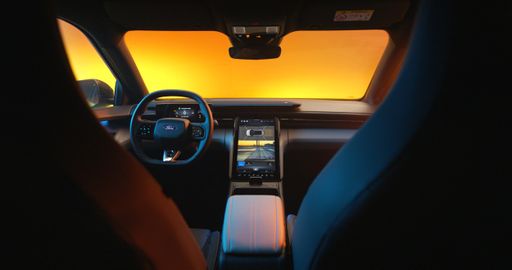
The Ford Capri turned the family car into something cheekily sporty, with a long, rakish profile that still promises fun at a glance. Today it lives on as a lovable classic — easy to tinker with, enjoyable to drive and guaranteed to raise smiles at any meet.

details

Mercedes EQE

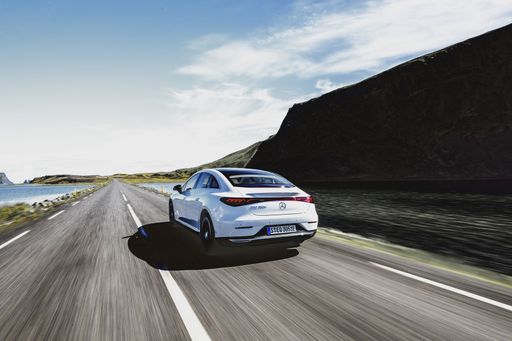
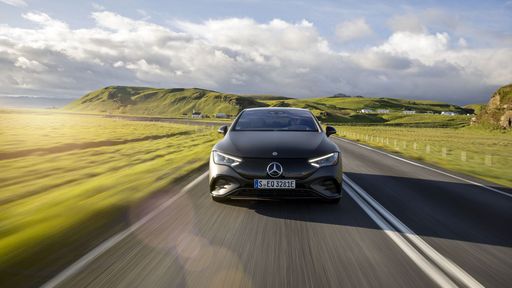
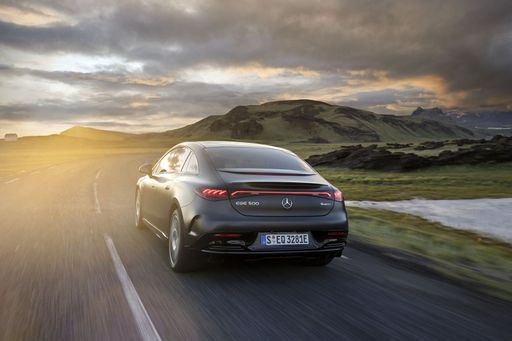
The Mercedes EQE glides like a silk-wrapped saloon from the future, pairing whisper-quiet refinement with a high-tech cabin that feels both modern and indulgent. For buyers who want electric luxury without shouting about it, the EQE is composed, comfortably confident, and just smug enough to feel special.

details
Ford Capri
Mercedes EQE

Costs and Consumption

Price
36,300 - 50,900 £
Price
57,600 - 94,900 £
Consumption L/100km
-
Consumption L/100km
-
Consumption kWh/100km
13.8 - 16.5 kWh/100km
Consumption kWh/100km
15.8 - 20.7 kWh/100km
Electric Range
439 - 627 km
Electric Range
502 - 691 km
Battery Capacity
-
Battery Capacity
90.5 - 96 kWh
co2
0 g/km
co2
0 g/km
Fuel tank capacity
-
Fuel tank capacity
-

Dimensions and Body

Body Type
SUV
Body Type
Sedan
Seats
5
Seats
5
Doors
-
Doors
4
Curb weight
2,001 - 2,175 kg
Curb weight
2,375 - 2,540 kg
Trunk capacity
572 L
Trunk capacity
430 L
Length
-
Length
4,946 - 4,964 mm
Width
1,872 mm
Width
1,961 mm
Height
-
Height
1,492 - 1,510 mm
Max trunk capacity
-
Max trunk capacity
-
Payload
559 - 587 kg
Payload
545 - 600 kg

Engine and Performance

Engine Type
Electric
Engine Type
Electric
Transmission
Automatic
Transmission
Automatic
Transmission Detail
Reduction Gearbox
Transmission Detail
Reduction Gearbox
Drive Type
Rear-Wheel Drive, All-Wheel Drive
Drive Type
All-Wheel Drive, Rear-Wheel Drive
Power HP
190 - 340 HP
Power HP
265 - 625 HP
Acceleration 0-100km/h
5.3 - 8 s
Acceleration 0-100km/h
3.5 - 6.9 s
Max Speed
-
Max Speed
210 - 220 km/h
Torque
350 - 679 Nm
Torque
550 - 950 Nm
Number of Cylinders
-
Number of Cylinders
-
Power kW
140 - 250 kW
Power kW
195 - 460 kW
Engine capacity
-
Engine capacity
-

General

Model Year
2,026
Model Year
2,024 - 2,025
CO2 Efficiency Class
A
CO2 Efficiency Class
A
Brand
Ford
Brand
Mercedes-Benz
DriveDuel uses data analysis and artificial intelligence to evaluate vehicle data and create content. Content is regularly reviewed and improved. The displayed prices are estimates based on German list prices, adjusted to the respective country’s VAT. Country-specific registration taxes are not included. This information is not legally binding.