VS

Ford Capri vs Peugeot 5008 comparison

Compare performance (340 HP vs 325 HP), boot space and price (36,300 £ vs 38,900 £ ) at a glance. Find out which car is the better choice for you – Ford Capri or Peugeot 5008?

Ford Capri vs Peugeot 5008: Key differences

Ford Capri

4.8 (4 Reviews)
rate
  • very slightly cheaper
  • marginally more power
  • markedly more efficient
  • visibly quicker 0–100 km/h
  • clearly more trunk space
details

Peugeot 5008

4.7 (1 Reviews)
rate
  • very slightly more electric range
  • somewhat lighter
details

All details on performance, efficiency, range and trunk space can be found in the technical comparison below – including user reviews for both models.

By Achim Sedelmaier

Capri

Ford Capri vs Peugeot 5008: A Comprehensive Car Comparison

The automotive world is constantly evolving, with manufacturers pushing the boundaries of technology and design to create vehicles that not only perform well but also cater to the needs of modern consumers. In this comparison, we take a closer look at two remarkable SUVs: the Ford Capri and the Peugeot 5008. Both vehicles offer a mix of performance, utility, and innovative features, yet they cater to different segments of the market.
5008

Design and Dimensions

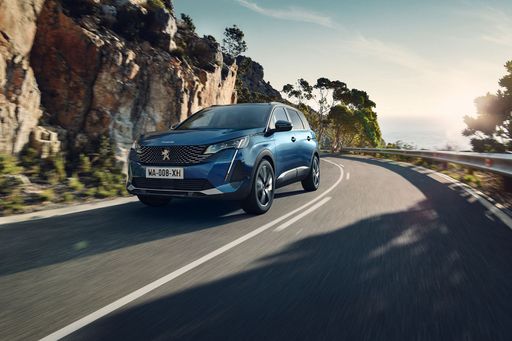
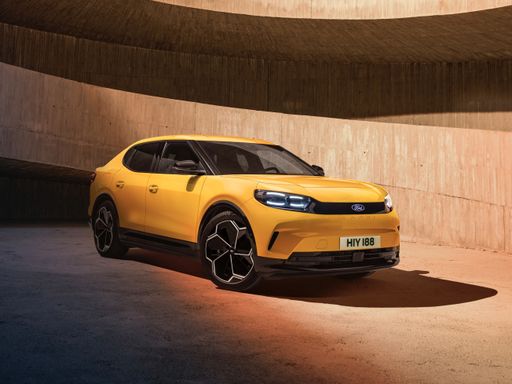
The Ford Capri sports a sleek, modern SUV design, measuring 4634 mm in length, 1872 mm in width, and 1626 mm in height. Its aerodynamic profile not only enhances its aesthetic appeal but also contributes to improved efficiency.

On the other hand, the Peugeot 5008 is slightly larger, boasting a length of 4791 mm, a width of 1895 mm, and a height of 1694 mm. This additional space allows for a more spacious interior, designed to comfortably accommodate up to seven passengers, making it an attractive choice for families and those requiring additional seating capacity.

Capri

Powertrains and Performance

The Ford Capri offers a range of powerful electric options with power outputs ranging from 170 HP to an impressive 340 HP. Its electric range reaches up to 627 km, supported by battery capacities of 52 kWh to 79 kWh. Acceleration is swift, with the Capri achieving 0-100 km/h in as little as 5.3 seconds, all while ensuring a CO2 emission of 0 g/km, marking it as an eco-friendly choice.

In contrast, the Peugeot 5008 presents a diverse range of powertrains, including petrol mild-hybrid, plug-in hybrid, and electric options, with power outputs between 136 HP and 231 HP. The 5008’s electric range can reach up to 664 km, making it a versatile option for both city driving and long journeys. It also offers a respectable acceleration of 0-100 km/h in as fast as 8.8 seconds.

5008

Fuel Efficiency and Consumption

When it comes to energy consumption, the Ford Capri leads the way in the electric category, with figures ranging from 13.3 kWh/100 km to 15.8 kWh/100 km. This positions it as a highly efficient electric SUV, perfect for those conscious of sustainability.

Meanwhile, the Peugeot 5008 showcases various options with fuel consumption as low as 5.8 liters/100 km for the petrol models, while its electric variants consume around 17.8 kWh/100 km. The 5008's ability to switch between fuel types allows it to cater to a broader audience, appealing to drivers seeking flexibility in their energy sources.

Interior Space and Comfort

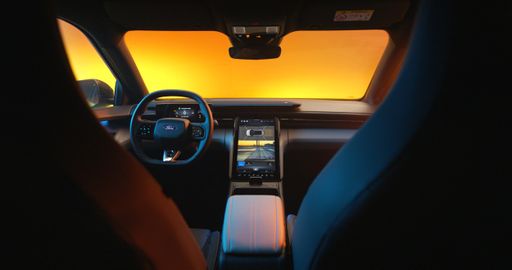
Both SUVs are designed with comfort and convenience in mind. The Ford Capri provides seating for five, with a trunk capacity of 572 liters, which is commendable for storing luggage and sporting equipment. Its spaciousness is enhanced by its high-quality materials and cutting-edge technology, ensuring an enjoyable driving experience.

The Peugeot 5008, designed as a larger family vehicle, offers a significant trunk capacity of 748 liters, providing ample space not just for passengers, but also for their belongings. Its innovative interior layout includes versatile seating arrangements, allowing the second and third rows to be folded down for maximal cargo space, catering to the needs of families and adventurers alike.

Safety and Innovations

Safety is a paramount concern for both Ford and Peugeot. The Ford Capri boasts advanced safety features, adhering to the highest standards in CO2 efficiency class A, alongside cutting-edge driving assist technologies, making it a safe option for the tech-savvy driver.

Likewise, the Peugeot 5008 is equipped with an array of safety systems, contributing to its strong CO2 efficiency ratings of up to class A, B, and D across different engine variants. It also incorporates innovative driver assistance features, enhancing overall safety for both the driver and passengers.

Conclusion: Which SUV is Right for You?

Choosing between the Ford Capri and the Peugeot 5008 ultimately depends on individual preferences and requirements. The Ford Capri is an excellent choice for those looking for a high-performance electric SUV with impressive efficiency and modern styling. Meanwhile, the Peugeot 5008 shines in its capacity for family travel, versatility, and choice of hybrid technologies.

Both vehicles bring their own flair and set of advantages, making them top contenders in the SUV market. Whether you prioritize performance or practicality, Ford and Peugeot have crafted vehicles that meet diverse consumer needs in an ever-evolving automotive landscape.

Here’s where it gets real: The technical differences in detail

Capri

Costs and Efficiency:

Price and efficiency are often the first things buyers look at. Here it becomes clear which model has the long-term edge – whether at the pump, the plug, or in purchase price.

Ford Capri is very slightly cheaper – starting at 36,300 £ , while the Peugeot 5008 costs 38,900 £ . That’s a price difference of around 2,580 £.

In terms of energy consumption, the Ford Capri is markedly more efficient: consuming 13.8 kWh/100km compared to 17.8 kWh/100km for the Peugeot 5008. That’s a difference of about 4 kWh/100km.

As for electric range, the Peugeot 5008 offers very slightly more range – reaching up to 669 km, about 42 km more than the Ford Capri.

5008

Engine and Performance:

Power, torque and acceleration are the classic benchmarks for car enthusiasts – and here, some clear differences start to show.

When it comes to engine power, the Ford Capri offers marginally more power – delivering 340 HP compared to 325 HP. That’s roughly 15 HP more horsepower.

When accelerating from 0 to 100 km/h, the Ford Capri is visibly quicker – completing the sprint in 5.3 s, while the Peugeot 5008 takes 6.5 s. That’s about 1.2 s quicker.

There’s also a difference in torque: the Ford Capri delivers visibly more torque with 679 Nm compared to 511 Nm. That’s about 168 Nm more.

Capri

Space and Everyday Use:

Cabin size, boot volume and payload all play a role in everyday practicality. Here, comfort and flexibility make the difference.

Seats: Peugeot 5008 offers more seats – 7 vs 5.

In terms of curb weight, Peugeot 5008 is somewhat lighter – 1,700 kg compared to 2,001 kg. The difference is around 301 kg.

Looking at boot space, the Ford Capri offers clearly more boot space – 572 L compared to 348 L. That’s a difference of about 224 L.

When it comes to payload, the Peugeot 5008 carries very slightly more – 640 kg compared to 587 kg. That’s a difference of about 53 kg.

Who wins the race in the data check?

The Ford Capri is decisively ahead in the objective data comparison.
This result only shows which model scores more points on paper – not which of the two cars feels right for you.

from £36,300
Capri

Ford Capri

  • Engine Type : Electric
  • Transmission : Automatic
  • Drive Type : Rear-Wheel Drive, All-Wheel Drive
  • Power HP : 190 - 340 HP
  • Consumption kWh/100km : 13.8 - 16.5 kWh/100km
  • Electric Range : 439 - 627 km
Ford Capri
Peugeot 5008

Costs and Consumption

View detailed analysis

Engine and Performance

View detailed analysis

Dimensions and Body

View detailed analysis

Ford Capri

The Ford Capri turned the family car into something cheekily sporty, with a long, rakish profile that still promises fun at a glance. Today it lives on as a lovable classic — easy to tinker with, enjoyable to drive and guaranteed to raise smiles at any meet.

details

Peugeot 5008

The Peugeot 5008 blends Peugeot's sharp design with the space and versatility families actually need, wrapping clever packaging and a premium-feeling cabin in a crisp, SUV-like silhouette. It drives with more poise than you'd expect from a people carrier, serves up practical touches and flexible seating for everyday chaos, and still looks good when parked outside the school gates.

details
Ford Capri
Peugeot 5008

Costs and Consumption

Price
36,300 - 51,800 £
Price
38,900 - 54,300 £
Consumption L/100km
-
Consumption L/100km
2.7 - 5.6 L/100km
Consumption kWh/100km
13.8 - 16.5 kWh/100km
Consumption kWh/100km
17.8 - 18.1 kWh/100km
Electric Range
439 - 627 km
Electric Range
78 - 669 km
Battery Capacity
-
Battery Capacity
-
co2
0 g/km
co2
0 - 127 g/km
Fuel tank capacity
-
Fuel tank capacity
-

Dimensions and Body

Body Type
SUV
Body Type
SUV
Seats
5
Seats
7
Doors
-
Doors
-
Curb weight
2,001 - 2,206 kg
Curb weight
1,700 - 2,344 kg
Trunk capacity
572 L
Trunk capacity
348 L
Length
-
Length
-
Width
1,872 mm
Width
1,895 mm
Height
-
Height
-
Max trunk capacity
-
Max trunk capacity
-
Payload
539 - 587 kg
Payload
596 - 640 kg

Engine and Performance

Engine Type
Electric
Engine Type
Electric, Petrol MHEV, Plugin Hybrid
Transmission
Automatic
Transmission
Automatic
Transmission Detail
Reduction Gearbox
Transmission Detail
Reduction Gearbox, Dual-Clutch Automatic
Drive Type
Rear-Wheel Drive, All-Wheel Drive
Drive Type
Front-Wheel Drive, All-Wheel Drive
Power HP
190 - 340 HP
Power HP
145 - 325 HP
Acceleration 0-100km/h
5.3 - 8 s
Acceleration 0-100km/h
6.5 - 10.2 s
Max Speed
-
Max Speed
-
Torque
350 - 679 Nm
Torque
230 - 511 Nm
Number of Cylinders
-
Number of Cylinders
3 - 4
Power kW
140 - 250 kW
Power kW
107 - 239 kW
Engine capacity
-
Engine capacity
1,199 - 1,598 cm3

General

Model Year
2026
Model Year
2,024 - 2,026
CO2 Efficiency Class
A
CO2 Efficiency Class
A, D, B
Brand
Ford
Brand
Peugeot
DriveDuel uses data analysis and artificial intelligence to evaluate vehicle data and create content. Content is regularly reviewed and improved. The displayed prices are estimates based on German list prices, adjusted to the respective country’s VAT. Country-specific registration taxes are not included. This information is not legally binding.