VS

Audi Q4 e-tron vs Ford Capri comparison

Compare performance (340 HP vs 340 HP), boot space and price (39,600 £ vs 36,300 £ ) at a glance. Find out which car is the better choice for you – Audi Q4 e-tron or Ford Capri?

Audi Q4 e-tron vs Ford Capri: Key differences

Audi Q4 e-tron

4.9 (2 Reviews)
rate

Ford Capri

5 (2 Reviews)
rate
  • very slightly cheaper
  • slightly more efficient
  • slightly more electric range
  • only slightly quicker 0–100 km/h
  • marginally lighter
  • barely more trunk space

All details on performance, efficiency, range and trunk space can be found in the technical comparison below – including user reviews for both models.

Q4 e-tron

Electric Showdown: Audi Q4 e-tron vs. Ford Capri

As the automotive landscape rapidly evolves towards electric mobility, two notable contenders are making waves in the SUV segment: the Audi Q4 e-tron and the Ford Capri. Both vehicles bring a unique blend of advanced technology, performance, and sustainability, but which one takes the crown in this electric comparison? Let's delve into the technical aspects and innovations that set these two apart.
Capri

Power and Performance

The Audi Q4 e-tron offers a diverse range of power options with its four configurations: 170 HP, 286 HP, and a robust 340 HP performance variant. The vehicle features rear-wheel drive and can be upgraded to an all-wheel drive system, catering to enthusiasts who prioritize performance alongside efficiency. With acceleration times from 0 to 100 km/h clocking in at as low as 5.4 seconds, it delivers a thrilling ride combined with a top speed of 160 km/h.

On the other side, the Ford Capri also boasts impressive performance metrics. It offers similar power outputs of 286 HP and 340 HP and achieves the 0-100 km/h sprint in just 5.3 seconds. While it matches the Q4 e-tron in power, it benefits from a maximum speed of 180 km/h, which is a slight edge over its Audi rival. Both electric models feature automatic transmissions that utilize reduction gearboxes, ensuring smooth rides across various terrains.

Q4 e-tron

Efficiency and Range

The efficiency of an electric vehicle is often a deciding factor for consumers, and both the Q4 e-tron and Capri deliver impressive consumption rates. The Q4 e-tron's energy consumption ranges from 15.9 to 17.4 kWh/100 km, while the Capri flaunts superior efficiency figures, recording consumption as low as 13.3 kWh/100 km. This means that for the environmentally-conscious driver, the Capri may provide a longer trip per charge.

When it comes to electric range, the results further favor the Ford Capri. With an astonishing maximum range of 627 km, it trumps the Q4 e-tron, which offers a commendable but lower maximum electric range of 554 km. Both vehicles utilize advanced battery capacities of up to 77 kWh, reflecting a commitment to long-distance travel capabilities within the realm of electric mobility.

Capri

Dimensions and Space

In terms of practicality, both the Audi Q4 e-tron and Ford Capri are designed with family needs in mind. The Q4 e-tron measures 4588 mm in length, 1865 mm in width, and stands 1632 mm high, while the Capri is slightly larger at 4634 mm in length and 1872 mm in width, and a height of 1626 mm. Both SUVs comfortably seat five passengers, catering to family-oriented drivers.

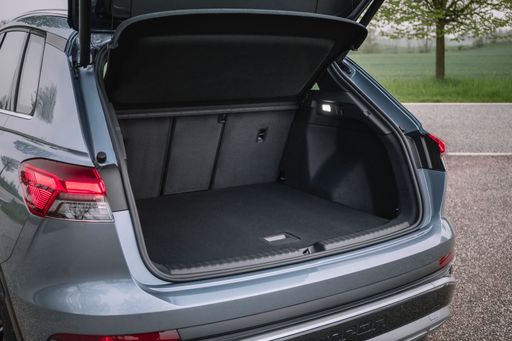
When it comes to cargo capacity, the Ford Capri again takes the lead, providing up to 572 liters of trunk space compared to the Q4 e-tron's 520 liters. This additional room can be invaluable for families or those who regularly travel with more gear.

Q4 e-tron

Innovations and Features

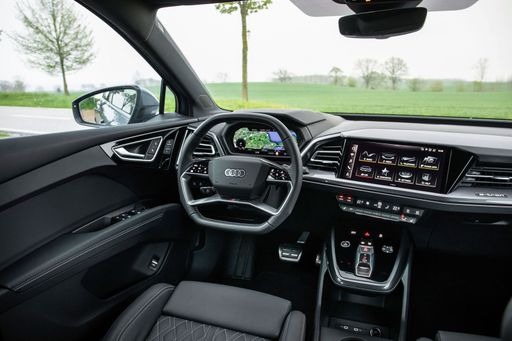
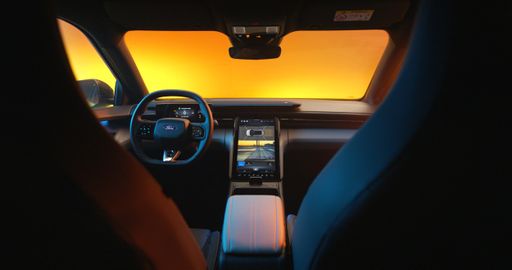
Both vehicles are packed with the latest innovations and tech features. The Audi Q4 e-tron embraces its premium image with a sophisticated interior architecture, integrating high-quality materials and cutting-edge infotainment systems. Audi’s MMI technology enhances usability with a responsive touchscreen interface and advanced connectivity features.

Meanwhile, the Ford Capri is characterized by its user-friendly layout and practical tech offerings, prioritizing functionality without compromising on style. Its interfaces are designed for ease of use, ensuring that drivers can easily navigate through various systems while on the road. Additionally, both vehicles score highly in terms of safety and driver-assistance technologies, ensuring peace of mind during journeys.

Conclusion: The Verdict

Ultimately, the choice between the Audi Q4 e-tron and Ford Capri comes down to personal preference and usage requirements. The Q4 e-tron excels in luxury and brand prestige, featuring a plush interior and sophisticated technology. In contrast, the Ford Capri offers unmatched efficiency and electric range, coupled with practicality for everyday use.

As consumers increasingly shift toward electric SUVs, both the Audi Q4 e-tron and Ford Capri stand out as formidable options worthy of consideration. Whether one prioritizes luxury or efficiency, these two vehicles are emblematic of the exciting future of the automotive industry.

Here’s where it gets real: The technical differences in detail

Q4 e-tron

Costs and Efficiency:

Looking at overall running costs, both models reveal some interesting differences in everyday economy.

Ford Capri is very slightly cheaper – starting at 36,300 £ , while the Audi Q4 e-tron costs 39,600 £ . That’s a price difference of around 3,215 £.

In terms of energy consumption, the Ford Capri is slightly more efficient: consuming 13.8 kWh/100km compared to 15.9 kWh/100km for the Audi Q4 e-tron. That’s a difference of about 2.1 kWh/100km.

As for electric range, the Ford Capri offers slightly more range – reaching up to 627 km, about 73 km more than the Audi Q4 e-tron.

Capri

Engine and Performance:

Power, torque and acceleration are the classic benchmarks for car enthusiasts – and here, some clear differences start to show.

Both models deliver identical power – 340 HP each.

When accelerating from 0 to 100 km/h, the Ford Capri is only slightly quicker – completing the sprint in 5.3 s, while the Audi Q4 e-tron takes 5.4 s. That’s about 0.1 s quicker.

Both models offer the same torque – 679 Nm.

Q4 e-tron

Space and Everyday Use:

Whether family car or daily driver – which one offers more room, flexibility and comfort?

Both vehicles offer seating for 5 people.

In terms of curb weight, Ford Capri is marginally lighter – 2,001 kg compared to 2,035 kg. The difference is around 34 kg.

Looking at boot space, the Ford Capri offers barely more boot space – 572 L compared to 535 L. That’s a difference of about 37 L.

When it comes to payload, the Ford Capri carries a bit more – 587 kg compared to 515 kg. That’s a difference of about 72 kg.

Who wins the race in the data check?

The Ford Capri is clearly ahead overall in the objective data comparison.
This result only shows which model scores more points on paper – not which of the two cars feels right for you.

from £36,300
Capri

Ford Capri

  • Engine Type : Electric
  • Transmission : Automatic
  • Drive Type : Rear-Wheel Drive, All-Wheel Drive
  • Power HP : 190 - 340 HP
  • Consumption kWh/100km : 13.8 - 16.5 kWh/100km
  • Electric Range : 439 - 627 km
Audi Q4 e-tron
Ford Capri

Costs and Consumption

View detailed analysis

Engine and Performance

View detailed analysis

Dimensions and Body

View detailed analysis

Audi Q4 e-tron

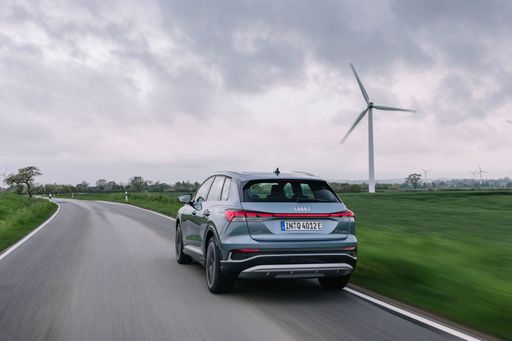
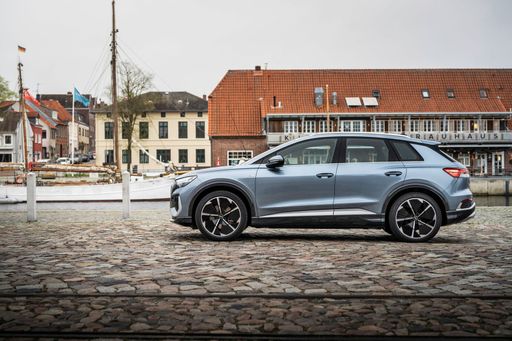
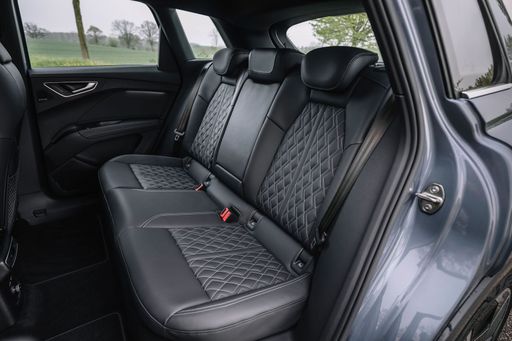
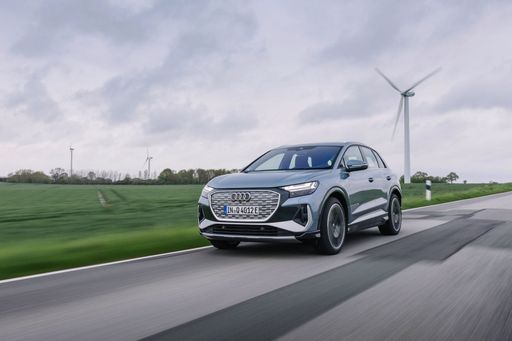
The Audi Q4 e-tron brings Audi polish into the electric crossover scene, pairing a sleek exterior with a refined, airy interior that makes everyday driving feel distinctly premium. It’s an easy-to-live-with EV that balances comfort and real-world usability with intuitive tech, making it a smart choice for buyers who want electric mobility without giving up Audi character — and yes, it still looks good in the driveway.

details

Ford Capri

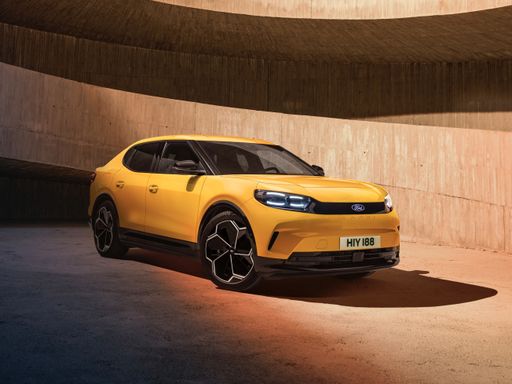
The Ford Capri turned the family car into something cheekily sporty, with a long, rakish profile that still promises fun at a glance. Today it lives on as a lovable classic — easy to tinker with, enjoyable to drive and guaranteed to raise smiles at any meet.

details
Audi Q4 e-tron
Ford Capri

Costs and Consumption

Price
39,600 - 58,800 £
Price
36,300 - 50,900 £
Consumption L/100km
-
Consumption L/100km
-
Consumption kWh/100km
15.9 - 17.4 kWh/100km
Consumption kWh/100km
13.8 - 16.5 kWh/100km
Electric Range
406 - 554 km
Electric Range
439 - 627 km
Battery Capacity
77 kWh
Battery Capacity
-
co2
0 g/km
co2
0 g/km
Fuel tank capacity
-
Fuel tank capacity
-

Dimensions and Body

Body Type
SUV
Body Type
SUV
Seats
5
Seats
5
Doors
5
Doors
-
Curb weight
2,035 - 2,235 kg
Curb weight
2,001 - 2,175 kg
Trunk capacity
520 - 535 L
Trunk capacity
572 L
Length
4,588 mm
Length
-
Width
1,865 mm
Width
1,872 mm
Height
1,614 - 1,632 mm
Height
-
Max trunk capacity
1,460 - 1,490 L
Max trunk capacity
-
Payload
505 - 515 kg
Payload
559 - 587 kg

Engine and Performance

Engine Type
Electric
Engine Type
Electric
Transmission
Automatic
Transmission
Automatic
Transmission Detail
Reduction Gearbox
Transmission Detail
Reduction Gearbox
Drive Type
Rear-Wheel Drive, All-Wheel Drive
Drive Type
Rear-Wheel Drive, All-Wheel Drive
Power HP
204 - 340 HP
Power HP
190 - 340 HP
Acceleration 0-100km/h
5.4 - 8.1 s
Acceleration 0-100km/h
5.3 - 8 s
Max Speed
180 km/h
Max Speed
-
Torque
310 - 679 Nm
Torque
350 - 679 Nm
Number of Cylinders
-
Number of Cylinders
-
Power kW
150 - 250 kW
Power kW
140 - 250 kW
Engine capacity
-
Engine capacity
-

General

Model Year
2,023 - 2,025
Model Year
2,026
CO2 Efficiency Class
A
CO2 Efficiency Class
A
Brand
Audi
Brand
Ford
DriveDuel uses data analysis and artificial intelligence to evaluate vehicle data and create content. Content is regularly reviewed and improved. The displayed prices are estimates based on German list prices, adjusted to the respective country’s VAT. Country-specific registration taxes are not included. This information is not legally binding.