VS

Ford Capri vs Renault Rafale comparison

Compare performance (340 HP vs 300 HP), boot space and price (36,300 £ vs 37,700 £ ) at a glance. Find out which car is the better choice for you – Ford Capri or Renault Rafale?

Ford Capri vs Renault Rafale: Key differences

Ford Capri

5 (2 Reviews)
rate
  • marginally cheaper
  • moderately more power
  • clearly more electric range
  • noticeably quicker 0–100 km/h

Renault Rafale

4.9 (7 Reviews)
rate
  • moderately lighter
  • very slightly more trunk space

All details on performance, efficiency, range and trunk space can be found in the technical comparison below – including user reviews for both models.

Capri

In the rapidly evolving automotive landscape, the demand for versatile and efficient SUVs has transformed into an exciting competition between manufacturers. Two standout models, the Ford Capri and the Renault Rafale, each bring a unique blend of technology, performance, and design to the market. In this article, we will delve into a head-to-head comparison, evaluating their technical specifications and innovations.
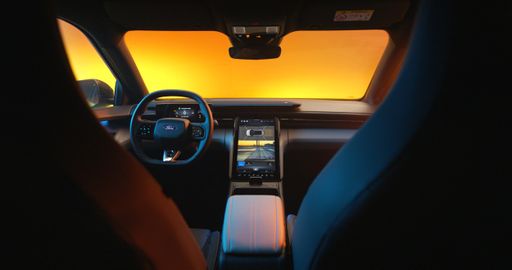
Rafale

Design and Styling

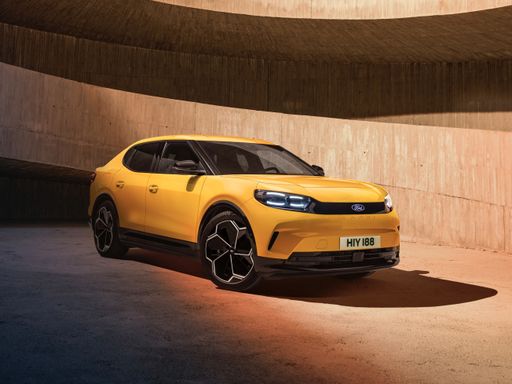
Both the Ford Capri and Renault Rafale showcase striking SUV designs that appeal to the modern driver. The Capri, with a robust yet sleek silhouette, measures 4634 mm in length, 1872 mm in width, and 1626 mm in height. Its aerodynamic profile not only enhances aesthetics but also contributes to better energy efficiency.

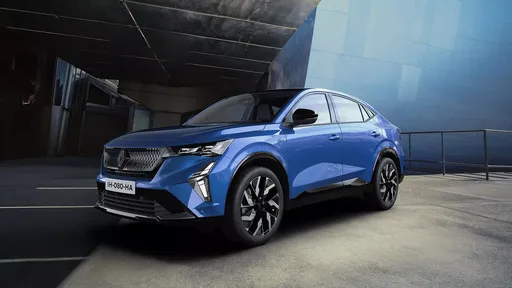
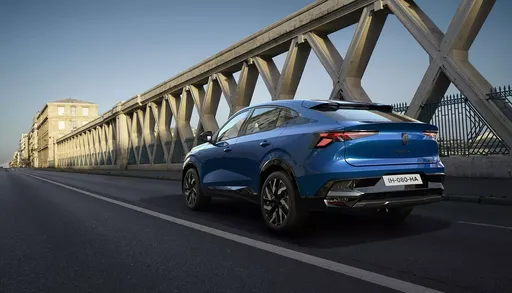
On the other hand, the Rafale features a slightly larger frame, measuring 4710 mm in length, 1886 mm in width, and 1613 mm in height. Its stylish curves and aggressive stance make it equally captivating. Both vehicles offer five-door configurations and comfortable seating for up to five occupants, ensuring practicality meets style.

Capri

Powertrains and Performance

When it comes to performance, the Ford Capri is available in various configurations, boasting electric power outputs ranging from 170 to 340 HP. With options for rear-wheel and all-wheel drive, the Capri guarantees dynamic handling, particularly accentuated by an acceleration time of just 5.3 seconds for the more potent variant. The electric range of the Capri is impressive, reaching up to 627 km, thanks to its advanced battery capacity of 77 to 79 kWh.

In contrast, the Renault Rafale offers a hybrid experience with a selection of full hybrid and plug-in hybrid powertrains. The maximum output can reach up to 300 HP. Although its acceleration time of 6.4 seconds is slightly longer than that of the Capri, it still delivers a spirited driving experience with a fuel consumption as low as 0.6 L/100 km when utilizing its hybrid capabilities.

Rafale

Innovation and Technology

Ford has equipped the Capri with cutting-edge technology, highlighting its commitment to sustainability. With a CO2 efficiency class of A, the Capri operates with zero emissions, making it a strong contender in the environmentally conscious market. Features like an automatic transmission with reduction gearbox further enhance driving dynamics and efficiency.

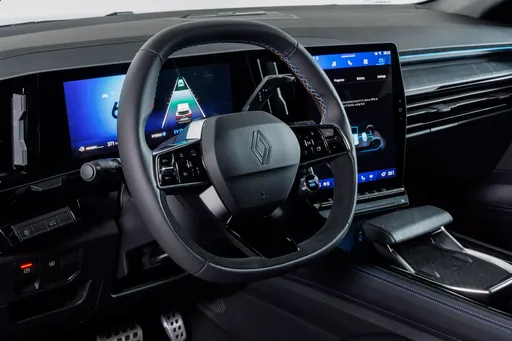
On the other hand, the Renault Rafale stands out with its hybrid technology, combining a gasoline engine with electric capabilities. This offers a unique driving experience and allows for an electric-only range of up to 97 km. The Rafale also features advanced safety and infotainment systems, ensuring that modern drivers stay connected while on the road.

Interior Comfort and Technology

Inside the Ford Capri, drivers and passengers will find a spacious cabin with ample trunk capacity of 572 liters. The interior emphasizes comfort with high-quality materials and intuitive technology integrations, catering to both driver needs and passenger relaxation.

In comparison, the Renault Rafale also prioritizes comfort, offering a slightly larger trunk capacity of 627 liters. The cabin is designed with ergonomic layouts and an array of advanced tech options, enhancing the driving and riding experience, while maintaining strong safety ratings as indicated by its CO2 efficiency class of C.

Conclusion

Ultimately, the choice between the Ford Capri and Renault Rafale may boil down to personal preference and usage. The Capri is a strong choice for those seeking a fully electric experience with outstanding range and performance. Conversely, the Rafale appeals to those looking for hybrid versatility without compromising technological advancements. Both vehicles represent their brands' commitment to innovation and sustainability, making either a worthy investment in the modern SUV market.

Here’s where it gets real: The technical differences in detail

Capri

Costs and Efficiency:

Looking at overall running costs, both models reveal some interesting differences in everyday economy.

Ford Capri is marginally cheaper – starting at 36,300 £ , while the Renault Rafale costs 37,700 £ . That’s a price difference of around 1,372 £.

As for electric range, the Ford Capri offers clearly more range – reaching up to 627 km, about 530 km more than the Renault Rafale.

Rafale

Engine and Performance:

Under the bonnet, it becomes clear which model is tuned for sportiness and which one takes the lead when you hit the accelerator.

When it comes to engine power, the Ford Capri offers moderately more power – delivering 340 HP compared to 300 HP. That’s roughly 40 HP more horsepower.

When accelerating from 0 to 100 km/h, the Ford Capri is noticeably quicker – completing the sprint in 5.3 s, while the Renault Rafale takes 6.4 s. That’s about 1.1 s quicker.

Capri

Space and Everyday Use:

Whether family car or daily driver – which one offers more room, flexibility and comfort?

Both vehicles offer seating for 5 people.

In terms of curb weight, Renault Rafale is moderately lighter – 1,734 kg compared to 2,001 kg. The difference is around 267 kg.

Looking at boot space, the Renault Rafale offers very slightly more boot space – 627 L compared to 572 L. That’s a difference of about 55 L.

When it comes to payload, the Ford Capri carries visibly more – 587 kg compared to 444 kg. That’s a difference of about 143 kg.

Who wins the race in the data check?

The Ford Capri stands well ahead of its rival in the objective data comparison.
This result only shows which model scores more points on paper – not which of the two cars feels right for you.

from £36,300
Capri

Ford Capri

  • Engine Type : Electric
  • Transmission : Automatic
  • Drive Type : Rear-Wheel Drive, All-Wheel Drive
  • Power HP : 190 - 340 HP
  • Consumption kWh/100km : 13.8 - 16.5 kWh/100km
  • Electric Range : 439 - 627 km
Ford Capri
Renault Rafale

Costs and Consumption

View detailed analysis

Engine and Performance

View detailed analysis

Dimensions and Body

View detailed analysis

Ford Capri

The Ford Capri turned the family car into something cheekily sporty, with a long, rakish profile that still promises fun at a glance. Today it lives on as a lovable classic — easy to tinker with, enjoyable to drive and guaranteed to raise smiles at any meet.

details

Renault Rafale

The Renault Rafale dresses bold coupé-inspired lines around a practical crossover body, turning heads without trying too hard. Inside it serves up a comfortable, well-equipped cabin and engaging driving manners, making it a clever choice for buyers who want a bit of panache with their daily commute.

details
Ford Capri
Renault Rafale

Costs and Consumption

Price
36,300 - 50,900 £
Price
37,700 - 49,700 £
Consumption L/100km
-
Consumption L/100km
2 - 5 L/100km
Consumption kWh/100km
13.8 - 16.5 kWh/100km
Consumption kWh/100km
-
Electric Range
439 - 627 km
Electric Range
97 km
Battery Capacity
-
Battery Capacity
-
co2
0 g/km
co2
43 - 109 g/km
Fuel tank capacity
-
Fuel tank capacity
-

Dimensions and Body

Body Type
SUV
Body Type
SUV
Seats
5
Seats
5
Doors
-
Doors
-
Curb weight
2,001 - 2,175 kg
Curb weight
1,734 - 2,025 kg
Trunk capacity
572 L
Trunk capacity
539 - 627 L
Length
-
Length
-
Width
1,872 mm
Width
1,886 mm
Height
-
Height
-
Max trunk capacity
-
Max trunk capacity
-
Payload
559 - 587 kg
Payload
415 - 444 kg

Engine and Performance

Engine Type
Electric
Engine Type
Full Hybrid, Plugin Hybrid
Transmission
Automatic
Transmission
Automatic
Transmission Detail
Reduction Gearbox
Transmission Detail
Automatic Gearbox
Drive Type
Rear-Wheel Drive, All-Wheel Drive
Drive Type
Front-Wheel Drive, All-Wheel Drive
Power HP
190 - 340 HP
Power HP
200 - 300 HP
Acceleration 0-100km/h
5.3 - 8 s
Acceleration 0-100km/h
6.4 - 8.9 s
Max Speed
-
Max Speed
-
Torque
350 - 679 Nm
Torque
-
Number of Cylinders
-
Number of Cylinders
3
Power kW
140 - 250 kW
Power kW
147 - 221 kW
Engine capacity
-
Engine capacity
1,199 cm3

General

Model Year
2,026
Model Year
2,025
CO2 Efficiency Class
A
CO2 Efficiency Class
C, B
Brand
Ford
Brand
Renault
DriveDuel uses data analysis and artificial intelligence to evaluate vehicle data and create content. Content is regularly reviewed and improved. The displayed prices are estimates based on German list prices, adjusted to the respective country’s VAT. Country-specific registration taxes are not included. This information is not legally binding.