@ Ford Motor Company / Ford Media Center
@ Renault Group Media
VS

Ford Capri vs Renault Scénic – Which model is better for everyday use?

Compare performance, boot capacity, efficiency and price at a glance.
Find out which car is the better choice for you – Ford Capri or Renault Scénic?

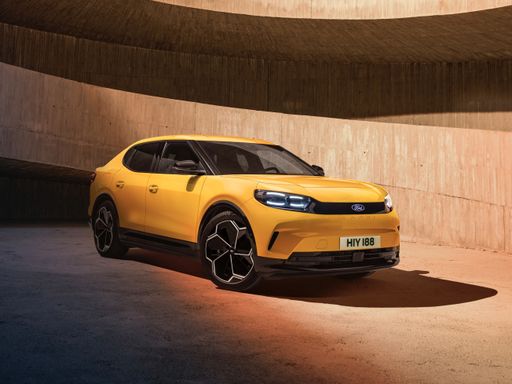
Capri @ Ford Motor Company / Ford Media Center

The automotive world is constantly evolving, and with the rise of electric vehicles, manufacturers are striving to meet the demands of eco-conscious consumers. Two notable entries in this genre are the Ford Capri and the Renault Scénic. While both are electric SUVs, they cater to different aspects of driving and lifestyle. In this article, we will dive into a comprehensive comparison of these two models, focusing on their technical details, performance, and innovations.

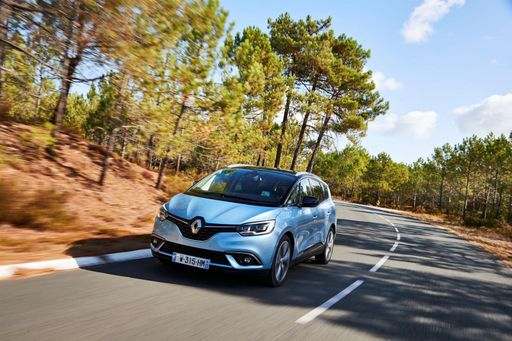
Scénic @ Renault Group Media

Design and Dimensions

The Ford Capri sports a robust and bold design, measuring 4634 mm in length, 1872 mm in width, and 1626 mm in height. This SUV exudes a sense of confidence on the road, making it a compelling choice for those seeking both style and substance.

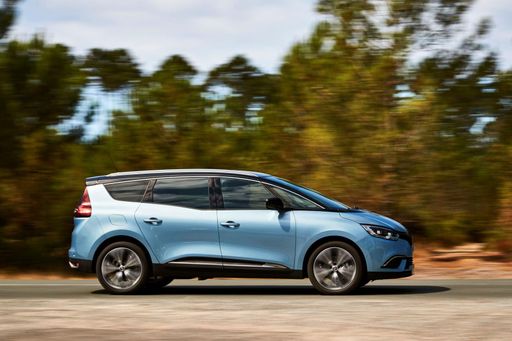
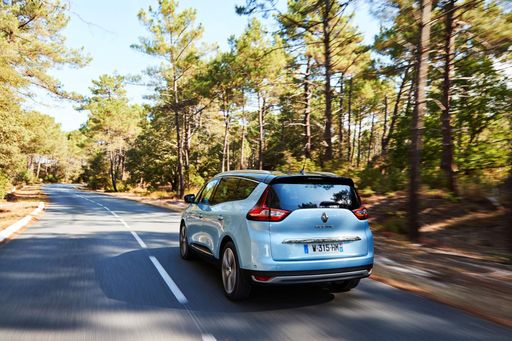
On the other hand, the Renault Scénic has a slightly more compact stature, at 4470 mm long, 1864 mm wide, and 1571 mm high. Its design prioritizes practicality, which is reflected in its efficient use of space, making it an excellent option for families and urban drivers alike.

Capri @ Ford Motor Company / Ford Media Center

Powertrain and Performance

Under the hood, the Ford Capri offers a choice of power ratings with two electric options: 286 HP and a more powerful 340 HP variant. Both configurations deliver impressive torque ranges, with options reaching up to 679 Nm. This results in speedy acceleration, with the top variant reaching 0-100 km/h in just 5.3 seconds. The versatile drive options of rear-wheel drive and all-wheel drive provide a tailored driving experience.

Conversely, the Renault Scénic features two power options, generating 170 HP and 220 HP. While these figures are less than those of the Capri, they still offer respectable performance with acceleration from 0-100 km/h achieved in as little as 7.9 seconds for the more powerful variant. The front-wheel drive setup lends itself to stability and control, particularly in urban environments.

Scénic @ Renault Group Media

Range and Efficiency

When it comes to electric range, the Ford Capri takes the lead, boasting an impressive maximum electric range of 627 km. This is complemented by a battery capacity of up to 79 kWh and energy consumption of 13.3 kWh/100km, making it a champion of efficiency for long-distance travelers.

In comparison, the Renault Scénic has a maximum electric range of 598 km, supported by a 52 kWh battery capacity and slightly higher consumption of 16.7 kWh/100km. Though it offers slightly less range, it still stands as a strong contender for everyday usage, especially for city driving.

Interior Comfort and Capacity

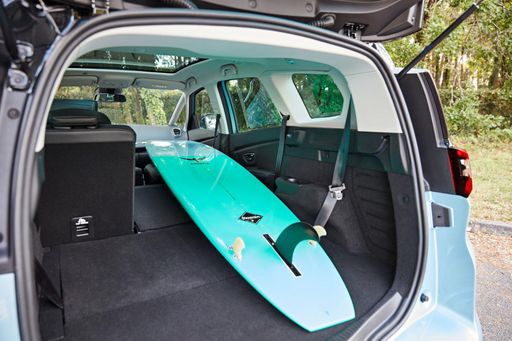
Inside, the Ford Capri can comfortably accommodate five passengers with its thoughtfully designed interior, ensuring a spacious environment. The trunk capacity of 572 liters adds practicality, making it suitable for family outings or road trips.

Meanwhile, the Renault Scénic also seats five, with a trunk space of 545 liters. While it is slightly less than the Capri, it still provides ample room for luggage and cargo, making it practical for daily errands and family needs.

Innovations and Technologies

Both models embrace technological advances, featuring modern infotainment systems and safety innovations. The Ford Capri is expected to come equipped with advanced driver-assistance features, enhancing the driving experience and providing peace of mind.

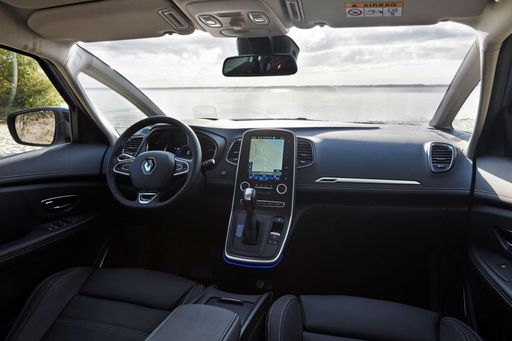
The Renault Scénic, on the other hand, focuses on user-friendly tech such as seamless connectivity options and smart climate control systems. These innovations cater to a connected lifestyle, making it easy for drivers to stay in touch while on the go.

Conclusion

In the battle of electric SUVs, the Ford Capri and Renault Scénic each bring unique offerings to the table. The Capri excels in performance, range, and innovative design, appealing to those who crave power and long-distance capability. Meanwhile, the Scénic shines in practicality and urban adaptability, proving it a worthy opponent for family-focused consumers.

Ultimately, choosing between these two remarkable vehicles comes down to personal preference and driving needs. Whether you prefer the bold capabilities of the Capri or the streamlined practicality of the Scénic, both of these electric SUVs represent a significant step forward in automotive innovation.

Here’s where it gets real: The technical differences in detail

Costs and Efficiency:

Price and efficiency are key factors when choosing a car – and this is often where the real differences emerge.

Renault Scénic has a minimal advantage in terms of price – it starts at 34600 £, while the Ford Capri costs 36300 £. That’s a price difference of around 1714 £.

In terms of energy consumption, the advantage goes to the Ford Capri: with 13.80 kWh per 100 km, it’s evident more efficient than the Renault Scénic with 16.60 kWh. That’s a difference of about 2.80 kWh.

As for range, the Ford Capri performs minimal better – achieving up to 627 km, about 29 km more than the Renault Scénic.

Engine and Performance:

Power, torque and acceleration say a lot about how a car feels on the road. This is where you see which model delivers more driving dynamics.

When it comes to engine power, the Ford Capri has a noticeable edge – offering 340 HP compared to 218 HP. That’s roughly 122 HP more horsepower.

In acceleration from 0 to 100 km/h, the Ford Capri is clearly quicker – completing the sprint in 5.30 s, while the Renault Scénic takes 7.90 s. That’s about 2.60 s faster.

In terms of top speed, the Ford Capri performs hardly perceptible better – reaching 180 km/h, while the Renault Scénic tops out at 170 km/h. The difference is around 10 km/h.

There’s also a difference in torque: Ford Capri pulls convincingly stronger with 679 Nm compared to 300 Nm. That’s about 379 Nm difference.

Space and Everyday Use:

Cabin size, boot volume and payload all play a role in everyday practicality. Here, comfort and flexibility make the difference.

Both vehicles offer seating for 5 people.

In curb weight, Renault Scénic is barely noticeable lighter – 1822 kg compared to 1914 kg. The difference is around 92 kg.

In terms of boot space, the Ford Capri offers minimal more room – 572 L compared to 545 L. That’s a difference of about 27 L.

In maximum load capacity, the Renault Scénic performs hardly perceptible better – up to 1670 L, which is about 160 L more than the Ford Capri.

When it comes to payload, Ford Capri slightly takes the win – 587 kg compared to 518 kg. That’s a difference of about 69 kg.

Who wins the race?

The Ford Capri proves to be is largely superior and therefore becomes our DriveDuel Champion!
Ford Capri is the better all-rounder in this comparison.

from about £36,300
Capri @ Ford Motor Company / Ford Media Center

Ford Capri

  • Engine Type : Electric
  • Transmission : Automatic
  • Drive Type : Rear-Wheel Drive, All-Wheel Drive
  • Power HP : 170 - 340 HP
  • Consumption kWh/100km : 13.8 - 16.4 kWh
  • Electric Range : 374 - 627 km

Ford Capri

5 (1)
rate

The Ford Capri turned the family car into something cheekily sporty, with a long, rakish profile that still promises fun at a glance. Today it lives on as a lovable classic — easy to tinker with, enjoyable to drive and guaranteed to raise smiles at any meet.

details

Renault Scénic

5 (1)
rate

The Renault Scénic is a quietly clever family MPV that balances everyday practicality with unexpected flair, offering a roomy, flexible cabin that makes school runs and weekend escapes less of a chore. It won't dazzle like a sports car, but its composed ride, sensible tech and thoughtful storage solutions make it a superbly pragmatic choice for buyers who prefer substance with a wink.

details
Ford Capri
Renault Scénic
Capri @ Ford Motor Company / Ford Media Center
Scénic @ Renault Group Media

Costs and Consumption

Price
36300 - 50900 £
Price
34600 - 44000 £
Consumption L/100km
-
Consumption L/100km
-
Consumption kWh/100km
13.8 - 16.4 kWh
Consumption kWh/100km
16.6 - 17.5 kWh
Electric Range
374 - 627 km
Electric Range
420 - 598 km
Battery Capacity
52 - 79 kWh
Battery Capacity
-
co2
0 g/km
co2
0 g/km
Fuel tank capacity
-
Fuel tank capacity
-

Dimensions and Body

Body Type
SUV
Body Type
SUV
Seats
5
Seats
5
Doors
5
Doors
5
Curb weight
1914 - 2174 kg
Curb weight
1822 - 1927 kg
Trunk capacity
567 - 572 L
Trunk capacity
545 L
Length
4634 mm
Length
4470 mm
Width
1872 mm
Width
1864 mm
Height
1626 mm
Height
1571 mm
Max trunk capacity
1505 - 1510 L
Max trunk capacity
1670 L
Payload
570 - 587 kg
Payload
514 - 518 kg

Engine and Performance

Engine Type
Electric
Engine Type
Electric
Transmission
Automatic
Transmission
Automatic
Transmission Detail
Reduction Gearbox
Transmission Detail
Reduction Gearbox
Drive Type
Rear-Wheel Drive, All-Wheel Drive
Drive Type
Front-Wheel Drive
Power HP
170 - 340 HP
Power HP
170 - 218 HP
Acceleration 0-100km/h
5.3 - 8.7 s
Acceleration 0-100km/h
7.9 - 8.6 s
Max Speed
160 - 180 km/h
Max Speed
150 - 170 km/h
Torque
310 - 679 Nm
Torque
280 - 300 Nm
Number of Cylinders
-
Number of Cylinders
-
Power kW
125 - 250 kW
Power kW
125 - 160 kW
Engine capacity
-
Engine capacity
-

General

Model Year
2024 - 2025
Model Year
2025
CO2 Efficiency Class
A
CO2 Efficiency Class
A
Brand
Ford
Brand
Renault
Is the Ford Capri offered with different drivetrains?

The Ford Capri is offered with Rear-Wheel Drive or All-Wheel Drive.

The prices and data displayed are estimates based on German list prices and may vary by country. This information is not legally binding.