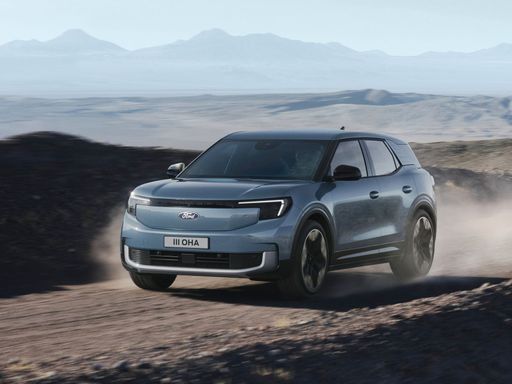
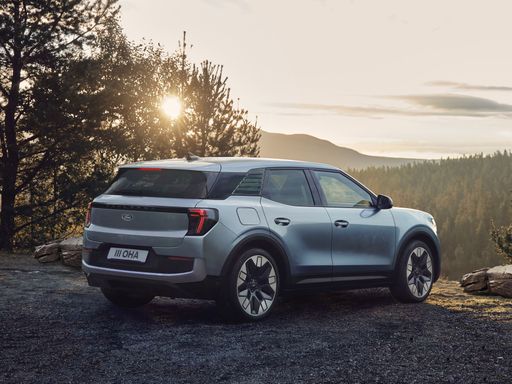
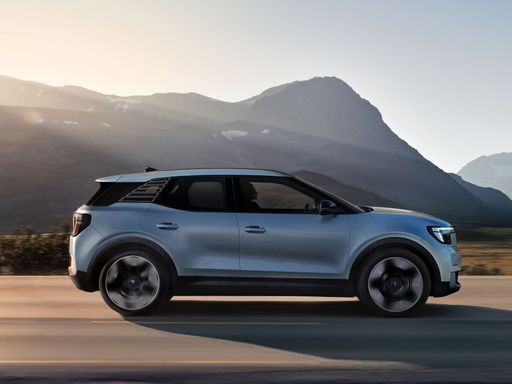
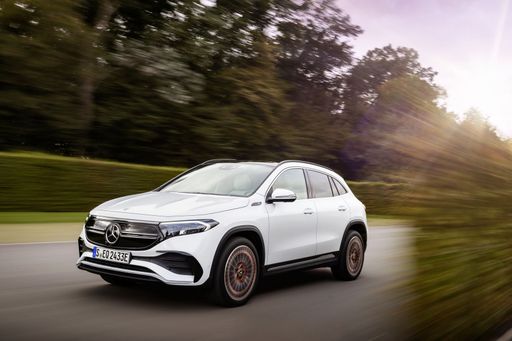
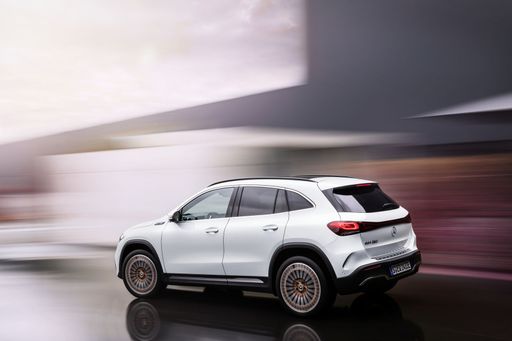
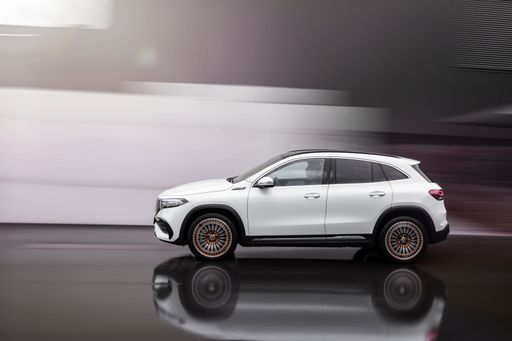
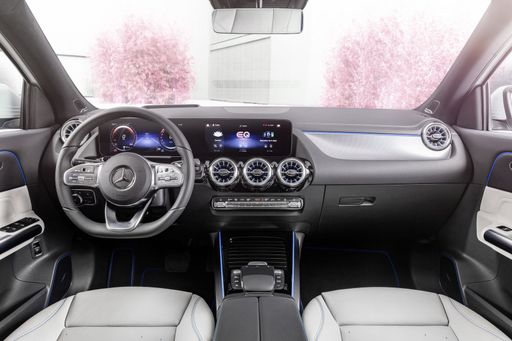
Compare performance (340 HP vs 292 HP), boot space and price (34200 £ vs 44200 £ ) at a glance. Find out which car is the better choice for you – Ford Explorer EV or Mercedes EQA?
Looking at overall running costs, both models reveal some interesting differences in everyday economy.
Ford Explorer EV has a clearly perceptible advantage in terms of price – it starts at 34200 £ , while the Mercedes EQA costs 44200 £ . That’s a price difference of around 10037 £.
In terms of energy consumption, the advantage goes to the Mercedes EQA: with 14.40 kWh per 100 km, it’s slight more efficient than the Ford Explorer EV with 14.50 kWh. That’s a difference of about 0.10 kWh.
As for electric range, the Ford Explorer EV performs slight better – achieving up to 602 km, about 41 km more than the Mercedes EQA.
Power, torque and acceleration are the classic benchmarks for car enthusiasts – and here, some clear differences start to show.
When it comes to engine power, the Ford Explorer EV has a a bit edge – offering 340 HP compared to 292 HP. That’s roughly 48 HP more horsepower.
In acceleration from 0 to 100 km/h, the Ford Explorer EV is to a small extent quicker – completing the sprint in 5.30 s, while the Mercedes EQA takes 6 s. That’s about 0.70 s faster.
In terms of top speed, the Ford Explorer EV performs a bit better – reaching 180 km/h, while the Mercedes EQA tops out at 160 km/h. The difference is around 20 km/h.
There’s also a difference in torque: Ford Explorer EV pulls evident stronger with 679 Nm compared to 520 Nm. That’s about 159 Nm difference.
Whether family car or daily driver – which one offers more room, flexibility and comfort?
Both vehicles offer seating for 5 people.
In curb weight, Ford Explorer EV is barely noticeable lighter – 1908 kg compared to 2045 kg. The difference is around 137 kg.
In terms of boot space, the Ford Explorer EV offers evident more room – 450 L compared to 340 L. That’s a difference of about 110 L.
In maximum load capacity, the Ford Explorer EV performs hardly perceptible better – up to 1422 L, which is about 102 L more than the Mercedes EQA.
When it comes to payload, Ford Explorer EV clearly perceptible takes the win – 585 kg compared to 425 kg. That’s a difference of about 160 kg.
The Ford Explorer EV proves to be is largely superior and therefore becomes our DriveDuel Champion!
Ford Explorer EV is the better all-rounder in this comparison.
The Ford Explorer EV translates the familiar big‑American SUV presence into whisper‑quiet electric motoring, offering roomy seating and a tech‑forward cabin that will please families and road‑trippers alike. It drives with more composure than its boxy looks suggest, blending a comfortable ride and eager acceleration while undercutting the guilt of gas stops — a practical, modern alternative for buyers who want Explorer space with electric charm.
detailsThe Mercedes EQA slips into the electric crossover ranks with the brand’s familiar luxury polish, offering a quiet, fuss-free drive that feels perfectly at home in the city or on a country escape. Inside it’s neatly finished and tech-forward, projecting grown-up refinement even if it plays things a bit safe for anyone chasing outright excitement.
detailsCosts and Consumption |
|
|---|---|
|
Price
34200 - 48800 £
|
Price
44200 - 57400 £
|
|
Consumption L/100km
-
|
Consumption L/100km
-
|
|
Consumption kWh/100km
14.5 - 17.2 kWh
|
Consumption kWh/100km
14.4 - 16.9 kWh
|
|
Electric Range
360 - 602 km
|
Electric Range
476 - 561 km
|
|
Battery Capacity
52 - 79 kWh
|
Battery Capacity
70.50 kWh
|
|
co2
0 g/km
|
co2
0 g/km
|
|
Fuel tank capacity
-
|
Fuel tank capacity
-
|
Dimensions and Body |
|
|---|---|
|
Body Type
SUV
|
Body Type
SUV
|
|
Seats
5
|
Seats
5
|
|
Doors
5
|
Doors
5
|
|
Curb weight
1908 - 2179 kg
|
Curb weight
2045 - 2115 kg
|
|
Trunk capacity
445 - 450 L
|
Trunk capacity
340 L
|
|
Length
4468 mm
|
Length
4463 mm
|
|
Width
1871 mm
|
Width
1834 mm
|
|
Height
1630 - 1639 mm
|
Height
1608 - 1613 mm
|
|
Max trunk capacity
1417 - 1422 L
|
Max trunk capacity
1320 L
|
|
Payload
561 - 585 kg
|
Payload
425 kg
|
Engine and Performance |
|
|---|---|
|
Engine Type
Electric
|
Engine Type
Electric
|
|
Transmission
Automatic
|
Transmission
Automatic
|
|
Transmission Detail
Reduction Gearbox
|
Transmission Detail
Reduction Gearbox
|
|
Drive Type
Rear-Wheel Drive, All-Wheel Drive
|
Drive Type
Front-Wheel Drive, All-Wheel Drive
|
|
Power HP
170 - 340 HP
|
Power HP
190 - 292 HP
|
|
Acceleration 0-100km/h
5.3 - 8.7 s
|
Acceleration 0-100km/h
6 - 8.6 s
|
|
Max Speed
160 - 180 km/h
|
Max Speed
160 km/h
|
|
Torque
310 - 679 Nm
|
Torque
385 - 520 Nm
|
|
Number of Cylinders
-
|
Number of Cylinders
-
|
|
Power kW
125 - 250 kW
|
Power kW
140 - 215 kW
|
|
Engine capacity
-
|
Engine capacity
-
|
General |
|
|---|---|
|
Model Year
2024 - 2025
|
Model Year
2024 - 2025
|
|
CO2 Efficiency Class
A
|
CO2 Efficiency Class
A
|
|
Brand
Ford
|
Brand
Mercedes-Benz
|
The Ford Explorer EV is available as Rear-Wheel Drive or All-Wheel Drive.