@ Ford Motor Company / Ford Media Center
@ MINI / BMW Group Press
VS

Ford Explorer EV vs MINI Countryman – Which one offers the better deal?

Everyday use, family trips or long-distance drives – here’s where the differences show.
Discover whether Ford Explorer EV or MINI Countryman fits your lifestyle better.

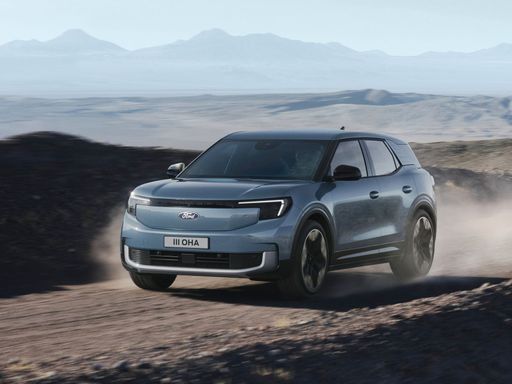
Explorer EV @ Ford Motor Company / Ford Media Center

The Battle of the Electrified SUVs: Ford Explorer EV vs. MINI Countryman

The automotive world is rapidly evolving with major brands rolling out electric versions of their popular models. Today, we take a closer look at two electrified SUVs: the Ford Explorer EV and the MINI Countryman. Both models promise thrilling rides, innovative features, and environmental benefits. Let's delve into their respective technical aspects and find out which might be the right choice for you.

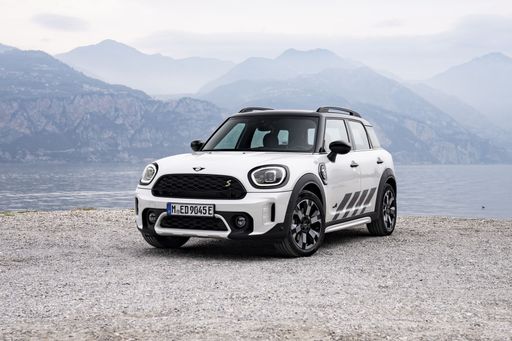
Countryman @ MINI / BMW Group Press

Performance and Powertrain

When it comes to performance, the Ford Explorer EV boasts impressive horsepower figures ranging from 170 HP to a massive 340 HP depending on the variant. It offers different drive types including rear-wheel drive and all-wheel drive, catering to various driving needs. The Ford Explorer EV can accelerate from 0-100 km/h in a mere 5.3 to 6.4 seconds, making it an electrifying choice for thrill-seekers.

On the other hand, the MINI Countryman offers flexibility with options for petrol MHEV, diesel MHEV, and fully electric powertrains. The electric variant reaches 218 HP, while the petrol option peaks at 313 HP. It also carries a spirited acceleration from 0-100 km/h within 5.4 to 8.6 seconds, matching closely with its American competitor.

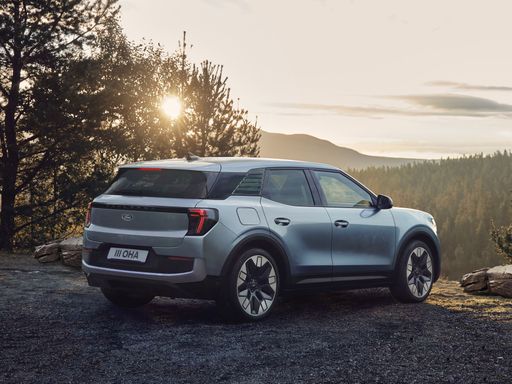
Explorer EV @ Ford Motor Company / Ford Media Center

Electric Range and Efficiency

Electric range and efficiency are crucial for EV buyers. The Ford Explorer EV shines with an outstanding electric range of up to 602 km, thanks to its comprehensive battery capacity offerings of up to 79 kWh. With a consumption rate as low as 13.9 kWh/100 km, it's designed for extended adventures without frequent charges.

The MINI Countryman’s electric version offers a respectable range of 462 km and a slightly higher consumption rate of 15.7 kWh/100 km. It comes equipped with a 64.6 kWh battery, which is sufficient for urban journeys and short trips. However, the Ford Explorer EV holds an advantage for long-distance travel and energy efficiency.

Countryman @ MINI / BMW Group Press

Interior Space and Comfort

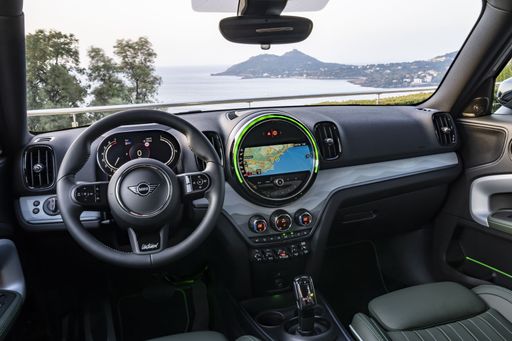
Both models feature spacious interiors, accommodating up to five passengers. The Ford Explorer EV has a competitive edge with a trunk capacity of up to 450 liters, allowing ample room for luggage and gear. Its modern technological amenities and plush seating ensure comfort on every drive.

Meanwhile, the MINI Countryman comes with a slightly larger trunk capacity of up to 505 liters, making it a practical choice for families. MINI retains its iconic style coupled with luxury touches inside, providing a unique blend of functionality and design.

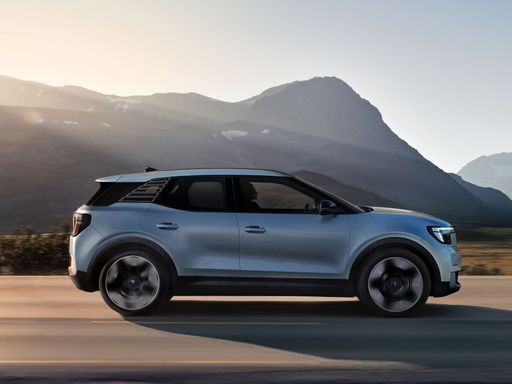
Explorer EV @ Ford Motor Company / Ford Media Center

Dimensions and Weight

Size-wise, the Ford Explorer EV is slightly longer and wider with dimensions of up to 4468 mm in length and 1871 mm in width, catering to those who prefer a more commanding presence on the road. It has a curb weight starting from 2090 kg, reflecting its robust build and safety features.

Conversely, the MINI Countryman measures around 4447 mm in length and 1843 mm in width, making it agile in urban settings while still offering SUV essentials. It is lighter, with curb weight figures starting from 1620 kg, making it more efficient for zipping through city traffic.

Countryman @ MINI / BMW Group Press

Conclusion

In conclusion, the Ford Explorer EV is for those seeking long-range capability, power, and a slightly larger footprint. Its superior range and flexibility in drivetrain make it a standout option for adventurers. Meanwhile, the MINI Countryman is an excellent choice for individuals who prioritize style, compact agility, and a varied powertrain offering.

Both vehicles bring innovation and eco-friendliness to the table, each appealing to different aspects of a dynamic and sustainable driving lifestyle. Your ideal electric SUV will depend on your personal preferences, driving needs, and lifestyle requirements.

Here’s where it gets real: The technical differences in detail

Costs and Efficiency:

Price and efficiency are often the first things buyers look at. Here it becomes clear which model has the long-term edge – whether at the pump, the plug, or in purchase price.

MINI Countryman has a hardly perceptible advantage in terms of price – it starts at 31500 £, while the Ford Explorer EV costs 34200 £. That’s a price difference of around 2658 £.

In terms of energy consumption, the advantage goes to the Ford Explorer EV: with 14.50 kWh per 100 km, it’s minimal more efficient than the MINI Countryman with 15.70 kWh. That’s a difference of about 1.20 kWh.

As for range, the Ford Explorer EV performs clearly perceptible better – achieving up to 602 km, about 140 km more than the MINI Countryman.

Engine and Performance:

Power, torque and acceleration say a lot about how a car feels on the road. This is where you see which model delivers more driving dynamics.

When it comes to engine power, the Ford Explorer EV has a hardly perceptible edge – offering 340 HP compared to 313 HP. That’s roughly 27 HP more horsepower.

In acceleration from 0 to 100 km/h, the Ford Explorer EV is hardly perceptible quicker – completing the sprint in 5.30 s, while the MINI Countryman takes 5.40 s. That’s about 0.10 s faster.

In terms of top speed, the MINI Countryman performs distinct better – reaching 250 km/h, while the Ford Explorer EV tops out at 180 km/h. The difference is around 70 km/h.

There’s also a difference in torque: Ford Explorer EV pulls noticeable stronger with 679 Nm compared to 494 Nm. That’s about 185 Nm difference.

Space and Everyday Use:

Cabin size, boot volume and payload all play a role in everyday practicality. Here, comfort and flexibility make the difference.

Both vehicles offer seating for 5 people.

In curb weight, MINI Countryman is somewhat lighter – 1620 kg compared to 1908 kg. The difference is around 288 kg.

In terms of boot space, the MINI Countryman offers somewhat more room – 505 L compared to 450 L. That’s a difference of about 55 L.

In maximum load capacity, the MINI Countryman performs minimal better – up to 1530 L, which is about 108 L more than the Ford Explorer EV.

When it comes to payload, Ford Explorer EV somewhat takes the win – 585 kg compared to 500 kg. That’s a difference of about 85 kg.

Who wins the race?

The Ford Explorer EV proves to be wins by a narrow margin and therefore becomes our DriveDuel Champion!
Ford Explorer EV is the better all-rounder in this comparison.

from about £34,200
Explorer EV @ Ford Motor Company / Ford Media Center

Ford Explorer EV

  • Engine Type : Electric
  • Transmission : Automatic
  • Drive Type : Rear-Wheel Drive, All-Wheel Drive
  • Power HP : 170 - 340 HP
  • Consumption kWh/100km : 14.5 - 17.2 kWh
  • Electric Range : 360 - 602 km

Ford Explorer EV

5 (2)
rate

The Ford Explorer EV translates the familiar big‑American SUV presence into whisper‑quiet electric motoring, offering roomy seating and a tech‑forward cabin that will please families and road‑trippers alike. It drives with more composure than its boxy looks suggest, blending a comfortable ride and eager acceleration while undercutting the guilt of gas stops — a practical, modern alternative for buyers who want Explorer space with electric charm.

details

MINI Countryman

The MINI Countryman turns the cheeky charm of a classic MINI into a proper all-rounder, blending playful styling with surprisingly usable space for everyday life. It still grins at city lights but will happily tackle muddy lanes, perfect for buyers who want character without sacrificing practicality.

details
Ford Explorer EV
MINI Countryman
Explorer EV @ Ford Motor Company / Ford Media Center
Countryman @ MINI / BMW Group Press

Costs and Consumption

Price
34200 - 48800 £
Price
31500 - 45300 £
Consumption L/100km
-
Consumption L/100km
4.6 - 7.8 L
Consumption kWh/100km
14.5 - 17.2 kWh
Consumption kWh/100km
15.7 - 16.8 kWh
Electric Range
360 - 602 km
Electric Range
432 - 462 km
Battery Capacity
52 - 79 kWh
Battery Capacity
64.60 kWh
co2
0 g/km
co2
0 - 177 g/km
Fuel tank capacity
-
Fuel tank capacity
45 - 54 L

Dimensions and Body

Body Type
SUV
Body Type
SUV
Seats
5
Seats
5
Doors
5
Doors
5
Curb weight
1908 - 2179 kg
Curb weight
1620 - 2075 kg
Trunk capacity
445 - 450 L
Trunk capacity
450 - 505 L
Length
4468 mm
Length
4444 - 4447 mm
Width
1871 mm
Width
1843 mm
Height
1630 - 1639 mm
Height
1635 - 1661 mm
Max trunk capacity
1417 - 1422 L
Max trunk capacity
1450 - 1530 L
Payload
561 - 585 kg
Payload
460 - 500 kg

Engine and Performance

Engine Type
Electric
Engine Type
Petrol MHEV, Diesel MHEV, Electric, Petrol
Transmission
Automatic
Transmission
Automatic
Transmission Detail
Reduction Gearbox
Transmission Detail
Dual-Clutch Automatic, Automatic Gearbox, Reduction Gearbox
Drive Type
Rear-Wheel Drive, All-Wheel Drive
Drive Type
Front-Wheel Drive, All-Wheel Drive
Power HP
170 - 340 HP
Power HP
163 - 313 HP
Acceleration 0-100km/h
5.3 - 8.7 s
Acceleration 0-100km/h
5.4 - 8.6 s
Max Speed
160 - 180 km/h
Max Speed
170 - 250 km/h
Torque
310 - 679 Nm
Torque
250 - 494 Nm
Number of Cylinders
-
Number of Cylinders
3 - 4
Power kW
125 - 250 kW
Power kW
120 - 230 kW
Engine capacity
-
Engine capacity
1499 - 1998 cm3

General

Model Year
2024 - 2025
Model Year
2024
CO2 Efficiency Class
A
CO2 Efficiency Class
D, E, A, G
Brand
Ford
Brand
MINI
What drive types are available for the Ford Explorer EV?

The Ford Explorer EV is available as Rear-Wheel Drive or All-Wheel Drive.

The prices and data displayed are estimates based on German list prices and may vary by country. This information is not legally binding.