VS

Ford Kuga vs Kia EV3 comparison

Compare performance (243 HP vs 265 HP), boot space and price (34,200 £ vs 40,200 £ ) at a glance. Find out which car is the better choice for you – Ford Kuga or Kia EV3?

Ford Kuga vs Kia EV3: Key differences

Ford Kuga

4.3 (7 Reviews)
rate
  • moderately cheaper
  • noticeably lighter
details

Kia EV3

4.6 (5 Reviews)
rate
  • marginally more power
  • significantly more electric range
  • a bit quicker 0–100 km/h
details

All details on performance, efficiency, range and trunk space can be found in the technical comparison below – including user reviews for both models.

By Achim Sedelmaier

Kuga

The Battle of the SUVs: Ford Kuga vs Kia EV3

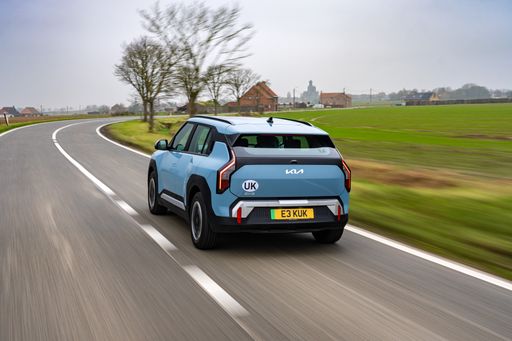
The world of SUVs has witnessed remarkable advancements in recent years, with manufacturers pivoting toward a blend of power, efficiency, and technology. Today, we dive into a comparison between two formidable contenders in the SUV segment - the Ford Kuga and the Kia EV3. Both vehicles boast the latest in automotive technology but cater to different types of drivers with their distinct attributes.
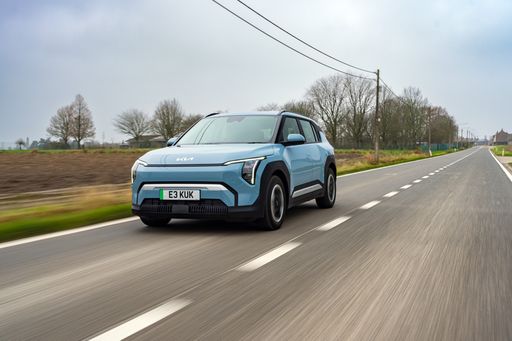
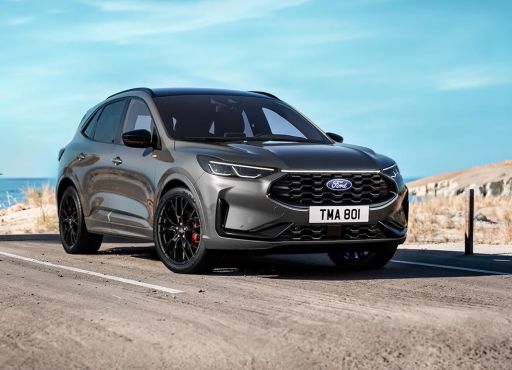
EV3

Powertrain and Performance

The Ford Kuga offers a diverse range of engine types, giving potential buyers a choice between petrol, full hybrid, and plug-in hybrid options. With power outputs ranging from 150 to 243 HP, the Kuga caters to various driving preferences, from the everyday driver to those seeking a bit more punch on the road. Notably, the plug-in hybrid variant provides an impressive acceleration of 0-100 km/h in 7.3 seconds and a competitive electric range of 69 km, thanks to its 14.4 kWh battery.

In contrast, the Kia EV3 steps into the ring with a purely electric powertrain, generating 204 HP and a remarkable torque of 283 Nm. Boasting a zero-emissions output, the EV3 stands out with its substantial electric range options, varying from 436 km to a ground-breaking 605 km, depending on the model. This capability sets it firmly as an eco-friendly choice for the environmentally conscious driver.

Kuga

Efficiency and Sustainability

Fuel efficiency is a crucial factor for many SUV buyers, and both models present compelling figures. The Kuga's consumption ranges from 6.4 to a remarkable 0.9 L/100 km with its CO2 emissions spanning 145 to a mere 20 g/km. Meanwhile, the EV3's electric consumption falls between 14.9 to 16.2 kWh/100 km, achieving a perfect CO2 emission score of 0 g/km. With an efficiency class of 'A', the EV3 clearly caters to the sustainability-focused driver.

EV3

Design and Interior Space

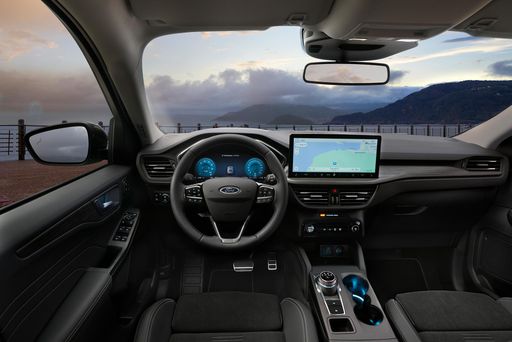
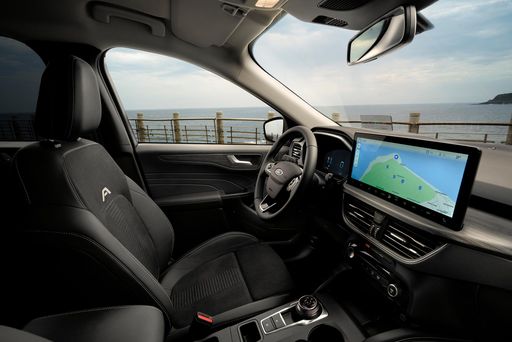
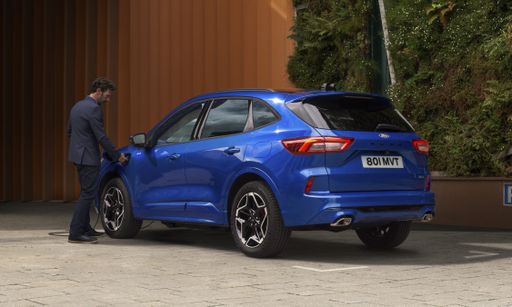
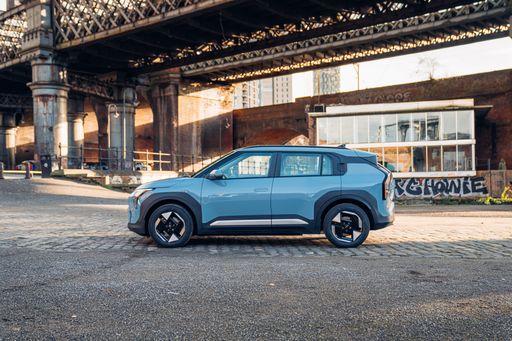
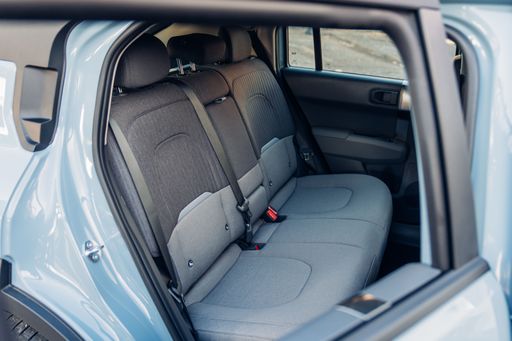
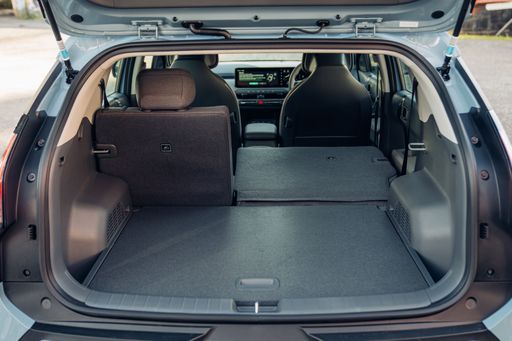
In terms of design, both SUVs exude their brand's signature styling while providing ample interior and trunk space. The Ford Kuga's dimensions stretch from 4604 to 4645 mm in length, offering 412 liters of trunk capacity, ensuring it can handle both passengers and gear with ease. The Kia EV3 is slightly more compact, with a length of up to 4310 mm, but surprises with a competitive trunk capacity of 460 liters.

Kuga

Innovation and Driving Convenience

Both SUVs embrace innovation, albeit in different manners. The Kuga's flexibility with drive types, including both front-wheel and all-wheel drive, and its choice of transmissions—from manual to the seamless CVT—provide a personalized driving experience. The EV3 counters with its effortless automatic reduction gearbox, offering a simple and smooth ride.

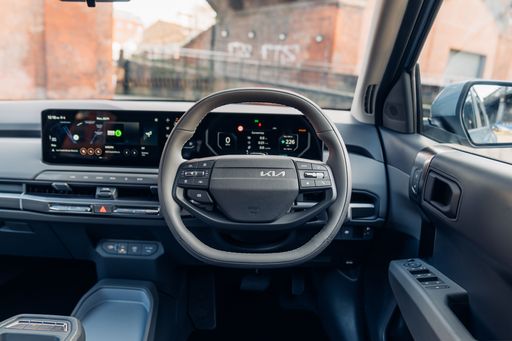
Moreover, the technological focus of the EV3 is underlined by its electric advancements, positioning it as an ideal fit for drivers eager to engage with next-level electric mobility. Conversely, the Kuga’s hybrid technology blends traditional combustion efficiency with new-age battery power, catering to a balanced driving style.

EV3

Final Thoughts

Ultimately, both the Ford Kuga and Kia EV3 are leaders of their class, with the Kuga appealing to drivers seeking flexibility in engine choices and the familiarity of hybrid power. The EV3, however, represents the future-forward vision of what an electric SUV should embody. Those in the market for their next SUV will find compelling reasons to choose either vehicle, depending on their inclination towards traditional hybrid efficiency or cutting-edge electric performance.

Here’s where it gets real: The technical differences in detail

Kuga

Costs and Efficiency:

Price and efficiency are key factors when choosing a car – and this is often where the real differences emerge.

Ford Kuga is moderately cheaper – starting at 34,200 £ , while the Kia EV3 costs 40,200 £ . That’s a price difference of around 5,940 £.

As for electric range, the Kia EV3 offers significantly more range – reaching up to 572 km, about 504 km more than the Ford Kuga.

EV3

Engine and Performance:

Under the bonnet, it becomes clear which model is tuned for sportiness and which one takes the lead when you hit the accelerator.

When it comes to engine power, the Kia EV3 offers marginally more power – delivering 265 HP compared to 243 HP. That’s roughly 22 HP more horsepower.

When accelerating from 0 to 100 km/h, the Kia EV3 is a bit quicker – completing the sprint in 6.6 s, while the Ford Kuga takes 7.3 s. That’s about 0.7 s quicker.

There’s also a difference in torque: the Kia EV3 delivers noticeably more torque with 385 Nm compared to 240 Nm. That’s about 145 Nm more.

Kuga

Space and Everyday Use:

Cabin size, boot volume and payload all play a role in everyday practicality. Here, comfort and flexibility make the difference.

Both vehicles offer seating for 5 people.

In terms of curb weight, Ford Kuga is noticeably lighter – 1,526 kg compared to 1,995 kg. The difference is around 469 kg.

When it comes to payload, the Ford Kuga carries slightly more – 550 kg compared to 485 kg. That’s a difference of about 65 kg.

Who wins the race in the data check?

The Kia EV3 holds a decisive overall lead in the objective data comparison.
This result only shows which model scores more points on paper – not which of the two cars feels right for you.

from £40,200
EV3

Kia EV3

  • Engine Type Electric
  • Transmission Automatic
  • Drive Type All-Wheel Drive
  • Power HP 265 HP
  • Consumption kWh/100km 15.8 kWh/100km
  • Electric Range 572 km
Ford Kuga
Kia EV3

Costs and Consumption

View detailed analysis

Engine and Performance

View detailed analysis

Dimensions and Body

View detailed analysis

Ford Kuga

The Ford Kuga is a practical and comfortable compact SUV that balances everyday usability with a composed ride and adaptable interior. It offers sensible tech and safety features, making it a solid choice for families or anyone seeking a versatile, easy-to-live-with crossover.

details

Kia EV3

The Kia EV3 is a stylish, user-friendly electric crossover that focuses on practicality and a roomy, well-equipped cabin. It delivers a comfortable ride with intuitive technology and efficient everyday performance, making it a sensible choice for city and family use.

details
Ford Kuga
Kia EV3

Costs and Consumption

Price
34,200 - 46,300 £
Price
40,200 - 43,900 £
Consumption L/100km
2.8 - 6.8 L/100km
Consumption L/100km
-
Consumption kWh/100km
-
Consumption kWh/100km
15.8 kWh/100km
Electric Range
68 km
Electric Range
572 km
Battery Capacity
-
Battery Capacity
-
co2
55 - 154 g/km
co2
0 g/km
Fuel tank capacity
-
Fuel tank capacity
-

Dimensions and Body

Body Type
SUV
Body Type
SUV
Seats
5
Seats
5
Doors
-
Doors
-
Curb weight
1,526 - 1,859 kg
Curb weight
1,995 kg
Trunk capacity
-
Trunk capacity
413 L
Length
-
Length
-
Width
1,882 mm
Width
1,850 mm
Height
-
Height
-
Max trunk capacity
-
Max trunk capacity
-
Payload
541 - 550 kg
Payload
485 kg

Engine and Performance

Engine Type
Petrol, Full Hybrid, Plugin Hybrid
Engine Type
Electric
Transmission
Manuel, Automatic
Transmission
Automatic
Transmission Detail
Manual Gearbox, CVT, Automatic Gearbox
Transmission Detail
Reduction Gearbox
Drive Type
Front-Wheel Drive, All-Wheel Drive
Drive Type
All-Wheel Drive
Power HP
150 - 243 HP
Power HP
265 HP
Acceleration 0-100km/h
7.3 - 9.9 s
Acceleration 0-100km/h
6.6 s
Max Speed
-
Max Speed
-
Torque
240 Nm
Torque
385 Nm
Number of Cylinders
3 - 4
Number of Cylinders
-
Power kW
111 - 178 kW
Power kW
195 kW
Engine capacity
1,496 - 2,488 cm3
Engine capacity
-

General

Model Year
2025
Model Year
2026
CO2 Efficiency Class
E, D, B
CO2 Efficiency Class
A
Brand
Ford
Brand
Kia
DriveDuel uses data analysis and artificial intelligence to evaluate vehicle data and create content. Content is regularly reviewed and improved. The displayed prices are estimates based on German list prices, adjusted to the respective country’s VAT. Country-specific registration taxes are not included. This information is not legally binding.