VS

Ford Kuga vs Volvo EX30 comparison

Compare performance (243 HP vs 428 HP), boot space and price (34,200 £ vs 30,000 £ ) at a glance. Find out which car is the better choice for you – Ford Kuga or Volvo EX30?

Ford Kuga vs Volvo EX30: Key differences

Ford Kuga

4.2 (6 Reviews)
rate
  • clearly lighter
details

Volvo EX30

3.7 (7 Reviews)
rate
  • slightly cheaper
  • considerably more power
  • considerably more electric range
  • substantially quicker 0–100 km/h
details

All details on performance, efficiency, range and trunk space can be found in the technical comparison below – including user reviews for both models.

By Achim Sedelmaier

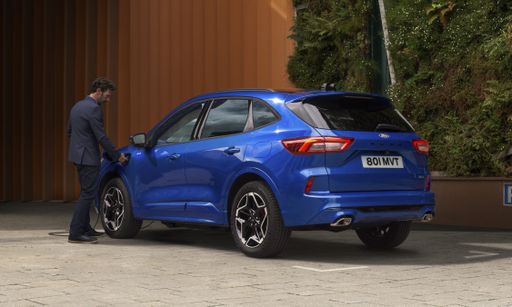
Kuga

The Battle of Innovation: Ford Kuga vs Volvo EX30

In the rapidly evolving world of SUVs, two standout models for 2024-2025 are making waves: the Ford Kuga and the Volvo EX30. These cars symbolize the dynamic shifts in automotive engineering, balancing performance, environmental concerns, and state-of-the-art technology. This article takes a closer look at their technical specifications and innovations to see how they match up against each other.

EX30

Performance Meets Hybrid Efficiency: Ford Kuga

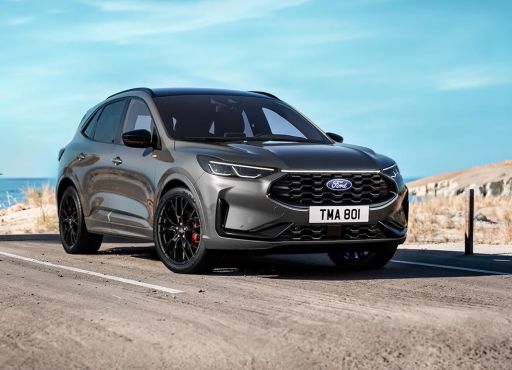
The Ford Kuga, renowned for its versatile configurations, offers multiple powertrain options, including petrol, full hybrid, and plug-in hybrid engines. It promises a range of power outputs from 150 to 243 HP, accommodating diverse driving needs. With front-wheel and all-wheel drive configurations, the Kuga caters to a variety of terrains and preferences.

One of its standout features is the electric range of 69 km on its plug-in hybrid variant, supported by a 14.4 kWh battery. This positions it as a competitor in the green driving segment, achieving a remarkable CO2 efficiency class of B in some models. Moreover, with a trunk capacity of 412 liters, the Kuga ensures practicality alongside performance.

The Kuga’s acceleration times range from 7.3 to 9.5 seconds for 0-100 km/h, highlighting a balance between speed and efficiency. Customers can also choose between a manual gearbox and a CVT, offering both traditional and modern driving experiences. Additionally, the wide engine capacity from 1497 cm3 to 2488 cm3 showcases the vehicle's versatile nature.


Kuga

Embracing the Electric Future: Volvo EX30

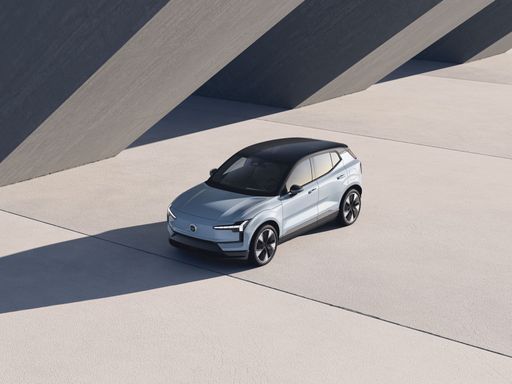
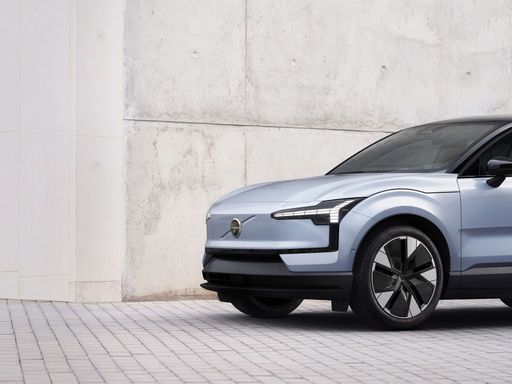
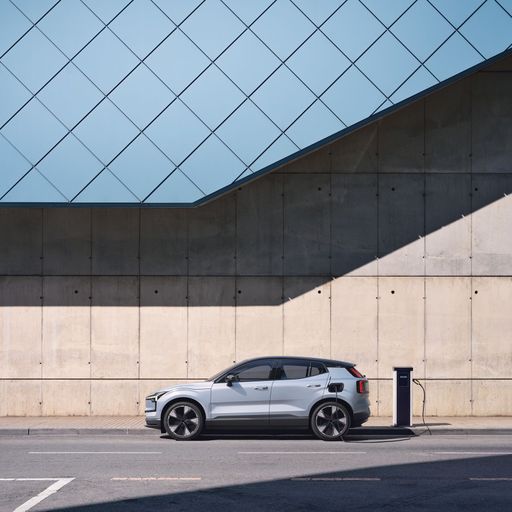
Volvo's EX30 represents the epitome of modern electric SUV design. With power outputs between 272 and 428 HP and an acceleration time as swift as 3.6 seconds for 0-100 km/h, it redefines the notion of electric performance. Notably, it offers both rear-wheel and all-wheel drive systems, extending its appeal to fans of electric mobility who do not want to compromise on driving dynamics.

The EX30 excels in range, offering up to 476 km on a single charge thanks to its 65 kWh battery. This class-leading range underscores its efficiency, with net consumption between 17 and 18.7 kWh/100 km, making it a strong choice for eco-conscious consumers. Also boasting a CO2 efficiency class of A and fully electric operation, the EX30 answers the demand for sustainable urban and suburban driving solutions.

While compact, the EX30 supports practicality with its intelligent design, featuring a trunk capacity of 318 liters. The SUV’s robust torque, reaching up to 543 Nm, provides ample power for a smooth and responsive driving experience. With its automatic reduction gearbox, the EX30 simplifies the driving experience, emphasizing user-friendliness in electric vehicles.

EX30

Conclusion: Innovation in Motion

The Ford Kuga and Volvo EX30 represent two different philosophies in the evolution of the SUV. The Kuga offers variety with its hybrid options, catering to varying environmental and performance demands. On the other hand, the EX30 boldly leads towards an all-electric future, with impressive eco-credentials and electric performance that invites drivers to rethink what an SUV can achieve.

Ultimately, the choice between these two lies in the priorities of the prospective owner—whether it's the adaptable powertrain options and hybrid efficiency of the Ford Kuga or the cutting-edge electric prowess of the Volvo EX30. Both models underscore the automotive industry's resolve to innovate and cater to the modern driver's changing demands.

Here’s where it gets real: The technical differences in detail

Kuga

Costs and Efficiency:

When it comes to price and running costs, the biggest differences usually appear. This is often where you see which car fits your budget better in the long run.

Volvo EX30 is slightly cheaper – starting at 30,000 £ , while the Ford Kuga costs 34,200 £ . That’s a price difference of around 4,251 £.

As for electric range, the Volvo EX30 offers considerably more range – reaching up to 475 km, about 407 km more than the Ford Kuga.

EX30

Engine and Performance:

Under the bonnet, it becomes clear which model is tuned for sportiness and which one takes the lead when you hit the accelerator.

When it comes to engine power, the Volvo EX30 offers considerably more power – delivering 428 HP compared to 243 HP. That’s roughly 185 HP more horsepower.

When accelerating from 0 to 100 km/h, the Volvo EX30 is substantially quicker – completing the sprint in 3.6 s, while the Ford Kuga takes 7.3 s. That’s about 3.7 s quicker.

There’s also a difference in torque: the Volvo EX30 delivers substantially more torque with 543 Nm compared to 240 Nm. That’s about 303 Nm more.

Kuga

Space and Everyday Use:

Beyond pure performance, interior space and usability matter most in daily life. This is where you see which car is more practical and versatile.

Both vehicles offer seating for 5 people.

In terms of curb weight, Ford Kuga is clearly lighter – 1,526 kg compared to 1,840 kg. The difference is around 314 kg.

When it comes to payload, the Ford Kuga carries markedly more – 550 kg compared to 390 kg. That’s a difference of about 160 kg.

Who wins the race in the data check?

The Volvo EX30 is clearly superior overall in the objective data comparison.
This result only shows which model scores more points on paper – not which of the two cars feels right for you.

from £30,000
EX30

Volvo EX30

  • Engine Type : Electric
  • Transmission : Automatic
  • Drive Type : Rear-Wheel Drive, All-Wheel Drive
  • Power HP : 150 - 428 HP
  • Consumption kWh/100km : 17 - 18.3 kWh/100km
  • Electric Range : 339 - 475 km
Ford Kuga
Volvo EX30

Costs and Consumption

View detailed analysis

Engine and Performance

View detailed analysis

Dimensions and Body

View detailed analysis

Ford Kuga

The Ford Kuga is a practical and comfortable compact SUV that balances everyday usability with a composed ride and adaptable interior. It offers sensible tech and safety features, making it a solid choice for families or anyone seeking a versatile, easy-to-live-with crossover.

details

Volvo EX30

The Volvo EX30 is a compact all-electric crossover that mixes Volvo's strong safety focus with clean Scandinavian design for a really city-friendly package. It feels lively and easy to live with, pairing a premium-feeling interior and modern connectivity with a practical footprint for urban driving.

details
Ford Kuga
Volvo EX30

Costs and Consumption

Price
34,200 - 46,300 £
Price
30,000 - 47,800 £
Consumption L/100km
2.8 - 6.8 L/100km
Consumption L/100km
-
Consumption kWh/100km
-
Consumption kWh/100km
17 - 18.3 kWh/100km
Electric Range
68 km
Electric Range
339 - 475 km
Battery Capacity
-
Battery Capacity
-
co2
55 - 154 g/km
co2
0 g/km
Fuel tank capacity
-
Fuel tank capacity
-

Dimensions and Body

Body Type
SUV
Body Type
SUV
Seats
5
Seats
5
Doors
-
Doors
-
Curb weight
1,526 - 1,859 kg
Curb weight
1,840 - 1,960 kg
Trunk capacity
-
Trunk capacity
-
Length
-
Length
-
Width
1,882 mm
Width
1,838 mm
Height
-
Height
-
Max trunk capacity
-
Max trunk capacity
-
Payload
541 - 550 kg
Payload
370 - 390 kg

Engine and Performance

Engine Type
Petrol, Full Hybrid, Plugin Hybrid
Engine Type
Electric
Transmission
Manuel, Automatic
Transmission
Automatic
Transmission Detail
Manual Gearbox, CVT, Automatic Gearbox
Transmission Detail
Reduction Gearbox
Drive Type
Front-Wheel Drive, All-Wheel Drive
Drive Type
Rear-Wheel Drive, All-Wheel Drive
Power HP
150 - 243 HP
Power HP
150 - 428 HP
Acceleration 0-100km/h
7.3 - 9.9 s
Acceleration 0-100km/h
3.6 - 8.6 s
Max Speed
-
Max Speed
-
Torque
240 Nm
Torque
343 - 543 Nm
Number of Cylinders
3 - 4
Number of Cylinders
-
Power kW
111 - 178 kW
Power kW
110 - 315 kW
Engine capacity
1,496 - 2,488 cm3
Engine capacity
-

General

Model Year
2025
Model Year
2026
CO2 Efficiency Class
E, D, B
CO2 Efficiency Class
A
Brand
Ford
Brand
Volvo
DriveDuel uses data analysis and artificial intelligence to evaluate vehicle data and create content. Content is regularly reviewed and improved. The displayed prices are estimates based on German list prices, adjusted to the respective country’s VAT. Country-specific registration taxes are not included. This information is not legally binding.