VS

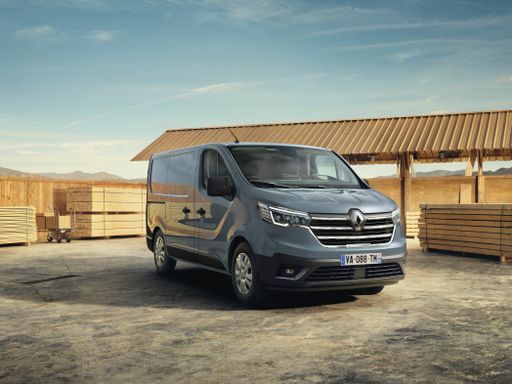
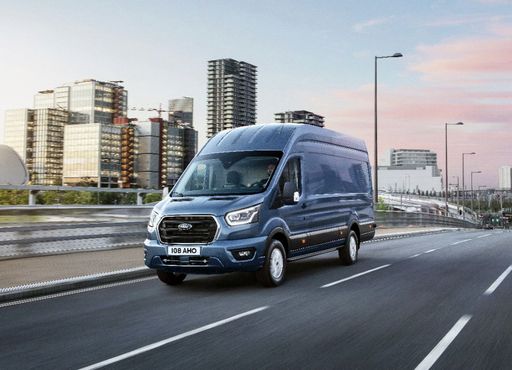
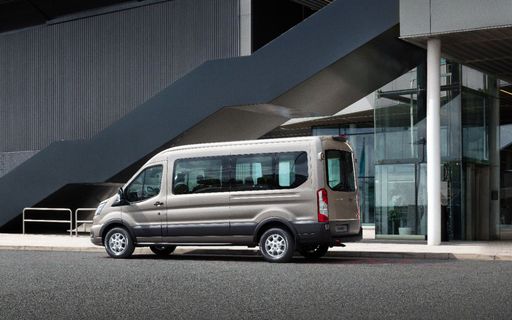
Ford Transit Custom Transporter vs Renault Trafic Transporter - Differences and prices compared

Compare performance (286 HP vs 170 HP), boot space and price (36300 £ vs 33200 £ ) at a glance. Find out which car is the better choice for you – Ford Transit Custom Transporter or Renault Trafic Transporter?

Transit Custom Transporter

The Battle of the Cargo Vans: Ford Transit Custom vs. Renault Trafic

It's a head-to-head comparison between two of the most popular cargo vans on the market today: the Ford Transit Custom and the Renault Trafic. Both models offer a plethora of options to cater to different business needs, from varied powertrains to spacious cargo holds. Let's delve into their specifications and see how they stack up against each other.
Transit Custom Transporter

Engine and Performance

The Ford Transit Custom stands out with a versatile engine lineup that includes electric, diesel, and plug-in hybrid options. The power range spans from 110 HP to a robust 286 HP. Its electric models boast an impressive range of up to 327 km, making them ideal for eco-conscious businesses. The drive types available include rear-wheel, front-wheel, and all-wheel, ensuring a suitable choice for different road conditions.

In comparison, the Renault Trafic offers diesel and electric options, with horsepower ranging from 110 HP to 170 HP. This van is exclusively a front-wheel drive, which may limit some traction in challenging terrains. However, with a maximum speed reaching 185 km/h and a solid torque range, the Trafic is no slouch on the roads.

Transit Custom Transporter

Fuel Efficiency and Range

Ford's electric version of the Transit Custom consumes between 22.4 to 24.5 kWh/100km. Diesel models have an outstanding fuel consumption rate as low as 1.6 L/100km, emphasizing its cost-effectiveness for long-distance hauls. The CO2 emissions range between 0 to 36 g/km, granting it a commendable environmental rating of A to B in efficiency class.

Renault Trafic's diesel engines have a consumption rate between 6.7 to 7.8 L/100km. The electric variant consumes 21.3 to 21.5 kWh/100km, slightly more efficient than its counterpart but offers a lesser electric range of up to 292 km. With CO2 emissions reaching up to 205 g/km in diesel models, the Trafic falls primarily in the G efficiency class, with electric models achieving a zero-emission status.

Size and Capacity

The Ford Transit Custom caters to various payload requirements, ranging from 802 kg to a staggering 1332 kg, with dimensions of 5050 mm to 5450 mm in length and a stable width of 2032 mm. With seating options for three or six, it offers multiple configurations to suit passenger and cargo needs.

The Renault Trafic offers a payload capacity starting from 867 kg to 1185 kg. It measures slightly longer at 5080 mm to 5480 mm, but narrower, with a width of 1956 mm. It can also configure seating for two, three, or six, emphasizing its adaptability for lighter transport scenarios.

Technological Innovations

Ford Transit Custom integrates advanced technology with its optional all-wheel drive and various gearbox choices, including CVT, catering to different driver preferences. Safety and driving assistance features are prevalent, supporting a smooth and safe journey.

Renault Trafic boasts a dual-clutch automatic transmission, assuring seamless gear changes for improved driving comfort. Its focus on intuitive cabin technology, such as ergonomic seating and advanced infotainment, enhances driver satisfaction during long hauls.

Final Thoughts

Both the Ford Transit Custom and the Renault Trafic offer distinct advantages depending on the business needs. While the Transit Custom impresses with its diverse engine options, range, and payload capabilities, the Trafic stands out for its robust performance and cabin technology enhancements. Ultimately, the choice between these two eminent vehicles will depend on specific requirements such as environmental priorities, cargo demands, and driving conditions.

Ford Transit Custom Transporter

Renault Trafic Transporter

Here’s where it gets real: The technical differences in detail

Costs and Efficiency:

When it comes to price and running costs, the biggest differences usually appear. This is often where you see which car fits your budget better in the long run.

Renault Trafic Transporter has a slight advantage in terms of price – it starts at 33200 £ , while the Ford Transit Custom Transporter costs 36300 £ . That’s a price difference of around 3060 £.

Engine and Performance:

Under the bonnet, it becomes clear which model is tuned for sportiness and which one takes the lead when you hit the accelerator.

When it comes to engine power, the Ford Transit Custom Transporter has a convincingly edge – offering 286 HP compared to 170 HP. That’s roughly 116 HP more horsepower.

In acceleration from 0 to 100 km/h, the Renault Trafic Transporter is distinct quicker – completing the sprint in 10.80 s, while the Ford Transit Custom Transporter takes 13.40 s. That’s about 2.60 s faster.

There’s also a difference in torque: Ford Transit Custom Transporter pulls noticeable stronger with 630 Nm compared to 380 Nm. That’s about 250 Nm difference.

Space and Everyday Use:

Whether family car or daily driver – which one offers more room, flexibility and comfort?

Both vehicles offer seating for 6 people.

In curb weight, Renault Trafic Transporter is minimal lighter – 1848 kg compared to 1893 kg. The difference is around 45 kg.

In maximum load capacity, the Renault Trafic Transporter performs noticeable better – up to 8900 L, which is about 2100 L more than the Ford Transit Custom Transporter.

When it comes to payload, Ford Transit Custom Transporter barely noticeable takes the win – 1332 kg compared to 1222 kg. That’s a difference of about 110 kg.

Who wins the race in the data check?

The Ford Transit Custom Transporter is decisively ahead in the objective data comparison.
This result only shows which model scores more points on paper – not which of the two cars feels right for you.

Ford Transit Custom Transporter
Renault Trafic Transporter

Costs and Consumption

View detailed analysis

Engine and Performance

View detailed analysis

Dimensions and Body

View detailed analysis
from about £36,300
Transit Custom Transporter

Ford Transit Custom Transporter

  • Engine Type : Diesel, Plugin Hybrid, Electric
  • Transmission : Manuel, Automatic
  • Drive Type : Front-Wheel Drive, All-Wheel Drive, Rear-Wheel Drive
  • Power HP : 110 - 286 HP

Ford Transit Custom Transporter

The Transit Custom is a clever, no-nonsense workhorse that blends roomy practicality with surprisingly car-like driving manners, so your workday feels less like a chore and more like efficient transport. With a sensible interior, smart storage and tidy handling, it’s the kind of van that makes owners smile while they get on with the job — reliable, unfussy and built to keep moving.

details

Renault Trafic Transporter

The Renault Trafic is a practical, workhorse transporter that hides thoughtful cabin comfort behind a tough, utilitarian exterior, so you can tackle a busy week without sacrificing sanity. It’s a sensible choice for buyers who want reliability and clever flexibility rather than flash, with just enough character to make daily hauling feel less like a chore.

details
Ford Transit Custom Transporter
Renault Trafic Transporter

Costs and Consumption

Price
36300 - 77400 £
Price
33200 - 43500 £
Consumption L/100km
-
Consumption L/100km
6.6 - 7.8 L
Consumption kWh/100km
-
Consumption kWh/100km
21.2 - 22.2 kWh
Electric Range
-
Electric Range
240 - 318 km
Battery Capacity
11.80 kWh
Battery Capacity
-
co2
0 g/km
co2
0 - 206 g/km
Fuel tank capacity
55 - 63 L
Fuel tank capacity
80 L

Dimensions and Body

Body Type
Cargo Van
Body Type
Cargo Van
Seats
3 - 6
Seats
3 - 6
Doors
4
Doors
4
Curb weight
1893 - 2122 kg
Curb weight
1848 - 2075 kg
Trunk capacity
-
Trunk capacity
-
Length
5050 - 5450 mm
Length
5080 - 5480 mm
Width
2032 mm
Width
1956 mm
Height
1958 - 1959 mm
Height
1967 - 2509 mm
Max trunk capacity
5800 - 6800 L
Max trunk capacity
3300 - 8900 L
Payload
802 - 1332 kg
Payload
848 - 1222 kg

Engine and Performance

Engine Type
Diesel, Plugin Hybrid, Electric
Engine Type
Diesel, Electric
Transmission
Manuel, Automatic
Transmission
Manuel, Automatic
Transmission Detail
Manual Gearbox, Automatic Gearbox, CVT, Reduction Gearbox
Transmission Detail
Manual Gearbox, Reduction Gearbox, Automatic Gearbox
Drive Type
Front-Wheel Drive, All-Wheel Drive, Rear-Wheel Drive
Drive Type
Front-Wheel Drive
Power HP
110 - 286 HP
Power HP
110 - 170 HP
Acceleration 0-100km/h
13.4 - 16.9 s
Acceleration 0-100km/h
10.8 - 15.1 s
Max Speed
-
Max Speed
110 - 174 km/h
Torque
310 - 630 Nm
Torque
245 - 380 Nm
Number of Cylinders
4
Number of Cylinders
4
Power kW
81 - 210 kW
Power kW
81 - 125 kW
Engine capacity
1996 - 2488 cm3
Engine capacity
1997 cm3

General

Model Year
2023 - 2025
Model Year
2022 - 2025
CO2 Efficiency Class
A
CO2 Efficiency Class
F, G, A
Brand
Ford
Brand
Renault
What drive types are available for the Ford Transit Custom Transporter?

The Ford Transit Custom Transporter is available as Front-Wheel Drive, All-Wheel Drive or Rear-Wheel Drive.

The prices shown are estimates based on German list prices, adjusted for local VAT. Local registration taxes (e.g. NoVA, BPM or CO2 malus) are not included. This information is not legally binding.