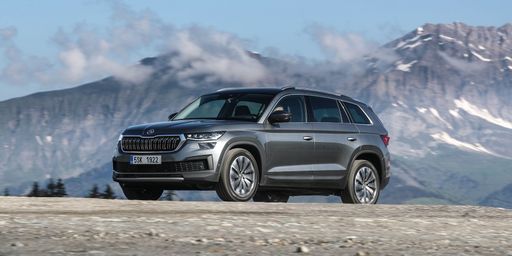
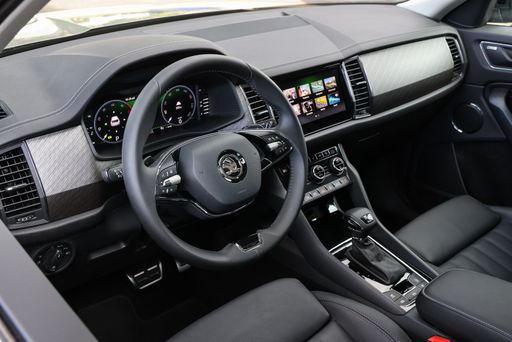
VS

Honda CR-V vs Skoda Kodiaq comparison

Compare performance (184 HP vs 265 HP), boot space and price (40,200 £ vs 37,900 £ ) at a glance. Find out which car is the better choice for you – Honda CR-V or Skoda Kodiaq?

Honda CR-V vs Skoda Kodiaq: Key differences

Honda CR-V

4.7 (6 Reviews)
rate
details

Skoda Kodiaq

4.9 (5 Reviews)
rate
  • marginally cheaper
  • visibly more power
  • considerably more efficient
  • noticeably more electric range
  • clearly quicker 0–100 km/h
  • marginally lighter
  • markedly more trunk space
details

All details on performance, efficiency, range and trunk space can be found in the technical comparison below – including user reviews for both models.

By Achim Sedelmaier

CR-V

Two SUVs, One Choice

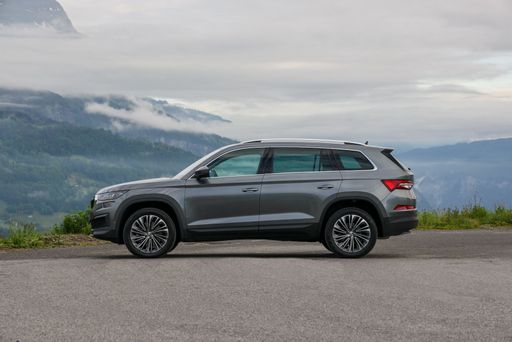
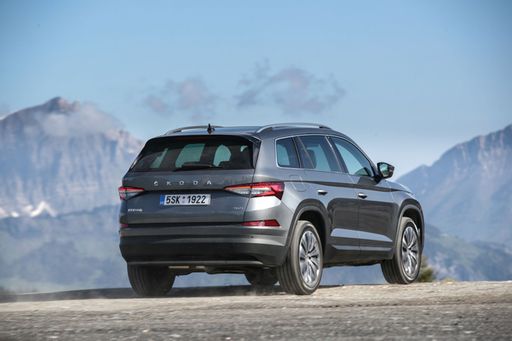
Honda CR-V VS Skoda Kodiaq — a classic SUV comparison that pits Honda’s steady, familiar family wagon against Škoda’s roomy, value-first challenger. Both are unmistakably SUVs and both aim at families who need space without a truck’s manners, but they wear their intentions differently. If you’re comparing cargo room, everyday comfort and road manners versus sheer practicality and presence, this is the duel you’ve been waiting for. Read on and you’ll get a feel for where each model sits in the market and which type of buyer they’re trying to win over.
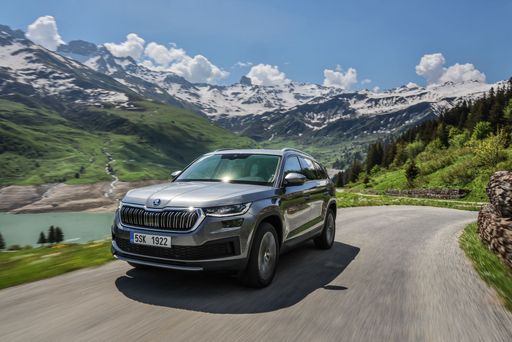
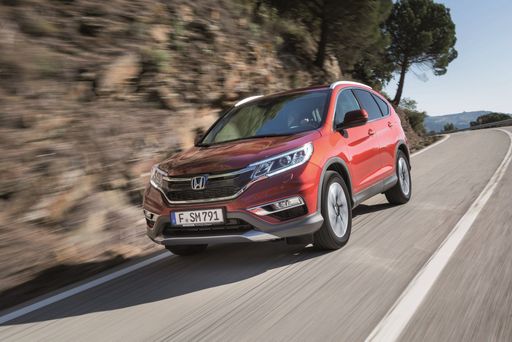
Kodiaq

Character Clash: Calm vs. Command

The Honda CR-V plays the refined, low-key role — it’s the kind of car that won’t shout in the school run but will quietly do its job well, while the Skoda Kodiaq makes a more assertive entrance with a roomier stance and a “bring everything” attitude. Honda leans toward a composed ride and intuitive ergonomics that suit long, uneventful miles; Škoda trades a bit of polish for practicality and cargo-minded cleverness. In short, the CR-V feels restrained and trustworthy, the Kodiaq feels purposeful and accommodating. Both wear family-SUV DNA, but the mood each one sets is clearly different.

CR-V

How they live day-to-day

For daily commuting and relaxed long-distance runs the Honda CR-V rewards you with predictable manners, easy visibility and a comfortable seat that doesn’t complain after hours behind the wheel, whereas the Skoda Kodiaq shines when your life needs to swallow pushchairs, sports kit or weekend gear without a fuss. City drivers who rarely load up will appreciate the CR-V’s composed steering and simple controls, while busy families or tradespeople will love the Kodiaq’s flexible space and no-nonsense practicality. Both are user-friendly, but the trade-off is clear: slightly cosier, more composed comfort versus modular capacity and utility. Choose based on whether your average day needs more calm or more cargo.

Kodiaq

Buying for image and justification

Pick the Honda CR-V if you want to signal reliability and understated competence — it’s a sensible choice that sounds like a sensible life. Opt for the Skoda Kodiaq if you prefer to justify a car purchase on plain utility and value, or if you like a bigger, more dominant presence on the road. The CR-V markets itself on refinement and low fuss; the Kodiaq makes a case with space, flexibility and a slightly more ambitious silhouette. Both give you reasons to sign the cheque, but they sell different promises: quiet competence versus practical confidence.

CR-V

Who should pick the CR-V?

If you’re a pragmatic commuter who prioritises a serene cabin and predictable daily manners, the Honda CR-V is pitched squarely at you, and it will appeal to buyers who value comfort and fuss-free ownership over headline-grabbing figures. The CR-V suits people who want straightforward ergonomics, a calm long-distance cruiser and a no-surprises family carrier. It’s for drivers who prefer to blend in rather than stand out, and who prize a relaxed drive above theatrical ability. If that sounds like you, the CR-V is worth a close look before you compare specs on paper.

Kodiaq

Who should pick the Kodiaq (and where the CR‑V still matters)

The Skoda Kodiaq is aimed at practical realists and those who want presence — families who need flexible space and buyers who like a car that looks and feels like it can do more, so it will attract value-focused and status-conscious shoppers alike. The Kodiaq rewards anyone who treats a car as a toolbox first and a statement second, but it also satisfies those who enjoy the confidence of extra room and a stronger road stance. That said, the Honda CR-V still keeps its appeal for drivers who prioritise refinement and calm over maximum cargoability. Flip to the technical breakdown below to see where the numbers underline these differences and help you pick which direction to take.

Here’s where it gets real: The technical differences in detail

CR-V

Costs and Efficiency:

When it comes to price and running costs, the biggest differences usually appear. This is often where you see which car fits your budget better in the long run.

Skoda Kodiaq is marginally cheaper – starting at 37,900 £ , while the Honda CR-V costs 40,200 £ . That’s a price difference of around 2,323 £.

Fuel consumption also shows a difference: the Skoda Kodiaq uses 1.5 L/100km and is considerably more efficient than the Honda CR-V with 2.6 L/100km. The difference is about 1.1 L/100km.

As for electric range, the Skoda Kodiaq offers noticeably more range – reaching up to 122 km, about 44 km more than the Honda CR-V.

Kodiaq

Engine and Performance:

Power, torque and acceleration are the classic benchmarks for car enthusiasts – and here, some clear differences start to show.

When it comes to engine power, the Skoda Kodiaq offers visibly more power – delivering 265 HP compared to 184 HP. That’s roughly 81 HP more horsepower.

When accelerating from 0 to 100 km/h, the Skoda Kodiaq is clearly quicker – completing the sprint in 6.3 s, while the Honda CR-V takes 9 s. That’s about 2.7 s quicker.

There’s also a difference in torque: the Skoda Kodiaq delivers a bit more torque with 400 Nm compared to 335 Nm. That’s about 65 Nm more.

CR-V

Space and Everyday Use:

Whether family car or daily driver – which one offers more room, flexibility and comfort?

Both vehicles offer seating for 5 people.

In terms of curb weight, Skoda Kodiaq is marginally lighter – 1,684 kg compared to 1,821 kg. The difference is around 137 kg.

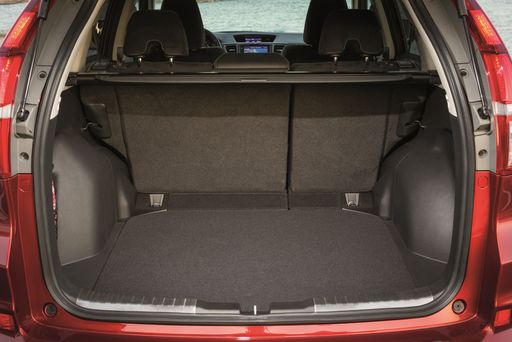
Looking at boot space, the Skoda Kodiaq offers markedly more boot space – 910 L compared to 617 L. That’s a difference of about 293 L.

When it comes to payload, the Skoda Kodiaq carries a bit more – 563 kg compared to 475 kg. That’s a difference of about 88 kg.

Who wins the race in the data check?

The Skoda Kodiaq is far ahead overall in the objective data comparison.
This result only shows which model scores more points on paper – not which of the two cars feels right for you.

from £37,900
Kodiaq

Skoda Kodiaq

  • Engine Type Petrol, Petrol MHEV, Diesel, Plugin Hybrid
  • Transmission Automatic
  • Drive Type All-Wheel Drive, Front-Wheel Drive
  • Power HP 150 - 265 HP
  • Consumption L/100km 1.5 - 8.2 L/100km
  • Electric Range 119 - 122 km
Honda CR-V
Skoda Kodiaq

Costs and Consumption

View detailed analysis

Engine and Performance

View detailed analysis

Dimensions and Body

View detailed analysis

Honda CR-V

The Honda CR-V blends sensible practicality with a polished feel, offering roomy interiors and a confident ride that keeps commutes and weekend escapes equally comfortable. Its unshowy styling and reliable reputation make it a smart, low‑drama choice for buyers who want versatility without fuss — the kind of car that quietly makes everyday life a little easier.

details

Skoda Kodiaq

The Skoda Kodiaq is a practical, well built family SUV that puts space, comfort and usefulness ahead of showy gimmicks. Its composed ride, clever interior packaging and sensible feature set make it an easy, unpretentious choice for daily driving and longer journeys.

details
Honda CR-V
Skoda Kodiaq

Costs and Consumption

Price
40,200 - 48,800 £
Price
37,900 - 50,600 £
Consumption L/100km
2.6 - 6.7 L/100km
Consumption L/100km
1.5 - 8.2 L/100km
Consumption kWh/100km
-
Consumption kWh/100km
-
Electric Range
78 km
Electric Range
119 - 122 km
Battery Capacity
-
Battery Capacity
-
co2
59 - 152 g/km
co2
35 - 186 g/km
Fuel tank capacity
-
Fuel tank capacity
-

Dimensions and Body

Body Type
SUV
Body Type
SUV
Seats
5
Seats
5
Doors
-
Doors
-
Curb weight
1,821 - 1,988 kg
Curb weight
1,684 - 1,970 kg
Trunk capacity
579 - 617 L
Trunk capacity
745 - 910 L
Length
-
Length
-
Width
1,866 mm
Width
1,864 mm
Height
-
Height
-
Max trunk capacity
-
Max trunk capacity
-
Payload
439 - 475 kg
Payload
460 - 563 kg

Engine and Performance

Engine Type
Full Hybrid, Plugin Hybrid
Engine Type
Petrol, Petrol MHEV, Diesel, Plugin Hybrid
Transmission
Automatic
Transmission
Automatic
Transmission Detail
Automatic Gearbox
Transmission Detail
Dual-Clutch Automatic
Drive Type
Front-Wheel Drive, All-Wheel Drive
Drive Type
All-Wheel Drive, Front-Wheel Drive
Power HP
184 HP
Power HP
150 - 265 HP
Acceleration 0-100km/h
9 - 9.5 s
Acceleration 0-100km/h
6.3 - 9.7 s
Max Speed
-
Max Speed
-
Torque
335 Nm
Torque
250 - 400 Nm
Number of Cylinders
4
Number of Cylinders
4
Power kW
135 kW
Power kW
110 - 195 kW
Engine capacity
1,993 cm3
Engine capacity
1,498 - 1,984 cm3

General

Model Year
2025
Model Year
2,024 - 2,025
CO2 Efficiency Class
D, E, B
CO2 Efficiency Class
F, G, E, B
Brand
Honda
Brand
Skoda
DriveDuel uses data analysis and artificial intelligence to evaluate vehicle data and create content. Content is regularly reviewed and improved. The displayed prices are estimates based on German list prices, adjusted to the respective country’s VAT. Country-specific registration taxes are not included. This information is not legally binding.