VS

Hyundai Bayon vs Citroen C4 comparison

Compare performance (90 HP vs 156 HP), boot space and price (20,100 £ vs 20,600 £ ) at a glance. Find out which car is the better choice for you – Hyundai Bayon or Citroen C4?

Hyundai Bayon vs Citroen C4: Key differences

Hyundai Bayon

4 (1 Reviews)
rate
  • barely cheaper
  • slightly lighter

Citroen C4

4.7 (3 Reviews)
rate
  • substantially more power
  • visibly more efficient
  • clearly quicker 0–100 km/h
  • moderately more trunk space

All details on performance, efficiency, range and trunk space can be found in the technical comparison below – including user reviews for both models.

Bayon

Crossover Clash: Citroën C4 vs. Hyundai Bayon

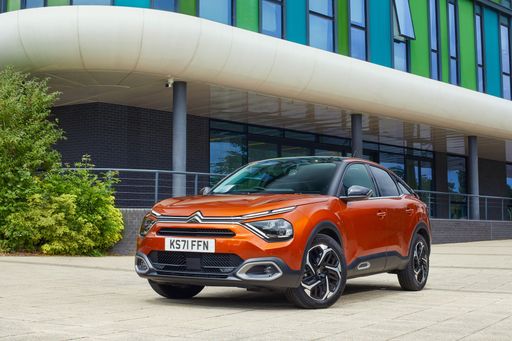
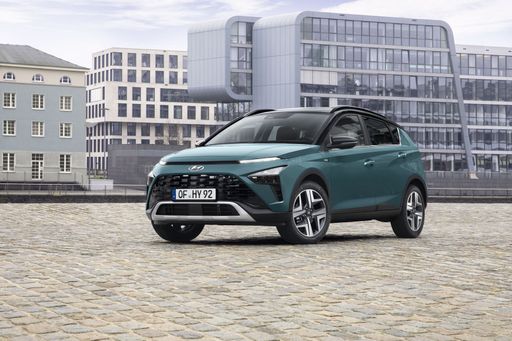
In the ever-evolving world of compact SUVs, two contenders have caught significant attention: the Citroën C4 and the Hyundai Bayon. Both offer a compelling mix of style, technology, and performance, yet each has its distinct character. Let's dive into the details and see how they stack up against each other.
C4

Design and Dimensions

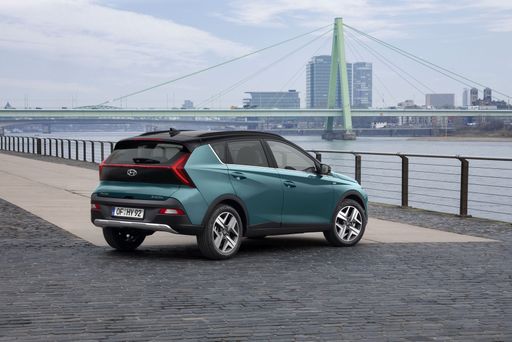
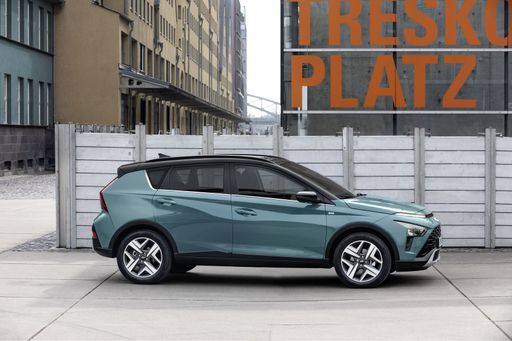
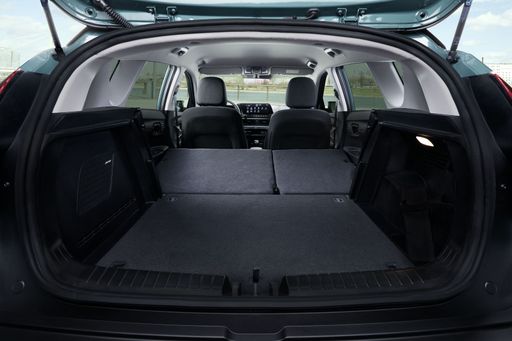
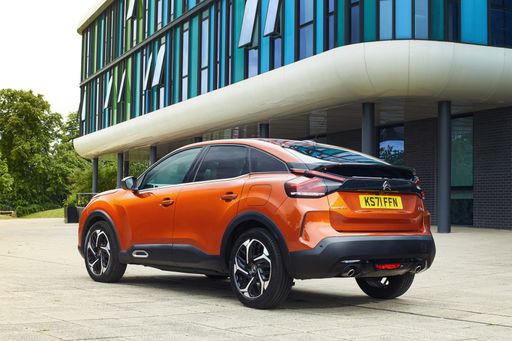
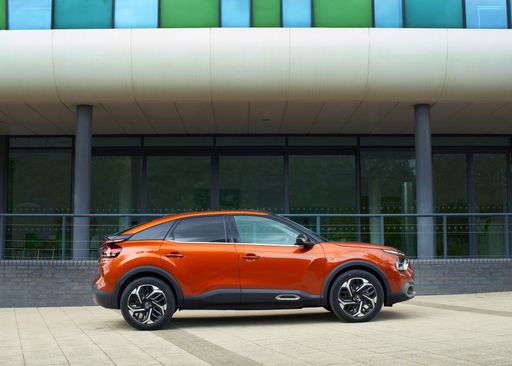
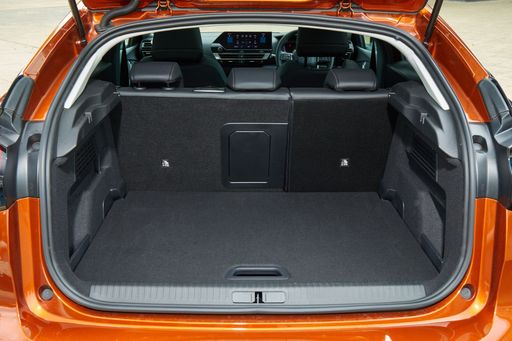
The Citroën C4 and Hyundai Bayon both embody the sleek aesthetics characteristic of modern SUVs, yet they come with subtle differences. The Citroën C4 boasts slightly larger dimensions, with a length of 4,350 mm and a width of 1,800 mm, compared to the Bayon's length of 4,180 mm and width of 1,775 mm. This additional space translates to a more robust on-road presence and potentially more interior room. Despite this, the Bayon provides a practical trunk capacity of 411 liters, closely rivaling the C4’s capacity of 380 liters.

Bayon

Engine and Performance

Under the hood, the Citroën C4 offers diverse engine options, including petrol MHEVs, petrol, and a fully electric variant. The conventional petrol engines provide power outputs of 101 to 156 HP, complementing the front-wheel-drive setup. In contrast, the Hyundai Bayon sticks to a simpler formula with its petrol engine churning out 100 HP. Both vehicles sport a three-cylinder configuration, highlighting efficiency and modern engineering.

The C4's electric variant offers distinct advantages in eco-friendly performance, delivering up to 136 HP and an impressive range of up to 427 km on a single charge. Meanwhile, the Bayon achieves a balanced city mileage with a consumption rate of 5.4 L/100 km.

C4

Transmission and Drive

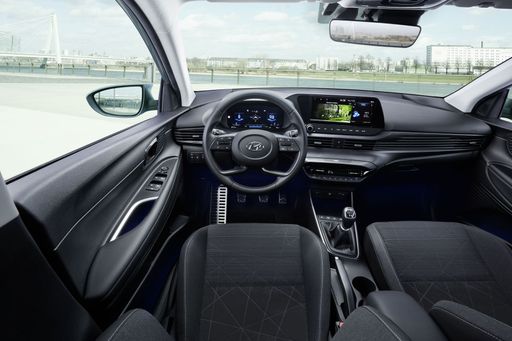
When it comes to gearbox variety, the Citroën C4 shines with options including dual-clutch automatic and standard automatic gearboxes. This versatility allows drivers to select a setup that fits their driving style. The Bayon isn't left behind, offering a choice between manual and a dual-clutch automatic transmission that pairs well with its urban-centric performance.

Bayon

Acceleration and Speed

In terms of raw speed, the Citroën C4 takes the lead, achieving a maximum speed of 206 km/h with its more potent petrol engine variants. Acceleration figures for the C4 also demonstrate its strong performance ethic, achieving 0-100 km/h in as fast as 8 seconds for its top-specced models. Hyundai Bayon's modest power translates to a maximum speed of up to 179 km/h with suitable 0-100 km/h acceleration times of 11.3 seconds.

C4

Fuel Efficiency and Environmental Concerns

Efficiency is a significant consideration for potential buyers. The C4's wide-ranging engine options afford it varied fuel efficiencies, from 4.7 L/100 km for certain petrol models to impressive electric efficiencies with CO2 emissions as low as 0 g/km for the electric variant. The Bayon maintains a competitive performance with its respectable consumption and CO2 emissions of 122 g/km, appealing to those prioritizing fuel economy.

Bayon

Conclusion

The Citroën C4 and Hyundai Bayon cater to different aspects of the compact SUV market. Where the C4 excels with its variety and electric offering, the Bayon provides a straightforward, reliable choice with a focus on practicality and urban maneuverability. Whether your preference leans towards cutting-edge innovation or unfussy efficiency, each car commands attention in its own right.

Here’s where it gets real: The technical differences in detail

Bayon

Costs and Efficiency:

Price and efficiency are often the first things buyers look at. Here it becomes clear which model has the long-term edge – whether at the pump, the plug, or in purchase price.

Hyundai Bayon is barely cheaper – starting at 20,100 £ , while the Citroen C4 costs 20,600 £ . That’s a price difference of around 505 £.

Fuel consumption also shows a difference: the Citroen C4 uses 4.7 L/100km and is visibly more efficient than the Hyundai Bayon with 5.8 L/100km. The difference is about 1.1 L/100km.

C4

Engine and Performance:

Under the bonnet, it becomes clear which model is tuned for sportiness and which one takes the lead when you hit the accelerator.

When it comes to engine power, the Citroen C4 offers substantially more power – delivering 156 HP compared to 90 HP. That’s roughly 66 HP more horsepower.

When accelerating from 0 to 100 km/h, the Citroen C4 is clearly quicker – completing the sprint in 8 s, while the Hyundai Bayon takes 11.9 s. That’s about 3.9 s quicker.

There’s also a difference in torque: the Citroen C4 delivers noticeably more torque with 270 Nm compared to 172 Nm. That’s about 98 Nm more.

Bayon

Space and Everyday Use:

Beyond pure performance, interior space and usability matter most in daily life. This is where you see which car is more practical and versatile.

Both vehicles offer seating for 5 people.

In terms of curb weight, Hyundai Bayon is slightly lighter – 1,175 kg compared to 1,403 kg. The difference is around 228 kg.

Looking at boot space, the Citroen C4 offers moderately more boot space – 510 L compared to 411 L. That’s a difference of about 99 L.

When it comes to payload, the Hyundai Bayon carries somewhat more – 460 kg compared to 406 kg. That’s a difference of about 54 kg.

Who wins the race in the data check?

The Citroen C4 is far ahead overall in the objective data comparison.
This result only shows which model scores more points on paper – not which of the two cars feels right for you.

from £20,600
C4

Citroen C4

  • Engine Type : Electric, Petrol MHEV
  • Transmission : Automatic
  • Drive Type : Front-Wheel Drive
  • Power HP : 110 - 156 HP
  • Consumption L/100km : 4.7 - 4.8 L/100km
  • Consumption kWh/100km : 14.5 - 15.3 kWh/100km
  • Electric Range : 354 - 427 km
Hyundai Bayon
Citroen C4

Costs and Consumption

View detailed analysis

Engine and Performance

View detailed analysis

Dimensions and Body

View detailed analysis

Hyundai Bayon

The Hyundai Bayon slips neatly between city runabout and small SUV, offering surprising practicality and a fresh, confident design that stands out in urban traffic. It's an easy buy for shoppers who want smart packaging, tidy handling and a dash of personality without fuss — a sensible little crossover that makes everyday driving a bit more enjoyable.

details

Citroen C4

Citroën C4 wears its French eccentricity with confidence, pairing bold, sculpted styling with a supremely comfortable ride that turns mundane commutes into a gentler affair. If you value relaxed comfort, clever practicality and a car with personality rather than pretence, the C4 is a charming, sensible choice — and it won't make you miss the usual hot‑hatch theatrics.

details
Hyundai Bayon
Citroen C4

Costs and Consumption

Price
20,100 - 25,800 £
Price
20,600 - 32,200 £
Consumption L/100km
5.8 L/100km
Consumption L/100km
4.7 - 4.8 L/100km
Consumption kWh/100km
-
Consumption kWh/100km
14.5 - 15.3 kWh/100km
Electric Range
-
Electric Range
354 - 427 km
Battery Capacity
-
Battery Capacity
46 - 51 kWh
co2
130 - 132 g/km
co2
0 - 108 g/km
Fuel tank capacity
-
Fuel tank capacity
-

Dimensions and Body

Body Type
SUV
Body Type
SUV
Seats
5
Seats
5
Doors
-
Doors
4 - 5
Curb weight
1,175 - 1,200 kg
Curb weight
1,403 - 1,659 kg
Trunk capacity
411 L
Trunk capacity
380 - 510 L
Length
-
Length
4,350 - 4,580 mm
Width
1,775 mm
Width
1,800 - 1,834 mm
Height
-
Height
1,520 - 1,525 mm
Max trunk capacity
-
Max trunk capacity
1,250 - 1,360 L
Payload
450 - 460 kg
Payload
379 - 406 kg

Engine and Performance

Engine Type
Petrol
Engine Type
Electric, Petrol MHEV
Transmission
Manuel, Automatic
Transmission
Automatic
Transmission Detail
Manual Gearbox, Dual-Clutch Automatic
Transmission Detail
Reduction Gearbox, Dual-Clutch Automatic
Drive Type
Front-Wheel Drive
Drive Type
Front-Wheel Drive
Power HP
90 HP
Power HP
110 - 156 HP
Acceleration 0-100km/h
11.9 - 13.3 s
Acceleration 0-100km/h
8 - 10.8 s
Max Speed
-
Max Speed
150 km/h
Torque
172 Nm
Torque
205 - 270 Nm
Number of Cylinders
3
Number of Cylinders
3
Power kW
66 kW
Power kW
81 - 115 kW
Engine capacity
998 cm3
Engine capacity
1,199 cm3

General

Model Year
2,025
Model Year
2,025 - 2,026
CO2 Efficiency Class
D
CO2 Efficiency Class
A, C
Brand
Hyundai
Brand
Citroen
DriveDuel uses data analysis and artificial intelligence to evaluate vehicle data and create content. Content is regularly reviewed and improved. The displayed prices are estimates based on German list prices, adjusted to the respective country’s VAT. Country-specific registration taxes are not included. This information is not legally binding.